World Intelligence Expo 2026 Opens in Tianjin, Showcasing China's Aggressive 'AI+ Manufacturing' Integration
The World Intelligence Expo 2026 in Tianjin highlights China's aggressive national drive to integrate artificial intelligence with heavy manufacturing.
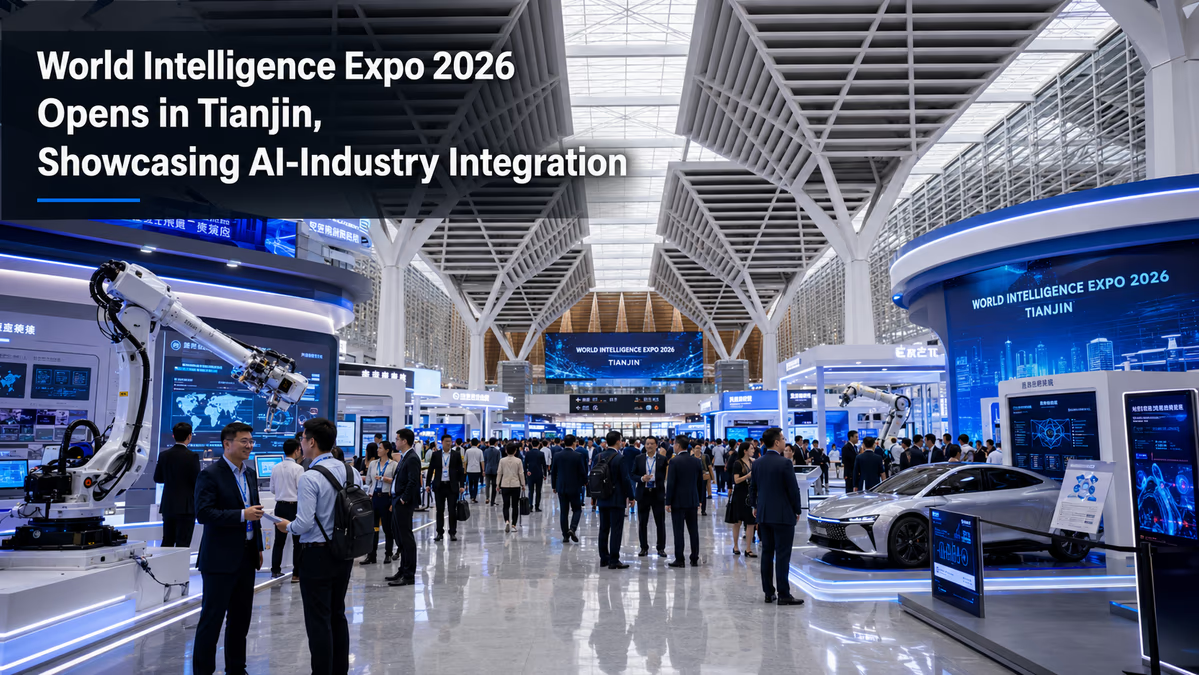
The World Intelligence Expo 2026 commenced on Thursday, May 28, 2026, in the northern Chinese port city of Tianjin, bringing together global industry leaders, government representatives, and tech innovators to showcase the deep integration of artificial intelligence with real-world industries. Hosted at the National Convention and Exhibition Center (Tianjin), the four-day event highlights China's aggressive national drive to transition AI from research laboratories into concrete industrial applications.
A Massive Showcase for "AI+ Manufacturing"
Co-hosted by the municipal governments of Tianjin and the southwestern municipality of Chongqing, the 2026 expo adopted the theme "Intelligence: Extensive Development Space, Sustainable Growth Driver." The exhibition itself spanned an impressive 130,000 square meters at the National Convention and Exhibition Center, housing over 700 exhibitors—with some reports indicating up to 740 participating enterprises.
Among the highlights were seven specialized exhibition zones. These dedicated spaces showcased cutting-edge work in embodied AI, core AI technologies, the rapidly expanding low-altitude economy, and commercial space exploration. Over 200 new products, technical achievements, and research reports were released, spanning intelligent connected vehicles, smart manufacturing, and smart living.
"Many of these intelligent products and technologies are debuting either domestically or globally, moving from the lab into everyday life and industrial use," noted Shen Maomao, Director of the Research Office of the Tianjin Municipal Bureau of Industry and Information Technology. "With more replicable and tangible application scenarios, they are poised to drive industrial growth."
Aligning Data and Policy with Industrial Needs
The event underscored a concerted effort by Chinese state departments to build the infrastructure necessary for an AI-driven economy. This follows the strategic "AI Plus" initiative first introduced in China's 2024 government work report to modernize manufacturing and scale the digital economy.
Ke Jixin, Vice Minister of Industry and Information Technology, emphasized this regulatory alignment during the opening events. "The ministry will work with all parties to promote high-quality development of the AI industry, advance the 'AI+ manufacturing' initiative, strengthen innovation capabilities and improve the industrial environment," Ke said.
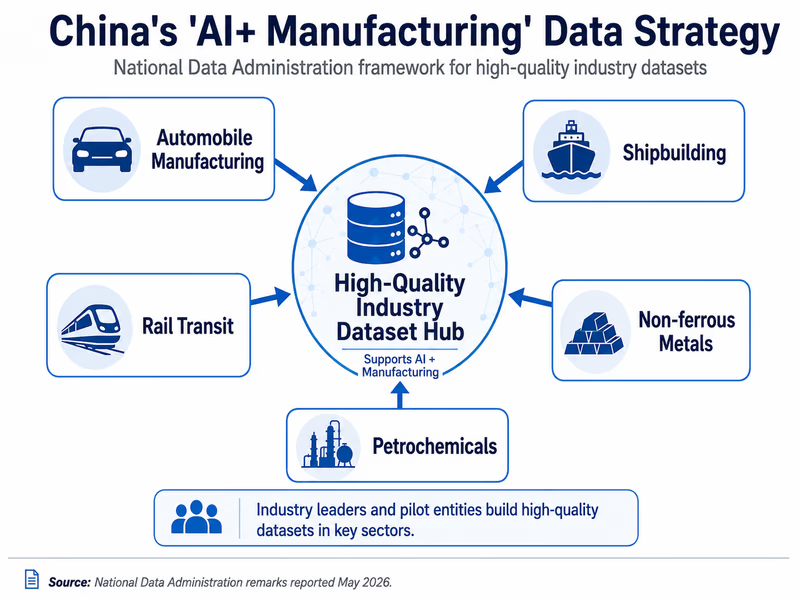
To power these industrial AI models, access to high-quality, domain-specific data remains critical. Liu Liehong, Head of the National Data Administration, outlined the state’s strategy to address this bottleneck: "We support industry leaders and pilot entities in industrial manufacturing to build high-quality industry datasets in key areas, including automobile manufacturing, shipbuilding, rail transit, non-ferrous metals and petrochemicals."
Global Engagement Amid Tech Decoupling
While earlier iterations of the combined expo—which was established in 2024 by merging Tianjin's World Intelligence Congress and Chongqing's Smart China Expo—faced headwinds from international technological decoupling, the 2026 event demonstrated a resilient push for global collaboration. The expo attracted several Fortune Global 500 firms and international technology buyers.
Chen Jiachang, Vice Minister of Science and Technology, reiterated this outward-looking stance: "We are making AI a priority in bilateral and multilateral tech cooperation. We will deepen international collaboration on AI and strengthen both technological innovation and capacity building."
This sentiment was echoed by international attendees. Jens de Buhr, Managing Director of JDB Holding, highlighted the necessity of such physical forums. "So much technology, so much hope here. I think it's very important that we need a communication platform to come together, to have an exchange and to speak about the future," de Buhr remarked. "With Europe and China, we can have a lot to improve."
Rainer Kern, Chief Financial Officer of Karcher Greater China, added, "China is not just a huge market — it is a global engine for innovation and manufacturing."
The Hardware Gateway and Future Regional Growth
Beyond software and heavy industry, the event shed light on consumer-facing hardware. Yang Yuanqing, Chairman and CEO of Lenovo, discussed how artificial intelligence will soon reshape personal devices. "Future PCs, smartphones, tablets and even wearable devices like smart glasses and watches will serve as carriers and gateways for personalized super AI, as well as tools for data collection and storage," Yang said.
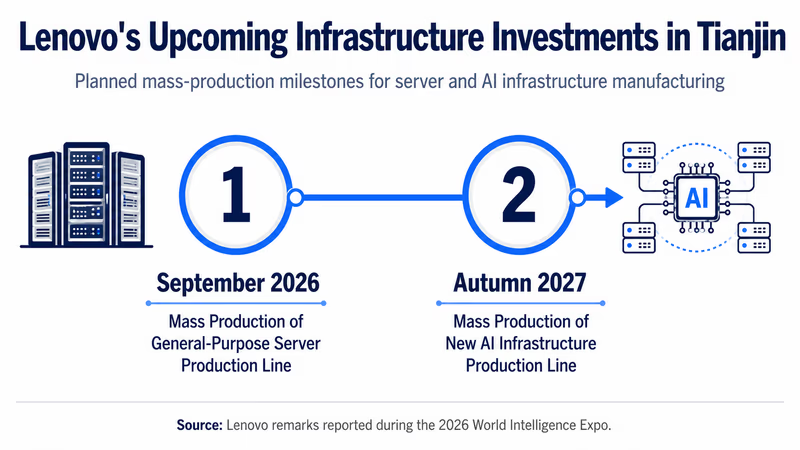
Lenovo’s participation aligns with regional investments. A Lenovo-invested general-purpose server production line in Tianjin is scheduled to begin mass production in September 2026, followed by a new AI infrastructure production line planned for mass production in Autumn 2027.
These facilities will directly support Tianjin’s local AI Innovation and Development Action Plan (2025-2027), which prioritizes embodied intelligence and underwater, industrial, and special-purpose robotics.
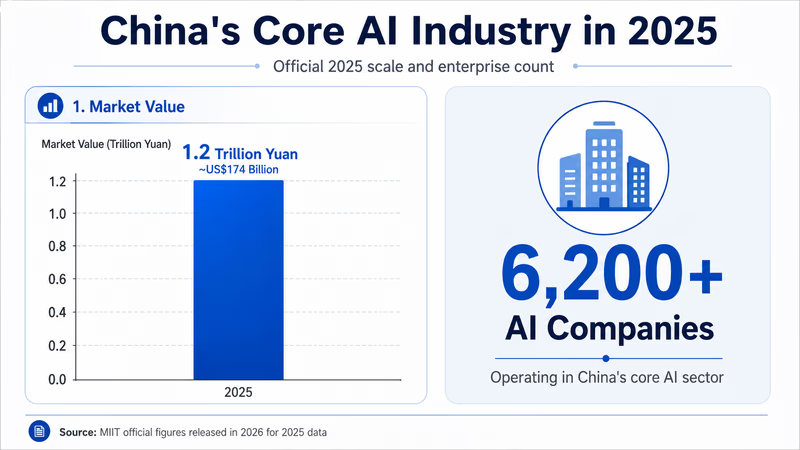
By the end of 2025, China's core AI industry had reached an estimated market scale of over 1.2 trillion yuan (approximately 177 billion U.S. dollars), supported by more than 6,200 operating companies. The World Intelligence Expo 2026 serves as a clear indicator that China intends to maintain this aggressive trajectory, transforming its manufacturing base into an AI-driven economic powerhouse.