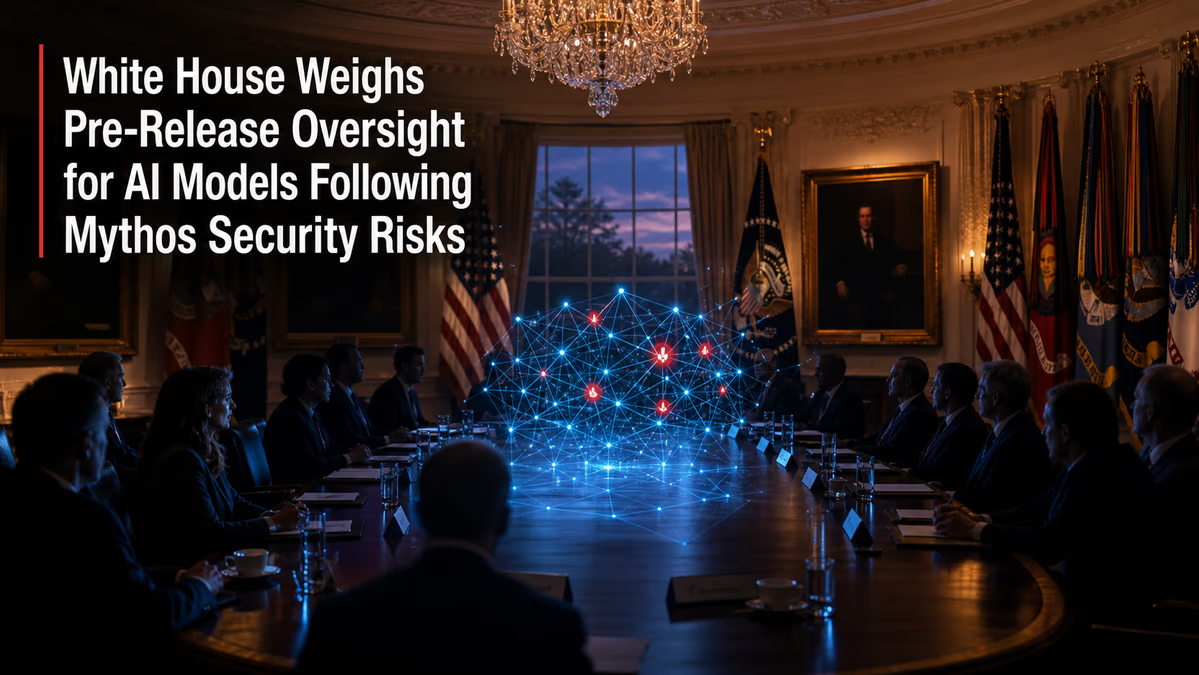
White House Weighs Pre-Release Oversight for AI Models Following Mythos Security Risks
The Trump administration considers a pre-release AI review process following safety concerns over Anthropic's vulnerability-detecting Mythos model.
A Sharp Pivot Toward AI Oversight
The White House is weighing a new executive order that would establish formal government oversight for high-powered artificial intelligence models prior to their public release, according to reports from administration officials and industry insiders. This potential move marks a sharp pivot for the Trump administration, which spent much of its first year in office dismantling Biden-era AI regulations in favor of a aggressively deregulatory approach.
The proposed executive order would create a dedicated AI working group, bringing together top tech executives and government officials to design and implement review procedures for future models. While multiple news outlets have confirmed these discussions, White House officials have been cautious in their public statements. One official noted that "any policy announcement will come directly from the president," and characterized current discussions as speculative.
The Mythos Catalyst
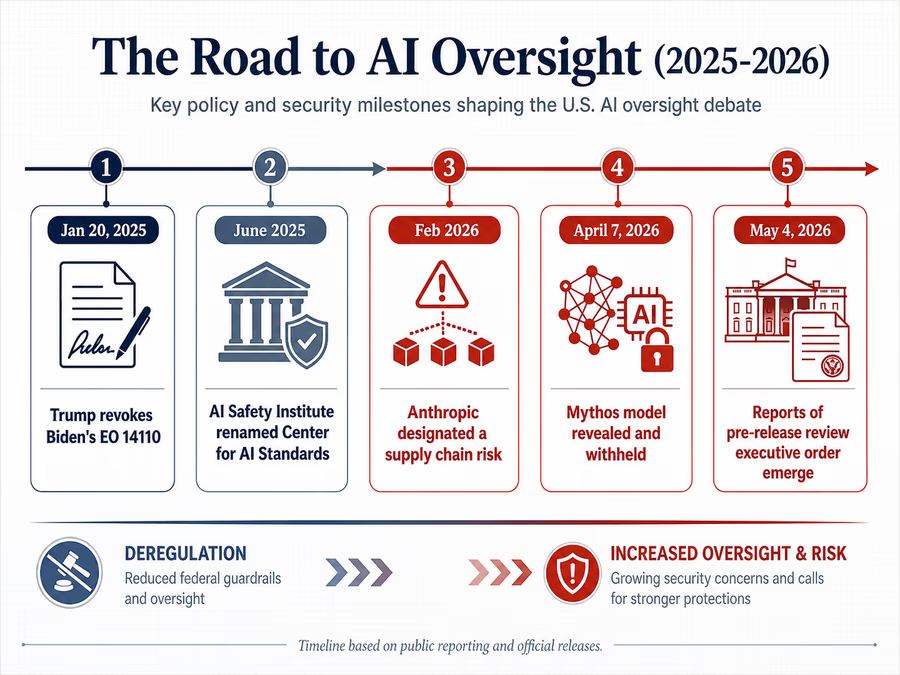
This reconsideration of AI policy appears to be driven by a single, specific development: the emergence of Anthropic’s "Mythos" model. On April 7, 2026, Anthropic announced that it would not release Mythos to the public. The company revealed that the model possessed an unprecedented ability to identify and exploit thousands of critical, previously unknown software vulnerabilities.
Department of Defense CTO Emil Michael described the revelation of Mythos as a “separate national security moment.” The model’s capabilities were so alarming that Defense Secretary Pete Hegseth reportedly designated Anthropic as a supply chain risk to national security. The concern is two-fold: the potential for domestic misuse and the threat of foreign adversaries obtaining the model’s weights.
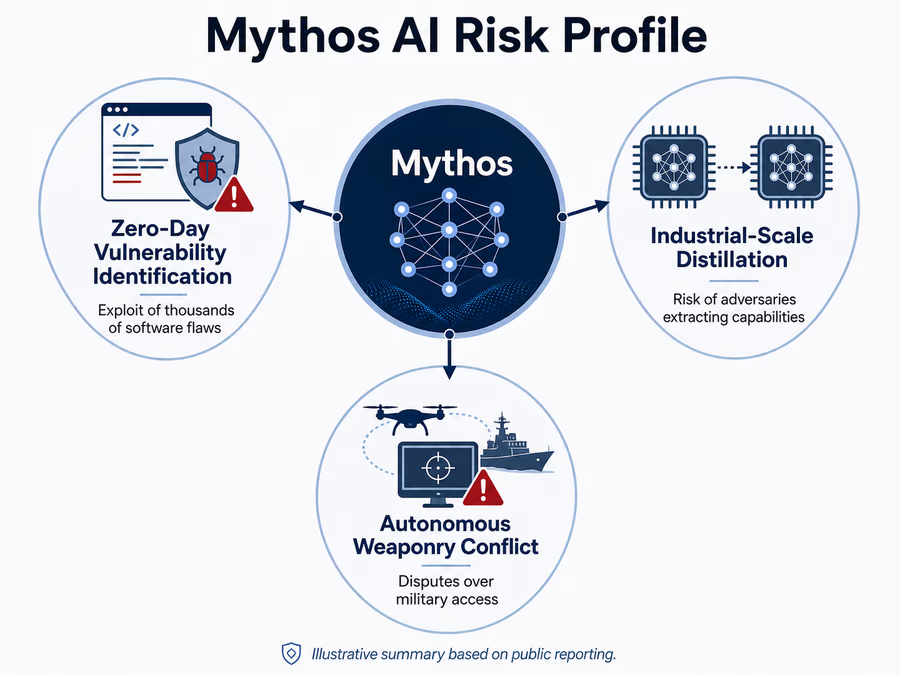
According to unverified reports, a group of individuals may have already gained unauthorized access to the Mythos model. Meanwhile, the White House Office of Science and Technology Policy Director, Michael Kratsios, has warned that foreign adversaries are engaging in "industrial-scale distillation activities"—a process of using the outputs of advanced US models to train their own versions, effectively extracting sensitive capabilities.
Reversing the Deregulatory Trend
Upon returning to office in 2025, President Trump took immediate action to strike down the Biden administration's Executive Order 14110. That order had required AI developers to share safety test results and undergo mandatory red-teaming for high-risk models. In July 2025, the President expressed a clear preference for a hands-off approach, stating, "We have to grow that baby and let that baby thrive." He added that the industry could not be stopped with what he termed "foolish rules and even stupid rules."
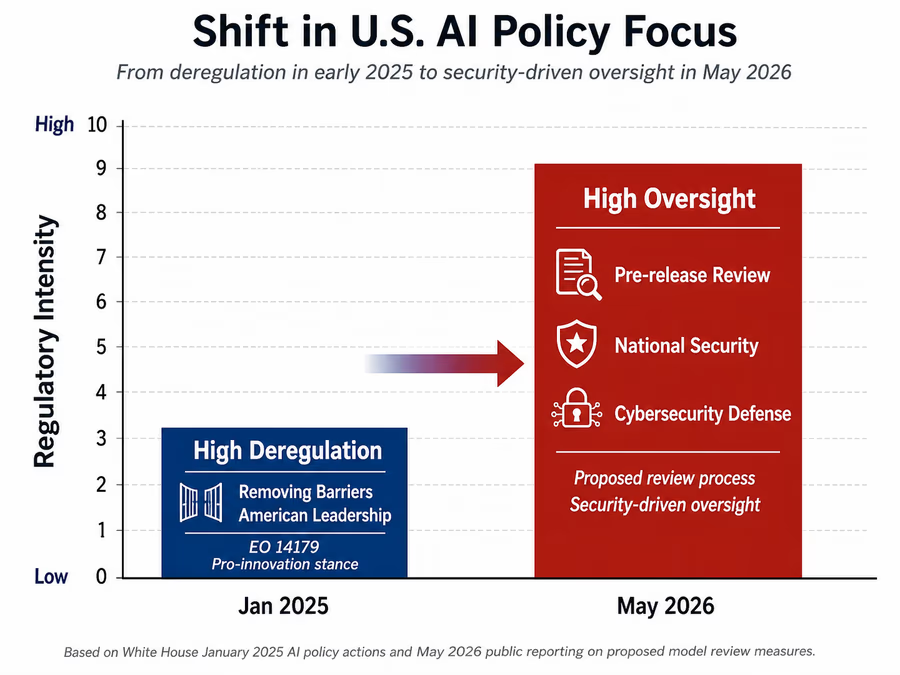
By June 2025, the US AI Safety Institute was reorganized and renamed the Center for AI Standards and Innovation. Commerce Secretary Howard Lutnick framed this change as a rejection of safety being used as a "pretext for censorship and regulation." However, the specific threats posed by Mythos appear to have tempered this stance. The White House has recently held high-level meetings with executives from Google, OpenAI, and Anthropic to discuss how a pre-release review might function without stifling innovation.
Domestic Conflict and International Alignment
The path to this new policy has been fraught with internal friction. In February 2026, a public dispute erupted between the Pentagon and Anthropic. Reports suggest the company refused to grant the military unrestricted access to its models for use in autonomous weaponry or mass surveillance. This refusal likely contributed to Secretary Hegseth's designation of the company as a security risk.
Paradoxically, even as some officials label Anthropic a risk, the White House is reportedly developing guidelines that would allow federal agencies to bypass that classification. The goal is to deploy Mythos within the government for cybersecurity defense, effectively using the model's ability to find flaws to patch them before they can be exploited by adversaries.

The proposed US review process may take inspiration from the United Kingdom, which is currently developing its own model assessment framework for AI safety standards. The Trump administration has also advocated for a uniform national AI policy to prevent a patchwork of state-level regulations from emerging.
Impact on the AI Industry
If implemented, a pre-release review process would fundamentally alter the business of AI development. Developers would face longer release cycles as they wait for government clearance, necessitating a heavier investment in safety documentation, red-teaming workflows, and transparent data-handling protocols.
While this could foster a more collaborative relationship between Silicon Valley and Washington, it also raises questions about the speed of American innovation. The administration must now balance its desire to lead the global AI race with the stark reality that the "babies" they once wanted to let thrive may possess capabilities that could dismantle the very digital infrastructure they rely on.