
Western Digital and SanDisk Exceed Forecasts Due to Soaring AI Demand
Western Digital and SanDisk report record fiscal Q3 2026 earnings as massive AI data center investments drive a surge in storage demand.
Western Digital and its subsidiary SanDisk have crushed Wall Street expectations for the third fiscal quarter of 2026, driven by an insatiable appetite for data center components to power the global artificial intelligence expansion. The two storage giants reported financial results that underscore a fundamental shift in the memory market, where AI-driven infrastructure is now the primary engine of growth.
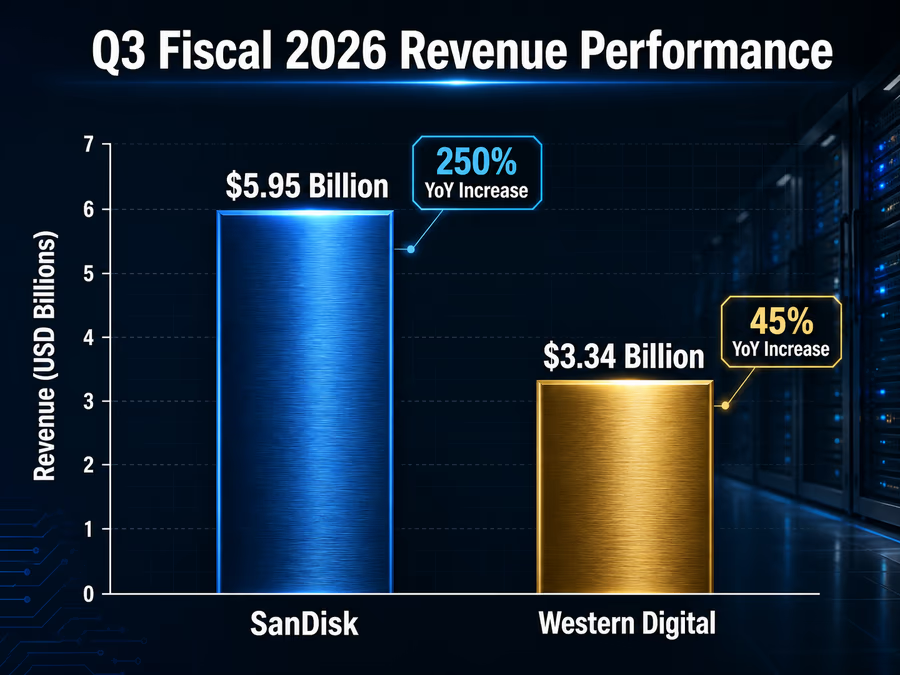
SanDisk reported a staggering Q3 fiscal 2026 revenue of $5.95 billion, representing a 250% year-over-year surge that comfortably cleared analyst projections of $4.72 billion. The company’s net profit for the quarter rose 88% to reach $3.62 billion. David Goeckeler, CEO of SanDisk, characterized the period as a fundamental inflection point, stating, "This quarter marks a fundamental inflection point for Sandisk — where our technology leadership is enabling a deliberate shift in our mix toward the highest-value end markets, led by Datacenter."
Western Digital mirrored this success, posting revenue of $3.34 billion, a 45% increase over the previous year. The company's net profit surged more than sixfold to $3.21 billion. Perhaps most impressively, Western Digital's gross margin climbed to 50.5%, reflecting significant pricing power in a tightening market. Following these results, Western Digital announced a 20% increase to its quarterly cash dividend, now set at $0.15 per share.
The Sold-Out AI Infrastructure
The sheer scale of the AI boom is perhaps best illustrated by Western Digital’s order books. The company revealed that it has nearly sold out its entire hard drive (HDD) supply for the remainder of calendar year 2026. This shortage is backed by firm purchase orders from the company's top seven customers, a group dominated by hyperscale cloud providers.
"We're pretty much sold out for calendar 2026," said Irving Tan, CEO of Western Digital. "We have firm POs [purchase orders] with our top seven customers."
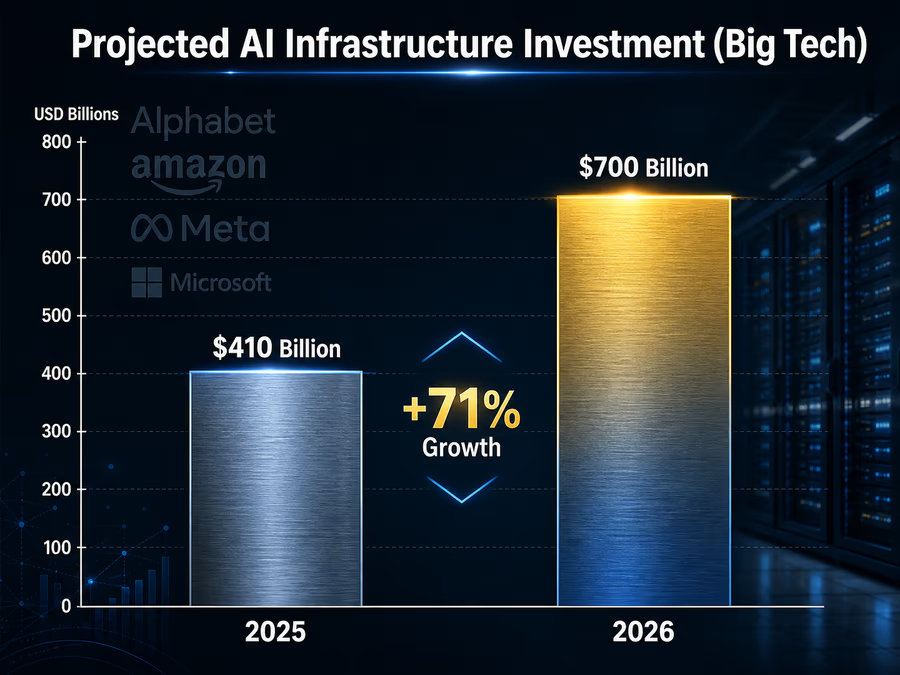
This demand is fueled by the unprecedented capital expenditures of "Big Tech" firms. Alphabet, Amazon, Meta, and Microsoft are projected to invest over $700 billion in AI infrastructure in 2026 alone, a 71% jump from the $410 billion spent in 2025. For Western Digital, this has resulted in a pivot where cloud revenue now constitutes approximately 89% of its total business, while traditional consumer sales have dwindled to just 5%.
The Compounding Loop of Inference
While early AI demand was centered on training massive models, Western Digital is now seeing a structural shift toward inference—the phase where AI models are actually used to generate content or make predictions. Irving Tan noted that the demand drivers are clear, as virtually every AI workload—from training and inference to agentic and physical AI—creates data that must be stored persistently and cost-efficiently on HDDs.
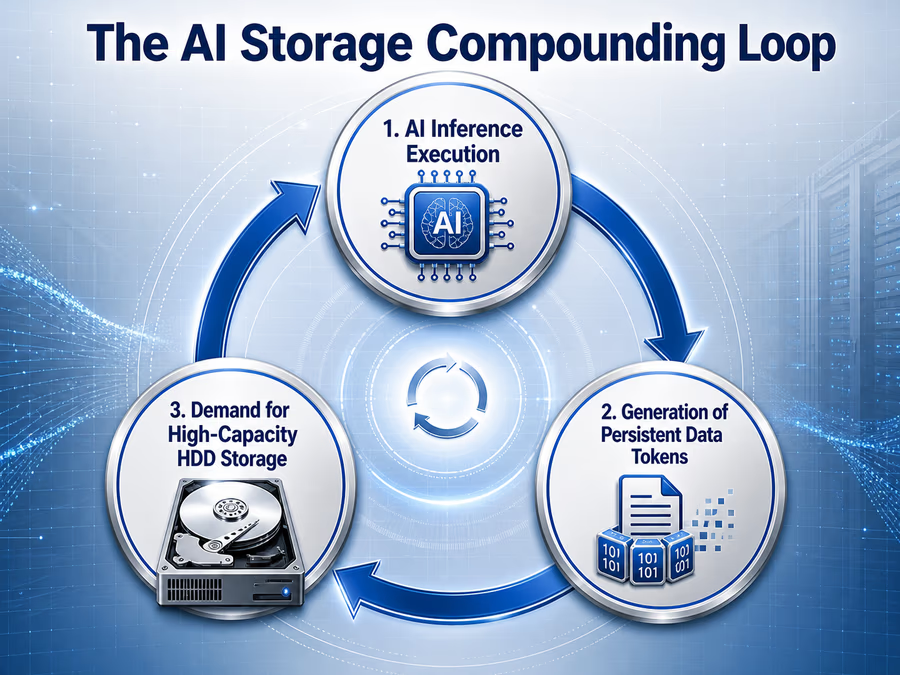
Tan further explained that as AI workloads transition to large-scale inference and the execution of autonomous agents, every generated token essentially becomes non-recoverable persistent data. This creates what the company calls a compounding loop where the act of AI inference itself creates more data, necessitating more storage in a self-reinforcing cycle.
Analysts have responded with aggressive price target upgrades. Matt Bryson of Wedbush raised his target for SanDisk to $1,200 from $740, citing better-than-expected conditions in NAND flash pricing. Meanwhile, Cantor Fitzgerald analyst C.J. Muse increased his price target for SanDisk to $1,400 and for Western Digital to $500, maintaining Overweight ratings on both as they capitalize on the storage-intensive nature of the AI era.
Long-Term Visibility and Innovation
Unlike previous cyclical peaks in the memory industry, Western Digital and SanDisk are signaling a sustained growth period. Western Digital anticipates that demand for exabytes of storage will grow at a compound annual growth rate (CAGR) of more than 25% over the next five years. The company already has order visibility extending through 2029.
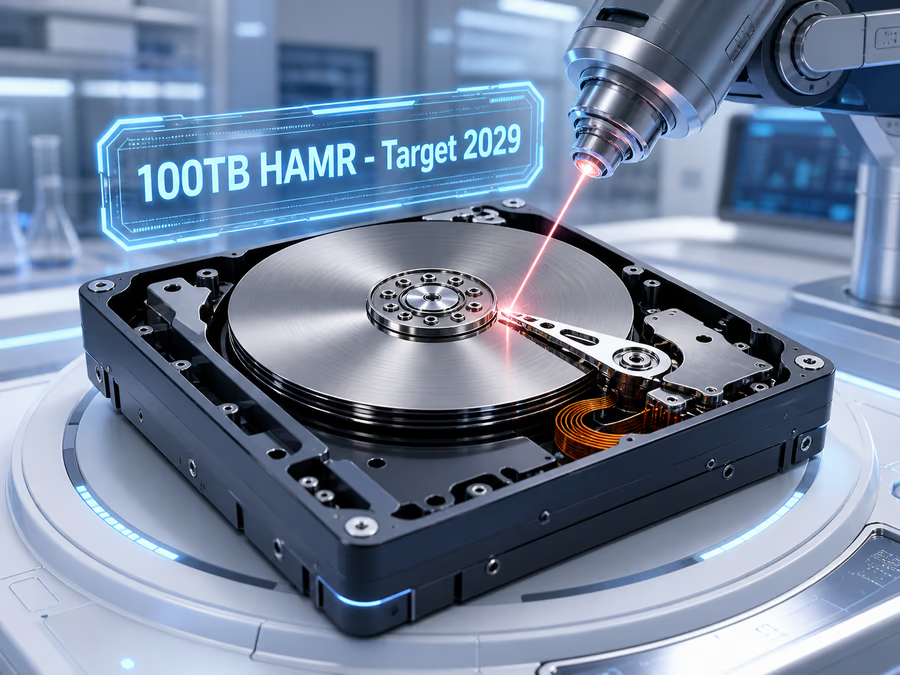
To meet this sustained demand, Western Digital is securing its future through long-term agreements (LTAs). The company has already locked in contracts with two major customers through 2027 and one customer extending into 2028. Strategically, the firm is moving toward higher capacity, preparing to release 40TB EPMR drives in the second half of 2026, with plans for 100TB HAMR (Heat-Assisted Magnetic Recording) drives by 2029.
Kris Sennesael, CFO of Western Digital, indicated that the company's business continues to strengthen with visibility extending as they build momentum across all end markets. Sennesael noted that they have also improved their balance sheet while using robust free cash flow to benefit shareholders.
However, this high-demand environment has led to market volatility. Despite the record-breaking figures, some unverified reports suggest that stock price dips immediately following the announcement may be due to profit-taking by investors who believe the AI growth narrative is already fully priced into the shares. Regardless of short-term market fluctuations, the fundamental reality remains: the AI revolution is as much about storage as it is about compute.