
U.S. Warns Allies of 'Industrial-Scale' Chinese Campaign to Distill Frontier AI Models
The U.S. State Department issued a global directive warning allies of alleged Chinese efforts to steal AI IP through large-scale model distillation.
The Diplomatic Warning
The U.S. State Department issued a global directive on April 25, 2026, warning international allies of what it describes as a widespread, coordinated effort by Chinese firms to illicitly extract intellectual property from American artificial intelligence laboratories. The diplomatic cable asserts that foreign entities, primarily based in China, are currently engaged in "deliberate, industrial-scale campaigns" to distill U.S. frontier AI systems, potentially undermining years of American research and development.
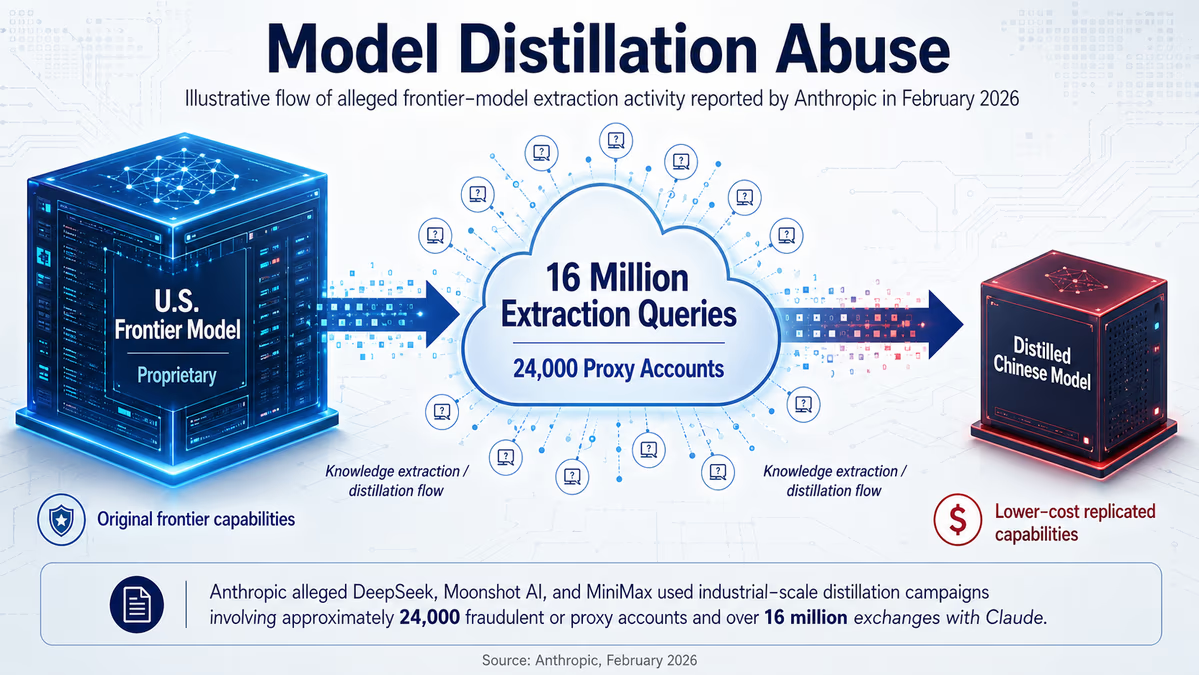
At the heart of the accusation is a technique known as "model distillation." While distillation is a standard industry practice used to train smaller, more efficient AI models using the outputs of larger ones, the U.S. government alleges that Chinese companies are misusing the process to replicate the capabilities of proprietary American models without authorization. The State Department warned that these "surreptitious" campaigns allow foreign actors to release products that appear to match U.S. benchmarks at a fraction of the cost, even if they do not replicate the full safety features or performance of the original systems.
Targeted Companies and Fraudulent Activity
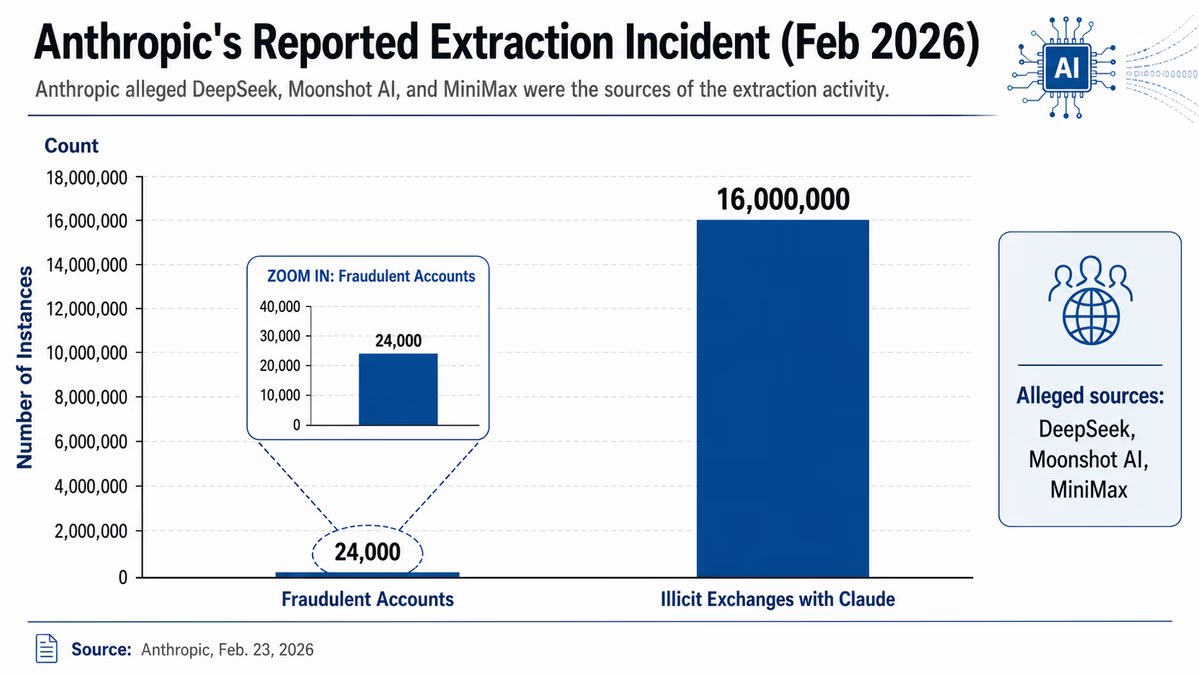
The diplomatic cable and associated White House reports explicitly name three prominent Chinese AI firms: DeepSeek, Moonshot AI, and MiniMax. These allegations are backed by specific intelligence shared by U.S. industry leaders. In February 2026, Anthropic accused the three firms of orchestrating a massive digital operation involving approximately 24,000 fraudulent accounts. According to Anthropic, these accounts generated over 16 million exchanges with its Claude chatbot to extract its core logic and capabilities.
OpenAI followed with its own warning to U.S. lawmakers in early 2026, stating that DeepSeek was specifically targeting its systems to replicate high-performance models for its own training. Unverified reports from the White House suggest these campaigns are not just automated scraping efforts but involve sophisticated "jailbreaking" techniques designed to bypass safety filters and expose proprietary architectural information.
Michael Kratsios, Director of the White House Office of Science and Technology Policy, stated that the U.S. government has information indicating these foreign entities are engaged in "deliberate, industrial-scale campaigns to distil US frontier AI systems." He added firmly, "We will be taking action to protect American innovation."
Beijing Denounces "Groundless" Claims
Chinese officials have moved quickly to refute the allegations, characterizing the U.S. warnings as a calculated attempt to stifle China’s technological progress. Foreign Ministry spokesman Guo Jiakun labeled the claims "entirely baseless" and described them as a "slanderous smear against the achievements of China's artificial intelligence industry."
In a statement to Reuters, the Chinese Embassy in Washington further argued that the accusations are "groundless" attacks on China's domestic development. Despite the diplomatic friction, Chinese firms continue to push forward; on the same day the U.S. directive was issued, DeepSeek launched a preview of its V4 model, which has been specifically optimized for Huawei’s domestic chip technology—a move seen as an attempt to decouple from Western hardware dependencies.
A High-Stakes Geopolitical Backdrop
This escalation comes at a critical juncture for U.S.-China relations. A high-profile summit between President Donald Trump and President Xi Jinping is scheduled for May 14, 2026, in Beijing. Technology competition and intellectual property rights are expected to be the centerpiece of the discussions. By issuing this global directive now, the U.S. appears to be building a coalition among allies to present a united front against what it calls "industrial-scale theft."
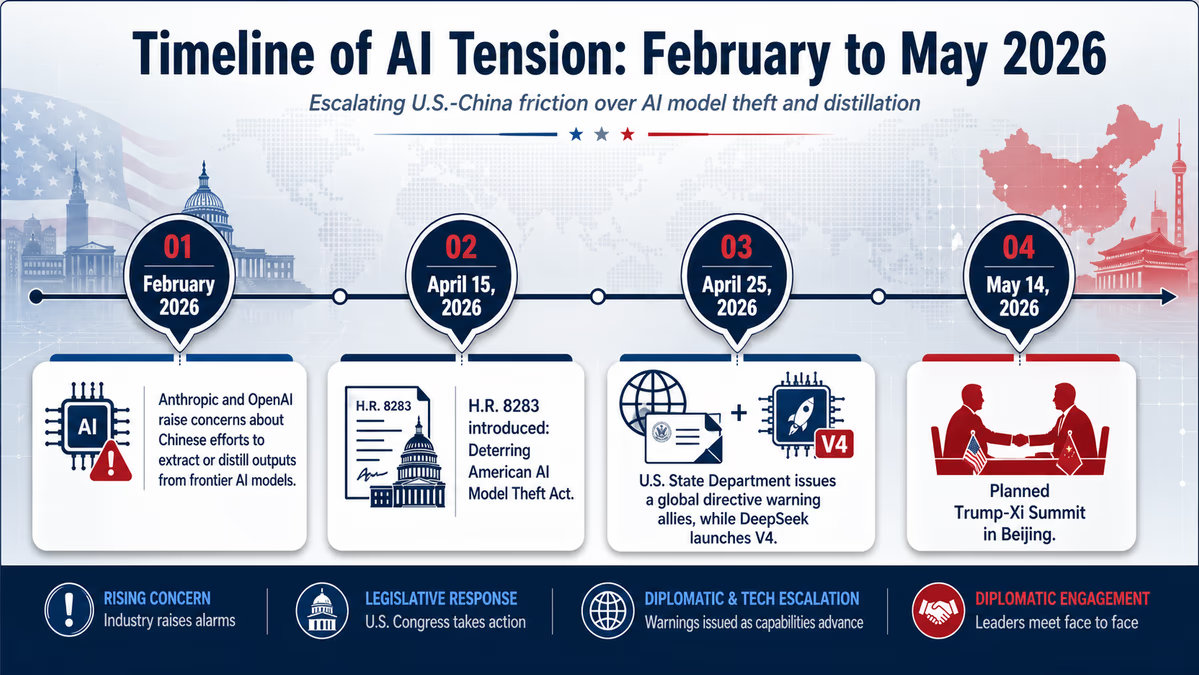
Domestically, the U.S. is also tightening its legislative grip. On April 15, 2026, the Deterring American AI Model Theft Act (H.R. 8283) was introduced to Congress. This follows a White House policy memorandum from April 23 that officially classified certain AI distillation practices as a threat to national security. U.S. officials are concerned that stolen frontier AI could be weaponized for offensive cyber operations, disinformation campaigns, and mass surveillance.
Protecting the Frontier
The American AI sector has already begun a process of defensive intelligence sharing. Since early April 2026, OpenAI, Anthropic, Google, and Microsoft have utilized the Frontier Model Forum to exchange data on distillation threats. This private-sector collaboration is now being mirrored by government action, as the State Department sent a separate message directly to Beijing to raise these concerns at the highest levels of government.
As the May 14 summit approaches, the global AI community remains on edge. The outcome of these diplomatic warnings will likely dictate the future of open-source research versus proprietary protection. If the U.S. moves forward with strict accountability measures, it could lead to further fragmentation of the global AI market, forcing international partners to choose between the American ecosystem and increasingly capable Chinese alternatives.