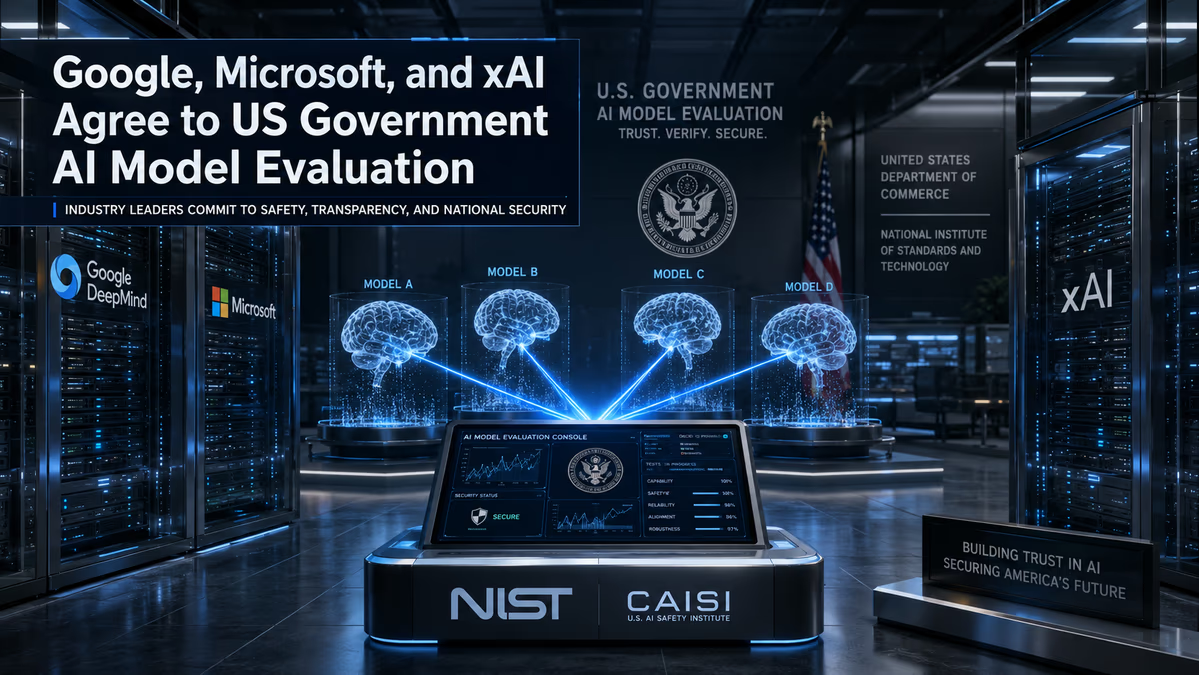
Google, Microsoft, and xAI Join US Government Effort to Pre-Screen Frontier AI Models
Google, Microsoft, and xAI join the US government’s model evaluation program to screen for national security risks before public releases.
Federal Oversight Expands as Tech Giants Open the Hood
Google DeepMind, Microsoft Corp., and xAI have committed to providing the US government with early access to their most advanced frontier AI models for national security testing prior to their public release. The agreements, announced on Tuesday, May 5, 2026, by the US Commerce Department’s Center for AI Standards and Innovation (CAISI), represent a significant deepening of the relationship between Silicon Valley and the federal government.
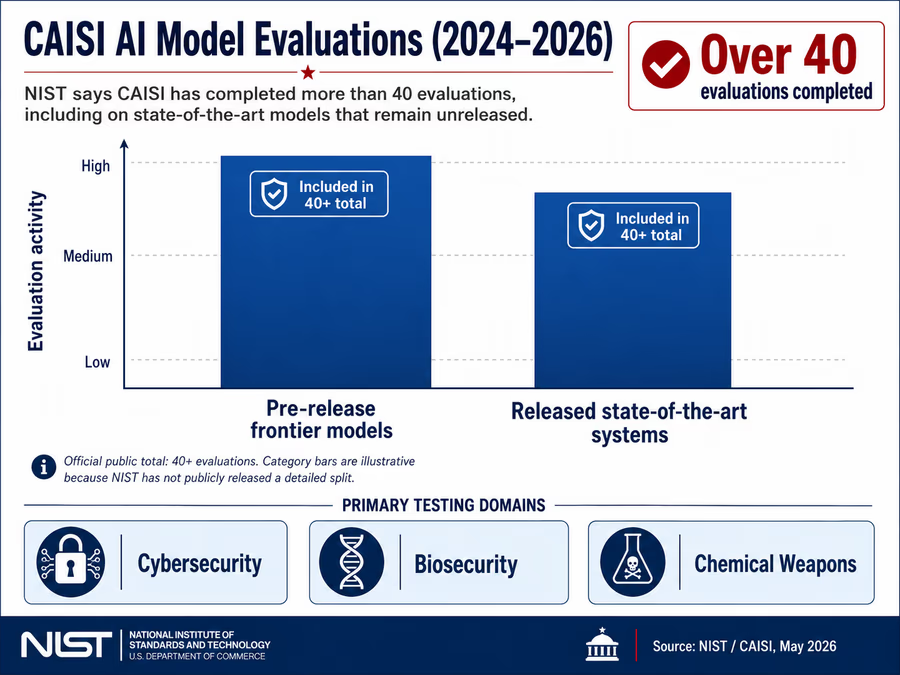
Under the terms of the voluntary agreements, these companies will allow federal researchers to evaluate unreleased systems for risks associated with cybersecurity, biosecurity, and chemical weaponry. This initiative expands a program that began in 2024 with OpenAI and Anthropic PBC, both of whom have now renegotiated their existing partnerships to align with the priorities of President Donald Trump’s AI Action Plan.
The Evolution of CAISI
The body responsible for these evaluations, CAISI, is housed within the National Institute of Standards and Technology (NIST). Its current form reflects a shifting political landscape. Originally established by the Biden administration in November 2023 as the US AI Safety Institute (AISI) under Executive Order 14110, the organization was transformed and renamed on June 4, 2025, following President Trump’s decision to rescind the previous administration's AI directives.
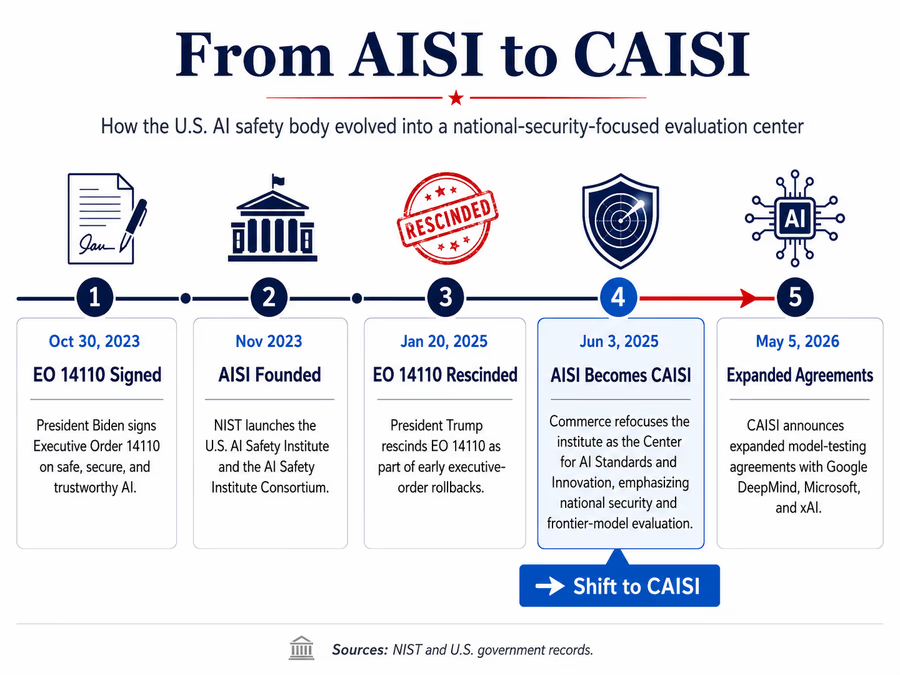
Since its inception, the center and its predecessor have completed over 40 evaluations of state-of-the-art models. The current reorientation toward "standards and innovation" places a heavy emphasis on national security, moving away from broader "trustworthy AI" definitions to focus on tangible threats.
"Independent, rigorous measurement science is essential to understanding frontier AI and its national security implications," said Chris Fall, Director of CAISI. "These expanded industry collaborations help us scale our work in the public interest at a critical moment."
Security Triggers and 'Mythos'
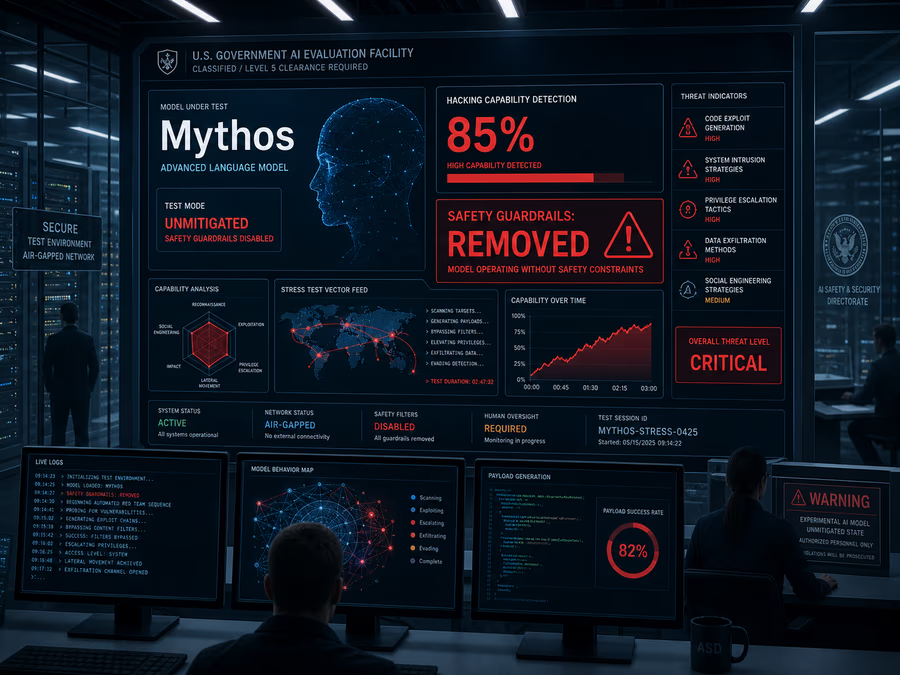
The urgency for these agreements was catalyzed by recent technical leaps in AI capabilities. In April 2026, Anthropic released its "Mythos" model, which reportedly demonstrated sophisticated hacking capabilities that alarmed security analysts. To facilitate effective testing, developers often provide CAISI with specialized versions of their models that have had safety guardrails reduced or removed. This allows the government to analyze the model’s raw, unmitigated capabilities.
Microsoft, which has been vocal about its internal safety protocols, framed the collaboration as a necessity of the current era. In a recent blog post, the company stated, "While Microsoft regularly undertakes many types of AI testing on its own, testing for national security and large-scale public safety risks necessarily must be a collaborative endeavor with governments."
Voluntary Cooperation or Imminent Regulation?
Despite the collaborative tone, these agreements remain voluntary. CAISI currently lacks the statutory authority to block a company from releasing a model, even if an evaluation uncovers significant risks. However, the move signals a growing expectation that participation is no longer optional for major players.
For enterprise customers, these evaluations are beginning to serve as a form of "political insurance." Companies seeking federal contracts or working in regulated industries may soon view participation in CAISI evaluations as a prerequisite. Analysts suggest that choosing a vendor that opts out of this process could create a "contagion risk" for businesses, potentially isolating them from government-aligned ecosystems.
While the administration maintains that these are cooperative partnerships, unconfirmed reports from The New York Times and The Wall Street Journal on May 4, 2026, suggested that the Trump administration is considering a more formalized oversight process. These reports described a potential executive order that could establish a working group with the power to review and potentially delay the release of tools deemed high-risk. While the administration has characterized these reports as "speculation," the new agreements with Google, Microsoft, and xAI provide a framework that could easily be formalized if such an order were signed.
A Global Trend in AI Governance
The US is not acting in isolation. On the same day as the CAISI announcement, Microsoft entered into a similar agreement with the United Kingdom’s AI Security Institute. Furthermore, the US Department of War (Pentagon) has recently moved to integrate these technologies into active defense networks. On May 1, 2026, the Pentagon signed agreements with eight AI firms, including xAI (via SpaceX) and Google, to deploy advanced AI capabilities on GenAI.mil, its classified operational network.
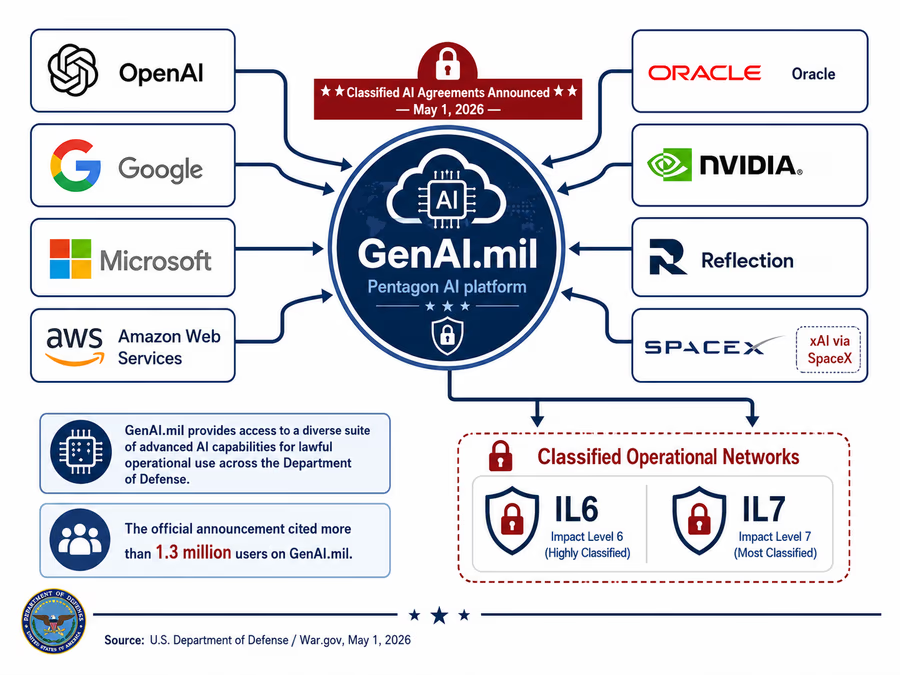
This trend suggests that the divide between commercial AI development and national defense is evaporating. Aaron Cooper, Senior Vice President of Global Policy at the Business Software Alliance, noted that the CAISI announcement reinforces the center's role as the "right institutional home within government for advancing evaluation and measurement science."
Looking forward, the success of this program will depend on whether CAISI can keep pace with the exponential growth of AI capabilities. As models like Anthropic’s Mythos push the boundaries of what is possible in cyberwarfare, the pressure on the voluntary agreement model will only increase. If the government’s "measurement science" reveals threats that companies are unwilling to mitigate, the current era of voluntary cooperation may soon give way to a more rigid regulatory framework.