The Silicon Ceiling: Trump Exempts AI Infrastructure From Tariffs to Fuel Domestic Boom
The Trump administration has exempted key AI hardware from global tariffs to sustain a massive 10% surge in domestic business investment.
A Strategic Shift in Economic Nationalism
The Trump administration has officially carved out a massive exemption for artificial intelligence infrastructure from its global tariff regime, signaling a strategic pivot to protect the United States' lead in the global technology race. Citing the 'needs of the United States economy,' the White House earlier in 2026 exempted a wide range of computer hardware, networking gear, integrated circuits, and industrial metals essential for AI from broader trade duties. This decision comes as business investment, fueled almost entirely by the AI boom, surged by over 10% in the first quarter of 2026—the largest leap in three years.
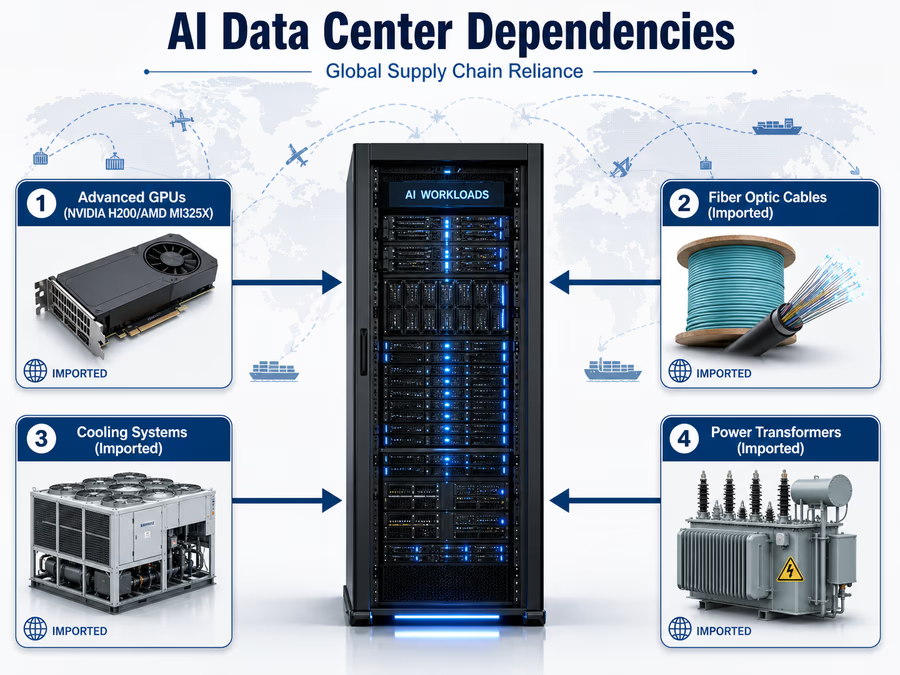
The move highlights an inescapable reality for the administration: the hardware required to power the next generation of computing is almost entirely reliant on global supply chains. Daron Acemoglu, an economist and Nobel Prize laureate at MIT, noted that the industry is fundamentally dependent on international trade. "The U.S. does not manufacture most of the advanced chips," Acemoglu said. "It requires other inputs for infrastructure investment and it requires global data."
The AI Investment Supercycle
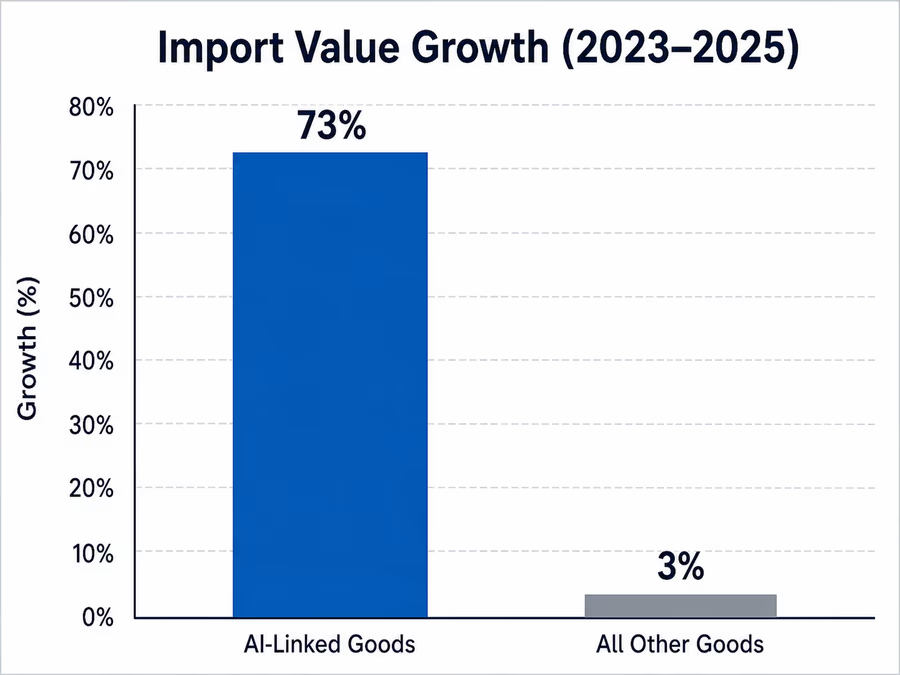
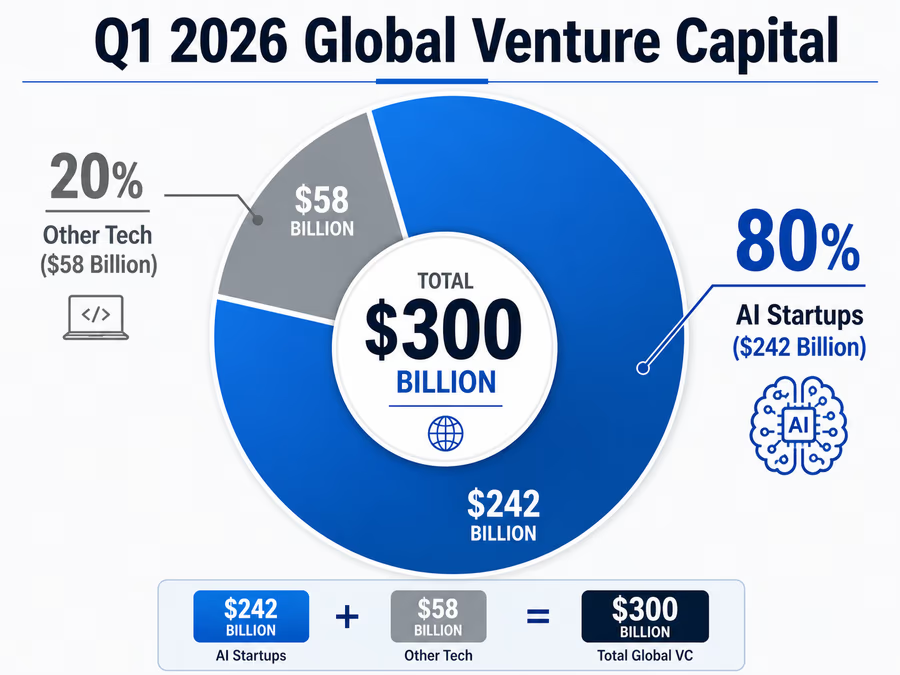
The scale of the current AI infrastructure buildout is staggering. According to the Commerce Department, nearly one-quarter of the $3.4 trillion in goods imported by the U.S. in 2025 was linked to the AI boom. While general imports rose a modest 3%, the value of AI-specific imports has skyrocketed by 73% since 2023. This appetite for hardware is backed by historic levels of capital; in the first quarter of 2026 alone, global venture capital reached $300 billion, with $242 billion—a staggering 80%—directed toward AI startups.
However, this growth remains fragile. Eric Winograd, Director of Developed Market Economic Research for AllianceBernstein, put it bluntly: "This is an AI economy." To keep that economy humming, the administration has had to balance its protectionist rhetoric with the practical requirements of tech giants like Microsoft, Amazon, and Google, who are planning hundreds of billions in data center investments.
Navigating the Tariff Minefield
The policy landscape has been a complex web of executive orders and reversals. On January 14, 2026, President Trump signed a Section 232 Proclamation imposing a 25% tariff on select high-performance AI chips, including NVIDIA’s H200 and AMD’s MI325X. Yet, the administration simultaneously introduced broad exemptions for chips used to expand domestic semiconductor manufacturing capacity or support data center research and development.
Industry analysts view these exemptions as a necessary safety valve. Stacy Rasgon, a semiconductor analyst at Bernstein Research, suggested that without these workarounds, the U.S. would become "the most expensive place in the world to build out AI infrastructure." Chim Lee, a Senior Analyst at the Economic Intelligence Unit, characterized the 25% tariff on specific GPUs as the government effectively taking a 'cut' of revenue from high-end silicon rather than a traditional trade barrier.
Despite these carve-outs, significant friction remains. Tariffs on Chinese power equipment and cooling infrastructure—critical components for data centers—are reportedly causing delays or cancellations for nearly half of all planned U.S. data center projects. Chris Miller, author of Chip War, warned that high costs for imported cooling and power equipment would make building these facilities much more expensive "at least until supply chains can be rejigged."
Unverified Reports and Internal Tensions
There are signs of ongoing internal debate within the administration regarding how far these exemptions should go. According to unverified reports, the U.S. Department of Commerce is currently considering specific tariff carve-outs for major AI hyperscalers. These reports suggest the deals may be linked to specific investment commitments from foreign chipmakers like TSMC to expand their U.S. footprints. However, other unconfirmed leaks indicate that President Trump has delayed signing these agreements, possibly using them as leverage for further domestic manufacturing concessions.
Furthermore, while Commerce Secretary Howard Lutnick and the President previously set deadlines in 2025 for implementing broad electronics tariffs, those deadlines reportedly passed without action. This suggests a tactical reluctance to impose duties that could inadvertently stall the U.S. AI sector.
The Geopolitical Horizon
The administration’s trade policy is also being used as a tool for geopolitical alignment. While the U.S. Trade Representative extended exclusions from China Section 301 tariffs until November 10, 2026, following a deal with President Xi Jinping, the U.S. is concurrently launching programs to export its AI dominance. The American AI Export Program, launched in April 2026, aims to embed partner nations within an American technological order, a move some compare to the Marshall Plan.
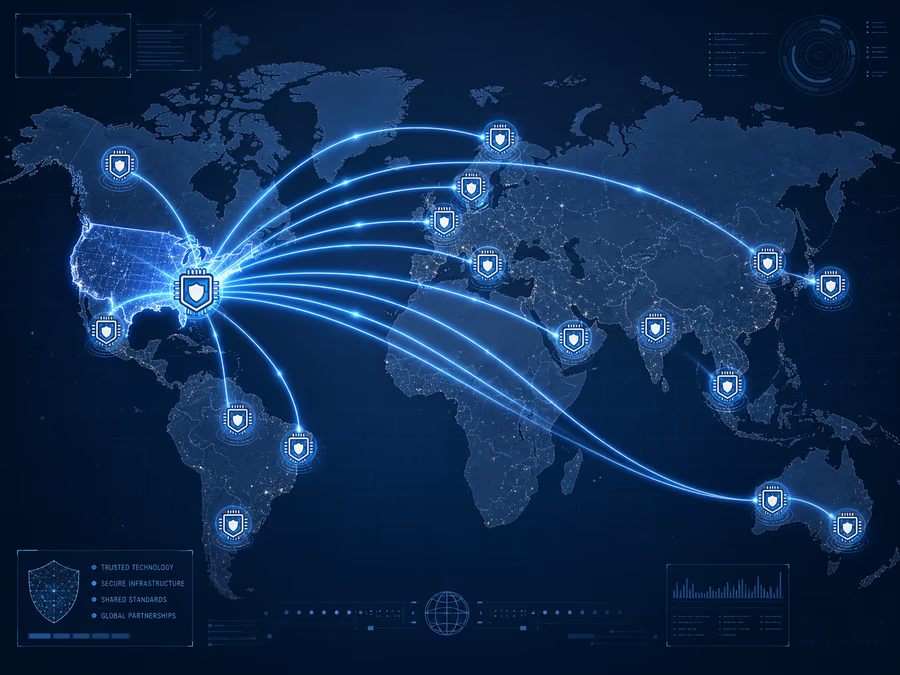
As the U.S. moves forward, the tension between economic nationalism and the reality of a globalized AI supply chain will likely remain the defining theme of 2026. The administration has successfully stimulated a domestic investment boom by lowering the barriers for essential hardware, but the long-term goal of total domestic self-sufficiency in AI manufacturing remains a distant, and incredibly expensive, prospect.