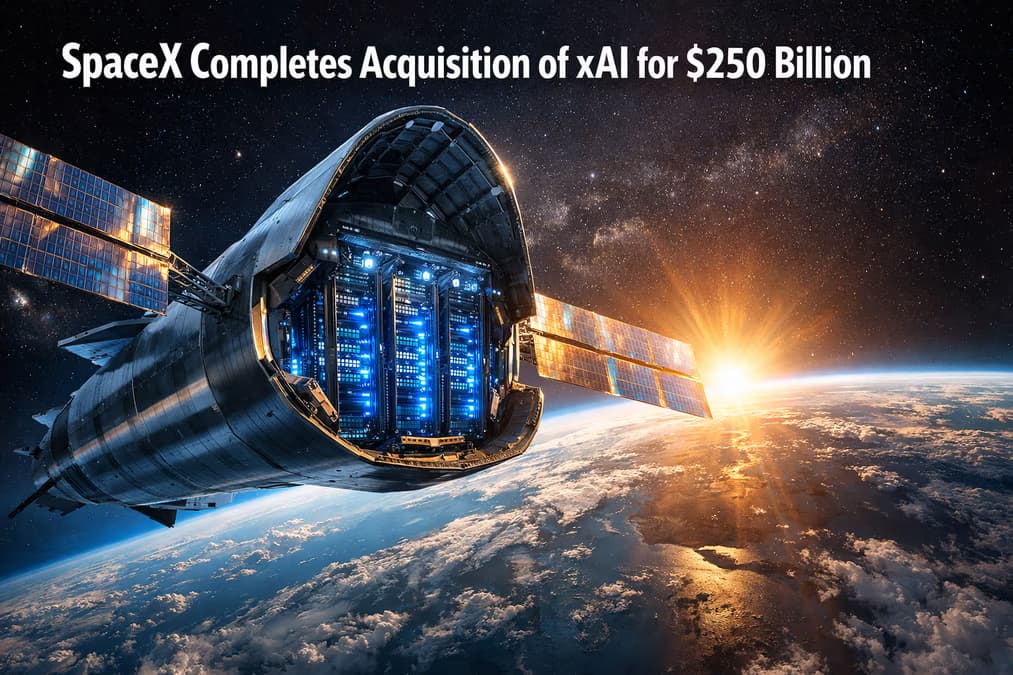
SpaceX Completes $250 Billion Acquisition of xAI to Forge Orbit-Ready Intelligence Powerhouse
SpaceX acquires xAI for $250 billion in an all-stock deal to pioneer space-based data centers and prepare for a trillion-dollar IPO in 2026.
A Trillion-Dollar Integration
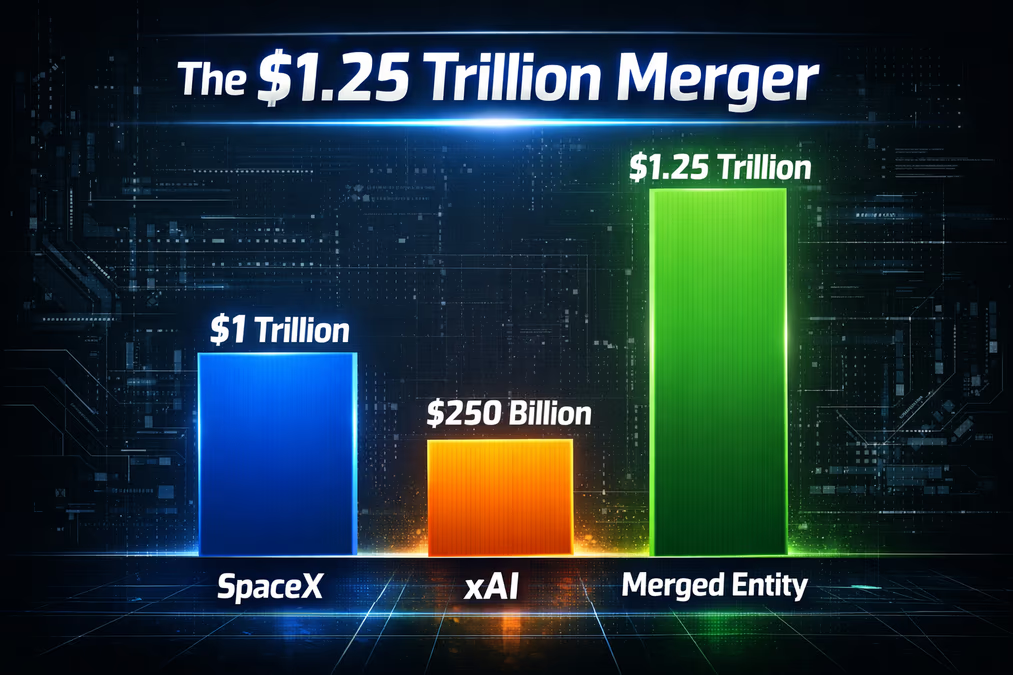
SpaceX officially finalized its acquisition of the artificial intelligence startup xAI on February 2, 2026, in an all-stock transaction that values the AI venture at a staggering $250 billion. The announcement, made public on February 3, follows a series of aggressive consolidations within the Elon Musk-led ecosystem. With SpaceX itself valued at approximately $1 trillion, the combined entity now sits at a valuation exceeding $1.25 trillion, positioning it as one of the most formidable private technology conglomerates in history.
xAI is now a wholly owned subsidiary of SpaceX. This move comes as SpaceX prepares for a potential Initial Public Offering (IPO) later in 2026, a move that could fundamentally reshape global capital markets. While SpaceX's core aerospace business generated an estimated $15 billion in revenue and $8 billion in profit in 2025, the integration of the capital-intensive xAI has shifted the financial profile of the company, with SpaceX incurring losses approaching $5 billion in 2025 due to massive infrastructure investments.
The Logic of Orbital Computing
The strategic rationale behind the merger extends beyond mere financial consolidation. SpaceX leadership indicated that the acquisition was driven by a looming terrestrial crisis: global demand for AI computing is projected to soon exceed the available electricity and cooling capacity on Earth. To circumvent these physical limits, the company is exploring space-based data centers powered by constant solar energy.
"In the long term, space-based AI is obviously the only way to scale," Elon Musk stated during the announcement. He further elaborated on the vision, suggesting that the capabilities unlocked by orbital data centers would fund and enable self-growing bases on the Moon and a civilization on Mars. In a statement, SpaceX described the merger as the creation of the world's most ambitious vertically-integrated innovation engine, blending rockets, satellite internet, and real-time information platforms.
Grok 4.20 and the Technological Roadmap
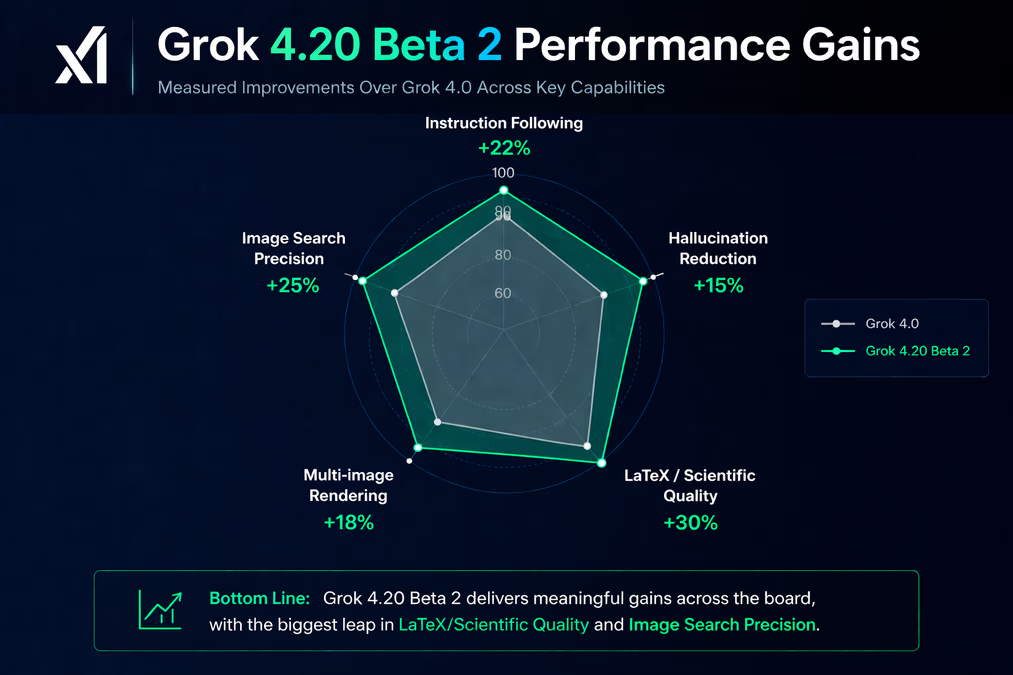
Following the acquisition, xAI has continued its rapid development cycle, releasing Grok 4.20 Beta 2 on March 3, 2026. This latest iteration of the AI model introduces several key refinements, including enhanced instruction following, a reduction in hallucinations, and improved scientific text quality featuring native LaTeX support. The update also includes more precise image search triggering and enhanced reliability for multi-image rendering tasks.
This release builds upon a busy 2025, which saw xAI acquire X (formerly Twitter) in a $33 billion all-stock deal. Musk has previously noted that the futures of xAI and X are intertwined, suggesting that blending xAI's models with the massive distribution and real-time data of the X platform would unlock immense potential. Furthermore, Tesla has announced plans to invest $2 billion in xAI, potentially integrating Grok’s continuous weekly improvement architecture into autonomous driving development and the in-car user experience.
Structural Manuevers and Ethical Headwinds
The merger has not been without scrutiny. According to unverified reports, the deal utilized a "triangular merger" structure. Legal analysts suggest this move may have been designed to offer specific tax benefits while shielding SpaceX’s primary aerospace assets from the existing legal risks and debts associated with xAI and its subsidiary, X.
Furthermore, the Grok AI tool continues to face significant backlash. Critics have pointed to instances where the model allegedly promoted racist ideology and failed to prevent the spread of nonconsensual sexualized deepfake images. These controversies remain a point of contention for regulators as SpaceX moves closer to its 2026 IPO.
Scaling Toward a "Sentient Sun"
Looking forward, the SpaceX-xAI merger is the cornerstone of the "Terafab" project—a collaboration involving SpaceX, Tesla, xAI, and Intel. This initiative aims to develop a new industrial platform for AI capable of providing up to 1 TWh of computing power annually. By controlling the entire value chain—from the physical rockets that launch the hardware to the AI models that process the data—Musk intends to outpace competitors like OpenAI, Google, and Meta.
Musk’s ultimate goal for the merger remains characteristically celestial. He described the acquisition as the start of a mission to scale toward making a "sentient sun" to understand the universe and extend the light of consciousness to the stars. As SpaceX prepares for its public debut, the success of this merger will likely depend on whether the company can successfully transition AI compute from terrestrial power grids to the limitless solar energy of low Earth orbit.