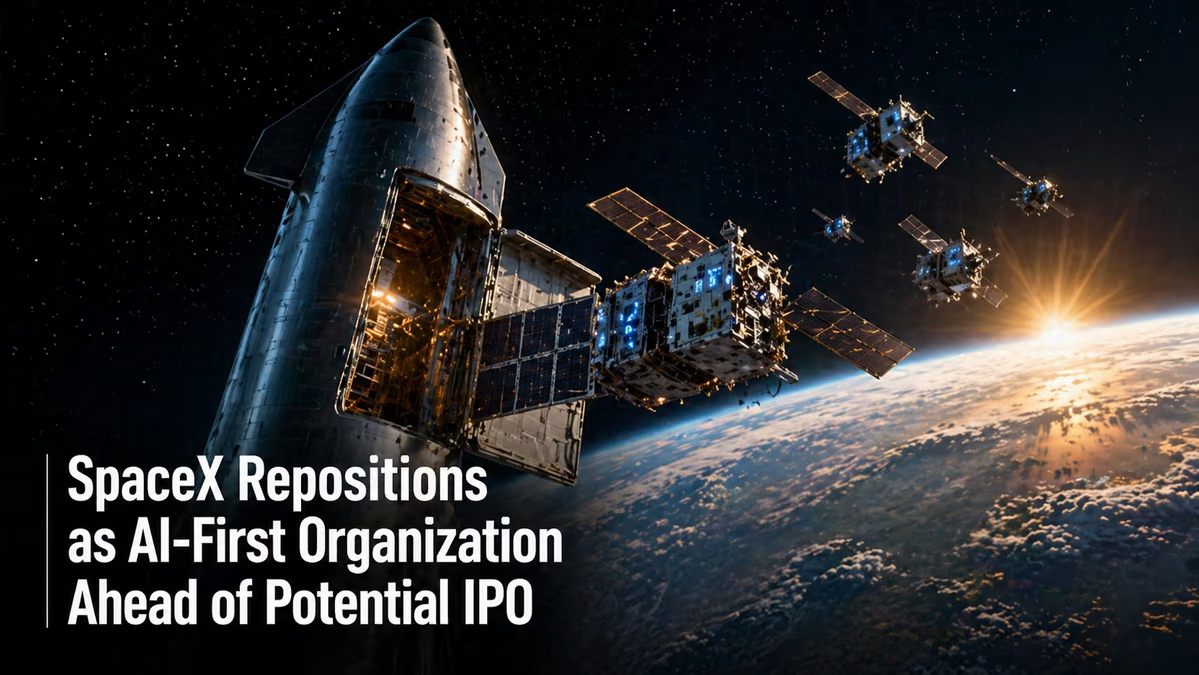
SpaceX Targets $1.75 Trillion Valuation in Strategic Pivot to 'AI-First' Powerhouse
SpaceX targets a $1.75 trillion IPO valuation as it pivots to an AI-first strategy, leveraging orbital data centers to scale compute power.
SpaceX has confidentially filed for an Initial Public Offering (IPO) with the U.S. Securities and Exchange Commission, a move that reveals the company’s radical transformation into what it terms an "AI-first" organization. This strategic repositioning, detailed in an S-1 filing reviewed by Reuters, sets the stage for a massive public debut anticipated in the summer of 2026. The company is targeting a valuation of approximately $1.75 trillion, with some internal projections stretching as high as $2 trillion, as it seeks to raise $75 billion from public markets.
The filing marks a departure from SpaceX’s traditional identity as a launch and satellite provider. Instead, the company is positioning itself as a vertically integrated AI infrastructure giant. This shift was cemented in February 2026 when SpaceX acquired xAI, Elon Musk's artificial intelligence venture, in an all-stock transaction. The merger valued the combined entity at $1.25 trillion, assigning $250 billion in value to the nascent AI unit.
The Economics of Orbital Intelligence
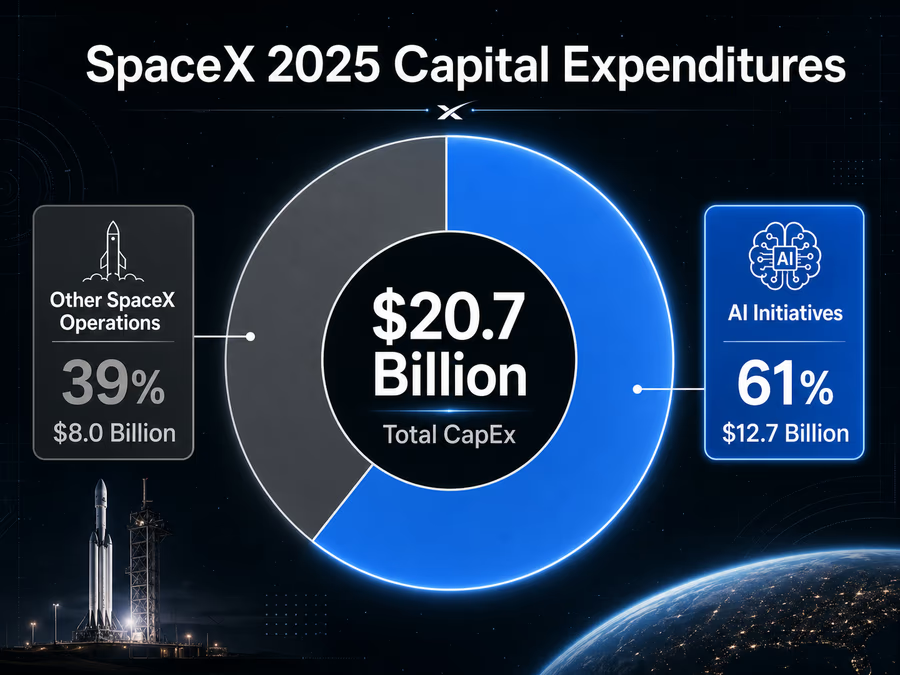
SpaceX’s pivot is backed by significant capital reallocation. In 2025, the company’s total capital expenditures reached $20.7 billion, with a striking $12.7 billion—roughly 61%—dedicated exclusively to AI initiatives. This aggressive spending is currently subsidized by the success of Starlink, which reported $11.4 billion in revenue and $4.4 billion in operating profit for the same year. However, the AI division remains in a heavy growth phase, reporting an operating loss of $6.4 billion in 2025, which contributed to a total company-wide operating loss of $4.9 billion.
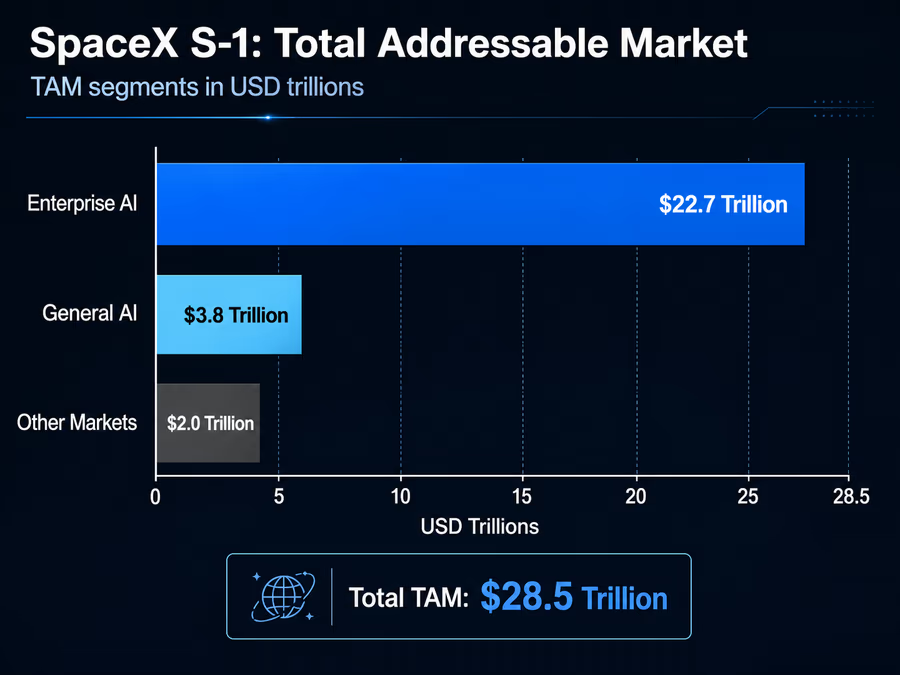
In its IPO documentation, SpaceX identifies a total addressable market (TAM) of $28.5 trillion. Crucially, the company attributes more than 90% of this—some $26.5 trillion—to AI, with $22.7 trillion specifically linked to enterprise AI solutions. "We believe we have identified the largest actionable total addressable market in human history," the company stated in the filing.
Solving the Terrestrial Compute Bottleneck
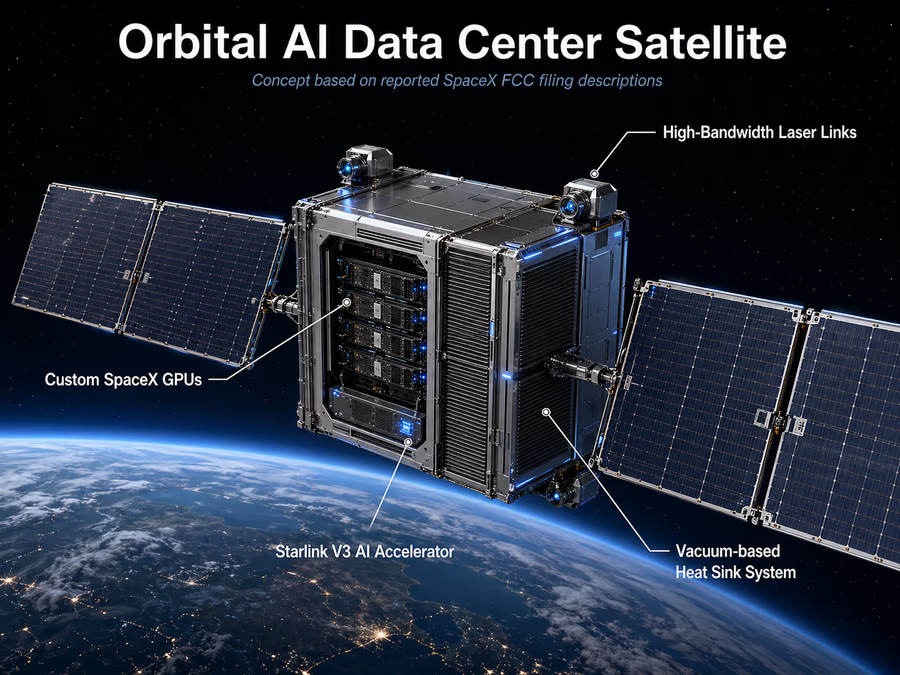
The core of the SpaceX AI strategy lies in its plan to move compute power off-planet. SpaceX has submitted an application to the Federal Communications Commission (FCC) to launch up to one million solar-powered orbital data center satellites. Elon Musk, CEO of SpaceX and xAI, believes that space-based AI is the only viable path to long-term scaling, given the increasing constraints on power, land, and cooling faced by terrestrial data centers. Musk estimates that within two to three years, space-based compute could become the most cost-effective method available.
Addressing the World Economic Forum in January, Musk noted that creating orbital AI data centers was a logical step that could become the cheapest option within a few years. He further emphasized the need for a fresh start for his AI efforts, stating, "xAI was not built right first time around, so is being rebuilt from the foundations up. Same thing happened with Tesla."
Strategic Acquisitions and Custom Hardware
Beyond orbital infrastructure, SpaceX is moving to secure the software and hardware components of the AI stack. The company has secured an option to acquire the AI coding startup Cursor for $60 billion later this year, or alternatively, pay $10 billion for a long-term collaboration. Michael Truell, CEO of Cursor, expressed excitement about the partnership, noting the ability to scale their model "Composer" using xAI’s Colossus infrastructure.
Furthermore, SpaceX intends to manufacture its own Graphics Processing Units (GPUs) to mitigate supply chain bottlenecks. This move towards vertical integration mirrors the company’s approach to rocket manufacturing and satellite design. SpaceX is also reportedly collaborating with Tesla on "Macrohard," an autonomous platform designed for enterprise agents.
Risks and Skepticism
Despite the lofty valuation, the company’s filing acknowledges significant hurdles. SpaceX explicitly warns investors that its plans for orbital AI compute and interplanetary industrialization are in "early stages" and involve "significant technical complexity and unproven technologies." The company admitted these initiatives "may not achieve commercial viability."
Financial analysts have also voiced caution. Melissa Otto, Head of Research at S&P Global Visible Alpha, noted that SpaceX currently resembles a "super-sized startup." Otto suggested that investors will require "clear visibility on how the business model evolves with this financing and whether it can make the economics of compute work at scale."
There are also operational concerns. xAI has seen the departure of all its original co-founders as of March 2026, leaving the division in a state of flux during its rebuilding phase. Additionally, experts have raised questions regarding the long-term feasibility of orbital cooling, the rapid obsolescence of space-bound GPUs, and the worsening problem of orbital debris.
A New Frontier for Markets
If the IPO proceeds in June as anticipated, it will likely be the largest in history. SpaceX plans to use a dual-class share structure, ensuring that Musk and a select group of insiders retain super-voting control over the company’s direction. This move signals that while the company is inviting public capital, its long-term vision remains firmly under the control of its leadership as they attempt to move the backbone of the digital economy into the stars.