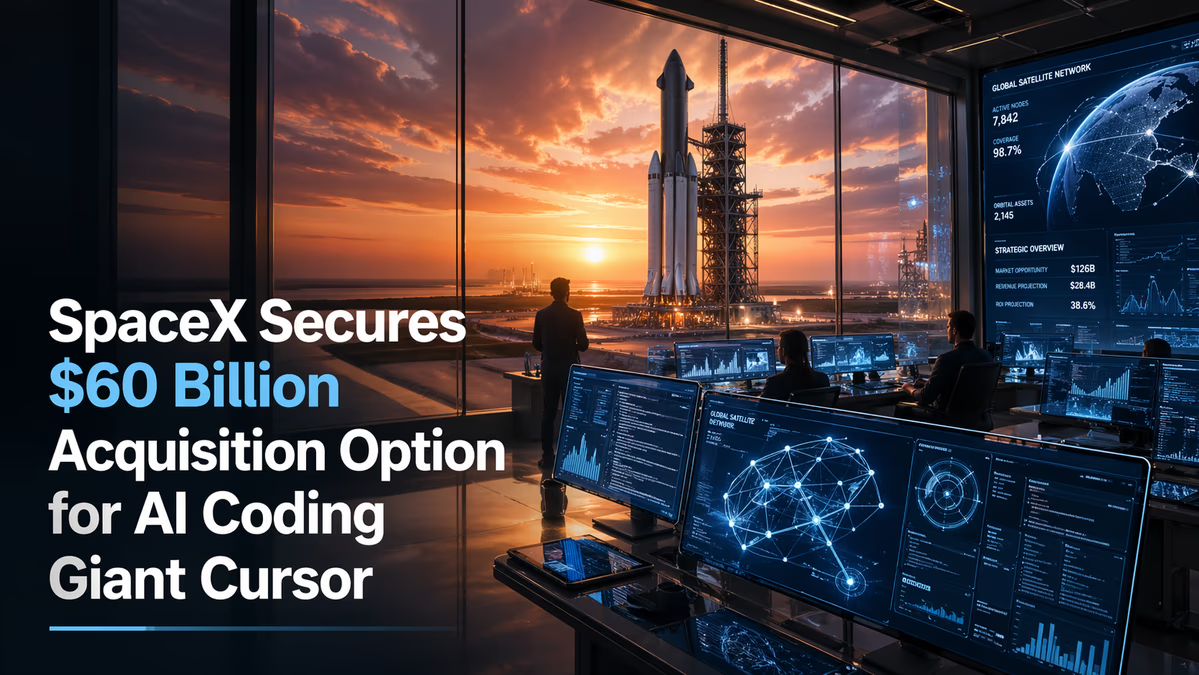
SpaceX Secures $60 Billion Acquisition Option for AI Coding Giant Cursor
SpaceX has partnered with AI startup Cursor, securing a $60 billion acquisition option to integrate advanced coding models with its Colossus supercomputer.
A Multi-Billion Dollar Strategic Pivot
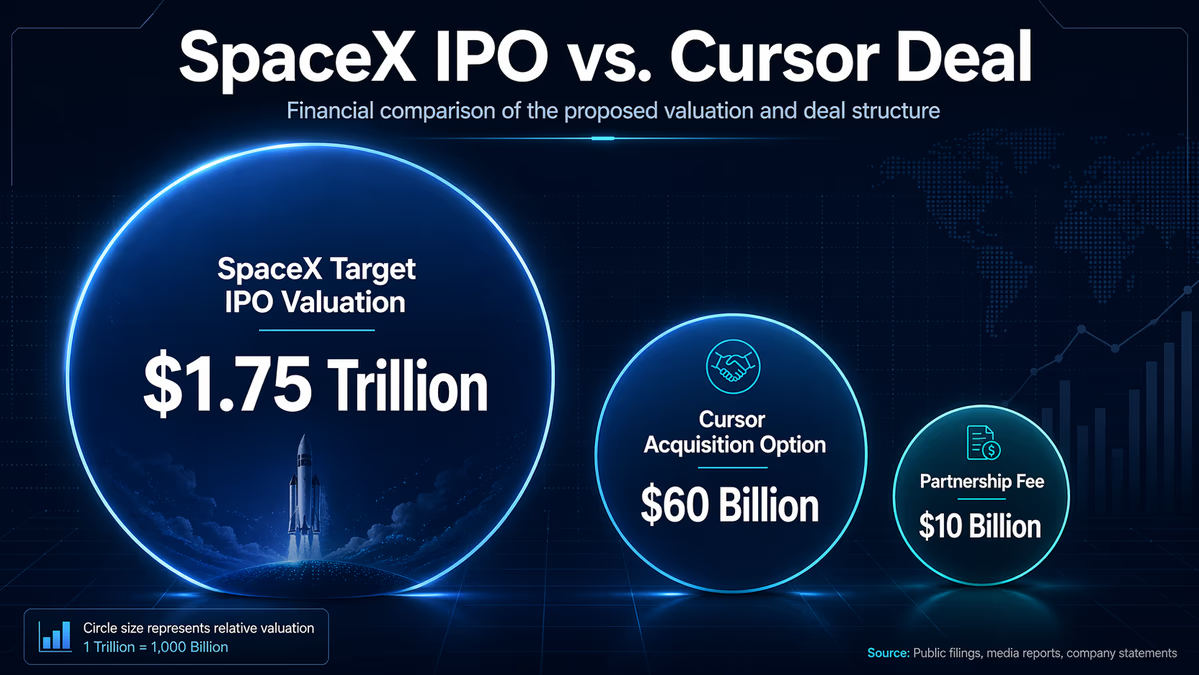
SpaceX announced a strategic partnership with the AI-native coding startup Cursor on April 21, 2026, marking one of the most significant consolidations of hardware and software talent in the history of the artificial intelligence industry. The deal includes a unique provision: SpaceX holds an option to acquire Cursor for $60 billion later this year. Should SpaceX choose not to proceed with the full acquisition, the company will instead pay a $10 billion fee for joint development work completed during the collaboration period.
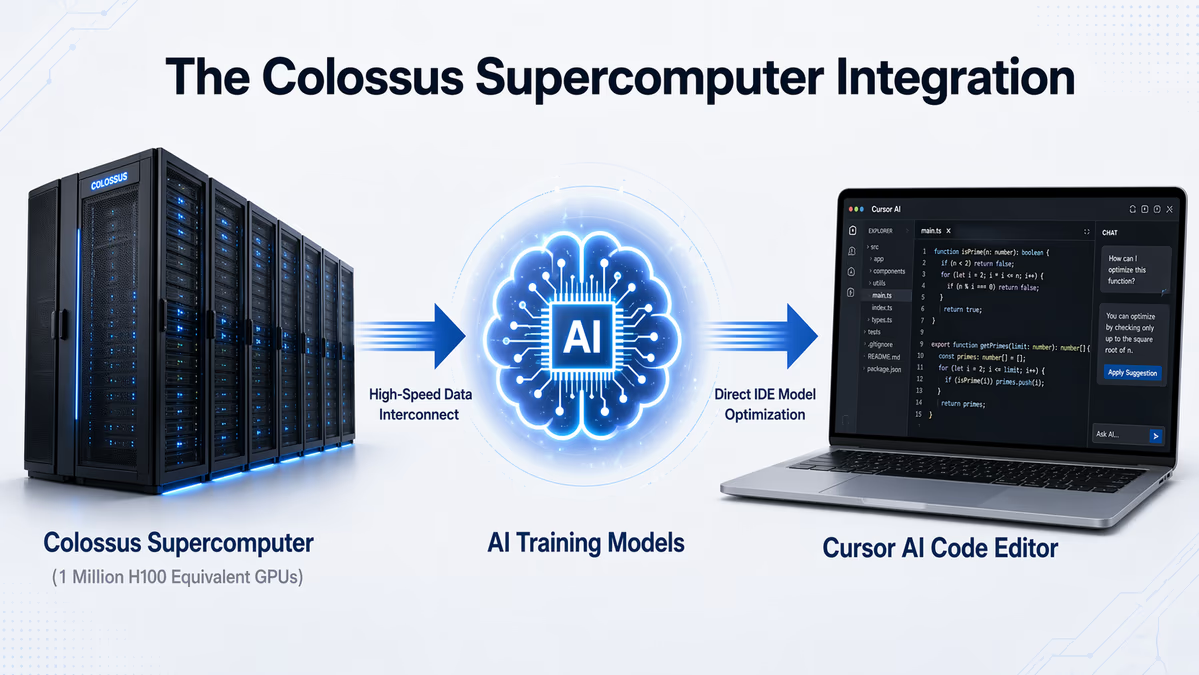
This move transforms SpaceX from a dominant aerospace and satellite communications provider into a vertically integrated AI powerhouse. By pairing Cursor’s AI-native code editing environment with the massive computational resources of the 'Colossus' supercomputer, SpaceX aims to accelerate the development of specialized AI models capable of high-level knowledge work and autonomous engineering.
The Power of Colossus and xAI
The technological backbone of this partnership is Colossus, a supercomputer cluster SpaceX acquired in February 2026 following its all-stock acquisition of Elon Musk’s AI venture, xAI. Currently recognized as the world’s largest AI training site, Colossus is targeting a capacity equivalent to one million Nvidia H100 GPUs.
In a social media statement, SpaceX noted, "The combination of Cursor's leading product and distribution to expert software engineers with SpaceX's million H100 equivalent Colossus training supercomputer will allow us to build the world's most useful models." This integration suggests that SpaceX is looking to move beyond general-purpose large language models (LLMs) to create a specialized stack where the software development environment is directly optimized by the world’s most powerful training hardware.
The Meteoric Rise of Cursor
Cursor, developed by Anysphere Inc., was founded in 2022 by four MIT classmates: Michael Truell, Sualeh Asif, Arvid Lunnemark, and Aman Sanger. The platform, which is a fork of Visual Studio Code, has rapidly become the preferred tool for professional developers seeking an AI-integrated development environment (IDE).
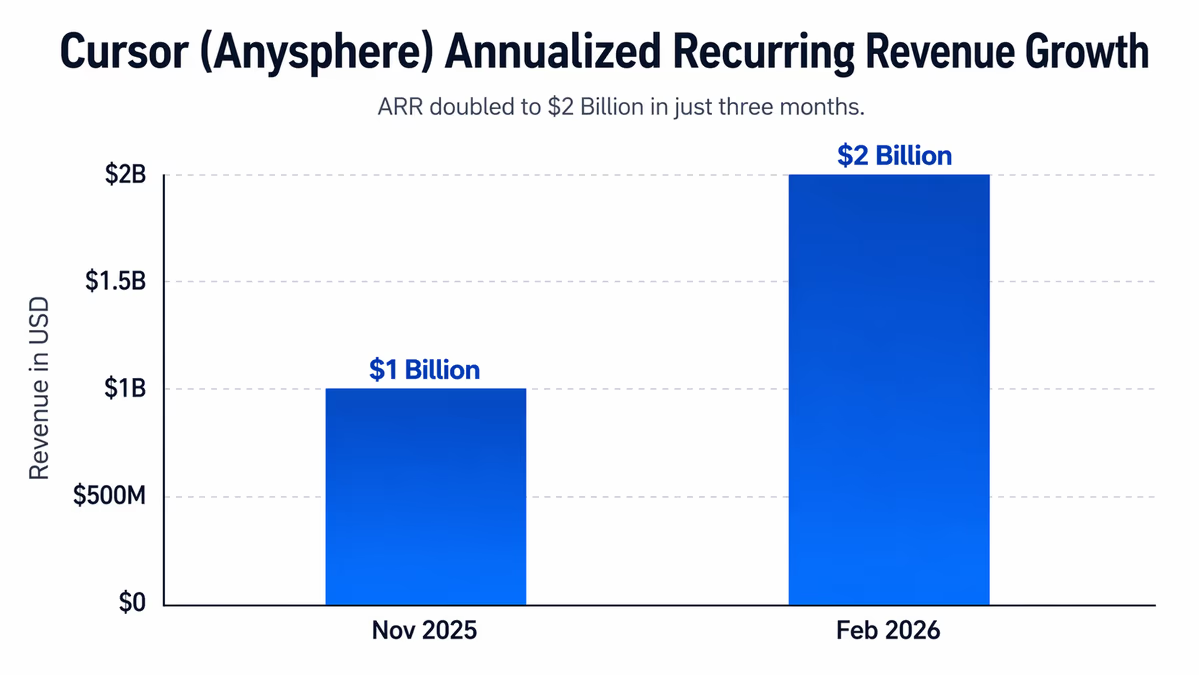
The company's financial growth has been nothing short of explosive. Cursor's valuation reached $29.3 billion in November 2025 following a $2.3 billion Series D funding round. Its financial performance followed a similar trajectory, with annualized recurring revenue (ARR) surpassing $1 billion in November 2025 and doubling to over $2 billion by February 2026.
"Excited to partner with the SpaceX team to scale up Composer," said Michael Truell, Co-founder and CEO of Cursor. "A meaningful step on our path to build the best place to code with AI." Oskar Schulz, President of Anysphere, echoed this sentiment, describing SpaceX as "the best company in the world when it comes to building computing capacity."
IPO Implications and Market Competition
The timing of this deal is critical. SpaceX is currently preparing for a massive initial public offering (IPO), potentially the largest in history, with a target valuation of $1.75 trillion and a goal to raise $75 billion. Incorporating a top-tier AI software division could significantly bolster investor confidence in SpaceX's long-term growth as a diversified technology conglomerate.
This partnership also positions SpaceX to compete directly with frontier AI labs. OpenAI, which recently relaunched its Codex agent, and Anthropic, with its Claude Code initiative, are both aggressively targeting the developer tool space. By securing Cursor, SpaceX effectively prevents competitors from acquiring one of the fastest-growing startups in the sector while gaining an immediate foothold in the high-value coding tools market.
Operational Synergy and Talent Migration
While the partnership was formally announced in April, signs of a deepening relationship appeared earlier. In March 2026, two former product engineering leads from Cursor, Andrew Milich and Jason Ginsberg, joined SpaceX to contribute to xAI and lunar projects. Furthermore, unverified reports suggest that xAI had already been planning to supply Cursor with substantial computing power prior to the formalization of the deal.
The structure of the agreement provides SpaceX with a rare degree of strategic flexibility. The $10 billion "collaboration fee" acts as a safeguard, allowing SpaceX to evaluate the effectiveness of the integration before committing to the full $60 billion purchase. This "try-before-you-buy" approach at a multi-billion dollar scale reflects the volatile and high-stakes nature of the current AI arms race.
Forward-Looking Implications
Looking ahead, the integration of Cursor into the SpaceX ecosystem could redefine the limits of autonomous engineering. If successful, the partnership may lead to AI models capable of managing the complex software requirements of Starship missions, Starlink network optimization, and even Tesla’s Optimus robotics program. As SpaceX approaches its public debut, the success of this $60 billion gamble will likely determine if the company can successfully transition from the leader of the New Space era to a dominant force in the age of Artificial General Intelligence.