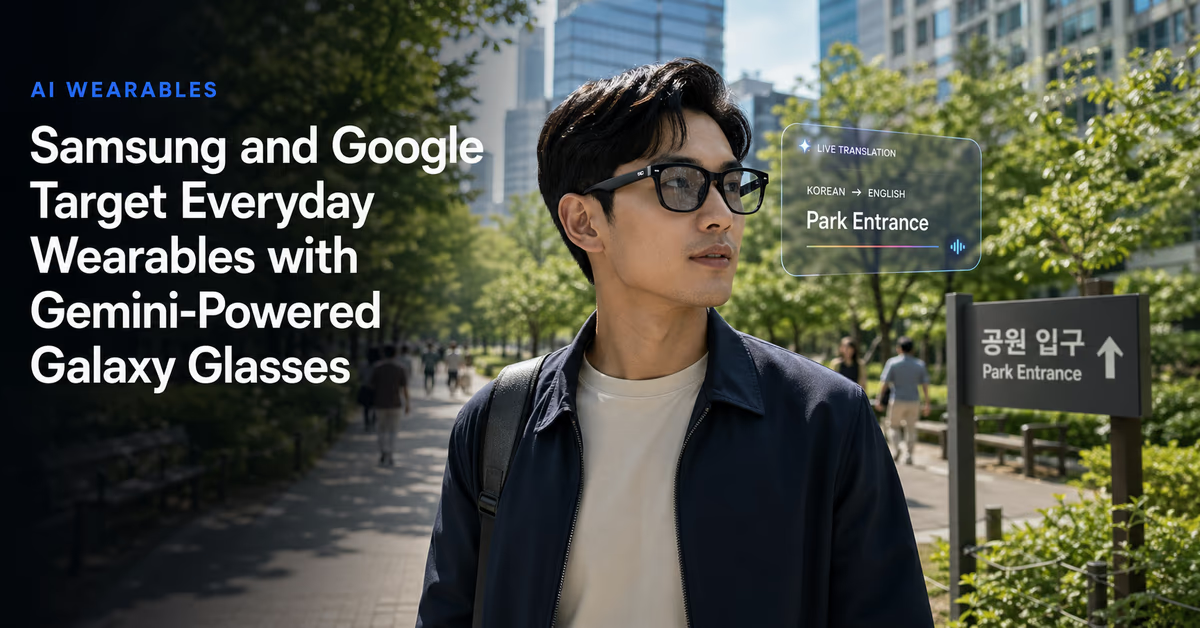
Samsung and Google Target Everyday Wearables with Gemini-Powered Galaxy Glasses
Samsung is developing AI-powered Galaxy Glasses featuring Google Gemini and Android XR, aiming to bring ambient computing to the mainstream by 2026.
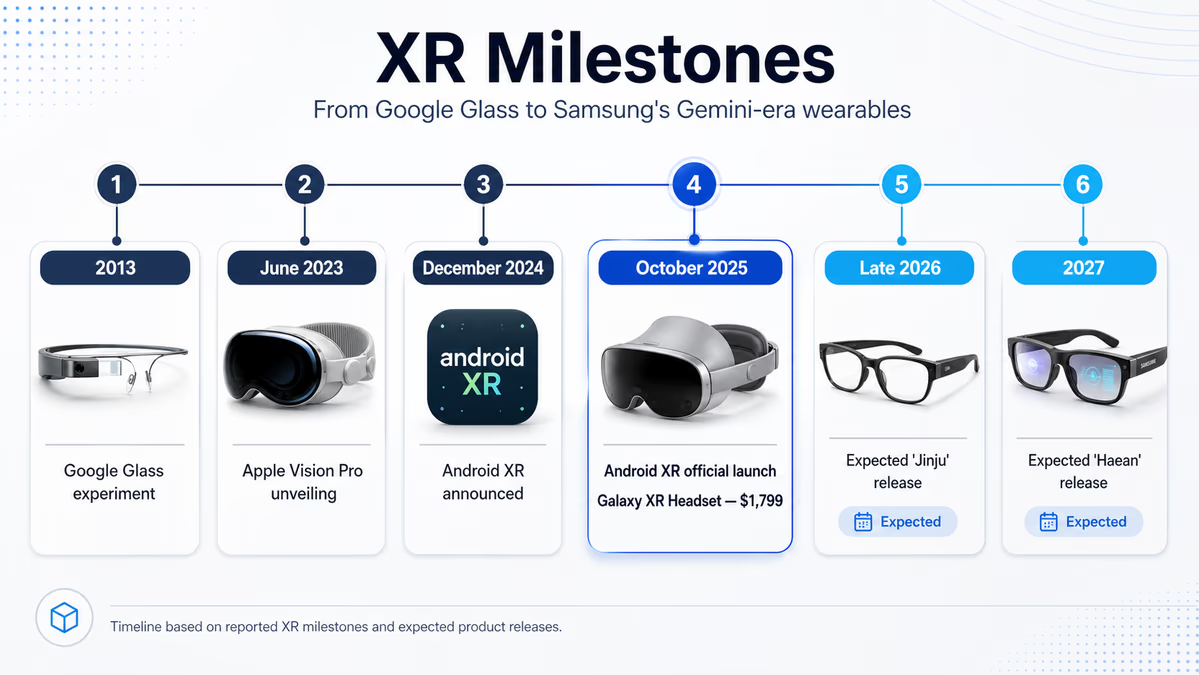
Samsung is moving beyond the bulky confines of traditional virtual reality with a strategic pivot toward AI-integrated smart glasses. Following the launch of the high-end Galaxy XR headset in October 2025, new reports and leaked firmware data suggest the Korean tech giant is readying a two-tier glasses lineup designed for daily use, powered by Google’s Android XR operating system and deeply integrated with the Gemini generative AI ecosystem.
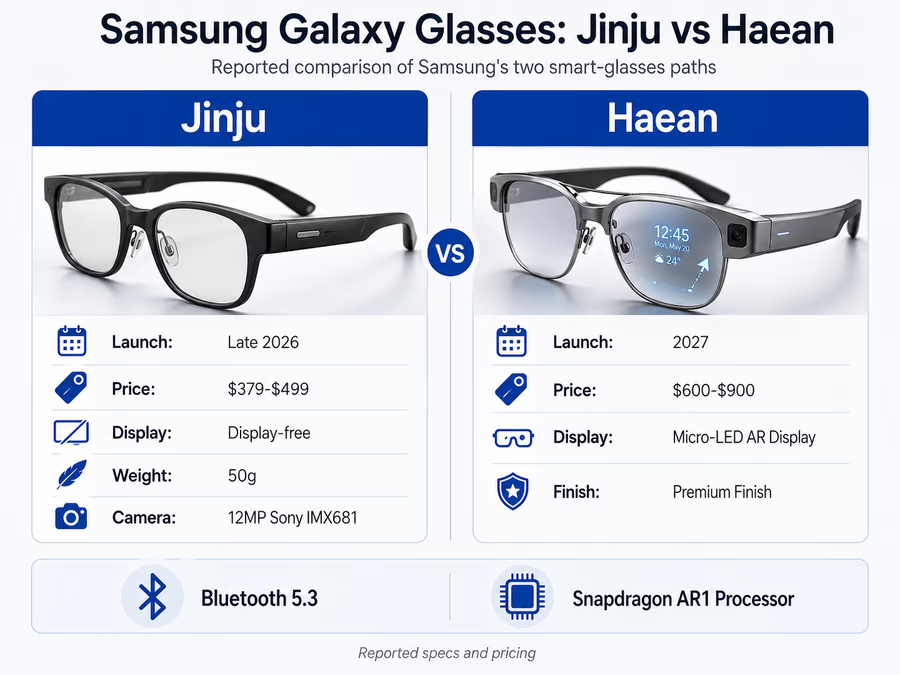
At the heart of this hardware push is Android XR, a platform officially launched in October 2025 as a collaborative effort between Google, Samsung, and Qualcomm. Sameer Samat, President of Android Ecosystem at Google, characterized the platform as the first built entirely for the "Gemini era." He noted that the partnership aims to "unlock entirely new ways to explore, connect and create, building an open, unified platform for the next evolution of computing."
The Two-Model Roadmap: 'Jinju' and 'Haean'
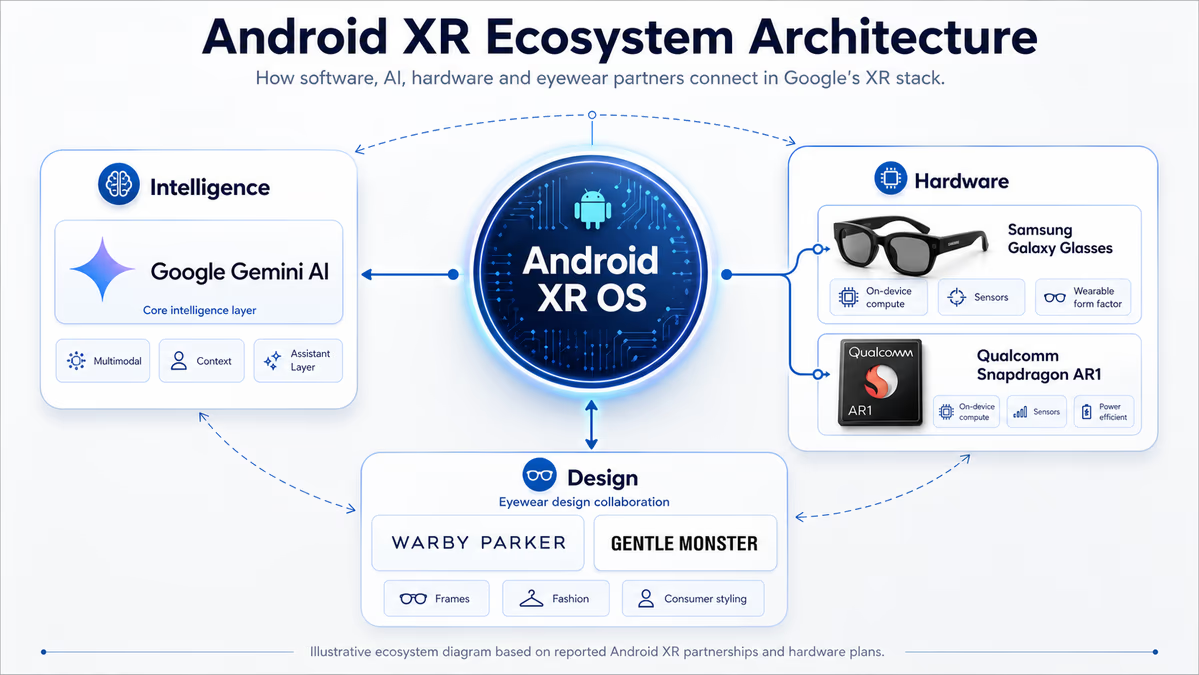
Leaked information, primarily sourced from @OnLeaks and early builds of Samsung’s One UI 9 firmware, indicates that Samsung is developing two distinct wearable models codenamed 'Jinju' and 'Haean.' The 'Jinju' model appears to be an entry-level, display-free design that prioritizes a lightweight aesthetic and audio-first AI interactions. According to unverified specifications, 'Jinju' will weigh approximately 50 grams and feature a 12MP Sony IMX681 camera, directional speakers, and the Qualcomm Snapdragon AR1 processor. With a rumored price point between $379 and $499, this model is expected to launch in late 2026, positioning it as a direct competitor to existing camera-equipped smart eyewear.
In contrast, the 'Haean' model is tipped for a 2027 release as a premium augmented reality (AR) offering. Reports suggest 'Haean' will feature an in-lens micro-LED display capable of projecting digital overlays, such as notifications or navigation prompts, directly onto the user's field of view. This advanced hardware is expected to command a higher price, rumored to fall between $600 and $900. Evidence for these devices is mounting; a dedicated 'Galaxy Glasses' icon has already been spotted in Samsung's software development pipeline.
Gemini AI: The Intelligent Core
The integration of Google’s Gemini AI is the defining feature of the Android XR experience. By leveraging the multimodal capabilities of Gemini, the Galaxy Glasses are expected to provide real-time sign translation, hands-free photography, and contextual assistance. This allows the glasses to "see" what the user sees, offering information about landmarks or identifying objects through the camera lens.
Samsung has also been reinforcing the physical design of these wearables. Patents filed throughout 2025 reveal work on an advanced hinge mechanism for improved long-term comfort and a specialized speaker system shielded against electromagnetic interference. These refinements underscore Samsung's focus on moving XR away from niche enthusiast hardware and toward mainstream fashion. To ensure the glasses appeal to a broad consumer base, Samsung is collaborating with established eyewear brands Warby Parker and Gentle Monster.
An Open Ecosystem vs. The Walled Garden
Google and Samsung are positioning Android XR as an open alternative to Apple’s Vision Pro ecosystem. Shahram Izadi, Google’s VP of AR and XR, emphasized that the strategy is not about a singular product but about building an adaptable platform. He and Sameer Samat have explicitly contrasted their approach with Apple’s "walled garden," suggesting that Android XR’s open-platform nature will foster a broader range of hardware innovations from multiple manufacturers.
This open philosophy is reflected in Google’s own development of Project Astra, a smart glasses initiative demonstrated in late 2025. Like the Samsung models, Project Astra runs on Android XR and utilizes Gemini AI. While Google has not yet confirmed a specific release date for Astra, it serves as a blueprint for the diverse hardware tiers—ranging from audio-only to full AR displays—that the Android XR ecosystem will eventually support.
Challenges and Industry Impact
The road to smart glasses has been fraught with historical missteps. Even Google co-founder Sergey Brin recently admitted that previous efforts, such as the original Google Glass in 2013, suffered from poor timing. However, the maturation of generative AI may be the missing piece of the puzzle. James Choi, EVP and Head of XR R&D at Samsung Electronics, stated that the vision for XR extends beyond hardware, focusing instead on a "secure, scalable ecosystem informed by our users."
The focus on enterprise utility is also a key part of the strategy. David Still, VP of Android Enterprise at Google, noted that bringing the trusted Android security framework to spatial computing allows IT professionals to manage XR devices with the same reliability they bring to smartphones.
As the industry shifts toward ambient computing, the success of the Galaxy Glasses will likely depend on whether the AI experience is compelling enough to justify wearing the hardware daily. By combining Samsung's manufacturing scale with Google’s AI prowess, the two companies are betting that the future of the smartphone is not in our pockets, but on our faces.