Robinhood Fund Injects $75 Million into OpenAI, Bridging the Retail-Private Equity Divide
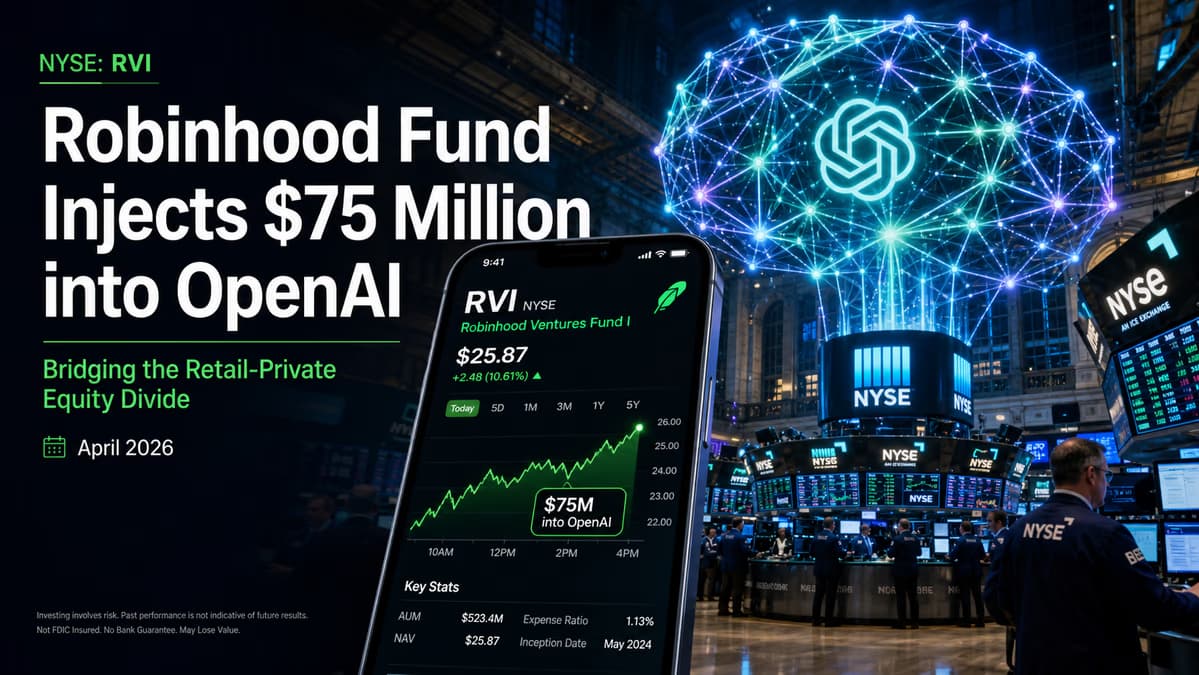
Robinhood Ventures Fund I secures a $75 million stake in OpenAI, offering retail investors rare access to the private AI giant's equity via the NYSE.
Robinhood Ventures Fund I (RVI) has finalized a $75 million purchase of OpenAI common stock, marking a significant entry into the world’s most watched artificial intelligence startup. The transaction, which was finalized on April 17, 2026, and officially announced by the fund on April 22, 2026, signals a strategic pivot in how everyday investors can gain exposure to high-growth tech companies that have traditionally remained the exclusive domain of venture capital and institutional titans.
Robinhood Ventures Fund I is a closed-end fund that began trading on the New York Stock Exchange under the symbol RVI on March 6, 2026. Unlike traditional venture capital vehicles that require accreditation or massive investment minimums, RVI is designed to provide retail investors with access to a concentrated portfolio of private companies. This $75 million stake in OpenAI represents one of the fund's largest investments to date.
Democratizing the AI Frontier
In a statement regarding the acquisition, Sarah Pinto, President of Robinhood Ventures Fund I, emphasized the strategic importance of the deal. "OpenAI is one of the frontier artificial intelligence companies, and we are incredibly proud to add them to the Fund," Pinto said. She further noted that the investment underscores the fund's core mission to provide everyday investors with access to transformative companies that are shaping the future.
The investment arrives at a time when OpenAI’s market footprint is expanding rapidly. While the company is famously dedicated to ensuring artificial general intelligence benefits all of humanity, its capital requirements have led to a complex web of funding. Recent reports suggest OpenAI has sold approximately $3 billion in shares to wealthy individual clients through major banking institutions, but the RVI deal offers a more accessible path for the public to participate in that growth via a liquid, NYSE-traded security.
A Structural Shift in the Markets
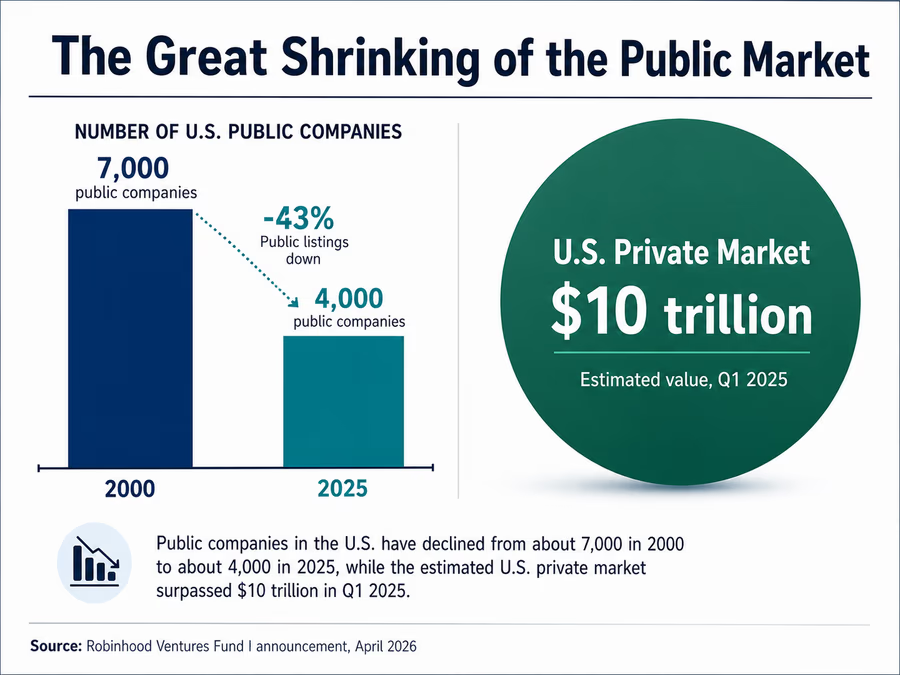
The move by Robinhood is a direct response to a fundamental shift in the American economy: companies are staying private much longer than they did at the turn of the millennium. In 2000, there were approximately 7,000 publicly traded companies in the U.S.; by 2025, that number had fallen to about 4,000. Meanwhile, the private market has ballooned. As of April 2024, there were more than 6.5 times as many private companies as public ones, with their estimated total value in the U.S. surpassing $10 trillion in early 2025.
For retail investors, this trend has historically meant missing out on the most explosive growth phases of tech giants. By the time a company like OpenAI potentially hits the public markets, much of the valuation spike has often already occurred in the private sector. Robinhood’s strategy aims to bridge this gap, allowing RVI shareholders to hold a piece of companies like OpenAI, Stripe, and Databricks while they are still privately held.
Valuation and Portfolio Context
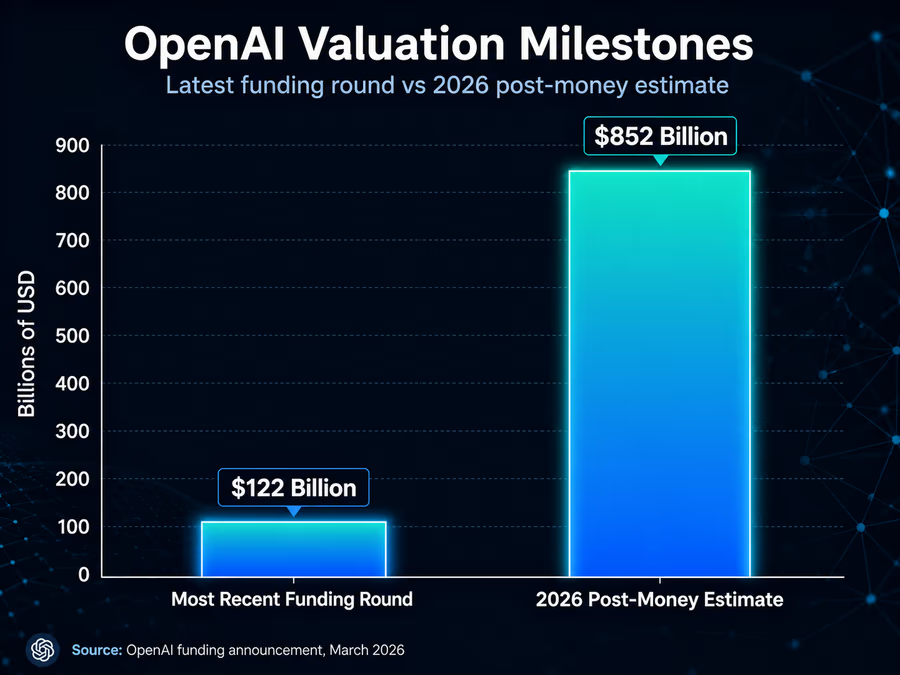
OpenAI’s valuation remains a subject of intense market scrutiny. During its most recent formal funding round, the company was valued at $122 billion. However, some market indicators and unconfirmed reports from earlier in 2026 have suggested a post-money valuation as high as $852 billion, reflecting the massive expectations placed on generative AI technologies. By securing common stock, RVI positions its investors directly within this valuation trajectory.
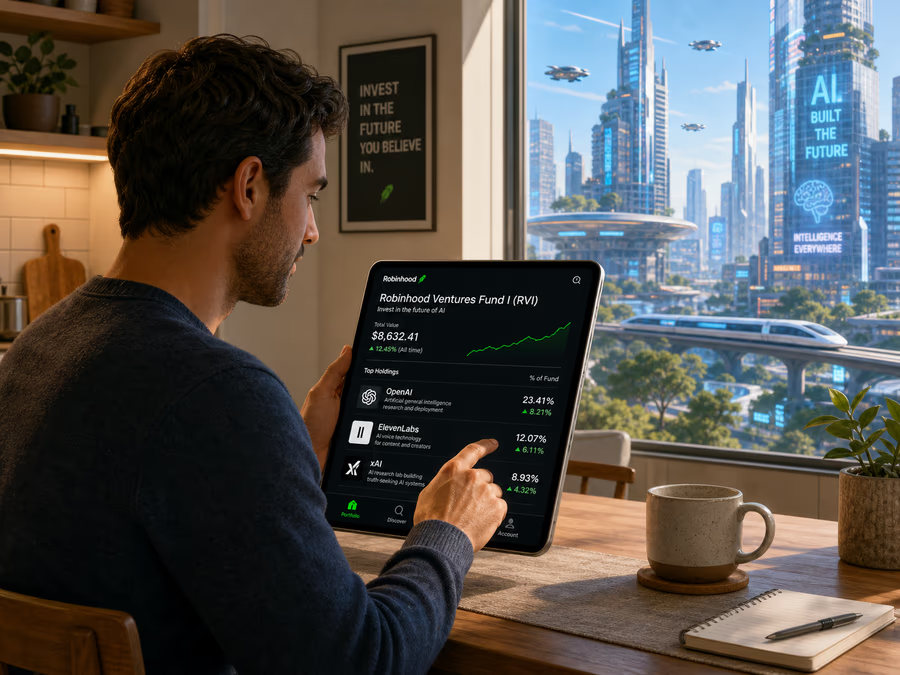
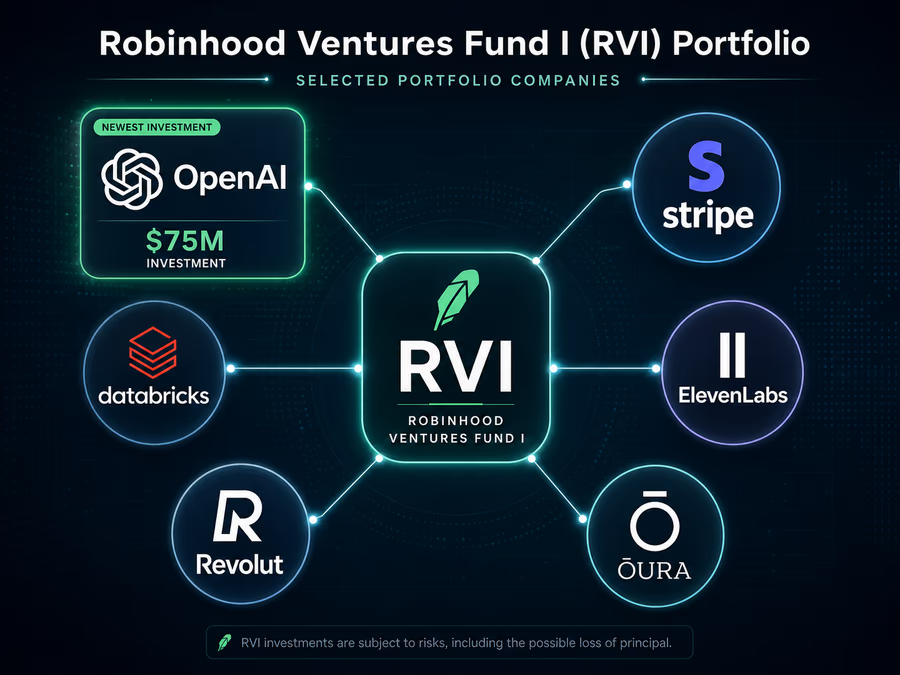
OpenAI joins an RVI portfolio that already reads like a "who’s who" of the modern tech ecosystem. The fund’s current holdings include fintech leaders like Stripe, Revolut, and Airwallex, as well as AI and data heavyweights like Databricks and ElevenLabs. Other niche but high-impact names in the portfolio include aerospace company Boom, work-management platform Mercor, and health-tech firm Oura.
Looking Ahead
The long-term roadmap for OpenAI remains centered on its massive capital needs. CEO Sam Altman has previously indicated that a public offering is the most likely eventual path forward for the company, given the sheer scale of investment required to develop and scale frontier AI models. Until that day comes, the RVI investment provides a rare "side door" for the retail public.
As the number of public companies continues to dwindle, the success of vehicles like RVI may determine whether the wealth generated by the AI revolution remains concentrated among the ultra-wealthy or is shared across a broader demographic of investors. For now, Robinhood has placed a $75 million bet that the future of AI—and the future of retail investing—are inextricably linked.