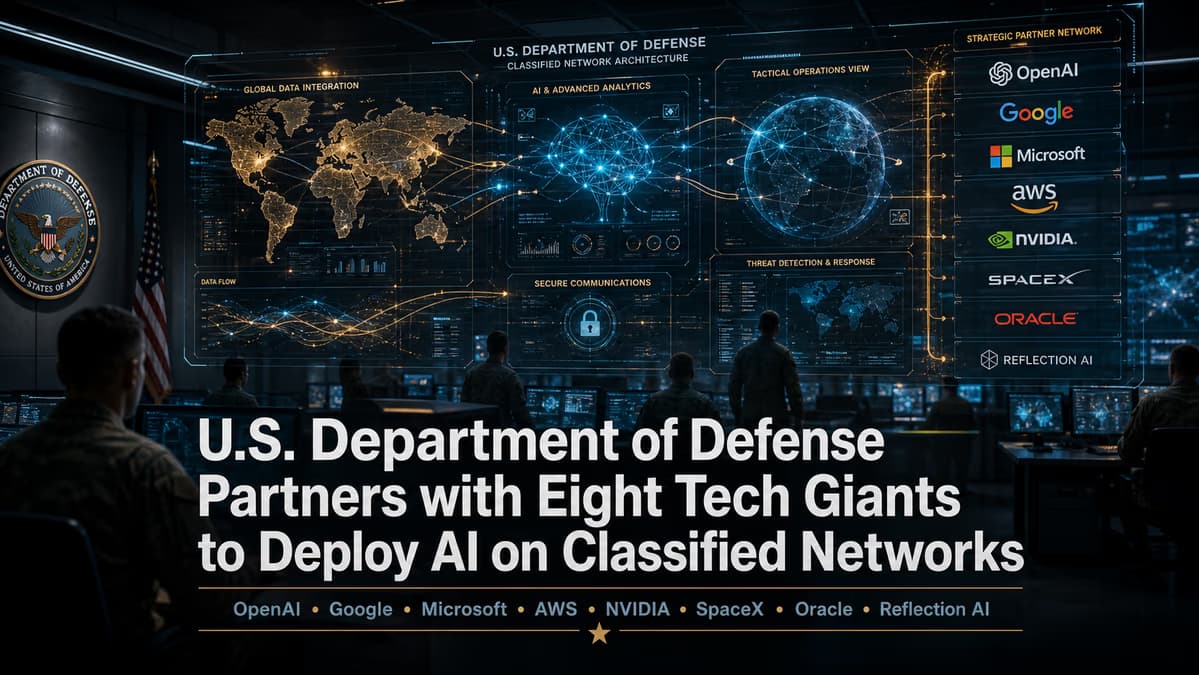
Pentagon Broadens AI Arsenal: Eight Tech Giants to Deploy Advanced Models on Classified Networks
The U.S. Department of Defense has partnered with eight tech giants to deploy advanced AI on classified networks, marking a shift to an AI-first military.
A New Era of Classified AI Operations
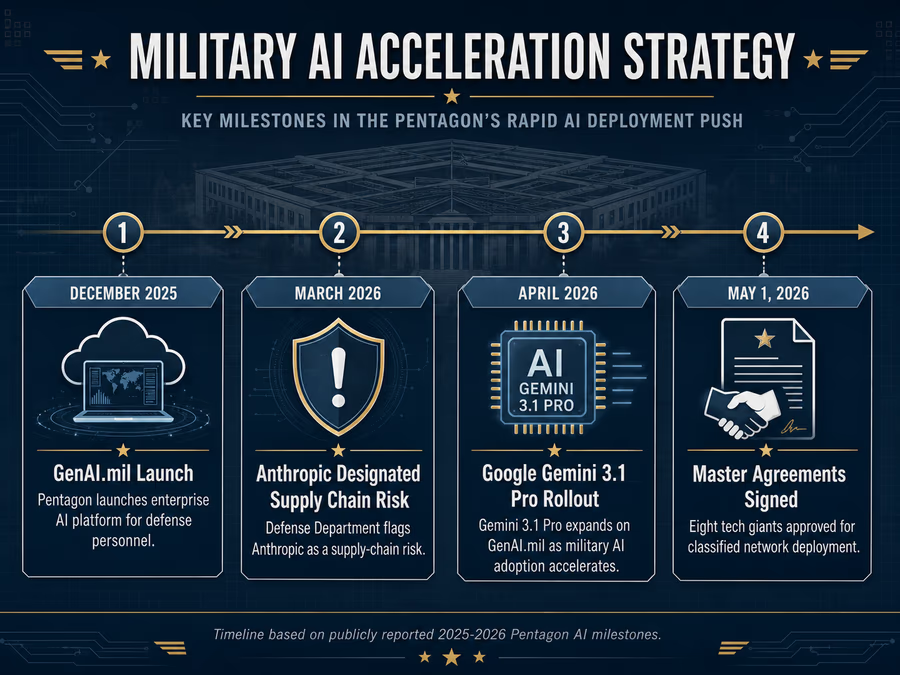
On May 1, 2026, the U.S. Department of Defense formalized agreements with eight of the world’s most prominent technology firms to integrate frontier artificial intelligence into the military's most sensitive classified networks. This strategic expansion marks a significant milestone in the Pentagon's "AI Acceleration Strategy," an initiative designed to transition the American military into what officials describe as an "AI-first fighting force."
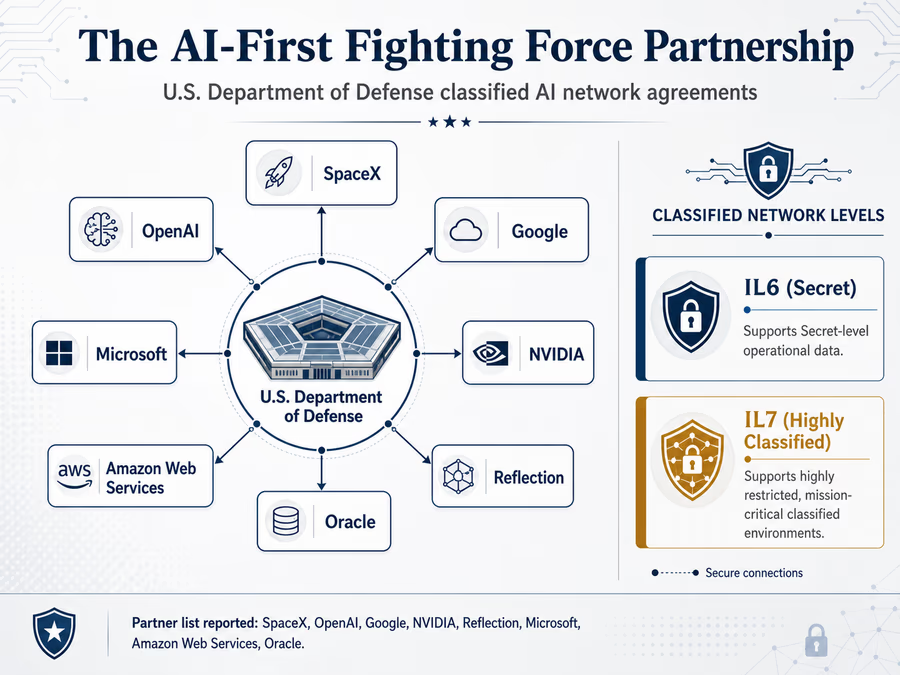
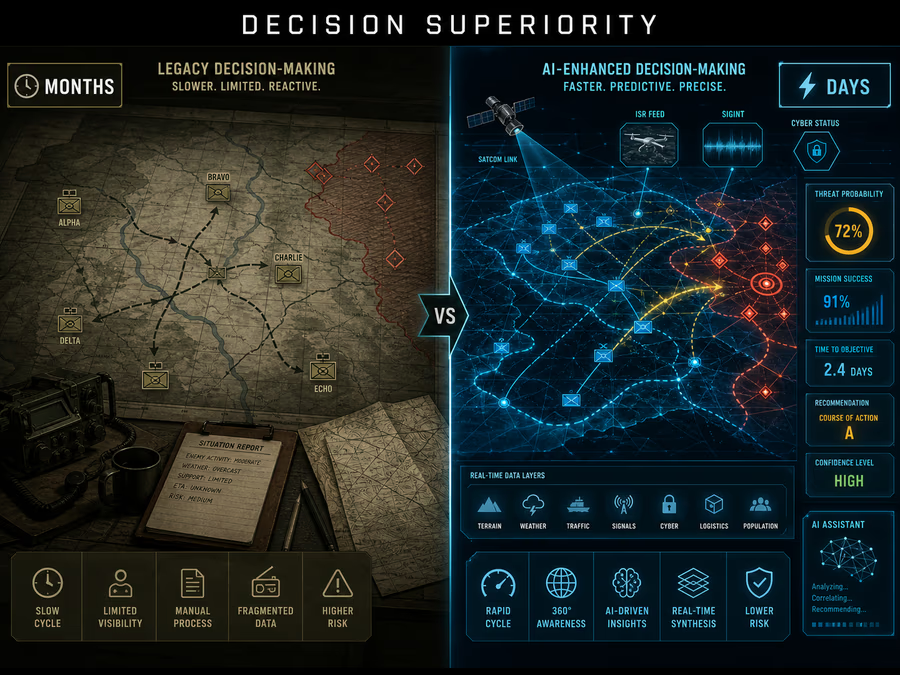
The list of partner companies includes SpaceX, OpenAI, Google, NVIDIA, Reflection, Microsoft, Amazon Web Services (AWS), and Oracle. These agreements authorize the deployment of advanced foundational models directly into Impact Level 6 (IL6) and Impact Level 7 (IL7) network environments. IL6 networks are reserved for secret-level data, while IL7 is a semi-official designation for the department’s most highly classified and sensitive systems. By bringing frontier AI—the most capable, large-scale models available—into these air-gapped or highly restricted environments, the DoD aims to maintain what leaders call "decision superiority" across all domains of modern warfare.
Diversifying the Tech Stack
One of the primary drivers behind this multi-vendor approach is the desire to avoid "AI vendor lock," a situation where the military becomes overly dependent on a single company's architecture or proprietary tools. By partnering with eight different entities, the Pentagon is building a resilient, diversified American technology stack.
Emil Michael, the Pentagon’s chief technology officer, explained to CNBC that relying on a single provider would have been a strategic error. He noted that the military is actively equipping personnel with a suite of AI tools to maintain an unfair advantage and achieve absolute decision superiority. This diversification is also seen as a direct response to recent friction with Anthropic, which was previously the sole provider for these sensitive environments.
Anthropic was notably excluded from this new round of agreements. The company has been at the center of a public dispute with the Department of War—a term used for the DoD under the current administration—following reports that it insisted on strict ethical guardrails. According to department records, these constraints would have limited the military’s ability to use Anthropic’s models for autonomous weapons systems and mass surveillance. This led Defense Secretary Pete Hegseth to designate Anthropic a "supply chain risk," prompting an executive order to cut ties. While a federal judge has since issued an injunction against that ban, the new eight-company coalition ensures the military has ample alternatives.
Practical Use and Rapid Adoption
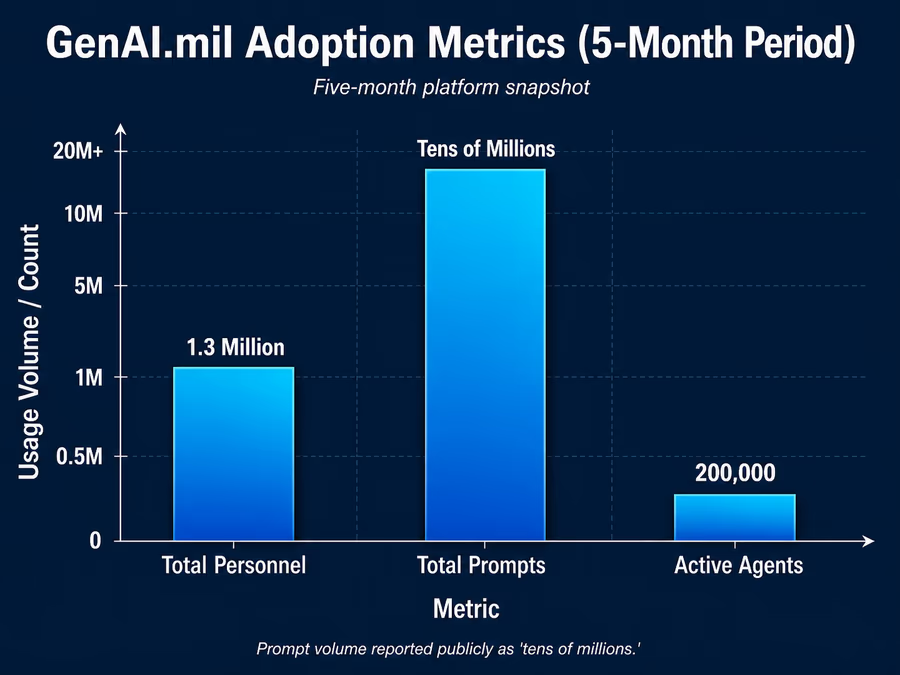
While the IL6 and IL7 deployments represent the high-water mark of classification, AI is already deeply embedded in daily military operations through GenAI.mil. Launched in late 2025, this official platform has seen explosive growth. In just five months, over 1.3 million DoD personnel—including warfighters, civilians, and contractors—have utilized the system, generating tens of millions of prompts and deploying hundreds of thousands of autonomous agents.
The Pentagon reports that these tools are already yielding tangible results in logistics, data synthesis, and situational awareness. Officials stated that personnel are putting these capabilities to use right now, and tasks that previously took months are being completed in days. The integration of the new eight partners into higher classification levels is intended to replicate this efficiency in the context of active, secret-level combat and intelligence operations.
Corporate Commitments and Oversight
The participating companies have expressed varying degrees of enthusiasm regarding their roles in national defense. A statement from OpenAI emphasized the company's belief that those defending the United States should have access to the world's best tools. Meanwhile, spokespeople for Microsoft and AWS highlighted the ongoing dialogue between the private sector and the military regarding safety and ethics.
Microsoft spokeswoman Kate Frischmann mentioned that the company had engaged in constructive conversations with officials to ensure the agreement properly protects human oversight of autonomous weapons and the privacy of the American public. Similarly, Amazon Web Services spokesman Tim Barrett noted the company’s decade-long commitment to military modernization, stating that AWS looks forward to continuing its support for critical missions through AI solutions.
Forward-Looking Implications
This widespread integration of AI into the core of the U.S. defense apparatus suggests a profound shift in the nature of conflict. As the military moves toward an AI-first posture, the speed of synthesis and decision-making will likely become the defining metric of success on the battlefield. For the AI industry, these contracts represent a massive validation of "frontier AI" as a critical national utility, though the exclusion of Anthropic serves as a stark reminder of the ethical tightrope these companies must walk.
As these tools move from unclassified administrative tasks to the "secret" and "highly classified" realms of IL6 and IL7, the focus will likely shift from mere efficiency to operational lethality and strategic foresight. The Pentagon's move to secure a broad, resilient supply chain of AI indicates that the race for algorithmic dominance is no longer just a commercial competition, but a cornerstone of national security strategy.