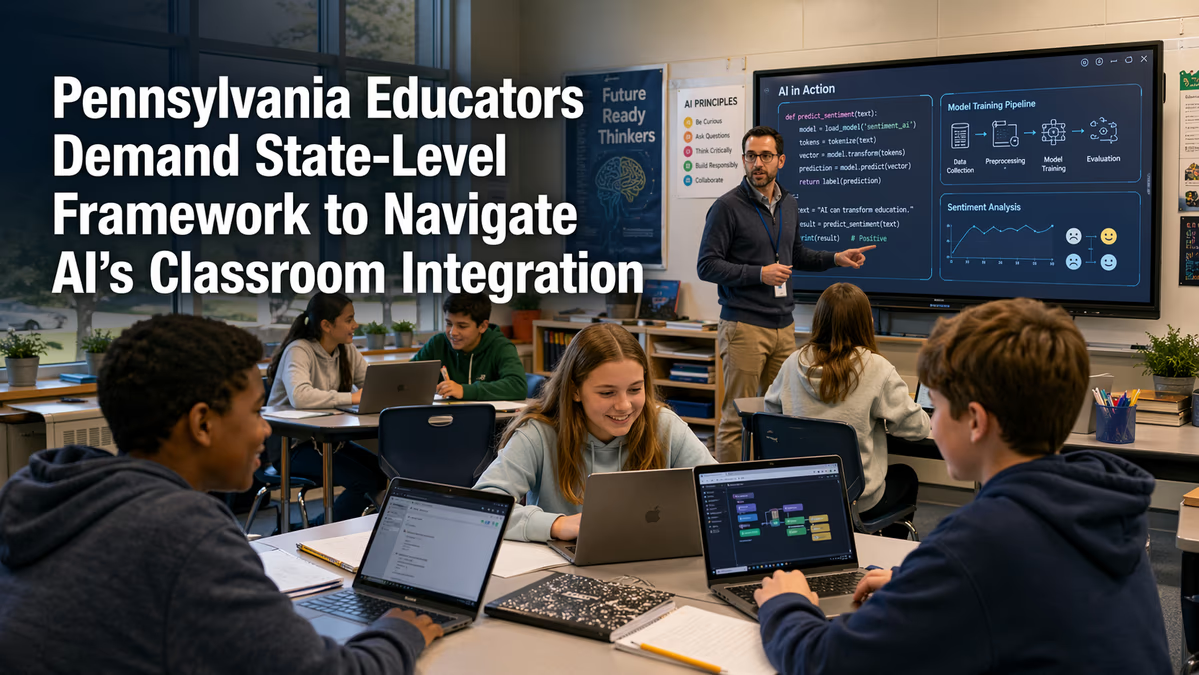
Pennsylvania Educators Demand State-Level Framework to Navigate AI’s Classroom Integration
Pennsylvania educators are urging state lawmakers to establish a comprehensive AI policy framework to ensure ethical and equitable classroom integration.
Educators Take the Lead in Pittsburgh
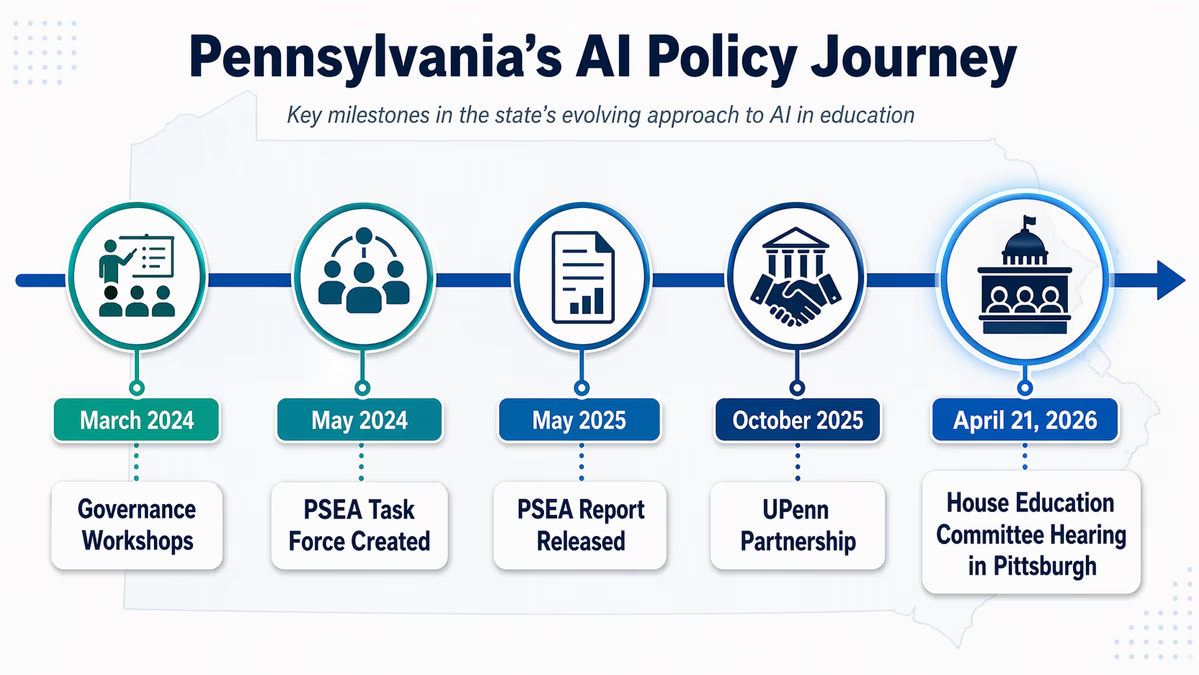
School administrators and teachers from across Pennsylvania converged on Pittsburgh on April 21, 2026, to deliver a clear message to the state House Education Committee: the era of individual districts navigating artificial intelligence in isolation must end. During the high-stakes hearing, witnesses described a rapidly shifting educational landscape where the pace of technological advancement is outstripping the development of guardrails.
Mark Stuckey, Chief Technology Officer for Pittsburgh Public Schools, was blunt in his testimony. "Pittsburgh Public Schools should not have to figure this out alone, and neither should other districts," Stuckey stated, highlighting the administrative burden placed on local systems forced to develop their own complex technical and ethical standards without a centralized roadmap.
Learning from the Social Media Legacy
The push for a state-level framework is driven by a desire to avoid the mistakes of previous technological shifts. Educators at the hearing frequently drew parallels to the emergence of social media, which permeated the lives of students long before schools or regulators had established safety and usage protocols.
"We've seen what happens when technology outpaces guidance as it did with social media," warned Melissa Costantino-Poruben, a sixth-grade math teacher at Avonworth Middle School and NEA Director for the Pennsylvania State Education Association (PSEA). "This time, we must be proactive."
Costantino-Poruben emphasized that the goal is not to block technology, but to master it. She argued that schools must take an active role in creating a generation of responsible AI users, requiring a unified effort from elected officials, policymakers, and educators to ensure a human-centered approach to generative AI tools.
A Growing National and State Momentum
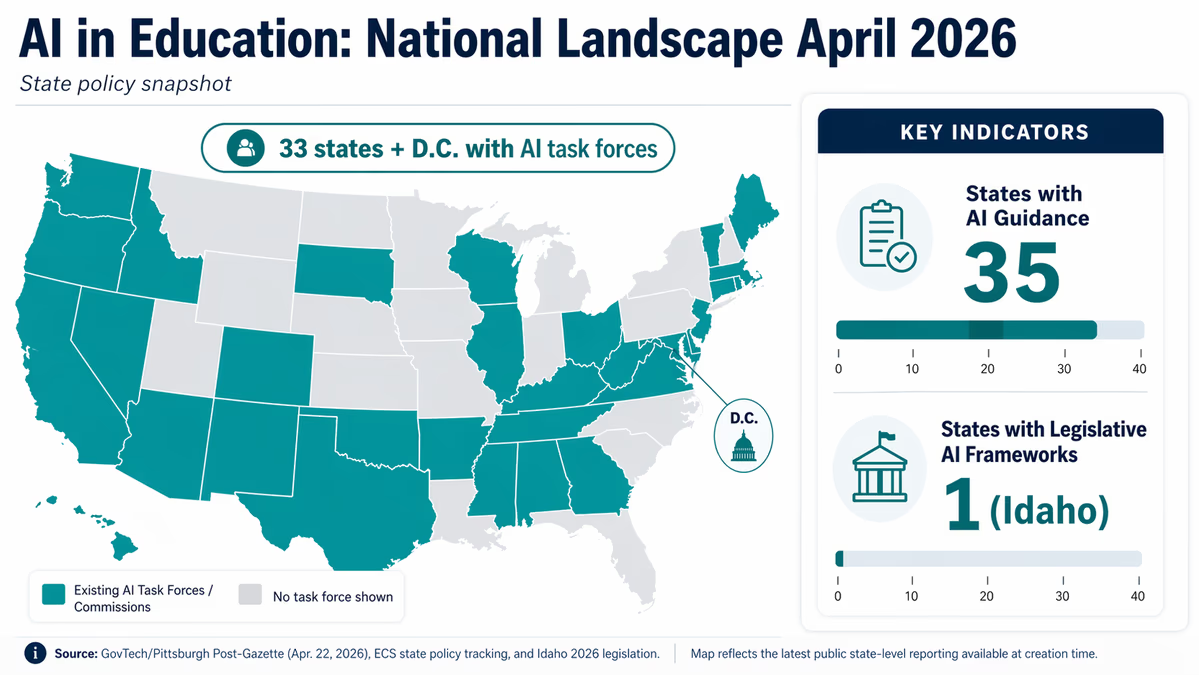
Pennsylvania is not alone in its concerns, but there are growing fears that the Commonwealth is trailing other jurisdictions. As of April 2026, at least 33 states and Washington D.C. have already formed task forces or commissions dedicated to AI in education. Furthermore, 35 states have published formal guidance on the topic. In 2026, Idaho took a significant step by passing legislation mandating its department of education to develop a statewide framework specifically for generative AI.
Within Pennsylvania, efforts have been mounting for several years. The PSEA established an Artificial Intelligence Task Force in May 2024, which released its preliminary recommendations in May 2025. Concurrently, the Pennsylvania Department of Education (PDE) has released guidance documents like 'Implementing AI in Schools' and 'AI and Digital Literacy.' However, educators argue these documents are advisory rather than a comprehensive policy framework that ensures consistency across the state's diverse school districts.
The Risks of the 'AI-Only' Classroom
One of the most pressing concerns raised by the PSEA is the potential for AI to be used to replace human educators under the guise of cost-saving measures. According to the association, some charter school companies have already attempted to implement AI-driven instruction to entirely replace teachers. While one such application in Pennsylvania was reportedly denied, the incident has left the teaching community on edge.
Mark Holtzman, Superintendent of Hempfield Area School District, noted that AI is reshaping workforce expectations and post-secondary readiness. "As educators, we're ensuring students are not only using these tools, but we're also critical thinkers who also understand the capabilities, limitations and ethical implications," Holtzman said.
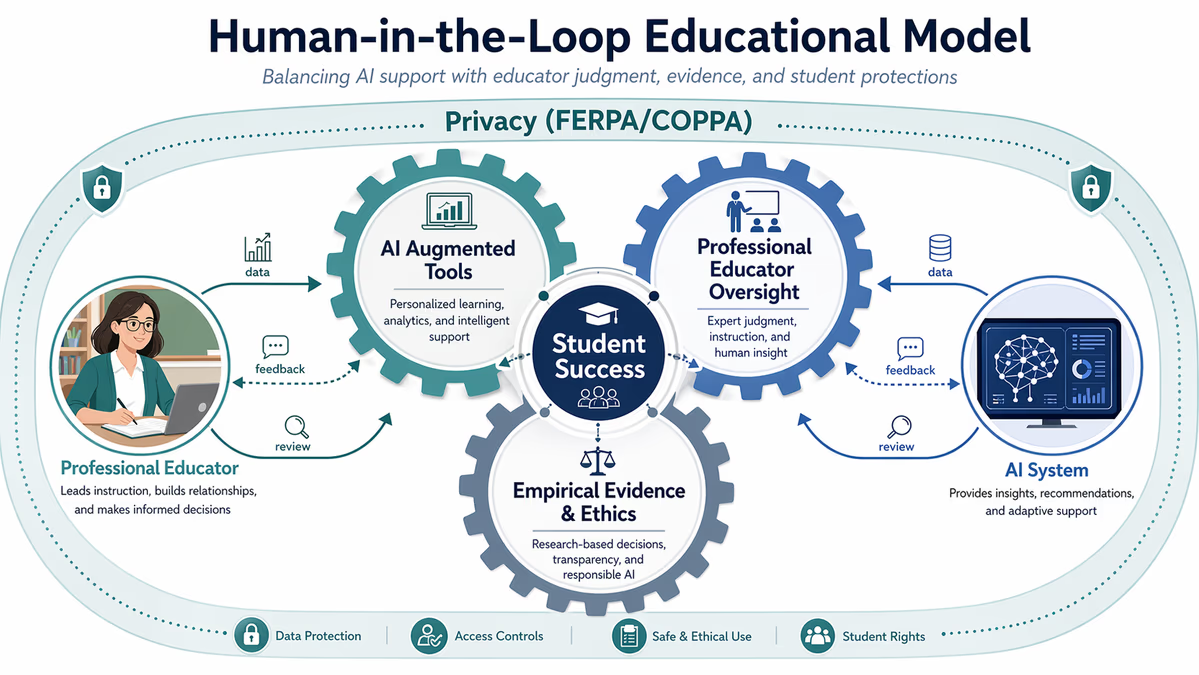
To prevent the marginalization of students, the PDE’s current guidance stresses the importance of a "human in the loop" for critical decisions such as grading and disciplinary actions. Educators also voiced concerns about the digital divide; without state intervention, there is a significant risk that equitable access to AI tools will become a matter of ZIP code, exacerbating existing disparities.
Collaborative Governance and Industry Impact
The path forward involves a unique collaboration between the public sector and academia. The Pennsylvania Joint State Government Commission has convened an advisory committee that includes prominent voices from the University of Pennsylvania. Professors Cary Coglianese and Richard Berk have been advising the state on the complexities of AI governance. Professor Berk has specifically emphasized that AI technology should not be adopted in the classroom without empirical evidence demonstrating how the tool will actually benefit student education.
For the AI industry, these state-level movements signal a shift toward greater accountability. A statewide framework would likely impose strict requirements on AI vendors regarding data transparency, privacy protections, and compliance with laws like FERPA and COPPA. This could force a maturation of the educational technology market, moving away from experimental tools toward rigorously tested, ethically designed products.
Forward-Looking Implications
As the Pennsylvania legislature considers the testimony from the April hearing, the focus turns to the development of a flexible, adaptive policy that can keep pace with AI’s evolution. If Pennsylvania adopts a comprehensive framework, it could serve as a model for other states currently struggling with the same disruptions.
Ultimately, the goal is to transform AI from a disruptive force into a tool that augments the human educator. As Professor Coglianese noted, few policy issues today are as challenging or important as AI governance. The decisions made in Harrisburg in the coming months will likely determine the educational landscape for the next generation of Pennsylvania students, ensuring that while technology advances, the human element remains at the center of the classroom.