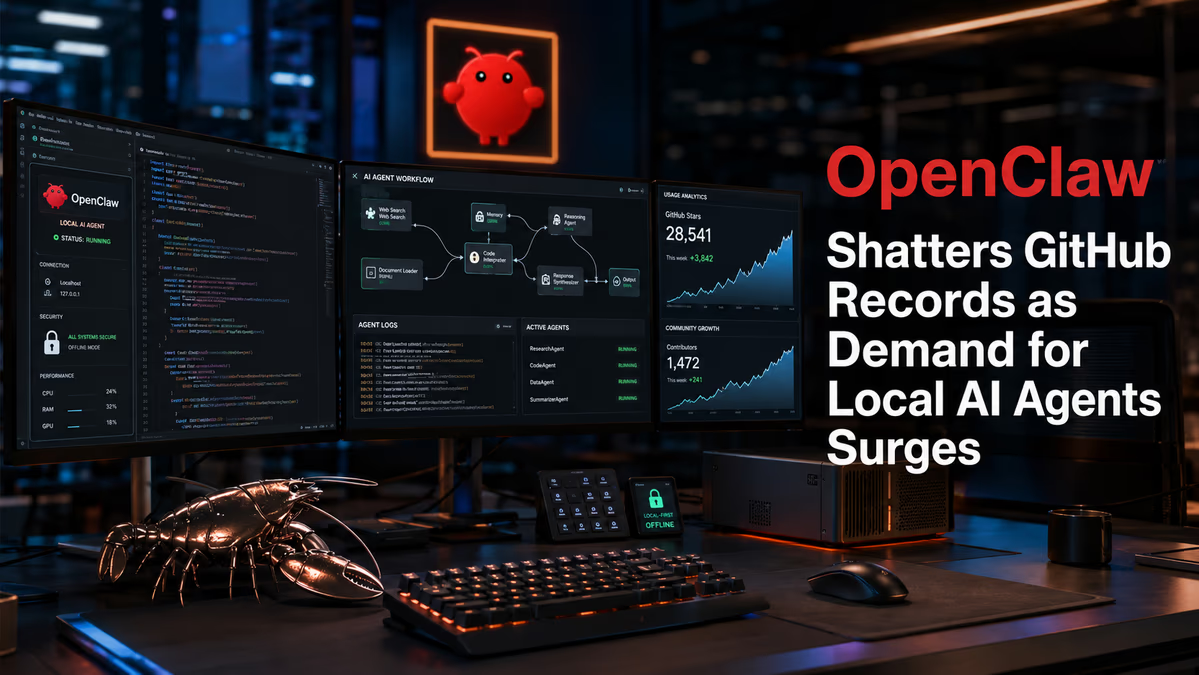
OpenClaw Shatters GitHub Records as Demand for Local AI Agents Surges
OpenClaw has made history as the fastest-growing open-source project on GitHub, reaching 350,000 stars with its privacy-focused local AI framework.
The Unprecedented Rise of OpenClaw
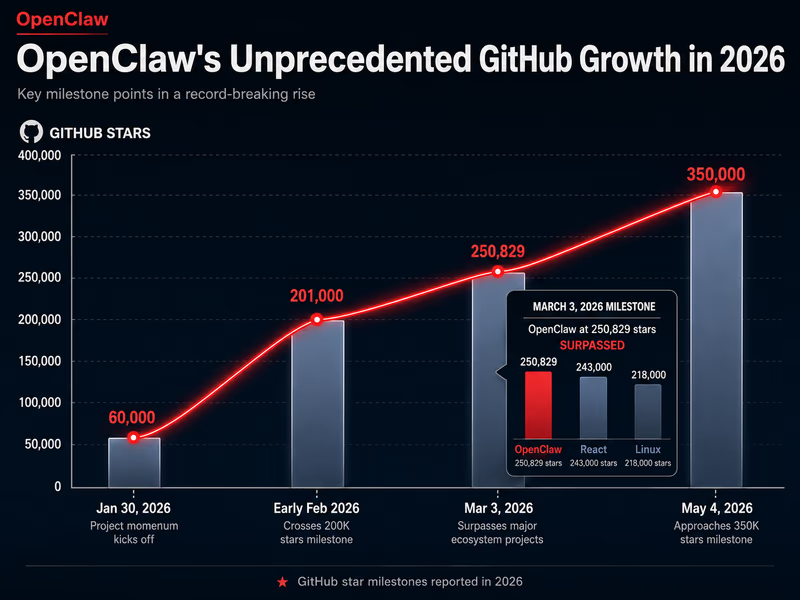
OpenClaw, a self-hosted personal AI assistant framework, has officially become the fastest-growing open-source project in GitHub history. Surpassing 350,000 stars by early May 2026, the project has bypassed foundational tech staples such as React (243,000 stars) and the Linux kernel (218,000 stars). Initially released on November 24, 2025, under the name "Clawdbot," the project’s velocity has stunned the software engineering community, signaling a profound shift in consumer and enterprise demand toward local-first, privacy-focused artificial intelligence.
The mind behind the project is Peter Steinberger, an Austrian developer widely recognized as the founder of PSPDFKit. Steinberger’s creation was designed to run entirely on local devices, giving users an autonomous agent capable of executing shell commands, managing local file structures, automating complex web tasks, and programmatically writing its own skills.
A Turbulent Rebranding Journey
Despite its astronomical trajectory, OpenClaw’s early days were marked by rapid adaptation. Following trademark complaints from Anthropic, Steinberger renamed the project to "Moltbot" on January 27, 2026. Just three days later, on January 30, 2026, the project was renamed again to OpenClaw. Steinberger later reflected that the name Moltbot never quite rolled off the tongue, motivating the quick transition to the now-famous OpenClaw branding.
The name changes did nothing to slow its viral momentum. Upon its official relaunch in late January 2026, the project secured 9,000 GitHub stars on day one, rocketed to 60,000 stars within three days, and reached 190,000 stars within two weeks. By March 3, 2026, it hit 250,829 stars. By May 4, it climbed past 350,000. Today, the project boasts over 300 active GitHub contributors, affectionately known as the "Claw Crew," and its official website—which was built entirely by OpenClaw agents operating under human direction—records an estimated 38 million monthly visitors alongside 3.2 million monthly active users globally.
Prioritizing Privacy Amid Operational Hardships
At the core of OpenClaw's architecture is a strict local execution model. By keeping user data on local hardware, the framework aims to guarantee high levels of data privacy and security, completely bypassing the risks associated with cloud-based AI providers. Its mascot, Molty the "Space Lobster AI," has come to symbolize this fortress-like approach to security and continuous evolution.
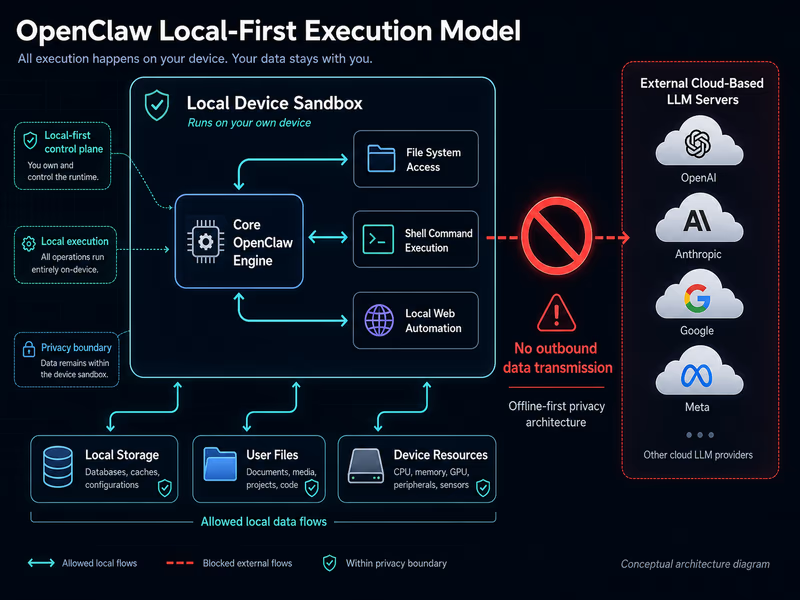
However, operating a hyper-capable local agent comes with practical bottlenecks. Because OpenClaw grants deep system access to execute shell commands and modify local environments, it is highly vulnerable to prompt injection attacks, accidental file deletion, and security loopholes from unverified user-created plugins. The complexity of setting up and self-hosting the platform also presents a barrier for non-technical users. Furthermore, scaling the platform has taken a heavy financial toll on its founder; Steinberger reportedly spent tens of thousands of dollars monthly in personal funds on API costs for the underlying large language models powering the agent's development phase.
Technical Refinement in the Latest Beta
To address security concerns and optimize the user experience, the development team released beta version 2026.5.19-beta.1 on May 19, 2026. While early community rumors suggested the update would feature a built-in meme-maker skill, the release was actually a hardening update centered on stabilization and minor quality-of-life adjustments.
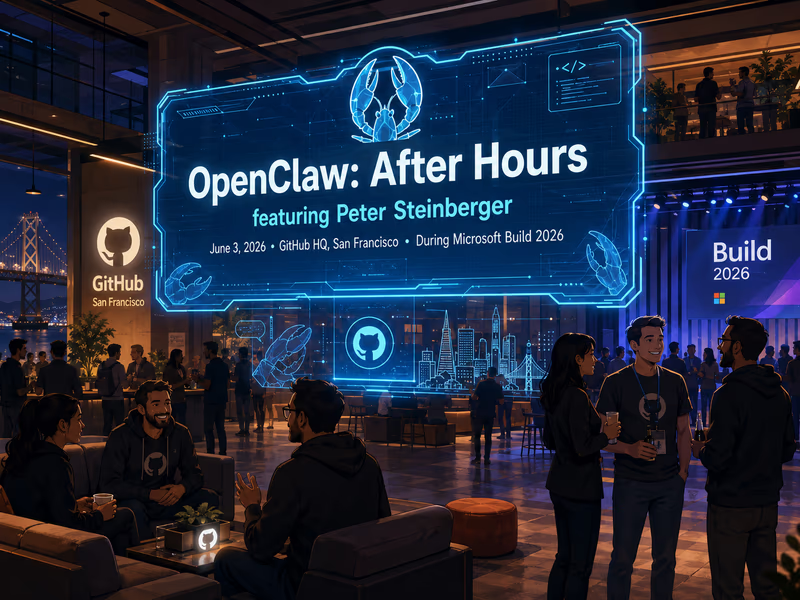
Key additions in the beta release included a Realtime Android Talk Mode, cleaner Mac settings menus, headless logins for xAI, and significantly improved Telegram topic handling. This technical polishing sets the stage for "OpenClaw: After Hours," an exclusive community event featuring Steinberger scheduled for June 3, 2026, at GitHub Headquarters during the Microsoft Build 2026 conference.
Corporate Maneuvering and Market Impact
The project's massive footprint has triggered significant strategic moves from major tech corporations. According to unconfirmed reports, OpenAI has purchased OpenClaw to absorb the framework into its agentic ecosystem. Sam Altman reportedly noted that OpenClaw will live in a foundation as an open-source project that OpenAI will continue to support, even as the company builds out competing proprietary agent systems.
Simultaneously, Microsoft has demonstrated a remarkable shift in its stance on the software. Despite Microsoft CEO Satya Nadella previously describing OpenClaw as a "virus"-like security threat due to its expansive local system access, leaked reports suggest that Microsoft is now internally testing an OpenClaw-based desktop environment codenamed "ClawPilot" as part of its secretive "Project Lobster."
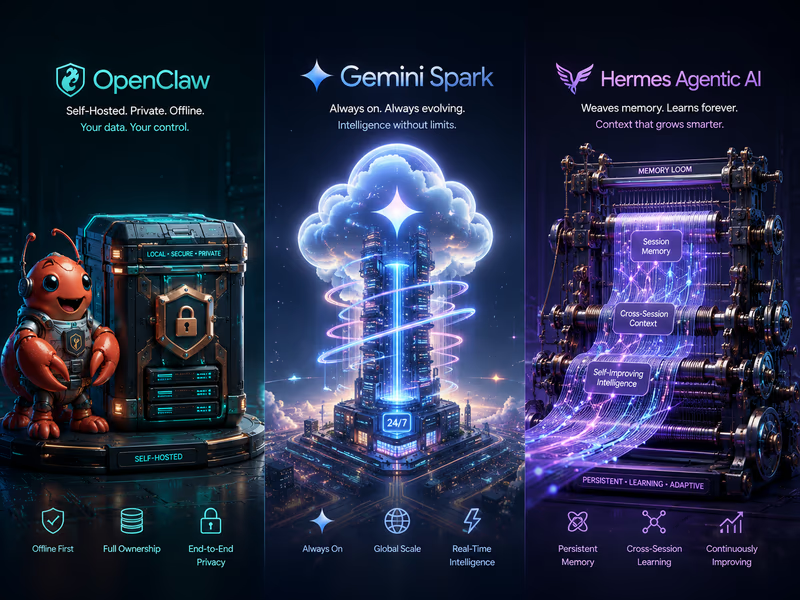
This corporate interest highlights the intense battle in the agentic AI market. OpenClaw faces direct competition from cloud-native alternatives like Google’s Gemini Spark, which offers a 24/7 managed cloud agent model, as well as Hermes Agentic AI, another open competitor focusing on context retention that has reportedly surpassed OpenClaw in certain performance metrics.
The Future of the Agentic Ecosystem
OpenClaw’s success marks a pivotal turning point in artificial intelligence. It transitions users from utilizing passive text generation tools to deploying active, autonomous digital companions that execute end-to-end workflows. By demonstrating that high-performance AI agents can run locally and transparently, the Claw Crew is forcing the broader industry to reconsider its dependence on centralized cloud architectures. As enterprise compliance and data governance laws tighten globally, local frameworks like OpenClaw are no longer just an open-source novelty—they are becoming the blueprint for the next era of personal computing.