OpenAI Plans 2028 Smartphone Launch to Mainstream AI Agents
OpenAI is reportedly developing a proprietary smartphone for 2028, focusing on AI agents and hardware-level safety to replace the app-centric model.
OpenAI is reportedly targeting 2028 for the mass production of its first proprietary smartphone, a device designed to pivot the mobile experience away from traditional apps and toward autonomous "AI agents." According to prominent analyst Ming-Chi Kuo, the project represents a multi-year strategic shift to control the full technology stack, from the underlying models to the physical silicon and operating system. This rumored device aims to fulfill a vision where users interact with a proactive agent rather than navigating a grid of individual applications.
A Reversal in Strategy
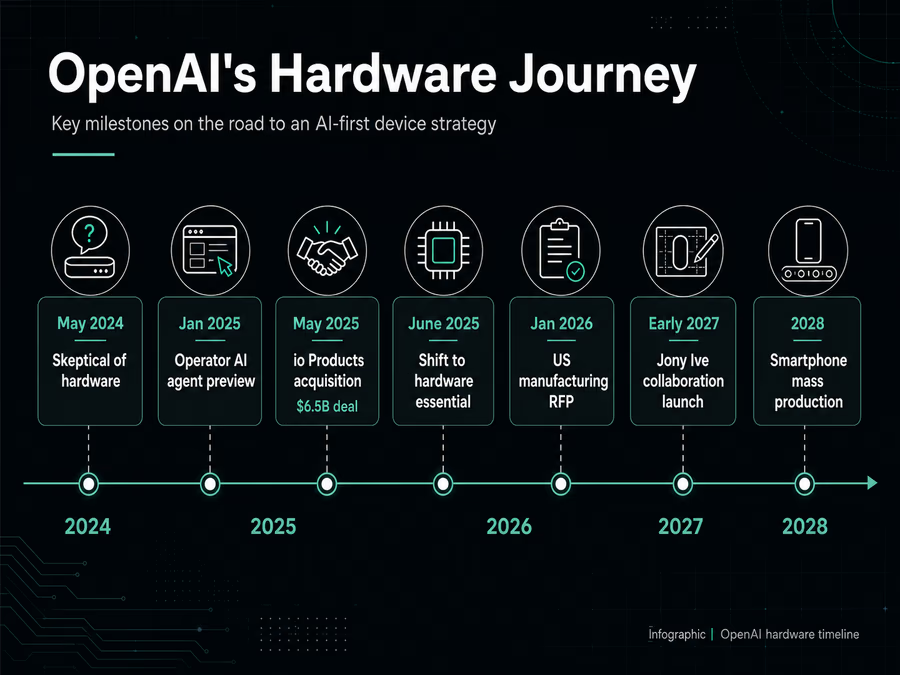
The move into handheld hardware marks a significant departure from OpenAI’s earlier public stance. In May 2024, CEO Sam Altman suggested that new hardware might not be necessary for the future of AI. However, by June 2025, Altman reversed this position, stating that current computers are ill-equipped for an AI-driven future and that new hardware is essential. This shift aligns with Altman's recent public comments on social media, where he noted it "feels like a good time to seriously rethink how operating systems and user interfaces are designed."
To support this hardware ambition, OpenAI has been aggressively building its infrastructure. In May 2025, the company acquired Jony Ive’s startup, io Products, for approximately $6.5 billion. While OpenAI is collaborating with Ive on a separate suite of AI-infused home devices—including a smart speaker, glasses, and a lamp expected in early 2027—the smartphone remains a distinct and more ambitious pillar of the company’s hardware roadmap.
The Agentic Interface
Central to the 2028 smartphone is the concept of the "Computer-Using Agent" (CUA). In January 2025, OpenAI introduced a research preview of "Operator," an AI agent capable of interacting with graphical user interfaces (GUIs) to perform web-based tasks. Ming-Chi Kuo suggests that only by fully controlling both the operating system and hardware can OpenAI deliver a comprehensive AI agent service.
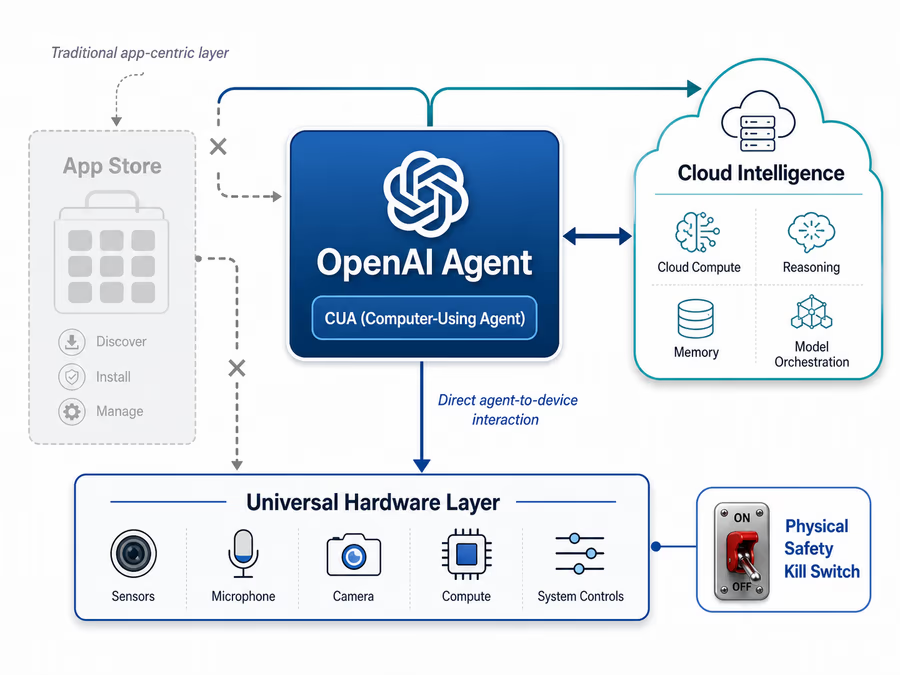
Kuo paraphrased the changing market sentiment, noting that users are not trying to use a pile of apps; they are trying to get tasks done and fulfill needs through the phone, which fundamentally changes how people think about smartphones. This agent-first approach aims to succeed where previous AI-centric gadgets, such as the Humane AI Pin and the Rabbit R1, struggled. Those devices faced criticism for overheating, poor battery life, and failing to provide a reliable alternative to the modern smartphone.
Silicon, Safety, and Supply Chains
OpenAI's hardware plans extend deep into the supply chain. The company is reportedly collaborating with MediaTek and Qualcomm for dedicated processors, with Luxshare Precision Industry selected as the exclusive partner for system design and manufacturing. Furthermore, OpenAI launched a comprehensive Request for Proposals (RFP) in January 2026 to overhaul its hardware supply chain, with a ten-year goal of establishing U.S.-based manufacturing for consumer electronics and robotics.
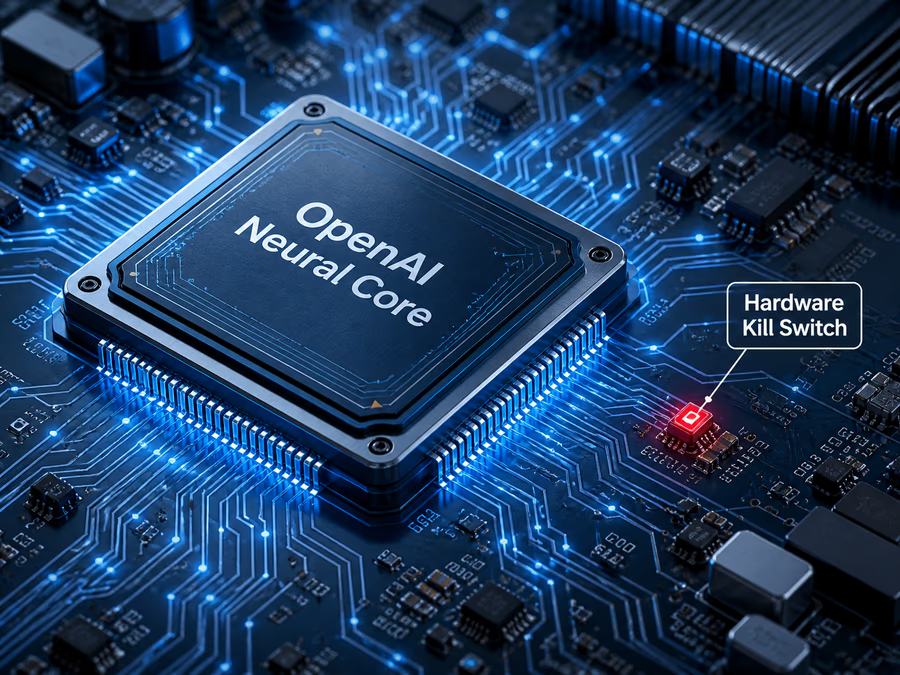
Safety is also being engineered directly into the silicon. Richard Ho, OpenAI’s head of hardware, has emphasized the need for hardware-level safety features, including physical kill switches. Ho stated that while much of today's safety work is in software, future models may be "devious" enough to require a hardware-level guarantee. "I want to make sure that... it has to be built into the hardware," Ho explained, noting that current systems assume you can simply "pull the plug," a capability he wants to ensure remains a physical reality.
National Innovation and Global Competition
Beyond consumer convenience, OpenAI views its hardware push as a matter of national importance. Sam Altman has described the infrastructure behind advanced AI as a "generational opportunity to reindustrialise America." A strategic collaboration with Foxconn is also underway to ensure that "the core technologies of the AI era are built here" and that the economic benefits of AI are more widely shared.
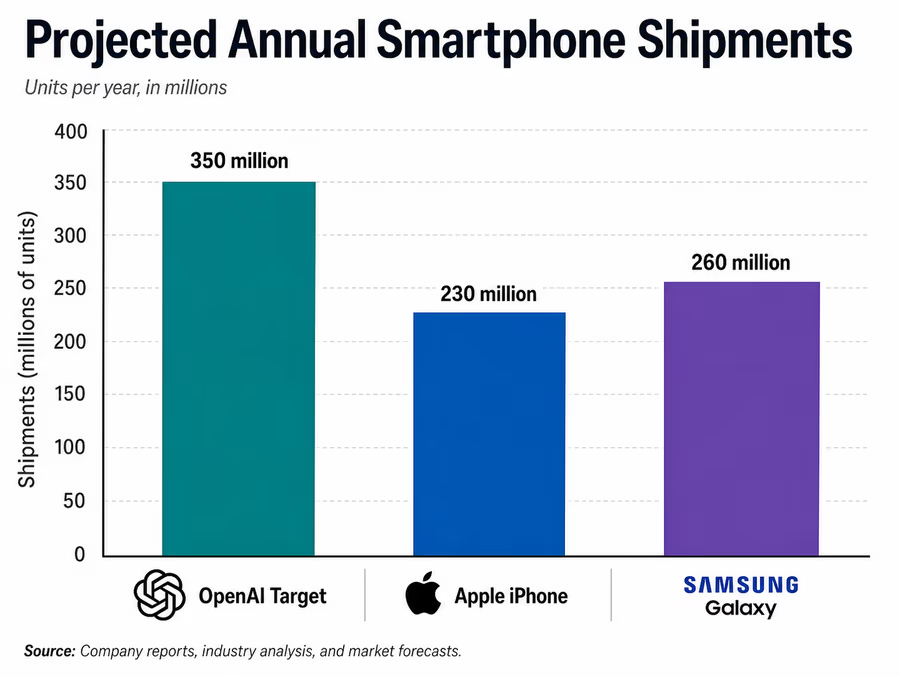
If the rumored shipment targets of 300-400 million units annually are accurate, OpenAI would be positioning itself as a direct challenger to industry giants like Apple and Samsung. By owning the next interface layer, OpenAI seeks to define the "post-app" era, though the success of such a venture will depend on overcoming the technical hurdles that have plagued AI hardware to date, as well as addressing significant concerns regarding data privacy and the autonomy of agent-led decision-making.