
OpenAI’s Silicon Ambition: Reports Point to a 2028 AI-First Smartphone
Leaked reports suggest OpenAI is developing an AI-first smartphone for 2028, moving beyond apps toward a hardware-integrated agent experience.
OpenAI is reportedly preparing to challenge the dominance of Apple and Google by developing a custom, AI-first smartphone designed to replace the traditional app-grid interface with a seamless, agent-driven experience. While the San Francisco-based company has long been synonymous with software, a series of unverified reports from TF International Securities analyst Ming-Chi Kuo suggests a multi-year roadmap that places OpenAI at the center of the next great hardware wars.
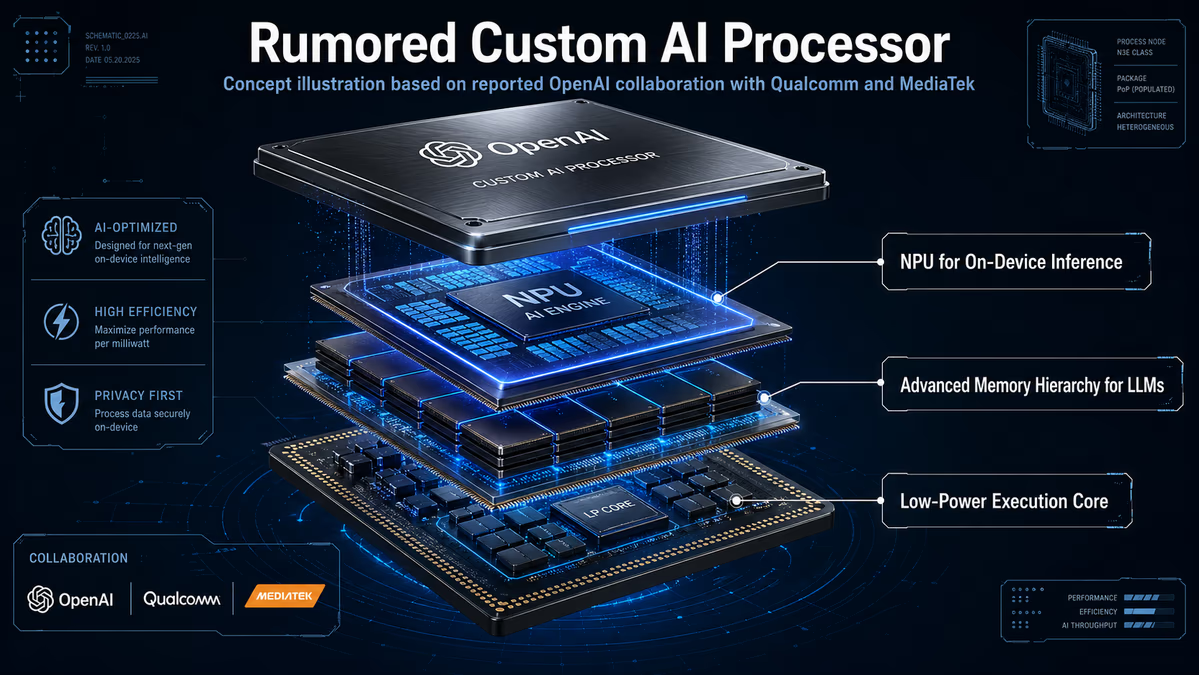
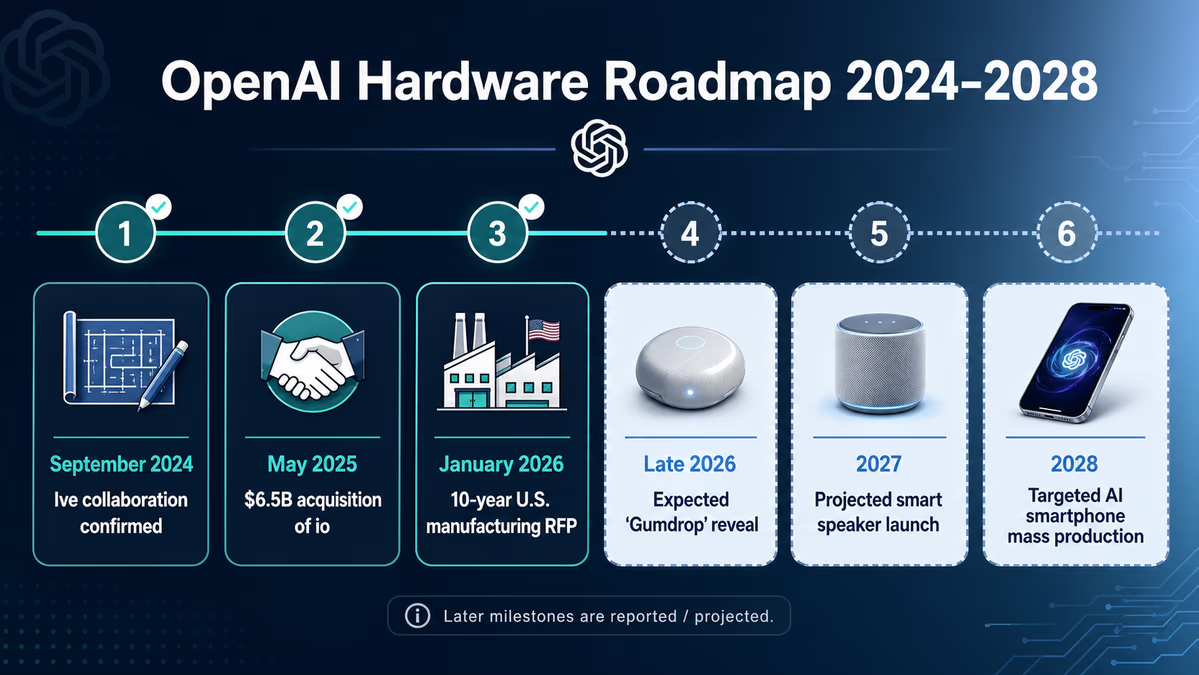
According to Kuo’s reports, which circulated in late April 2026, OpenAI is collaborating with industry giants MediaTek and Qualcomm to design custom processors specifically optimized for generative AI. The reports name Luxshare Precision Industry as the exclusive manufacturing and co-design partner. While mass production for this rumored smartphone is not targeted until 2028, the specifications and supplier list are expected to be finalized as early as late 2026.
The Philosophy of the AI Agent
This move into hardware is not merely about entering a new market; it represents a fundamental rethink of how humans interact with digital services. Sam Altman, CEO of OpenAI, has publicly expressed that it feels like the right time to rethink how operating systems and user interfaces are designed. He has also suggested the need for a new internet protocol that is equally usable by human beings and AI agents.
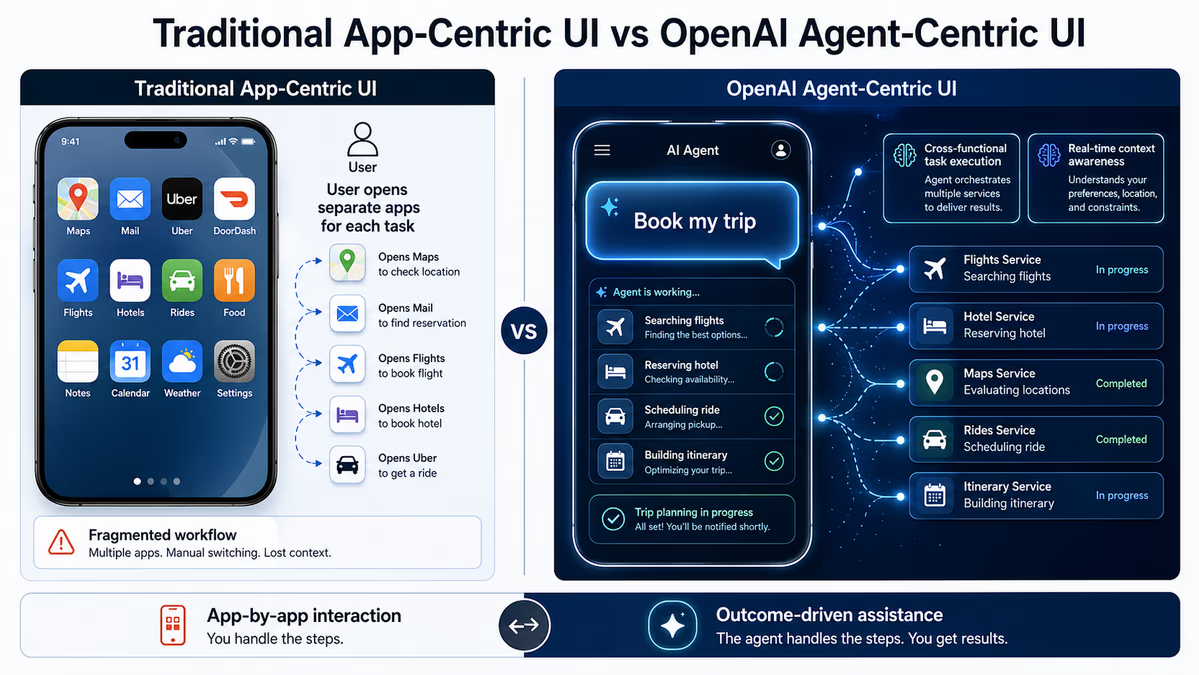
Currently, smartphones are built around siloed applications—an "app-grid" paradigm that has remained largely unchanged since the original iPhone. OpenAI’s vision, according to analysts, is to move toward an interface where the AI agent is the primary layer. Instead of a user opening a travel app to book a flight, the agent handles the task across functions, utilizing the phone’s unique ability to capture a user’s full real-time state.
Ming-Chi Kuo notes that the smartphone is the only device capable of capturing this level of real-time context, which he describes as the most important input for real-time AI agent inference. He further explains that only by fully controlling both the operating system and the physical hardware can OpenAI deliver a truly comprehensive AI agent service. Key design considerations for these custom chips reportedly include extreme power consumption efficiency and specialized memory hierarchies to manage small-model execution on the device's edge.
The Jony Ive Connection and ‘Gumdrop’
OpenAI’s hardware ambitions have been coalescing for years. In May 2025, the company made a massive $6.5 billion acquisition of Jony Ive’s design firm, io. Since then, Altman and Ive—the legendary designer behind the iPhone—have been working on a family of devices.
While the 2028 smartphone represents the long-term goal, a more immediate project is reportedly closer to fruition. Internally codenamed "Gumdrop," this project focuses on a screenless, companion-like device. Unlike a smartphone, this pocket-sized hardware is intended to be a voice-powered, contextually aware "third pillar of computing" that complements existing devices rather than replacing them.
Altman has described the work on current prototypes with Ive as being remarkably impressive. He has stated that the ideal device should feel peaceful, simple, and playful, allowing users to focus on their lives rather than being distracted by the "flashing lights" and "indignities" of current mobile interfaces. Jony Ive has echoed this sentiment, suggesting that the perfect device is one used almost without thought, lacking any steep learning curve or complex setup wizard.
Building a US-Based Ecosystem
OpenAI is also looking to secure its supply chain against geopolitical and logistical volatility. In January 2026, the company launched a 10-year Request for Proposals (RFP) to establish a robust, US-based hardware manufacturing and assembly ecosystem. This initiative aims to create a domestic infrastructure for consumer electronics, robotics, and data center components.
This hardware push is supported by a 2025 deal with Broadcom to develop custom AI chips for next-generation computer clusters. While those chips are primarily intended for data centers, the expertise gained in custom silicon is clearly bleeding into the consumer hardware division. OpenAI’s Chief Global Affairs Officer Chris Lehane confirmed in February 2026 that the company’s first consumer hardware device—likely the screenless "Gumdrop"—is currently on track for a reveal in late 2026, with a potential ship date in early 2027.
The Competitive Landscape
The road to 2028 is fraught with challenges. Previous attempts at AI-first hardware, such as the Humane AI Pin and the Rabbit R1, struggled to find a foothold due to technical limitations and mixed reviews. Furthermore, OpenAI will face stiff competition from Apple, which is reportedly testing its own AI smart glasses for a 2027 launch, and Google, which continues to integrate its Gemini models deeply into the Android ecosystem.
There are also significant technical and social hurdles. An always-on, context-aware device raises profound privacy concerns that OpenAI must address to win user trust. Technically, the "personality problem"—ensuring the AI knows exactly when to intervene and when to remain silent—remains a significant hurdle for the engineering team.
However, if OpenAI can successfully execute its vision, the impact could be transformative. Analyst estimates suggest that a successful AI-first smartphone could eventually reach annual shipments of 300 to 400 million units. By shifting the focus from apps to agents, OpenAI isn't just building a new phone; it is attempting to build the next dominant ecosystem for the age of artificial intelligence.