
OpenAI Proposes Radical Economic Shift: 4-Day Work Weeks and National AI Wealth Funds
OpenAI proposes a 32-hour work week and a national wealth fund to share AI-driven prosperity as adoption of the technology reaches 53 percent.
OpenAI Outlines a New Social Contract for the Intelligence Age
OpenAI has released a comprehensive 13-page policy framework proposing a transition to a 32-hour work week and the establishment of a national public wealth fund to distribute the economic gains of artificial intelligence. Titled "Industrial Policy for the Intelligence Age: Ideas to Keep People First," the document arrives as generative AI reaches a critical tipping point in global adoption, forcing a conversation about how to restructure society around automated labor.
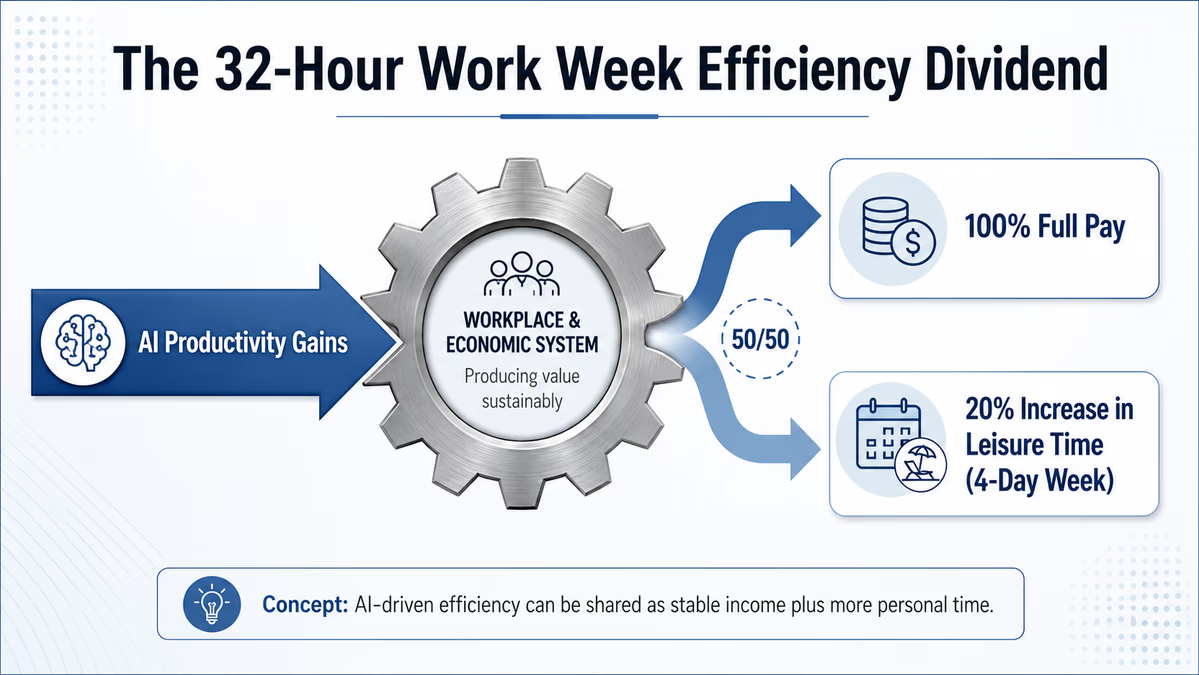
The proposal frames a four-day work week at full pay as an "efficiency dividend" born from AI productivity gains. Rather than allowing these advancements to solely pad corporate bottom lines, OpenAI argues that the resulting efficiency should be converted into durable improvements in worker benefits and increased leisure time. This vision of a shortened work week is presented alongside a radical restructuring of the national tax system, which would shift the tax base away from payroll and labor income toward corporate income, capital gains, and taxes on automated labor.
The National Public Wealth Fund
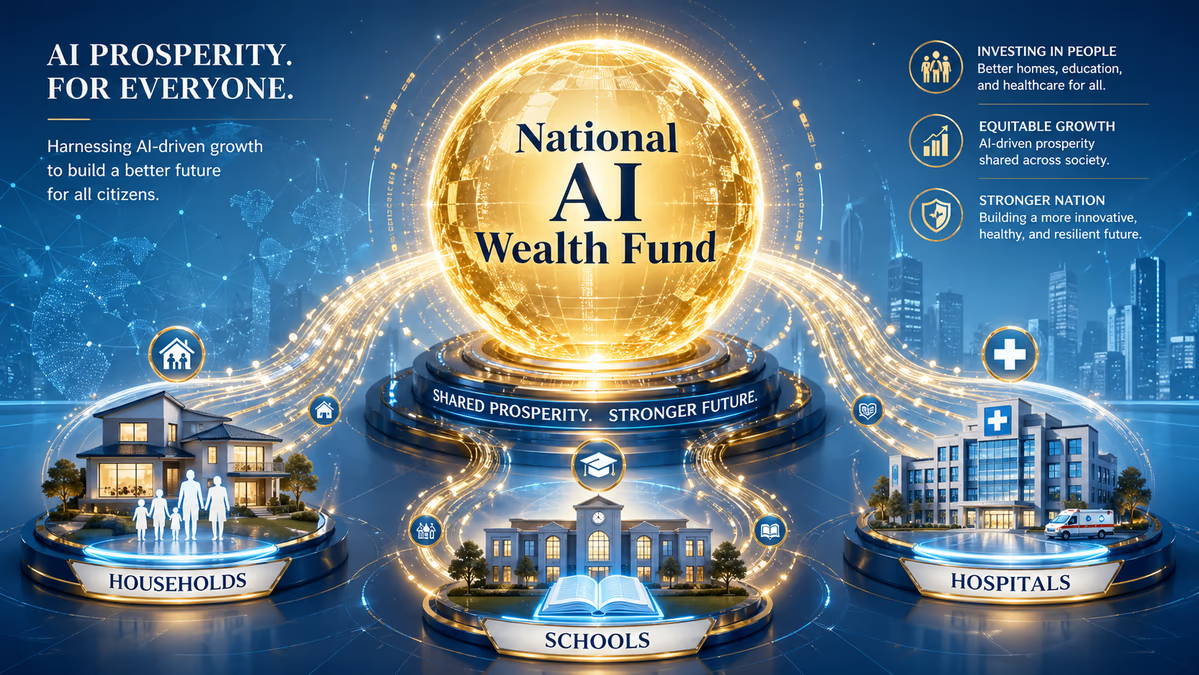
Central to OpenAI’s vision is the creation of a national public wealth fund, an idea modeled after Alaska’s Permanent Fund. The proposal suggests that this fund would be seeded by AI companies and lawmakers, investing in AI-related assets to distribute returns directly to citizens. This mechanism is designed to ensure that the "extraordinary progress" of advanced AI benefits the population at large rather than concentrating wealth among a handful of technology giants.
Sam Altman, CEO of OpenAI, contextualized these proposals within the broader trajectory of the industry. "We're beginning a transition toward superintelligence: AI systems capable of outperforming the smartest humans even when they are assisted by AI," Altman stated. He emphasized that while the exact path of this transition remains unknown, OpenAI believes it must be navigated through a democratic process that gives people real power to shape their future.
A Tipping Point in AI Adoption
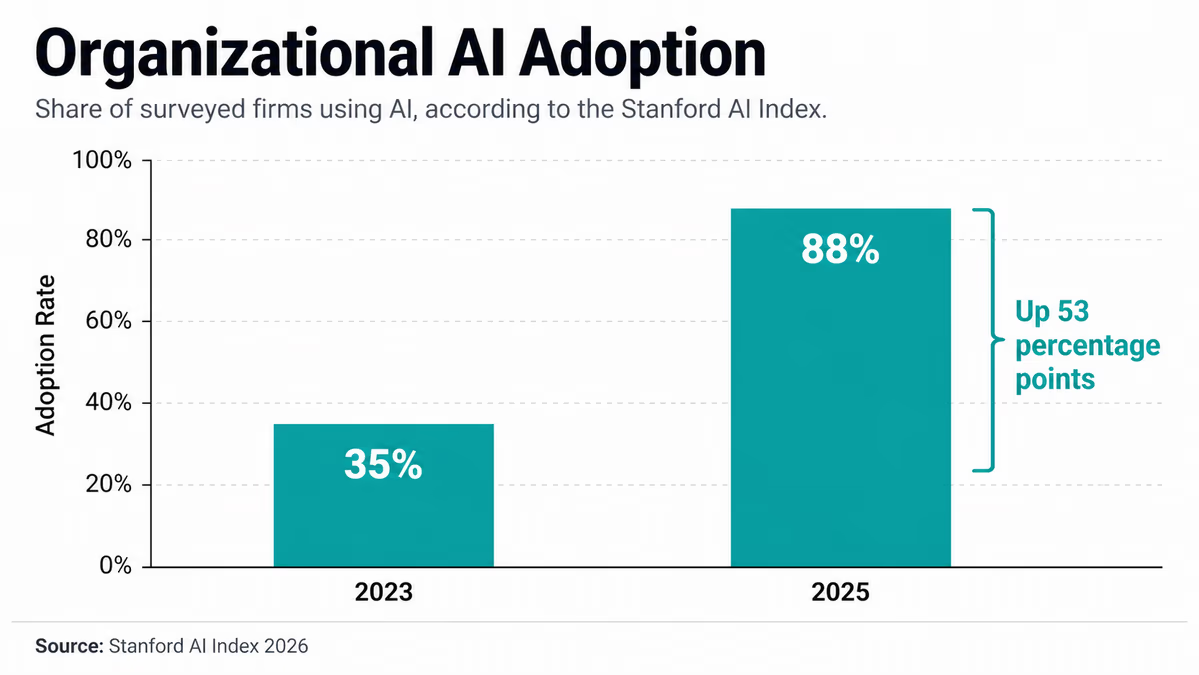
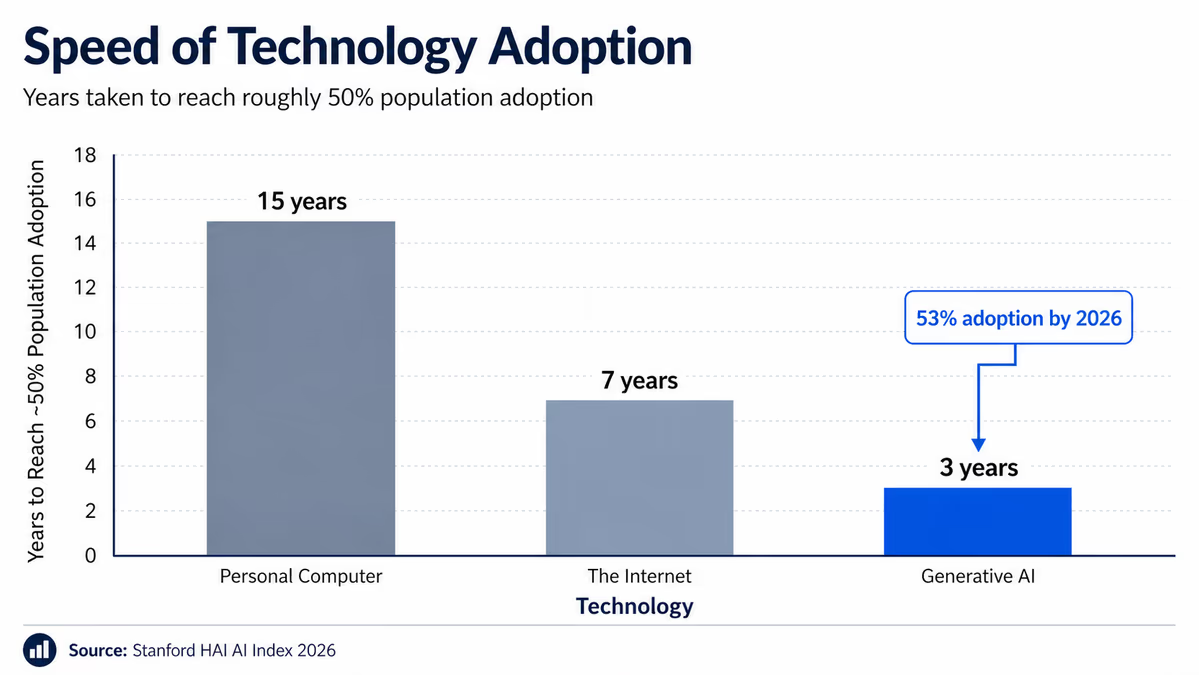
These policy recommendations coincide with data from the Stanford AI Index Report for 2026, released in mid-April. The report reveals that generative AI has achieved a 53% population-level adoption rate within just three years of its mass-market introduction. This pace significantly outstrips the historical adoption curves of both the personal computer and the internet. Furthermore, organizational AI adoption reached a staggering 88% of surveyed firms in 2025.
The urgency of OpenAI's proposal is underscored by the report’s findings that AI development is currently outpacing the institutional capacity to govern it. While OpenAI describes its ideas as "intentionally early and exploratory," the company notes that without proactive intervention, the traditional tax systems that fund Social Security and Medicaid could face collapse as AI reduces the necessity of human labor.
Economic Realities and Strategic Positioning
While the document paints a picture of shared abundance, it also acknowledges the darker side of the transition. The Stanford 2026 Index reported early signs of job displacement, particularly among younger workers in specialized sectors. High-profile examples of this shift are already appearing; in April 2026, Oracle reportedly eliminated up to 30,000 roles, with executive chairman Larry Ellison attributing much of the company's code-writing capabilities to AI models.
OpenAI's document also touches upon the need for "containment playbooks" to manage potentially dangerous autonomous systems. However, some industry observers suggest that these ambitious policy proposals may also serve a strategic purpose. By advocating for complex new regulatory and fiscal frameworks, OpenAI could be seeking to influence the very rules that will govern its future, particularly as the company explores a potential initial public offering (IPO).
Looking Ahead: A Starting Point for Debate
OpenAI’s document explicitly states that these ideas are not a final set of recommendations but a "starting point for discussion." The company has invited others to refine, challenge, or build upon these concepts through democratic engagement. The proposal mirrors similar suggestions from rival Anthropic, which in late 2025 suggested the creation of national sovereign wealth funds with stakes in AI companies.
As the "Intelligence Age" accelerates, the debate will likely center on whether these mechanisms—a 32-hour work week, a "robot tax," and a public wealth fund—can be implemented quickly enough to catch up with the blistering speed of technological change. For now, OpenAI has positioned itself not just as a developer of tools, but as a primary architect of the economic frameworks that may define the mid-21st century.