OpenAI Memo Slams Anthropic’s Revenue Claims, Previews GPT-6 'Spud' and Amazon Pivot
OpenAI CRO Denise Dresser’s leaked memo alleges Anthropic overstated revenue by $8 billion and previews the pre-trained GPT-6 model codenamed 'Spud.'
Internal Leak Reveals Aggressive Accounting Rivalry and Technological Leap
An internal memo sent Sunday, April 12, 2026, by OpenAI’s Chief Revenue Officer Denise Dresser has ignited a public accounting war with Anthropic while signaling a major strategic pivot in OpenAI’s infrastructure and partnership model. The document, which has circulated rapidly among industry analysts, alleges that Anthropic—founded by former OpenAI employees—is significantly overstating its financial success as both companies prepare for anticipated initial public offerings in late 2026.
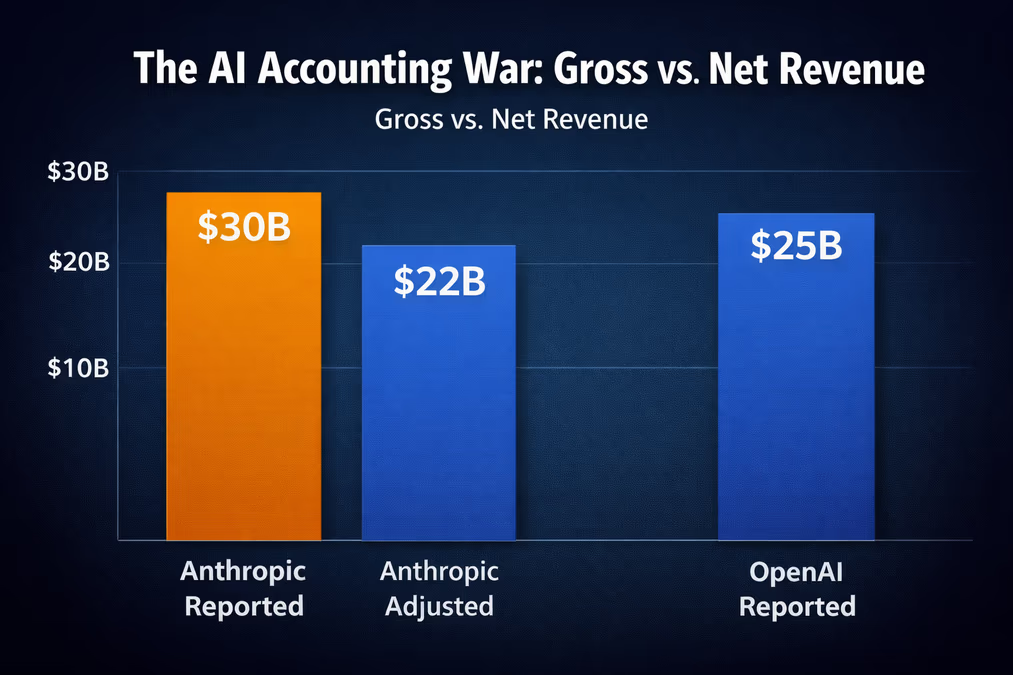
Dresser, who joined OpenAI as its first CRO in December 2025, used the memo to dismantle Anthropic’s recently reported $30 billion annualized revenue run rate. According to OpenAI’s internal analysis, Anthropic’s comparable revenue is closer to $22 billion when adjusted for specific accounting treatments. The discrepancy, Dresser argues, stems from Anthropic “grossing up” revenue from cloud partnerships with Amazon Web Services (AWS) and Google Cloud.
In contrast, OpenAI reports its revenue from its long-standing Microsoft partnership on a “net” basis. While both methods reportedly comply with U.S. Generally Accepted Accounting Principles (GAAP), the memo suggests that Anthropic’s story is “built on fear, restriction, and the idea that a small group of elites should control AI.” OpenAI’s own reported annualized run rate currently sits between $24 billion and $25 billion, positioning it behind Anthropic’s public claims but ahead of its adjusted reality.
The Strategic Divorce from Microsoft
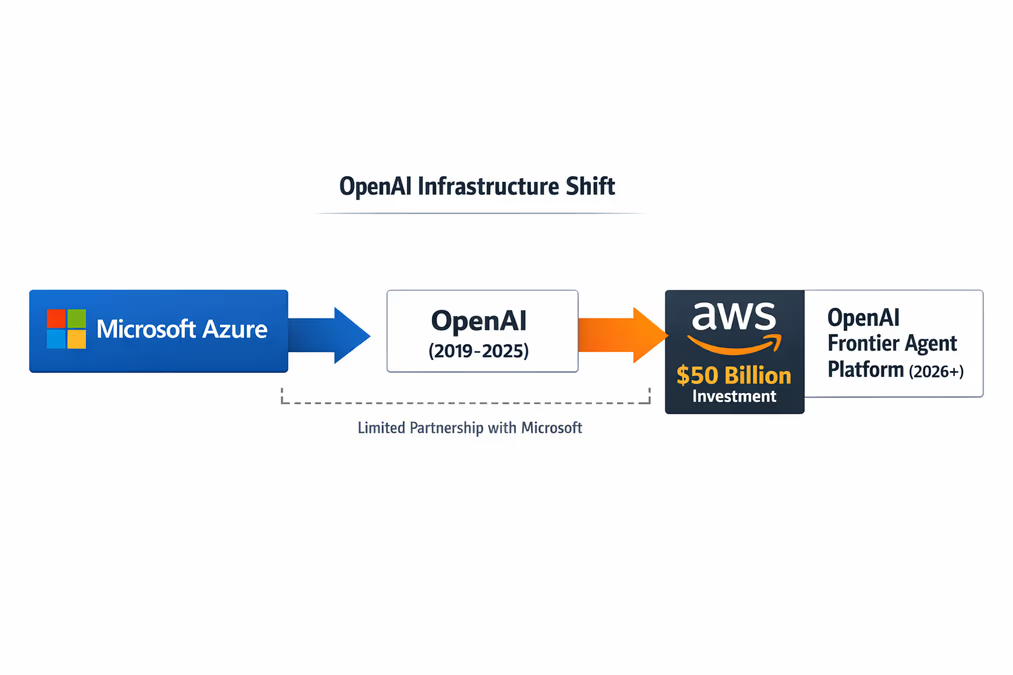
Beyond the financial accusations, the memo signals a cooling of the historic alliance between OpenAI and Microsoft. Since 2019, Microsoft has been the bedrock of OpenAI’s compute needs, but Dresser’s memo suggests that the exclusivity of that relationship has become a hurdle for enterprise expansion. Dresser stated that while the Microsoft partnership was foundational to OpenAI's success, it has also "limited our ability to meet enterprises where they are."
This sentiment aligns with recent industry shifts. In April 2026, Microsoft released three proprietary foundational models under its own "Microsoft AI" brand, moving away from being a mere distributor of OpenAI’s technology. OpenAI has responded by deepening its ties with Amazon. This new alliance reportedly includes a deal for up to $50 billion in investment and compute resources. Under this agreement, Amazon has become the exclusive third-party cloud distribution provider for OpenAI’s Frontier agent platform, a move that provides OpenAI with broader enterprise reach and a diversified infrastructure stack.
Pre-training Completed for 'Spud'
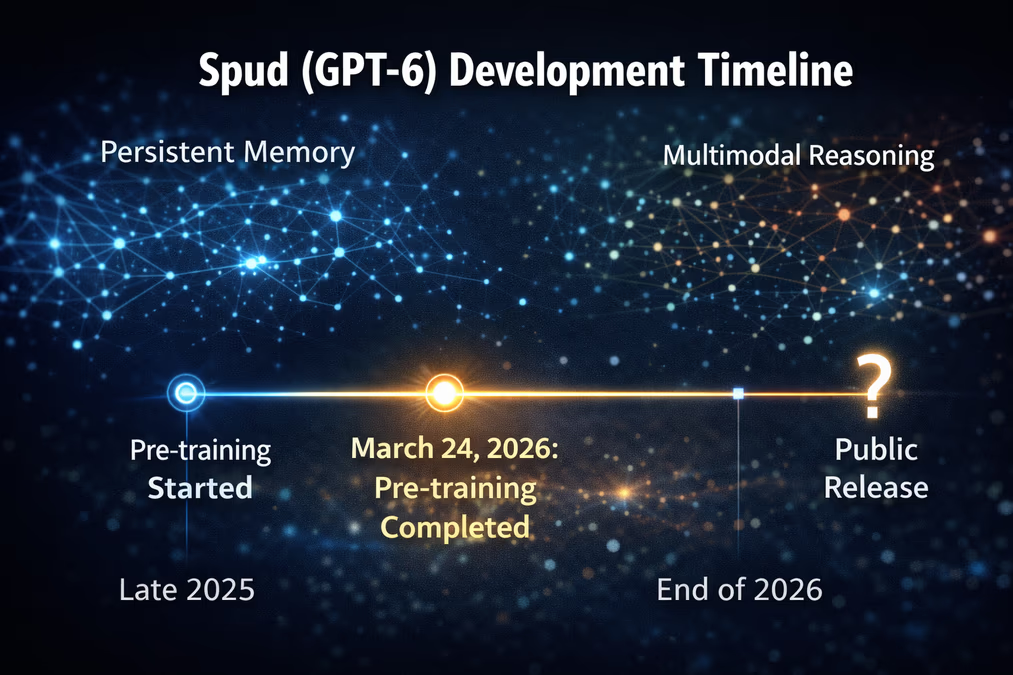
On the technological front, the memo offers a glimpse into the successor to GPT-5. Codenamed "Spud," the model is widely believed to be GPT-6. According to Dresser, pre-training for the Spud model was completed on March 24, 2026.
While technical specifications remain closely guarded, the memo implies that Spud will represent a significant leap in AI capabilities, specifically focusing on persistent memory and advanced multimodal understanding. The timing of this completion suggests a potential release later in 2026, coinciding with the peak of the “platform war” currently being fought between OpenAI, Anthropic, and Google, which recently released Gemini 3.1 Ultra with a massive 2 million token context window.
A History of Philosophical Friction
The vitriol in the memo is rooted in a history that dates back to 2021, when Dario Amodei and other key researchers left OpenAI to found Anthropic. That split was famously driven by disagreements over AI safety and the increasing commercialization of OpenAI’s research. The rivalry has since spilled into the public sphere, ranging from competing Super Bowl advertisements in early 2026 to this latest battle over financial metrics.
Industry analysts suggest that the "accounting treatment" debate is more than just semantics. As both startups look toward the public markets, their ability to demonstrate high-margin, sustainable growth is paramount. If Anthropic is perceived as inflating its numbers through cloud partnership pass-throughs, it could face increased scrutiny from institutional investors who are already wary of the high capital expenditures required to train frontier models.
The Road to Late 2026
As OpenAI moves closer to its next major release, the company is clearly positioning itself as the more transparent and enterprise-friendly option compared to its rivals. By distancing itself from Microsoft’s ecosystem and embracing a multi-cloud strategy with Amazon, OpenAI is attempting to shed its image as a research lab and finalize its transformation into a global software powerhouse.
The industry now waits to see how Anthropic responds to these allegations. With the race to GPT-6 level intelligence heating up and the financial stakes reaching the tens of billions, the leaked memo from Denise Dresser is a stark reminder that the AI revolution is as much about balance sheets and cloud contracts as it is about neural networks.