OpenAI Unveils GPT-Rosalind: A Specialized Frontier Model for Life Sciences Research
OpenAI debuts GPT-Rosalind, a specialized AI model for biochemistry and drug discovery designed to accelerate scientific research workflows.
OpenAI officially launched GPT-Rosalind on April 16, 2026, marking a strategic pivot from general-purpose artificial intelligence toward highly specialized, domain-specific reasoning models. Named after Rosalind Franklin, the British scientist whose research was fundamental to the discovery of the double-helix structure of DNA, the new model is engineered to assist in biochemistry, protein engineering, genomics, and translational medicine.
A Research Partner for Early Discovery
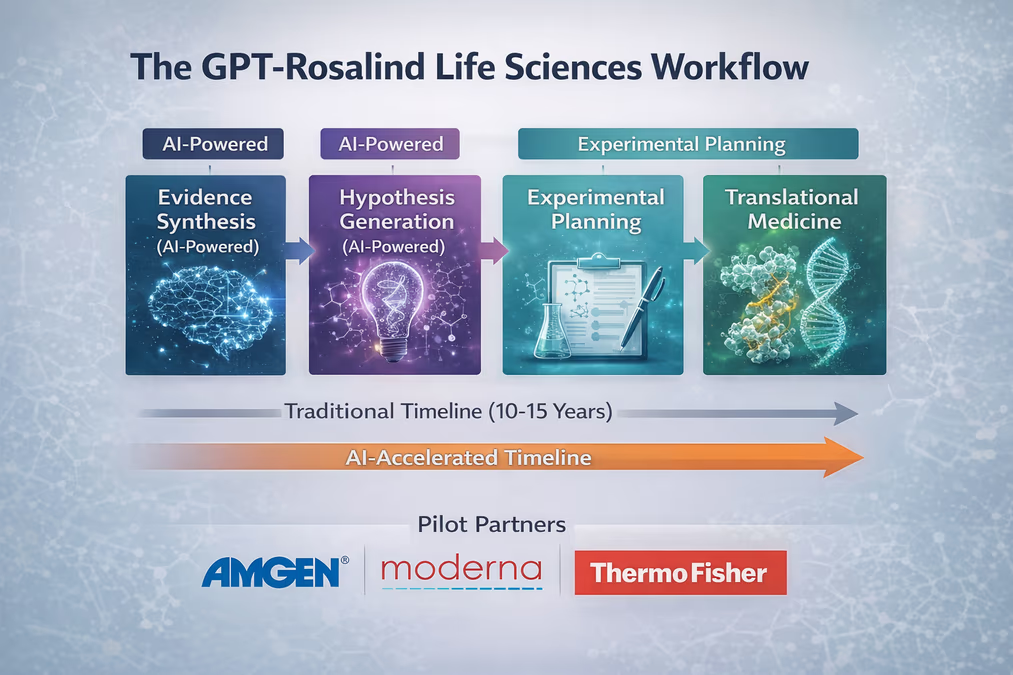
GPT-Rosalind is designed to function as a digital "research partner," moving beyond simple text generation to perform evidence synthesis, hypothesis generation, and multi-step experimental planning. According to an official OpenAI blog post, the model is intended to help researchers accelerate the early stages of discovery by supporting these complex workflows.
Joy Jiao, Head of Life Sciences Research at OpenAI, stated that the company envisions the model as a core tool for corporate biological research, particularly as the field becomes increasingly dependent on computational power. The launch includes a free Life Sciences research plugin for Codex, which provides scientists with direct integration to over 50 specialized tools and data repositories.
Benchmark Dominance and Performance
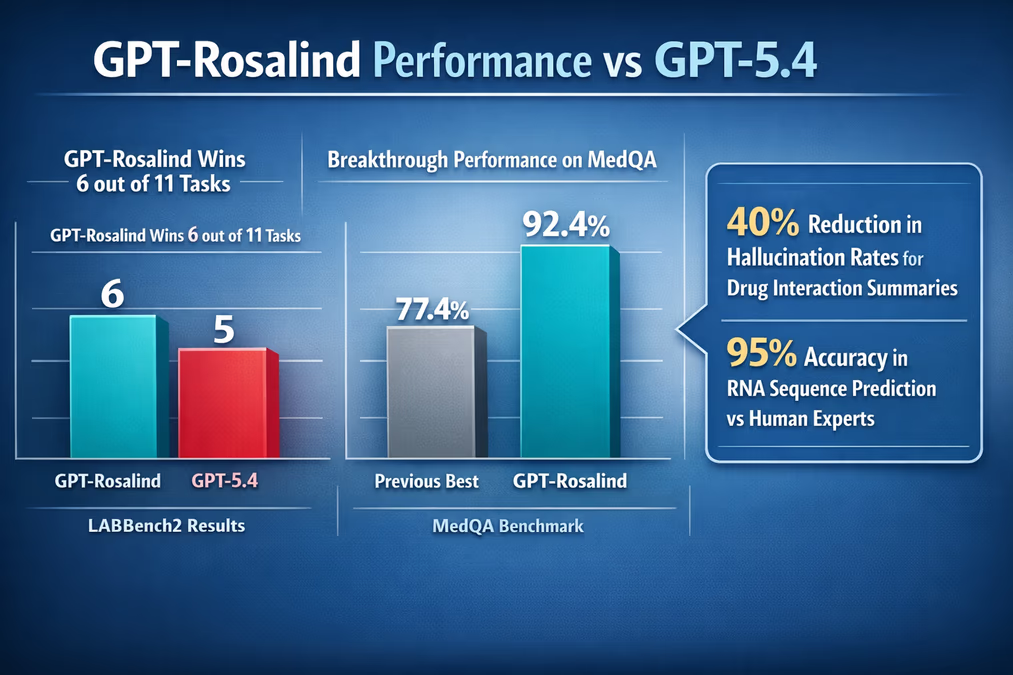
In rigorous evaluations, GPT-Rosalind has demonstrated significant advantages over generalist AI systems. During internal testing, the model achieved leading results on the BixBench benchmark and notably outperformed OpenAI’s own GPT-5.4 on six out of eleven tasks within the LABBench2 testing suite.
Performance in specialized medical and biological tasks has been equally stark. On the MedQA benchmark, GPT-Rosalind achieved an accuracy of 92.4%. Dr. Aris Thorne, Chief Scientific Officer at HelixGen AI, noted that this performance exceeds the previous state-of-the-art by nearly 15 percentage points. Furthermore, in a collaborative project with Dyno Therapeutics, the model demonstrated the ability to predict the functions of unpublished RNA sequences with greater accuracy than 95% of human experts. Crucially for medical applications, the model reportedly reduces hallucination rates by 40% when summarizing drug interaction mechanisms.
Strategic Industry Collaborations
OpenAI has secured a roster of high-profile pilot partners to integrate GPT-Rosalind into their research pipelines. Major biopharmaceutical companies and institutions, including Amgen, Moderna, the Allen Institute, and Thermo Fisher Scientific, are already utilizing the model.
Sean Bruich, Senior Vice President of Artificial Intelligence and Data at Amgen, emphasized the potential impact on patient care, stating that the collaboration allows the firm to apply OpenAI's most advanced tools in ways that could accelerate the delivery of medicines to patients. OpenAI's press release echoed this sentiment, suggesting that advanced AI can help scientists explore more possibilities and surface connections that might otherwise be missed during the initial phases of drug development.
Technical Rumors and Industry Impact
The pharmaceutical industry typically operates on a 10-to-15-year timeline for drug development, costing billions of dollars per successful treatment. OpenAI intends for GPT-Rosalind to compress these timelines by automating the painstaking analytical work that defines early-stage research. This move has already sent ripples through the market, with shares in some specialized drug discovery firms declining as investors weigh the competitive threat of a general AI powerhouse entering the niche biological software space.
While the official launch focused on the model's capabilities, some technical reports have introduced unverified details regarding the model's architecture. According to one report, HelixGen AI and a consortium including the Broad Institute were involved in the release, suggesting the core innovation of the model is a mechanism called "Bio-Bond Attention." However, OpenAI has not officially confirmed this specific technical detail or the extent of third-party involvement in the core development of the architecture.
Safety and Governance
Given the high stakes of biological research and the potential for dual-use concerns, OpenAI is controlling access through a "trusted access program." Qualified organizations must undergo rigorous safety and qualification reviews to ensure the technology is used for legitimate scientific purposes with public benefit. The model is currently available as a research preview in ChatGPT, Codex, and via the API for those within the vetted program.
This launch places OpenAI in direct competition with other major players in the computational biology space, such as Google DeepMind, whose AlphaFold system previously revolutionized protein structure prediction. As AI models move into regulated laboratory environments, the industry is entering a new era where the validation of AI-generated hypotheses will be as critical as the research itself.
Looking ahead, GPT-Rosalind represents the first entry in what OpenAI describes as a "life sciences model series," signaling that further specialized tools for the scientific community are on the horizon.