OpenAI Launches ChatGPT Images 2 with Advanced Reasoning and Multilingual Text Support
OpenAI debuts ChatGPT Images 2.0, featuring high-resolution text rendering, a reasoning-based Thinking mode, and the retirement of the Sora video app.
OpenAI officially released its next-generation image model, ChatGPT Images 2.0, on April 21, 2026, marking a significant pivot toward utility-driven generative media. Also known as ImageGen 2.0, the new model is immediately available across all ChatGPT tiers. While free users gain access to the base capabilities, a sophisticated "Thinking" mode is reserved for paid subscribers on the Plus, Pro, and Business plans. This launch arrives as OpenAI streamlines its portfolio, signaling the end of the Sora video application and the legacy DALL-E series.
Solving the AI Text Problem
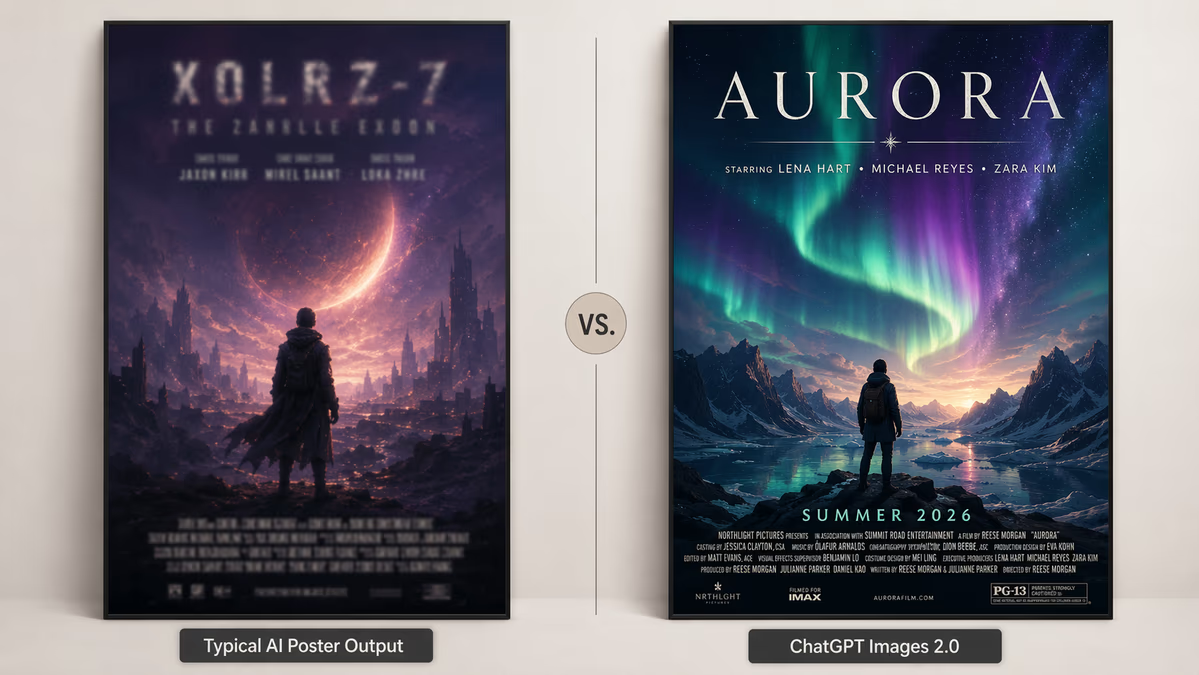
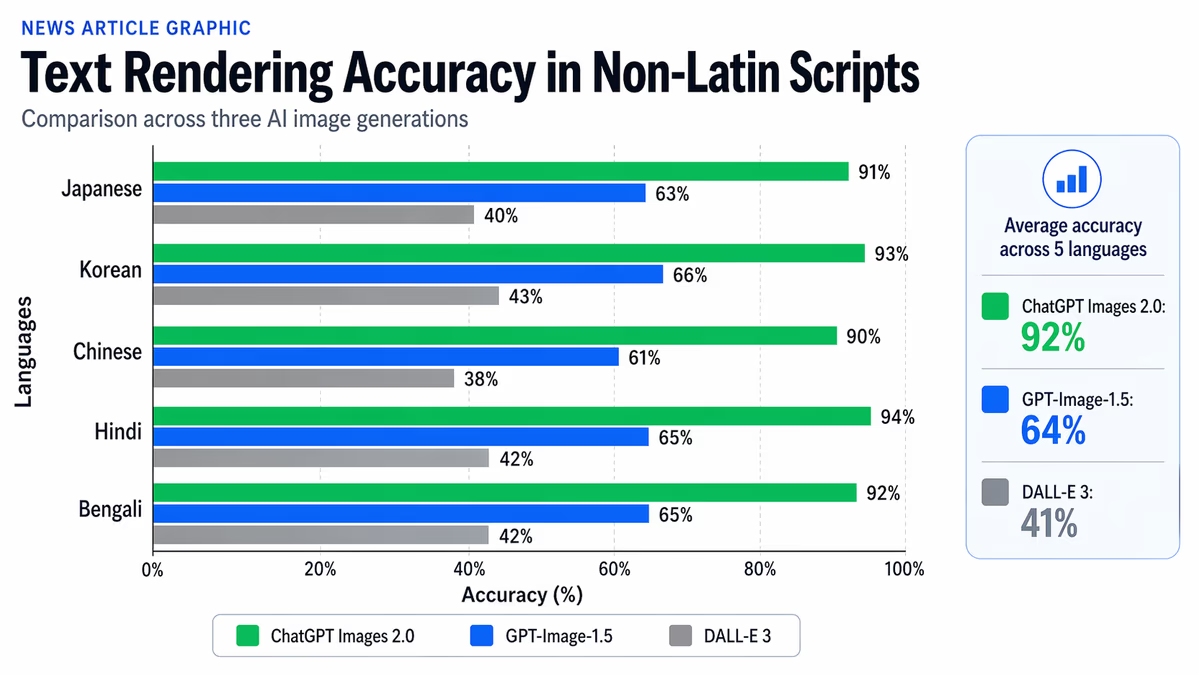
For years, generative AI has struggled with the "text problem"—the tendency to produce gibberish or visual artifacts when asked to include written words. ChatGPT Images 2.0 was specifically engineered to overcome this hurdle. The model creates text-heavy designs with crisp, legible typography, making it a viable tool for professional designers working on logos, posters, magazine layouts, and infographics. Beyond English, the model demonstrates significant gains in non-Latin scripts, including Japanese, Korean, Chinese, Hindi, and Bengali.
CEO Sam Altman characterized the leap in quality as transformative. He stated that Images 2.0 represents a massive step forward, comparing the jump in capability to moving from GPT-3 to GPT-5 in a single iteration. He noted that the model's ability to produce aesthetically remarkable outputs is a core achievement of the new architecture.
Intelligence Through "Thinking" Mode
The most distinctive feature of the new model is its "Thinking" mode. Unlike previous models that generated images in a single pass, this reasoning-heavy mode allows the AI to plan layouts before a single pixel is rendered. The model can now generate up to eight distinct images from a single prompt, perform web searches to ensure visual accuracy for real-world subjects, and analyze uploaded reference materials to maintain brand consistency.
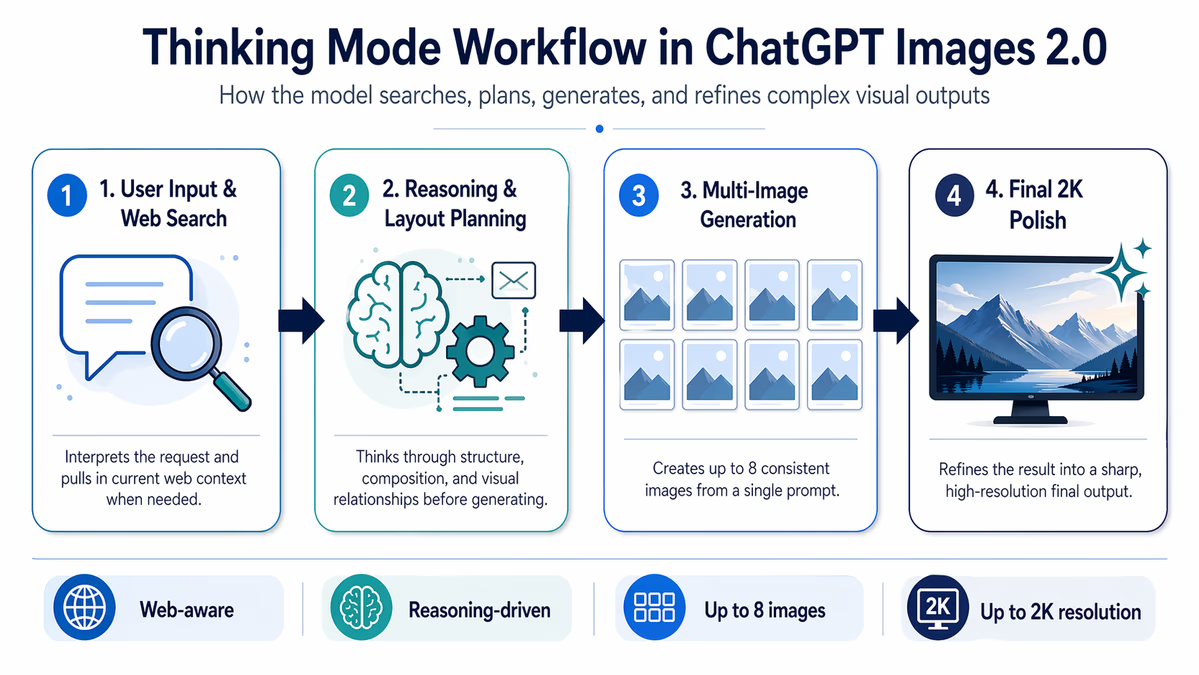
This shift reflects a philosophy OpenAI shared in its official release notes, suggesting that images should be viewed as a language rather than mere decoration. According to the company, a successful image functions like a well-constructed sentence by selecting, arranging, and revealing information to the viewer. This logic-first approach enables complex edits, such as changing the color of specific objects, removing backgrounds, or adding new elements to existing compositions with high spatial precision.
Strategic Consolidation and Competition
The arrival of Images 2.0 comes at the cost of OpenAI’s earlier experimental projects. The company confirmed that its Sora AI video app will be discontinued, with web and mobile experiences ceasing on April 26, 2026, followed by the API shutdown in September. An OpenAI spokesperson explained that the decision to shutter Sora in its consumer form allows the research team to focus on world simulation and robotics, shifting resources toward core products that are ready for enterprise adoption.
This consolidation is also visible in the expected retirement of the DALL-E brand. While DALL-E 3 was a milestone in 2023, unverified community discussions and rumors suggest that OpenAI plans to shut down DALL-E 2 and DALL-E 3 on May 12, 2026. The new model, which had been circulating on platforms like LM Arena under the leaked name "GPT-image-2," is now positioned as the definitive successor.
The competitive landscape has likely accelerated this timeline. In February 2026, Google released Nano Banana 2, also known as Gemini 3 Pro Image, which introduced its own advanced text rendering capabilities. By launching Images 2.0, OpenAI seeks to maintain its lead in the generative space, especially as Adobe continues to integrate multiple rival models, including OpenAI and Google’s latest offerings, into its Firefly ecosystem.
The Future of Visual Workflows
The release of ChatGPT Images 2.0 suggests that the industry is moving away from "prompt-and-hope" interactions toward controlled, iterative visual workflows. By supporting 2K resolution and multiple aspect ratios, OpenAI is targeting professional marketing and content creation sectors that require high-fidelity assets.
As OpenAI explores new revenue streams, including a rumored ad-driven strategy for ChatGPT, the success of Images 2.0 will be a critical metric for user engagement. The model’s ability to act as a bridge between abstract text instructions and complex, structured visual output may finally turn AI-generated imagery into a standard component of professional design suites rather than a novelty for social media sharing.