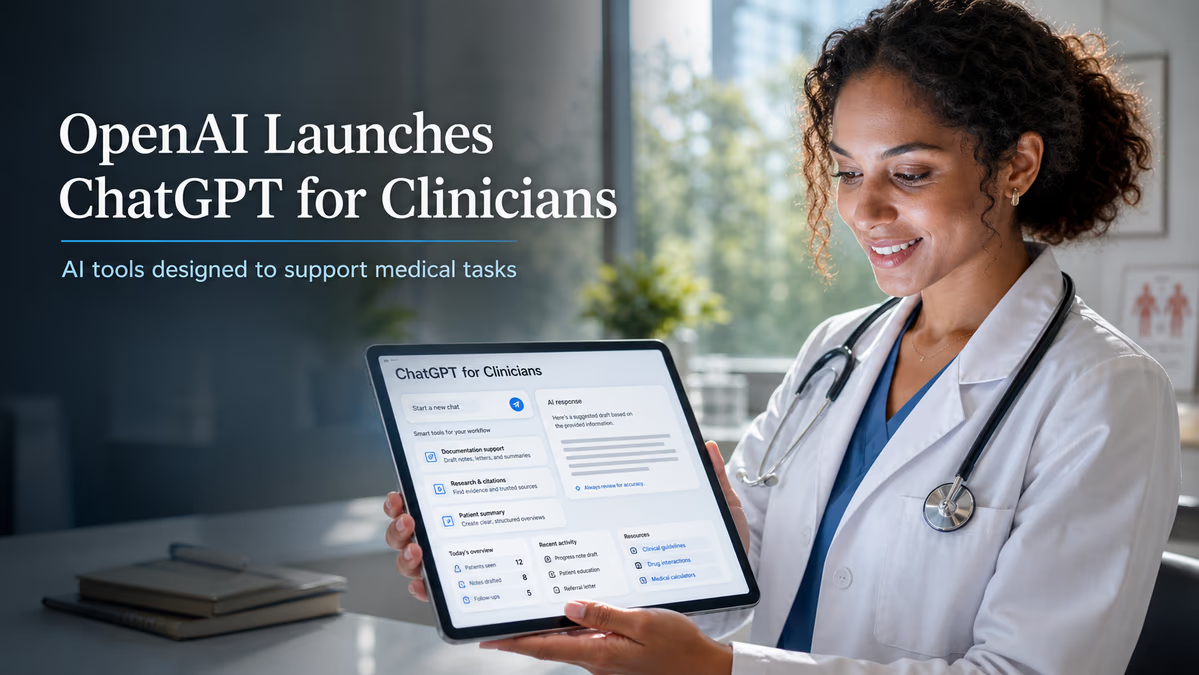
OpenAI Releases Dedicated ChatGPT for Clinicians to Combat Healthcare Burnout
OpenAI launches a free, specialized ChatGPT for clinicians to automate administrative tasks and support medical research with high accuracy ratings.
OpenAI has officially launched 'ChatGPT for Clinicians,' a specialized AI platform designed to alleviate the administrative and research burdens currently straining the United States healthcare system. Released on April 23, 2026, the tool is offered free of charge to verified physicians, nurse practitioners, physician assistants, and pharmacists. This rollout marks a significant expansion of the company’s medical strategy, transitioning from enterprise-level health systems to the individual practitioner's workflow.
A Tool for the Administrative Crisis
The launch arrives as clinical burnout reaches critical levels. Modern healthcare professionals often dedicate up to one-third of their working hours to paperwork, documentation, and insurance-related tasks. ChatGPT for Clinicians is specifically engineered to handle these workflows, including the generation of referral letters, the drafting of patient instructions, and the processing of prior authorizations.
Beyond administrative support, the platform introduces a 'clinical search' feature. This provides clinicians with citations from peer-reviewed medical sources, allowing for rapid evidence review during medical research. To further integrate the tool into professional development, OpenAI has included support for earning continuing medical education (CME) credits through the platform’s research and review capabilities.
Rigorous Safety and Performance Benchmarks
Addressing the high-stakes nature of medical technology, OpenAI subjected the model to extensive pre-launch scrutiny. Physician advisors reviewed over 700,000 model responses prior to the release. In a testing phase involving nearly 7,000 real-world clinical conversations, the company reported that 99.6% of the AI's responses were rated as safe and accurate.
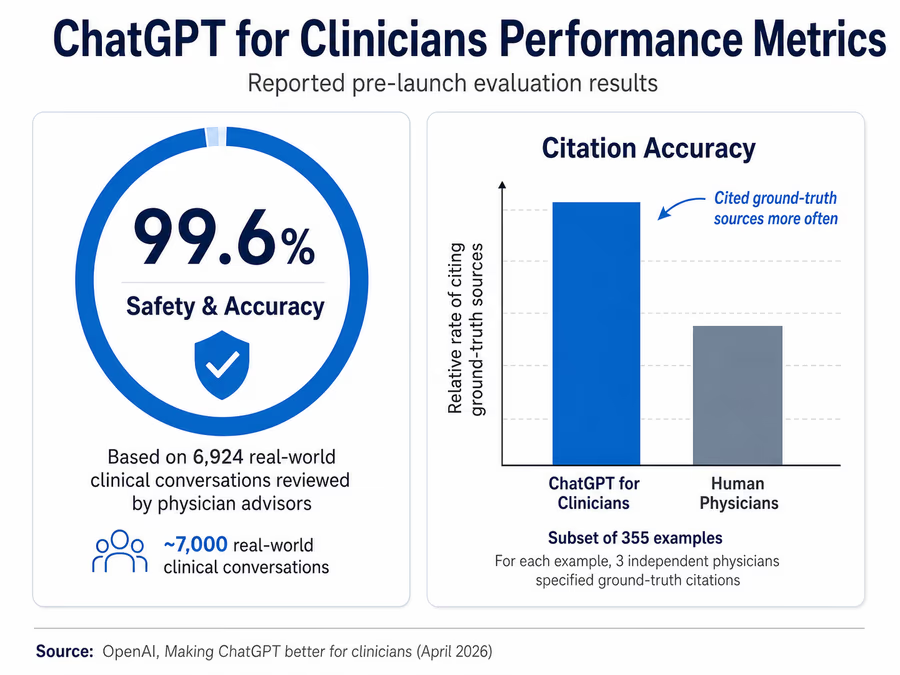
Data from OpenAI suggests that the AI may even outperform human experts in specific citation tasks. OpenAI executives noted in a blog post that on a subset of 355 examples where three independent physicians specified ground-truth citations, ChatGPT for Clinicians cited those sources more often than the human physicians. Despite these metrics, the company emphasizes that the tool is intended as a 'clinical support partner' rather than a replacement for professional judgment. OpenAI stated in a blog post that this version of ChatGPT is "as close to an ideal clinical support partner as it gets."
To standardize how these technologies are measured, OpenAI also introduced 'HealthBench Professional.' This open benchmark is designed to evaluate large language models (LLMs) on specific clinical tasks, focusing on care consultation, medical research, and documentation accuracy.
Privacy and HIPAA Compliance
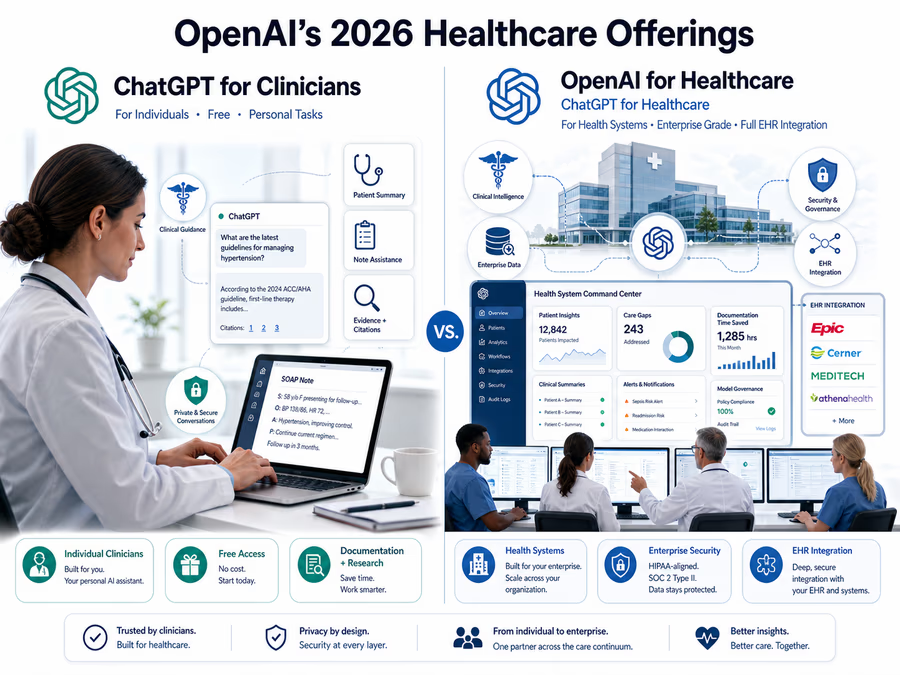
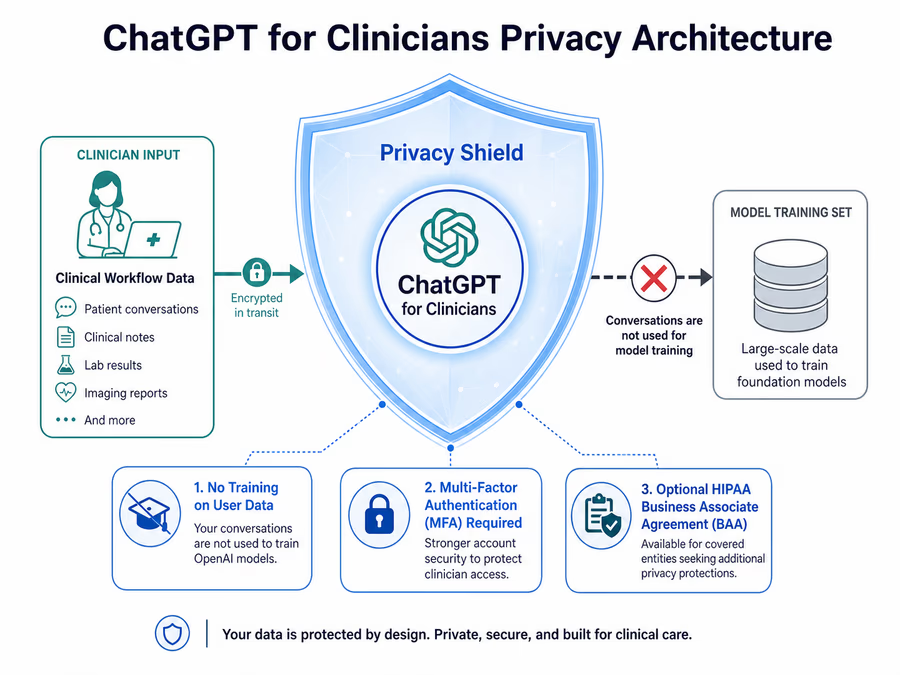
For individual users, ChatGPT for Clinicians functions as a standalone tool that does not integrate directly with Electronic Health Record (EHR) systems. However, OpenAI has built in several layers of protection for sensitive information. Conversations within the clinician-specific tool are not used to train OpenAI’s models, and the platform requires multi-factor authentication for all verified accounts.
For practitioners who require the use of Protected Health Information (PHI), OpenAI allows eligible accounts to establish a Business Associate Agreement (BAA). This enables HIPAA-compliant use of the tool, though practitioners must still manually bridge the gap between the AI and their specific EHR systems. This differs from 'OpenAI for Healthcare,' the enterprise suite launched in January 2026, which offers deep integration for large hospital networks.
The Specialization of AI
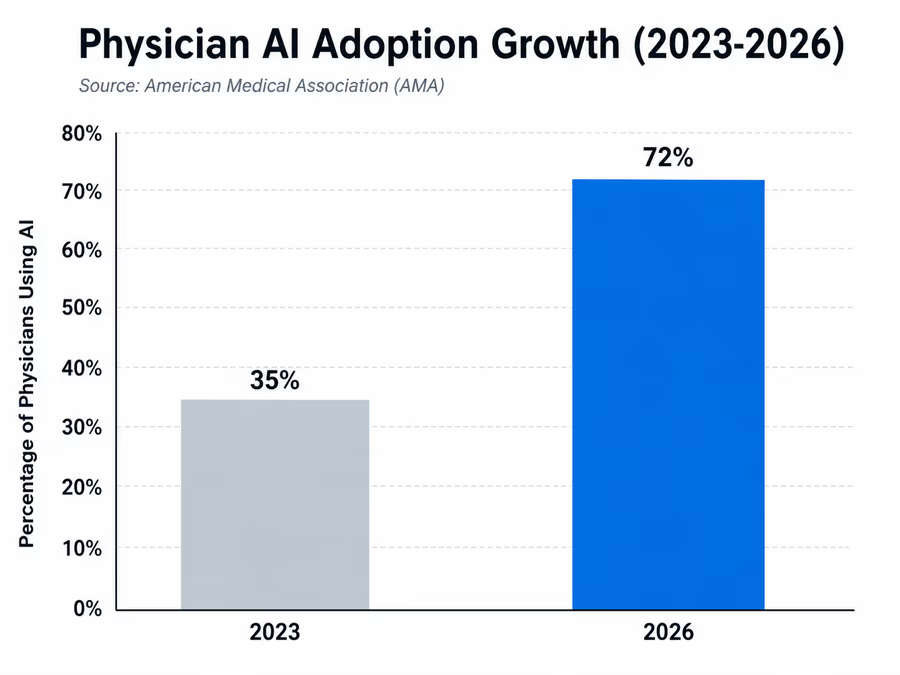
This release highlights a broader trend toward the specialization of general-purpose AI. By refining its frontier models for the medical sector, OpenAI is competing directly with healthcare AI initiatives from Anthropic, Amazon, and Google. The move follows a surge in adoption; according to a 2026 American Medical Association survey, 72% of physicians now use AI in clinical practice, more than doubling the adoption rate seen in 2023.
OpenAI stated that "improving human health will be one of the defining impacts of AI." By providing these tools for free to individual clinicians, the company appears to be betting on a bottom-up adoption strategy. If successful, this could shift the 'paradigm' of healthcare from experimental AI use to a standardized environment where AI manages the bulk of non-clinical labor.
Future Implications
While currently limited to verified professionals in the United States, OpenAI plans to expand the tool to other countries and healthcare groups in the future. The initiative places pressure on other AI developers to provide accessible, high-accuracy tools for specialized sectors. As these models become deeply embedded in the medical workflow, the focus will likely shift toward even deeper EHR integrations and the regulatory challenges of AI-assisted clinical decision-making. For now, the goal remains clear: reducing the 'bureaucratic weight' on healers to return their focus to the patient.