OpenAI's Codex Hits 4 Million Users as Anthropic's Developer Revenue Rockets to $2.5 Billion
OpenAI's Codex reaches 4 million weekly users as Anthropic's Claude Code revenue hits $2.5 billion, signaling a massive shift in AI software development.
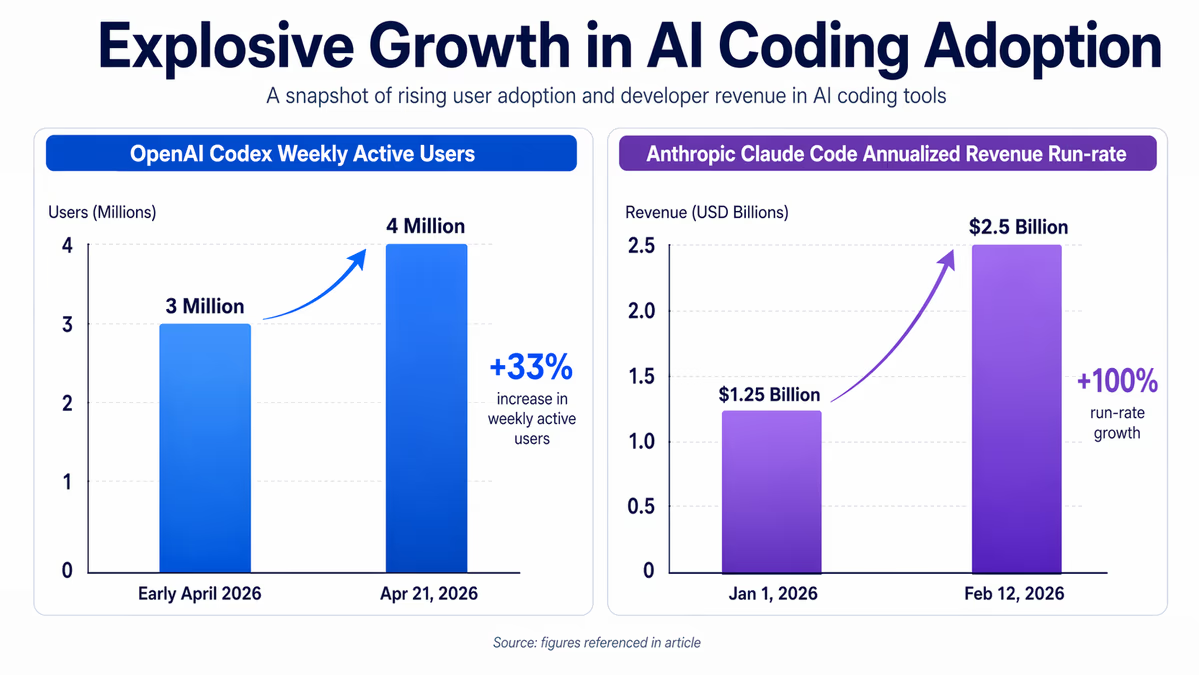
OpenAI's autonomous coding agent, Codex, reached a milestone of 4 million weekly active users on April 21, 2026, marking a gain of one million users in just a single fortnight. This surge in adoption underscores a broader explosion in the AI coding sector, where rival Anthropic is also seeing meteoric financial gains. Anthropic's developer-focused tool, Claude Code, saw its annual run-rate revenue climb to over $2.5 billion as of February 2026, effectively doubling its revenue in less than six weeks.
The Enterprise Pivot
The rapid expansion of these tools is no longer confined to individual hobbyists. OpenAI is aggressively moving into the enterprise sphere, forming strategic alliances with global consulting giants including Accenture, Capgemini, and PwC. These partnerships aim to integrate Codex-1—the autonomous software engineering agent launched in May 2025—into deep business workflows that extend beyond traditional software engineering into departments like finance and marketing.
Lan Guan, Chief AI Officer at Accenture, noted that her professionals are using the tool to transform static requirements into working solutions in hours rather than weeks. According to Guan, the platform enables rapid prototyping and real-time workflow redesign, significantly accelerating the entire development lifecycle.
Denise Dresser, Chief Revenue Officer at OpenAI, suggested that helping companies bridge the gap between initial usage and high-speed expansion is a core responsibility for the firm. She stated that these enterprise partnerships are the primary vehicle for scaling these AI capabilities globally.
Anthropic's Financial Momentum and its Critics
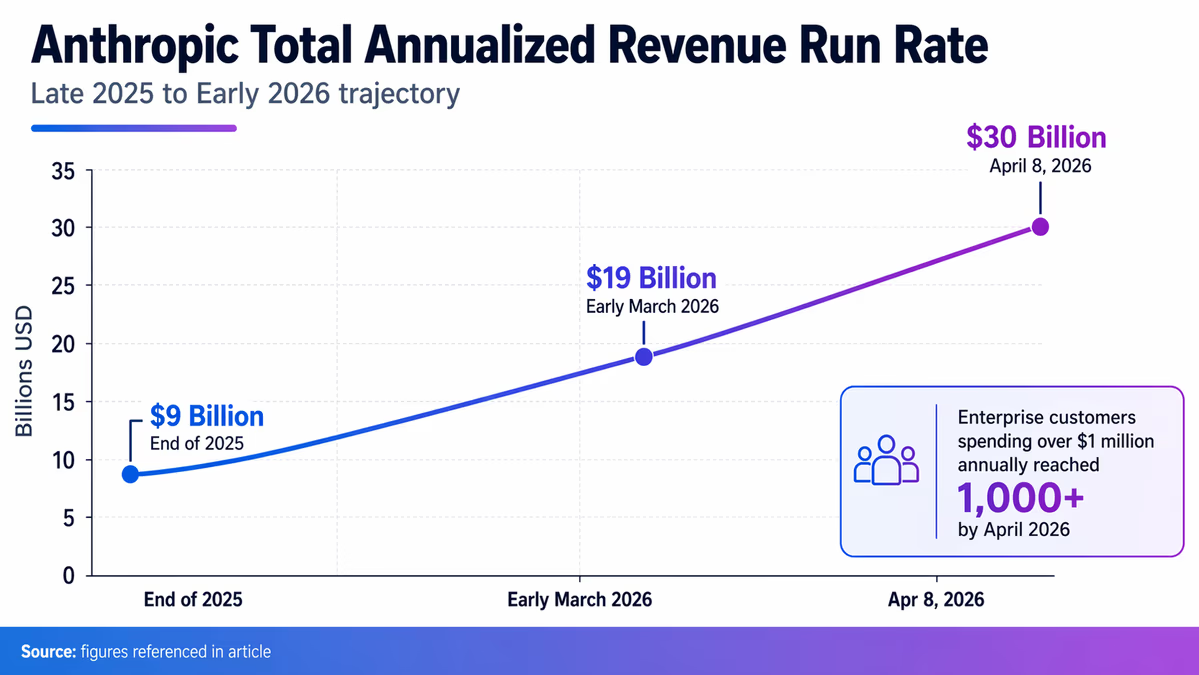
While OpenAI leads in user volume, Anthropic’s financial trajectory is drawing intense scrutiny from Wall Street. The company’s overall annualized revenue run rate surged to over $30 billion in April 2026, a staggering leap from the $9 billion reported at the end of 2025. This growth is driven by a high-value customer base; Anthropic now boasts more than 1,000 business customers spending at least $1 million annually on Claude services, a figure that doubled in the two months leading up to April 8, 2026.
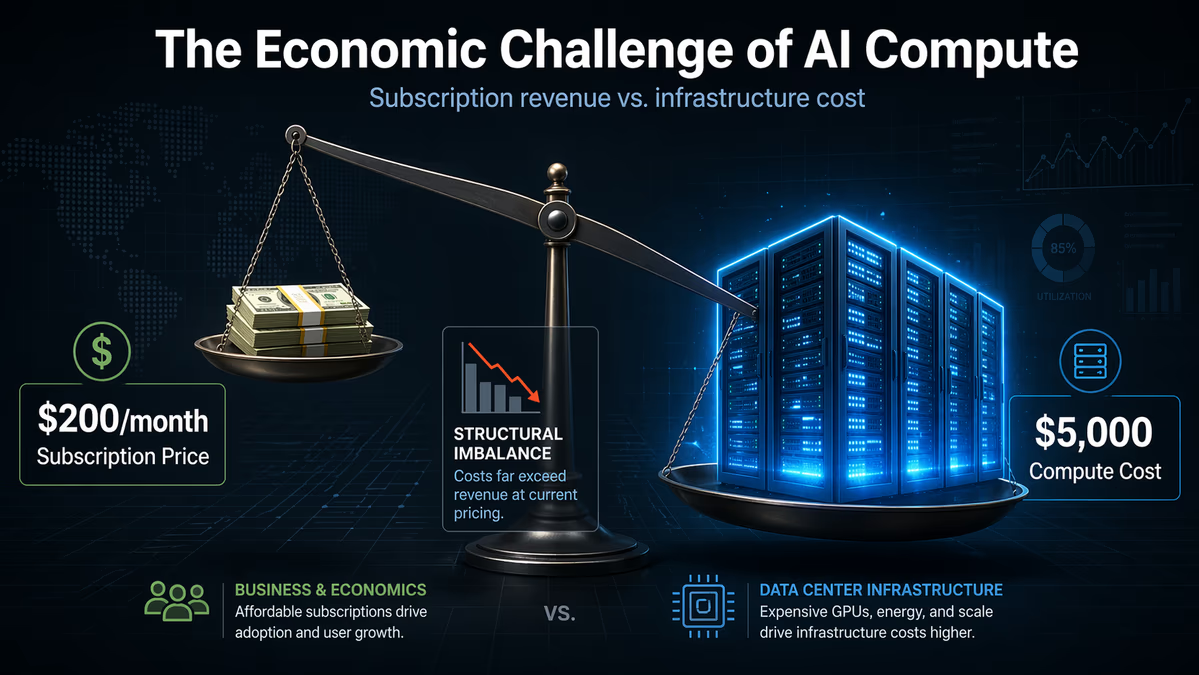
However, this rapid ascent is not without controversy. Unverified reports have surfaced suggesting that approximately $8 billion of Anthropic’s annualized revenue figures may be inflated due to specific accounting methods related to shared revenue from cloud partnerships with Google and Amazon. Furthermore, the economic sustainability of these tools is being questioned. Some industry analysts indicate that Anthropic may be heavily subsidizing its Claude Code subscriptions, with a standard $200-per-month plan potentially incurring up to $5,000 in computational costs for the company.
Quality Concerns and Security Risks
As the market expands, so do the technical growing pains. Despite the record revenue, some experts are sounding the alarm regarding the output quality of these models. Dave Kennedy, CEO of TrustedSec and a former NSA analyst, expressed significant concern over recent performance regressions. He stated that the current code quality is over 47.3% worse than it was upon initial release just five weeks prior.
These concerns are particularly focused on Claude Opus 4.6, which has reportedly introduced security vulnerabilities and shown a decline in code integrity since early February 2026. These risks have sparked a call for more robust verification protocols as businesses become increasingly reliant on AI-generated code. In response to such concerns, OpenAI recently introduced 'Codex Security,' a dedicated application-security agent designed to mitigate the risks of AI-introduced defects.
Market Outlook and Economic Impact
The AI coding tools market, valued at $7.59 billion in 2025, is now on a trajectory toward a projected $74.25 billion by 2035. This represents a compound annual growth rate (CAGR) of 25.62%. The rivalry between OpenAI and Anthropic is currently the primary engine of this growth, forcing rapid innovation in agentic assistants and autonomous code synthesis.
Anthropic has moved to secure its future by collaborating with Amazon to access 5 gigawatts of new compute capacity, while also launching specialized models like 'Mythos' to identify security vulnerabilities. Meanwhile, OpenAI is expanding Codex’s utility to include 'computer use' support and image generation, aiming to make it a holistic workspace assistant rather than just a code editor. As these tools evolve from assistants into autonomous agents, the long-term economic viability of the sector will likely depend on finding a balance between high compute costs and sustainable enterprise pricing models.