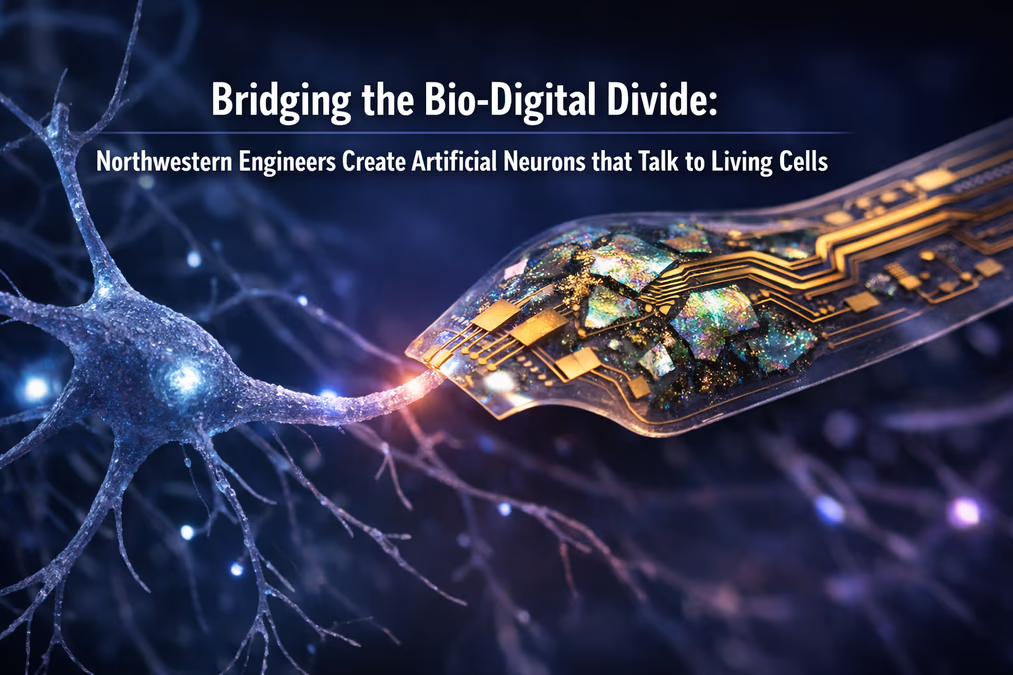
Bridging the Bio-Digital Divide: Northwestern Engineers Create Artificial Neurons that 'Talk' to Living Cells
Northwestern University engineers have developed printed artificial neurons that can communicate directly with living mouse brain cells using MoS2.
Northwestern University engineers have successfully bridged the gap between synthetic hardware and biological matter, demonstrating printed artificial neurons that can communicate directly with living brain cells. By generating lifelike electrical signals, these flexible, low-cost devices have successfully triggered responses from real neurons within mouse brain tissue, marking a significant milestone for the future of neurotechnology and energy-efficient computing.
Detailed in a study published on April 15, 2026, in the journal Nature Nanotechnology, the research was led by Mark C. Hersam, the Walter P. Murphy Professor of Materials Science and Engineering at Northwestern’s McCormick School of Engineering. The team collaborated with Indira M. Raman, the Bill and Gayle Cook Professor of Neurobiology at Weinberg, to validate the artificial devices on biological cerebellum slices.
A New Language of Silicon and Biology
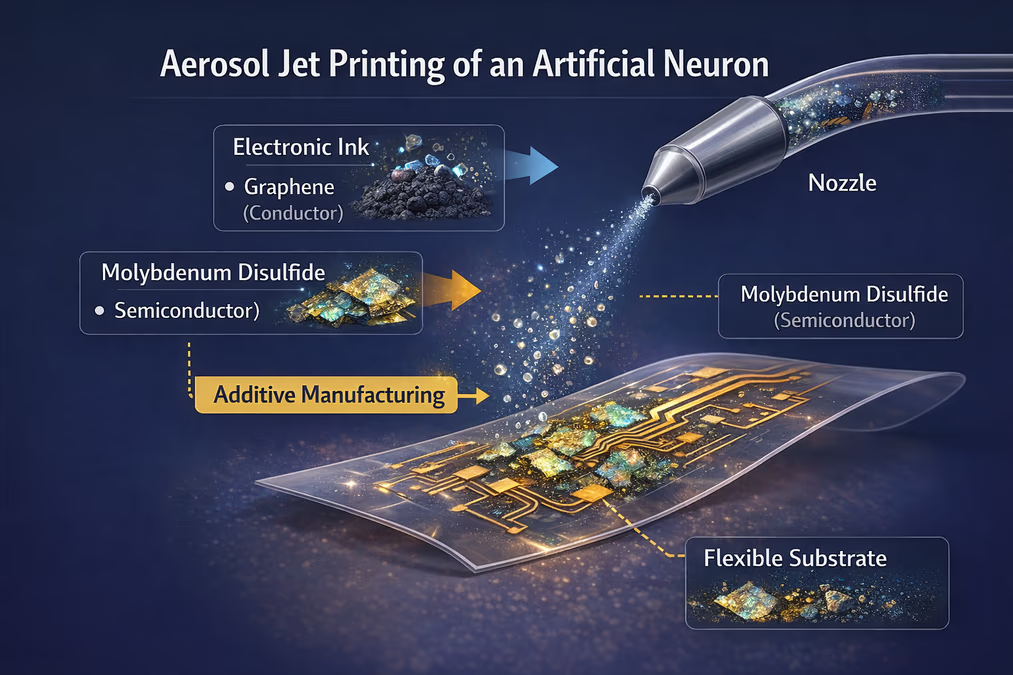
Unlike traditional silicon transistors that operate in binary 'on or off' states, these artificial neurons mimic the brain's complex, analog signaling. The devices are fabricated using a specialized aerosol jet printing technique, an additive manufacturing process that places material only where needed. This method uses electronic inks composed of nanoscale flakes of molybdenum disulfide, which acts as a semiconductor, and graphene, which serves as an electrical conductor.
The result is a device capable of producing a variety of signaling patterns, including single spikes, continuous firing, and bursting patterns. These patterns are the fundamental 'language' of the nervous system. While previous attempts to create such devices used organic materials or metal oxides, they often failed to match the timing of biological systems.
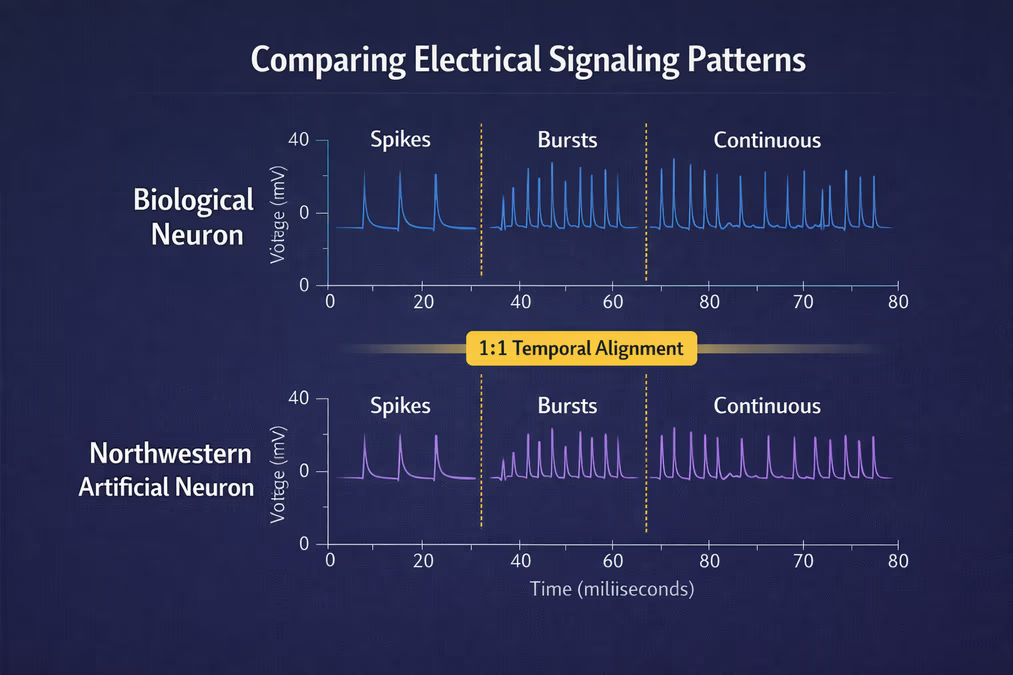
"Other labs have tried to make artificial neurons with organic materials, and they spiked too slowly. Or they used metal oxides, which are too fast," explained Mark C. Hersam. "We are within a temporal range that was not previously demonstrated for artificial neurons. You can see the living neurons respond to our artificial neuron. So, we've demonstrated signals that are not only the right timescale but also the right spike shape to interact directly with living neurons."
Solving the AI Energy Crisis
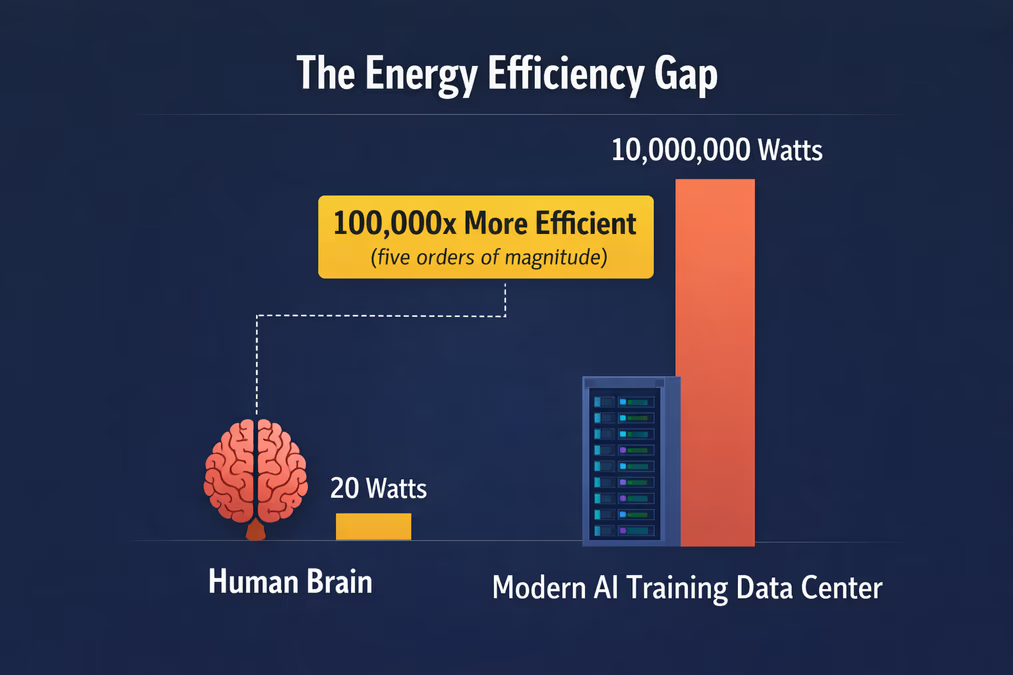
The drive behind this research isn't just about biological integration; it is also a response to the massive energy demands of modern artificial intelligence. Today’s AI models require enormous datasets and high-powered data centers, leading to a significant power-consumption problem. In contrast, the human brain is approximately five orders of magnitude more energy-efficient than a digital computer, performing complex cognitive tasks while consuming only about 20 watts of power.
Hersam noted that the world is currently dominated by AI that grows smarter by training on more data, which inevitably leads to hardware bottlenecks. He argued that it makes sense to look to the brain for inspiration for next-generation computing because of its superior efficiency. By mimicking the brain's heterogeneous and dynamic 3D networks, researchers hope to move beyond the rigid constraints of billions of identical transistors found on traditional chips.
Applications in Neuroprosthetics and Beyond
The ability of artificial neurons to interface directly with the nervous system opens the door to a new generation of medical interventions. Because these devices are flexible and can be produced using low-cost printing techniques, they are ideal candidates for advanced brain-machine interfaces and neuroprosthetics.
In the future, these printed neurons could be integrated into implants designed to restore lost sensory or motor functions. For instance, they could potentially serve as the foundation for devices that help restore hearing, vision, or movement for individuals with neurological impairments. By speaking the same 'electrical language' as the body, these interfaces could offer a level of seamless integration that current technologies cannot match.
Beyond medicine, the implications for the AI industry are profound. This research lays the groundwork for neuromorphic computing—a field dedicated to creating computers that learn and adapt like biological brains. Rather than following fixed, pre-fabricated paths, future hardware could utilize these artificial neurons to perform complex operations with a fraction of the power required by today’s digital architectures.
As the industry continues to grapple with the environmental and financial costs of data-hungry AI, Northwestern's breakthrough suggests that the path forward may involve making our machines a little more like ourselves. By capturing the right timescale and spike shape of biological life, these artificial neurons represent the first step toward a future where the line between computer code and biological thought becomes increasingly blurred.