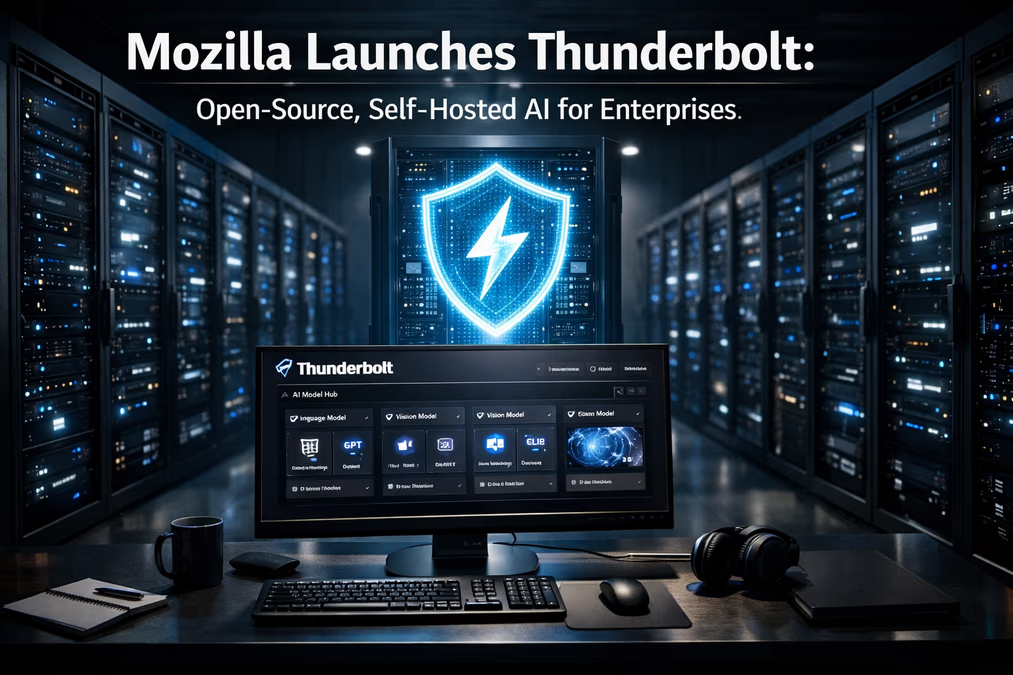
Mozilla Challenges Big Tech with Thunderbolt: A Sovereign AI Client for the Enterprise
Mozilla's subsidiary MZLA launches Thunderbolt, a self-hosted AI client giving enterprises full control over their data, models, and infrastructure.
On April 16, 2026, MZLA Technologies Corporation, the Mozilla subsidiary responsible for the long-standing Thunderbird email client, officially launched Thunderbolt. This open-source, self-hosted AI client is designed specifically for enterprises, marking a significant pivot in the corporate AI landscape by prioritizing data sovereignty and organizational control over the convenience of managed cloud services.
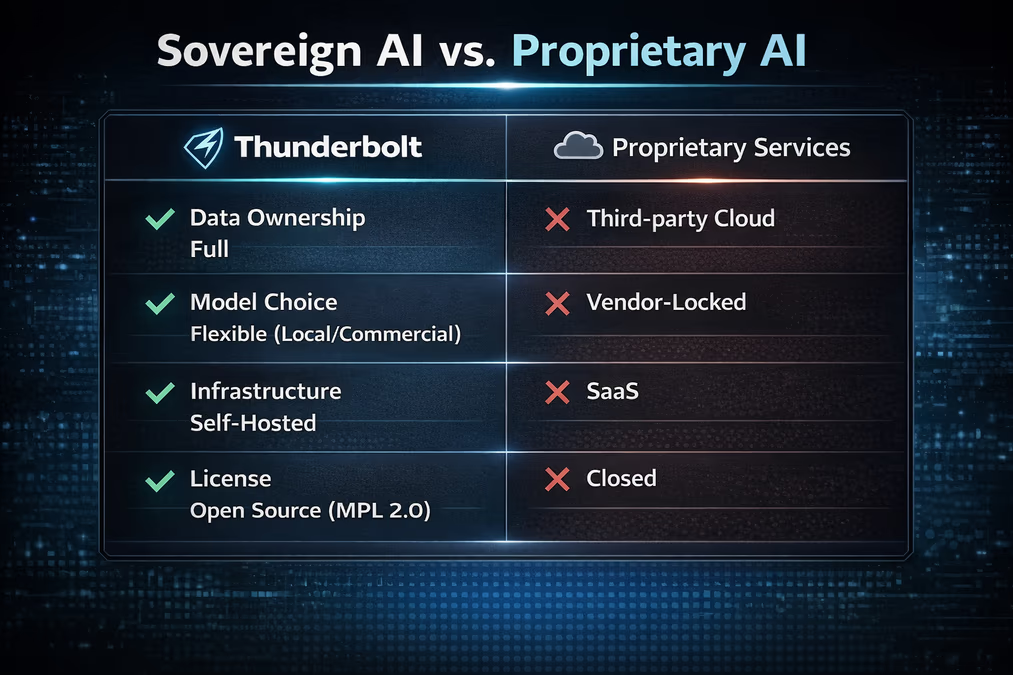
Thunderbolt emerges as a direct challenge to proprietary heavyweights such as Microsoft Copilot, ChatGPT Enterprise, and Claude Enterprise. Rather than funneling sensitive corporate data through third-party servers, Thunderbolt allows businesses to host their own AI infrastructure. This architecture ensures that internal data, proprietary workflows, and model interactions remain entirely within the organization’s firewall.
The Problem of AI Sovereignty
For many organizations, the adoption of generative AI has been tempered by fears of vendor lock-in and data leakage. Ryan Sipes, CEO of MZLA Technologies Corporation, addressed these concerns directly at the launch. "The problem we are solving today is one of sovereignty and control," Sipes said. "Do you really want to build your AI workflows on top of a proprietary service from OpenAI or Anthropic … not to mention having all your internal company data flowing through their systems?"
Sipes emphasized that for many firms, particularly those in highly regulated sectors, the current AI model is untenable. "AI is too important to outsource. With Thunderbolt, we're giving organizations a sovereign AI client that allows them to decide how AI fits into their workflows – on their infrastructure, with their data, and on their terms."
Technical Flexibility and Open Standards
One of Thunderbolt's most compelling features is its flexibility regarding the underlying AI models. Unlike proprietary clients that lock users into a specific model family, Thunderbolt allows enterprises to choose between commercial APIs, open-source models, or locally hosted instances.
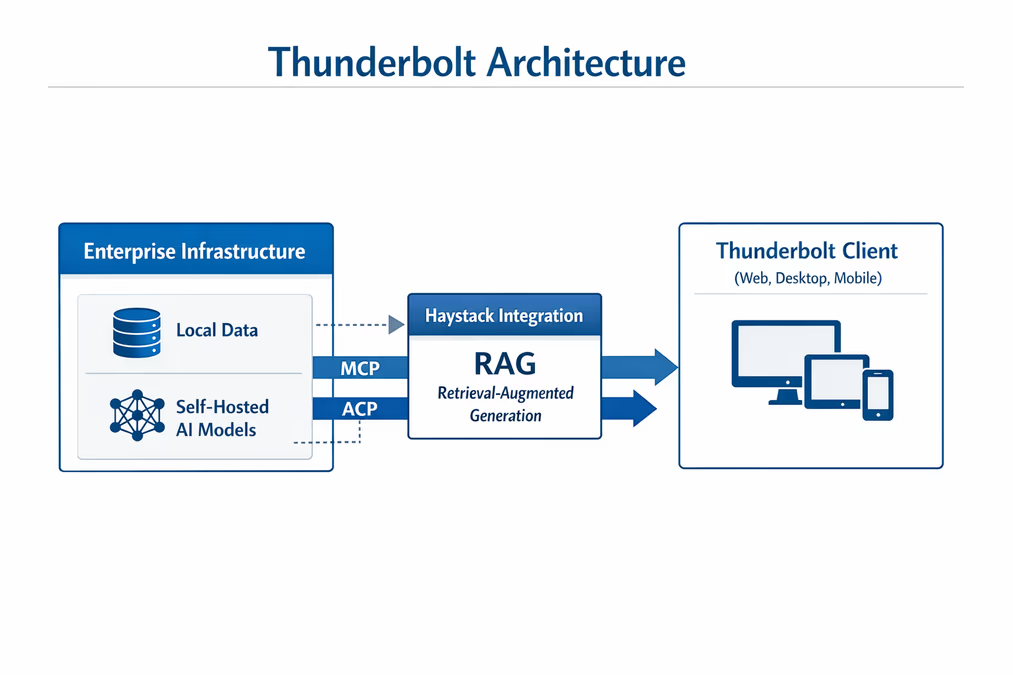
The platform features native integration with deepset’s Haystack platform. This partnership allows for sophisticated AI orchestration and retrieval-augmented generation (RAG), which connects AI models to an organization’s specific knowledge base. According to Sipes, "Integrating with Haystack is a natural opportunity to extend Thunderbolt's sovereignty to the infrastructure beneath. This gives organizations control not just over how they interact with AI, but how it is built and run."
Thunderbolt also champions interoperability by supporting open protocols such as the Model Context Protocol (MCP) and the Agent Client Protocol (ACP). These standards facilitate a modular ecosystem where different AI agents and data sources can communicate seamlessly, regardless of their origin.
Enterprise Features and Workflow Automation
Beyond simple chat interfaces, Thunderbolt is built for productivity. It supports the automation of recurring tasks, including the generation of executive briefings, topic monitoring across vast datasets, and the compilation of complex reports. The client is available across nearly every major platform, with native applications for Windows, macOS, Linux, iOS, and Android, alongside a web-based version.
While the software is open-source—available on GitHub under the Mozilla Public License 2.0 (MPL 2.0)—MZLA Technologies plans to monetize the project through enterprise licensing and managed-hosting plans for companies that prefer a turnkey solution without the overhead of local maintenance.
Context and Early Criticism
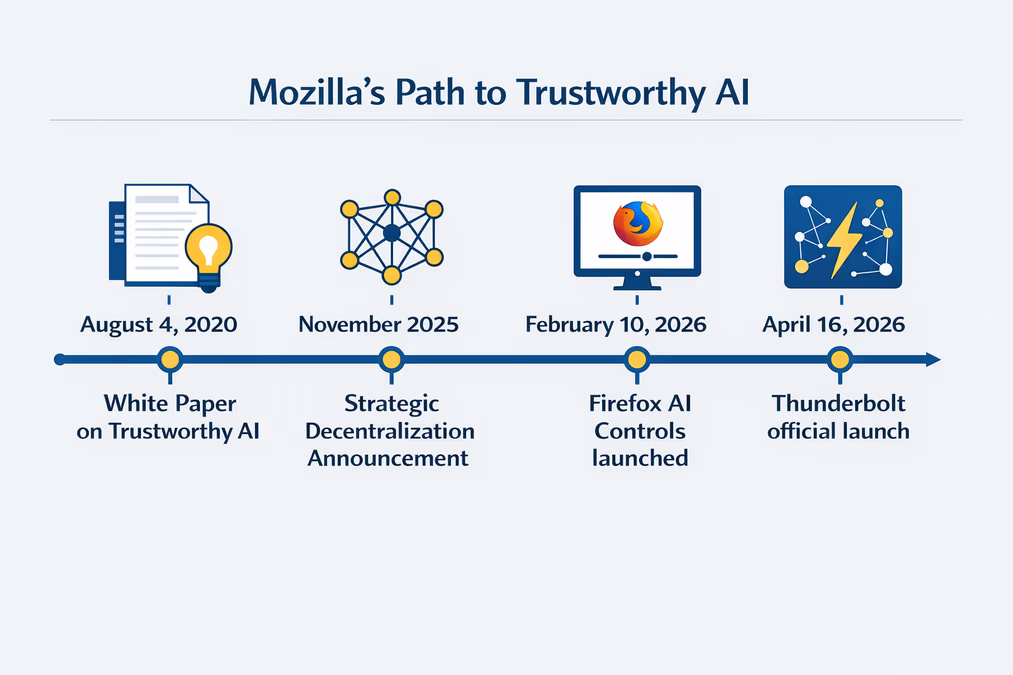
Mozilla’s launch of Thunderbolt aligns with its broader mission to decentralize the web and promote "trustworthy AI." This strategy was publicly detailed as early as 2020 and solidified in early 2026 with the introduction of AI controls in the Firefox browser, which allowed users to opt-out of generative features. MZLA Technologies stated in a blog post that Thunderbolt offers organizations full ownership of their data, freedom from vendor dependencies, and an infrastructure that stays entirely within their hands.
However, the launch has not been without minor controversy. According to unverified reports, some industry observers have criticized the name "Thunderbolt," noting that it is already a well-established technology interface standard (developed by Intel and Apple). Additionally, while the platform prioritizes privacy, Thunderbolt ships with telemetry enabled by default to collect usage data. While MZLA claims this does not include personally identifiable information (PII) and can be disabled in settings, the "opt-out" rather than "opt-in" approach has raised eyebrows among some privacy purists.
Forward-Looking Implications
As of its launch, Thunderbolt is currently undergoing a rigorous security audit and is not yet considered production-ready for mission-critical deployments. Nevertheless, the release of its source code marks a significant milestone for organizations with stringent compliance needs, such as healthcare providers, legal firms, and financial institutions.
If Thunderbolt achieves widespread adoption, it could fundamentally shift the power balance in the AI sector. By providing a viable, high-quality alternative to the 'Big AI' providers, Mozilla is betting that the future of the enterprise will be built on "owners, not renters." The success of this initiative will likely hinge on the maturity of its integration ecosystem and the speed at which it can pass its security certifications to meet the demands of the world's most cautious enterprises.