
Moonshot AI Unveils Kimi K2.6: An Open-Source Coding Powerhouse with 300-Agent Swarm Capacity
Moonshot AI releases Kimi K2.6, a 1-trillion parameter open-source model featuring advanced agent swarms and state-of-the-art coding performance.
Moonshot AI Launches Kimi K2.6
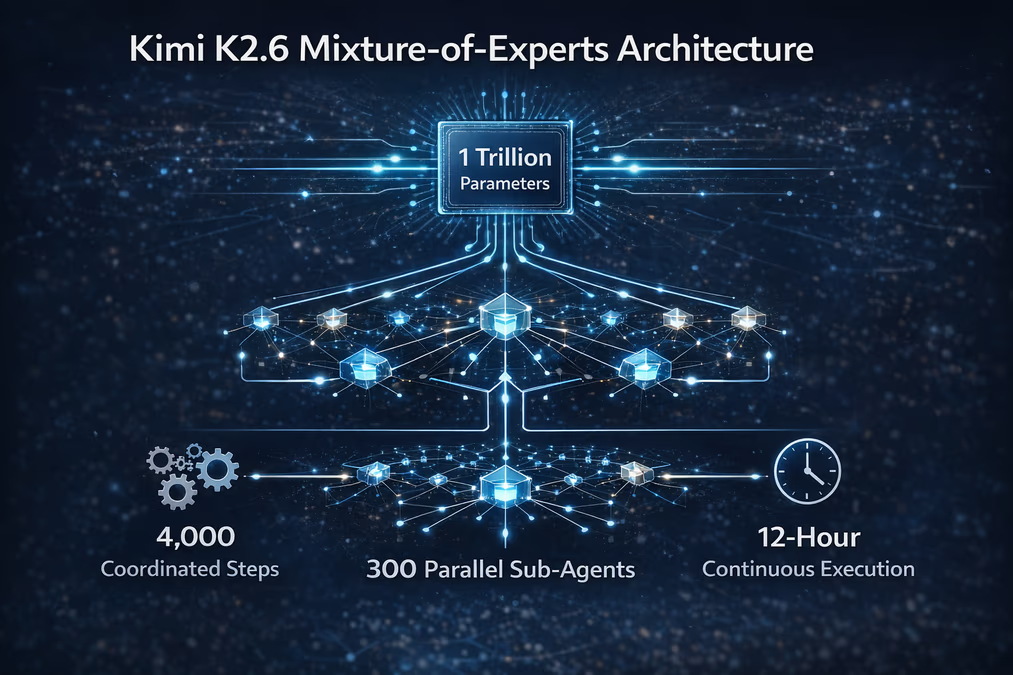
Moonshot AI officially released Kimi K2.6 on April 20, 2026, marking a significant milestone in the evolution of open-source artificial intelligence. The new model is a sophisticated Mixture-of-Experts (MoE) coding powerhouse designed to compete directly with the industry's most advanced proprietary systems. Built with 1 trillion total parameters—32 billion of which are active per token—Kimi K2.6 represents a massive leap in scale and efficiency for the Beijing-based AI firm.
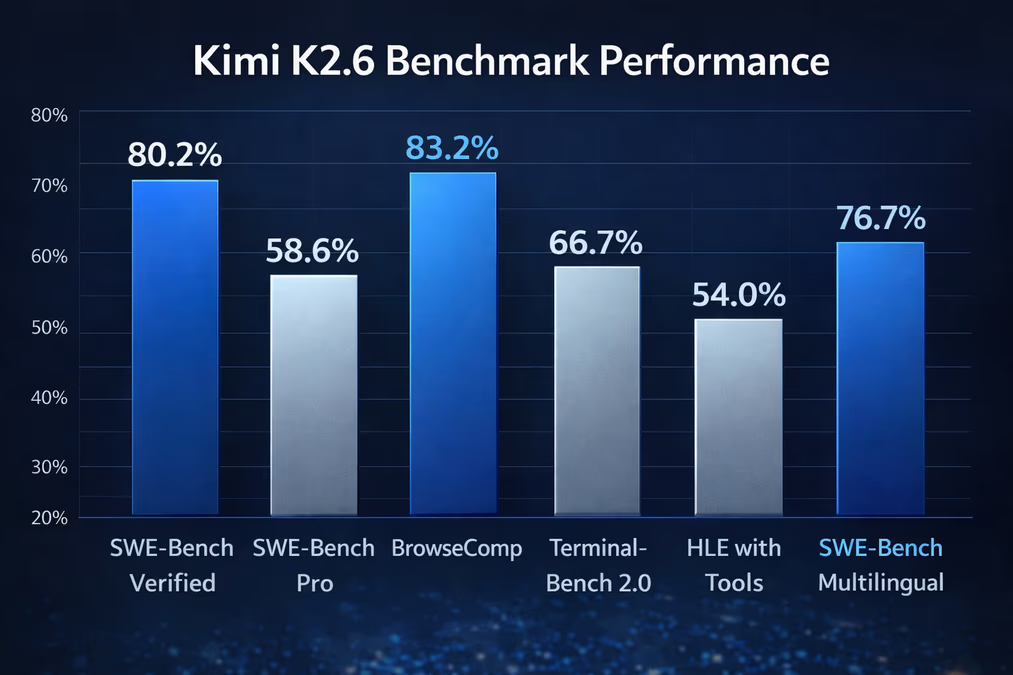
The release follows a year of rapid iteration for Moonshot AI, which was founded in early 2023. Kimi K2.6 is not merely a text generator; it is a specialized engine for complex, long-horizon tasks. It achieves state-of-the-art (SOTA) performance among open models across a wide range of rigorous benchmarks. Notably, it scored 80.2% on SWE-Bench Verified and 58.6% on SWE-Bench Pro, placing it at the top of the open-source hierarchy for software engineering tasks.
Triple-Strength Agent Swarms and Long-Horizon Execution
A standout feature of Kimi K2.6 is its significantly expanded agentic capability. The model’s agent-swarm capacity has been tripled since its predecessor, now supporting up to 300 parallel sub-agents. This allows K2.6 to execute up to 4,000 coordinated steps in a single run, facilitating the autonomous decomposition of complex projects into manageable sub-tasks.
Moonshot AI has engineered the model for persistence, enabling continuous execution for over 12 hours and handling more than 4,000 tool calls. This makes K2.6 particularly well-suited for "always-on" agents. Scott Breitenother, Co-founder and CEO of Kilo Code, emphasized the model's value for high-intensity developer environments. He stated that K2.6 offers SOTA-level performance at a fraction of the cost, noting its exceptional ability to handle long-context tasks across the codebase and support persistent agents like KiloClaw.
Creative Coding and Native Multimodality
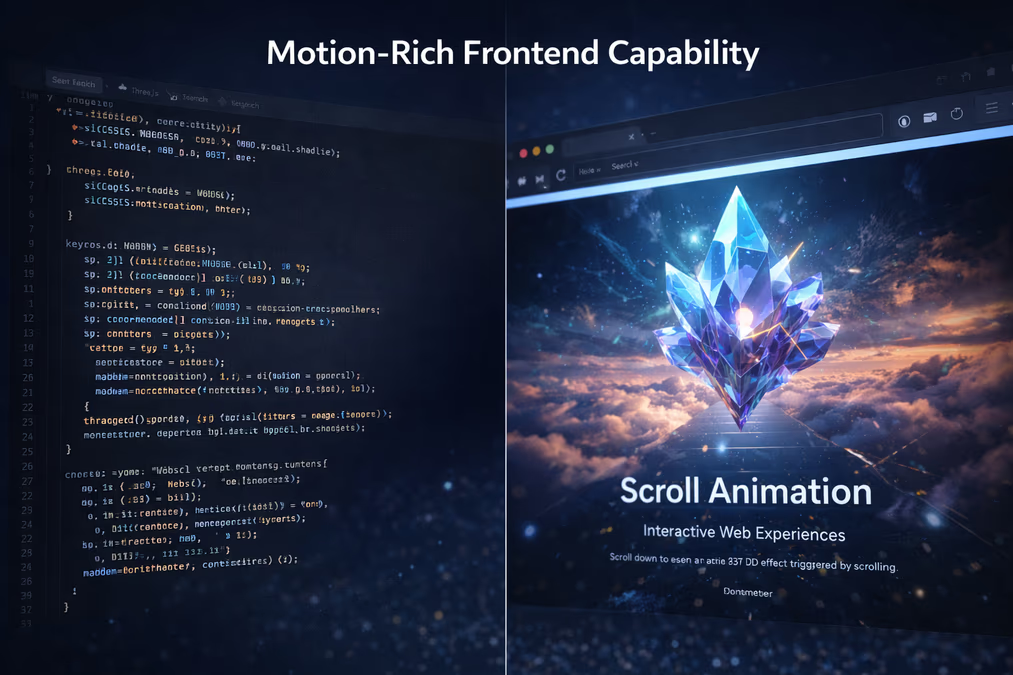
Beyond pure logic and DevOps, Kimi K2.6 introduces a creative dimension rarely seen in coding models. It possesses a "motion-rich frontend capability," allowing it to generate WebGL shaders and drive Three.js scenes with scroll-triggered animations. This enables the model to create sophisticated user interfaces with video backgrounds and 3D effects directly from prompts.
The model is natively multimodal, supporting text, image, and video inputs, and features a 262,144-token context window. Moonshot AI reported that the model generalizes robustly across major programming languages including Rust, Go, and Python, while covering domains ranging from performance optimization to frontend design.
Strategic Open-Source Licensing and Market Impact
Moonshot AI is making the Kimi K2.6 weights available on Hugging Face for self-hosting, while also offering access through its own API platform, Workers AI, and Kilo Code. However, the model operates under a modified MIT license. This strategic variant requires visible credit to "Kimi K2.6" for any commercial product that exceeds 100 million monthly active users or $20 million in monthly revenue.
This licensing move suggests Moonshot AI is aiming for widespread adoption among developers while ensuring brand recognition as its technology powers the next generation of high-traffic applications. The release is expected to intensify competition among major AI labs, particularly as K2.6's performance rivals leading closed-source models such as GPT-5.4 and Claude Opus 4.6.
Context and Future Horizons
The Kimi series has evolved at a breakneck pace. Starting with a 128,000-token chatbot in late 2023, the company has introduced specialized models for thinking, vision, and now, extreme-scale agentic coding. The latest release also introduces a research preview feature called "Claw Groups," intended to facilitate better human-machine collaboration.
While K2.6 is now the flagship, the industry is already looking toward what comes next. According to unconfirmed reports from a late-March Reddit leak—which accurately predicted the K2.6 release—Moonshot AI is currently developing "Kimi K3." Rumors suggest this next iteration aims for a parameter scale of 3 to 4 trillion, specifically designed to challenge the largest flagship models from American AI labs.
As Kimi K2.6 enters the ecosystem, its ability to power proactive, persistent agents for 24/7 autonomous operations without human oversight marks a clear shift toward a new era of AI-driven software development. By lowering the barrier for sophisticated agentic workflows, Moonshot AI is positioning itself as a central pillar of the global open-source community.