Microsoft Introduces Scout: An Always-On Personal AI Agent Built on OpenClaw
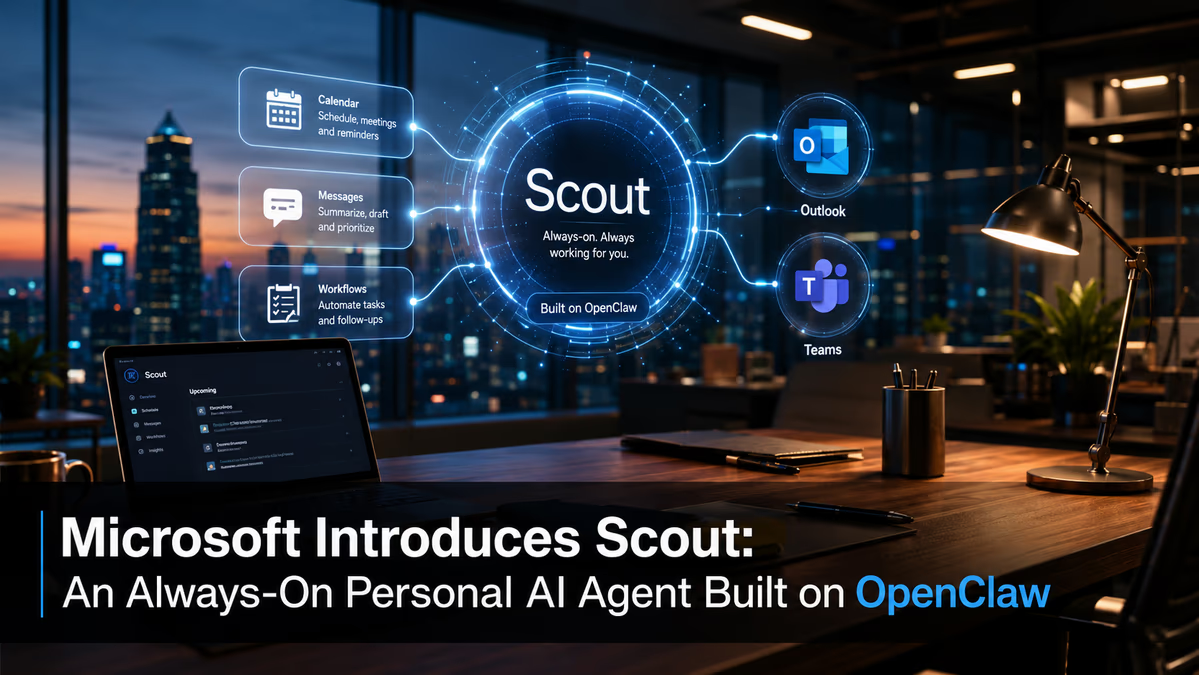
Microsoft debuted Scout at Build 2026, a persistent, always-on personal AI agent built on OpenClaw and designed for secure enterprise automation.
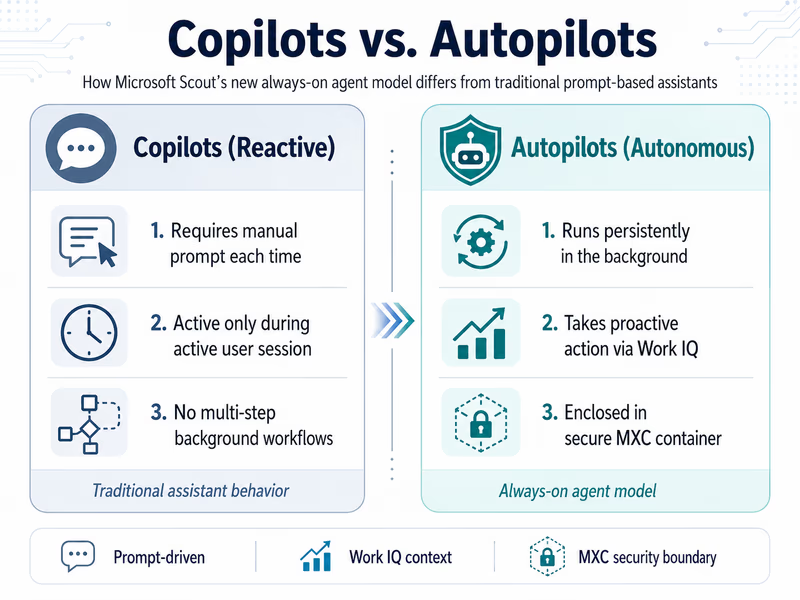
Microsoft debuted Scout, an always-on personal AI agent, at its Build 2026 developer conference on Tuesday. Built on the popular open-source OpenClaw architecture, Scout is the first release in a new class of autonomous assistants Microsoft calls 'Autopilots.' Unlike traditional, reactive Copilots, these Autopilots are engineered to run persistently in the background, executing multi-step workflows and managing daily digital chores across various applications without waiting for constant user prompts.
Redefining Work with Pervasive Autopilots
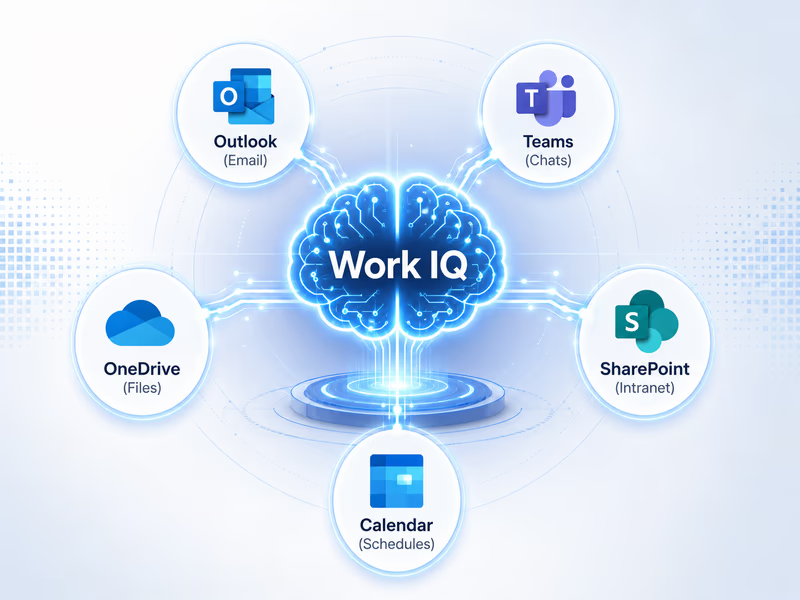
The debut of Scout represents a significant milestone in Microsoft's broader AI strategy, marking a transition from co-piloting to delegation. Deeply integrated into the Microsoft 365 ecosystem, Scout connects to Outlook, Teams, OneDrive, and SharePoint. By analyzing data from chats, emails, calendars, and contacts, the agent gains a deep contextual understanding of its user's daily duties, powered by Microsoft's Work IQ service.
Omar Shahine, Corporate Vice President at Microsoft, described the fundamental shift this represents. "Autopilots stay active in the background, understand how work gets done across your apps and systems, and take action without needing to be prompted each time," Shahine said. He later added, "This is a personal assistant, it's the first real personal assistant we've offered customers."
The practical utility of this persistent assistant is expected to target the tedious planning and administrative coordination that clogs corporate calendars. AJ Ansari, a Microsoft AI expert and Chief Operating Officer of DSWi, noted that "Scout handles all the stuff that quietly eats your morning before you have had a chance to do anything useful."
The Security and Governance Framework
Autonomous agents running unchecked across an enterprise network pose obvious security and compliance risks. To address these concerns, Microsoft designed Scout with rigorous enterprise-grade governance. Scout is assigned its own Microsoft Entra identity, operates under the strict enforcement of Microsoft Purview data protection policies, and is programmed to require explicit human approval before executing sensitive actions.
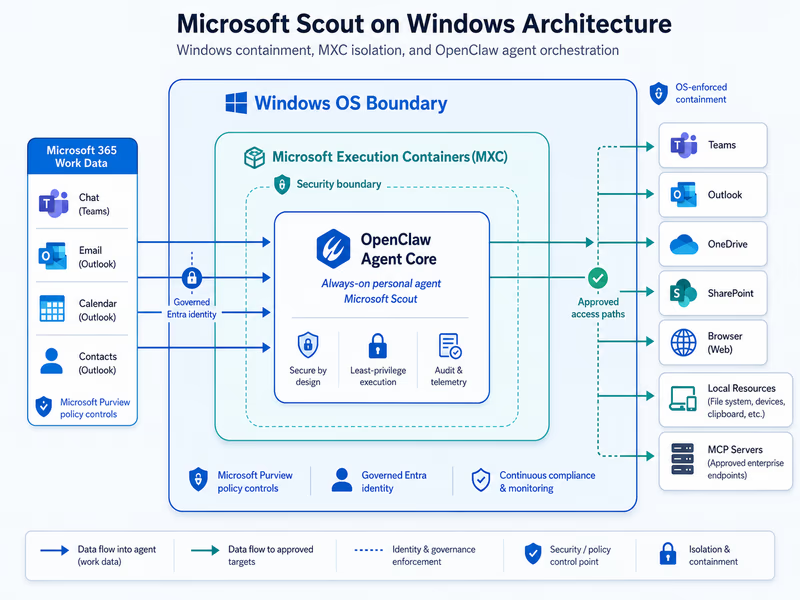
Underpinning this security model on the desktop are Microsoft Execution Containers (MXC). These containers provide a policy-driven execution layer and strict containment boundaries for agents running on Windows, ensuring they do not interfere with unauthorized system operations. Kyle Daigle, Microsoft Developer CMO, explained that "agents can execute multi-step workflows locally while running inside an operating system-enforced boundary rather than unmanaged user sessions." Additionally, Microsoft announced the general availability of Windows 365 for Agents, offering secure, cloud-hosted PCs specifically dedicated to executing complex enterprise workflows.
A Strategic Open-Source Evolution
The decision to build Scout on the open-source OpenClaw framework is a highly strategic pivot. OpenClaw gained massive popularity in late 2025 for its versatile multi-agent capabilities, but its broad permissions raised security alarms. In February 2026, OpenAI acquired the OpenClaw project and hired its founder. Around the same time, Microsoft's own security teams advised organizations to only run OpenClaw within strictly isolated environments.
Instead of abandoning the open-source architecture, Microsoft has embraced it while hardening its defenses. Microsoft announced it is contributing a 'policy conformance' layer back to the open-source OpenClaw project to help other organizations validate security and compliance. Satya Nadella, Microsoft Chairman and CEO, put this in perspective during his keynote: "We can think of autopilots as enterprise-grade Claws. These are autonomous, long-running agents with full enterprise compliance that run in your tenant. Autopilots can have a name, personality, custom connectors, context, and memory."
Market Context and Industry Shift
The rollout of Scout arrives amid intense competition in the 'agentic AI' space. Just days prior to Microsoft's announcement, Google introduced its own OpenClaw-based agent, Spark. Meanwhile, hardware giant NVIDIA is already leveraging Microsoft's MXC software development kit to bring 'OpenShell,' an easy-to-deploy package for secure, always-on agents, to the Windows platform. To support these complex reasoning tasks, Microsoft also introduced seven new in-house 'MAI' models specialized in tasks ranging from coding and image generation to voice translation.
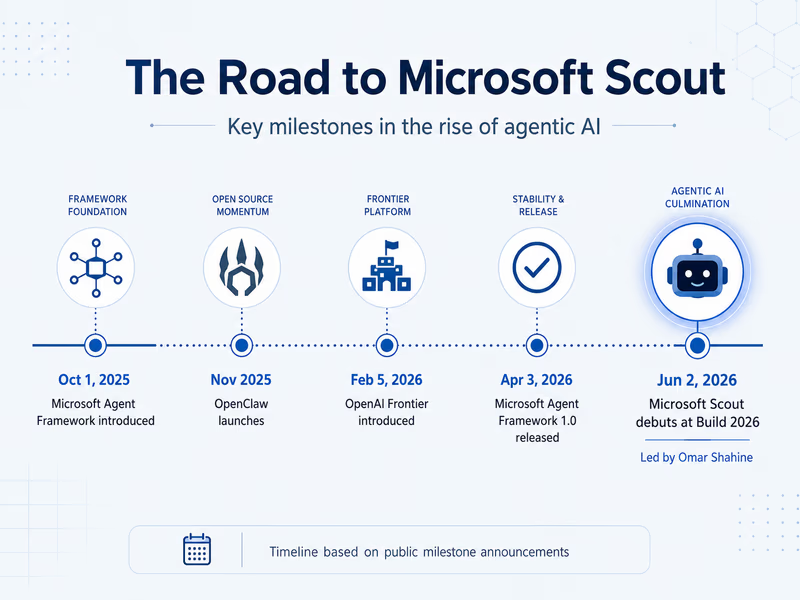
Scout is currently available as a desktop app preview for enterprise organizations and individuals enrolled in Microsoft's Frontier program in the United States.
Challenges and Future Outlook
While Scout promises a massive productivity leap by handling routine 'coordination work,' the shift to fully autonomous agents introduces unique challenges. Industry experts caution that issues like goal alignment, multi-step reasoning drifts, and tool misuse remain persistent hurdles. As enterprises begin testing Scout in the wild, the technology's success will depend heavily on whether Microsoft's governance layers can successfully contain these agentic errors while maintaining the autonomy that makes them useful in the first place.