Meta Enrolls US Workforce in Mandatory AI Training Program via Computer Tracking
Meta is installing mandatory tracking software on US employee computers to harvest behavioral data for training next-generation agentic AI models.
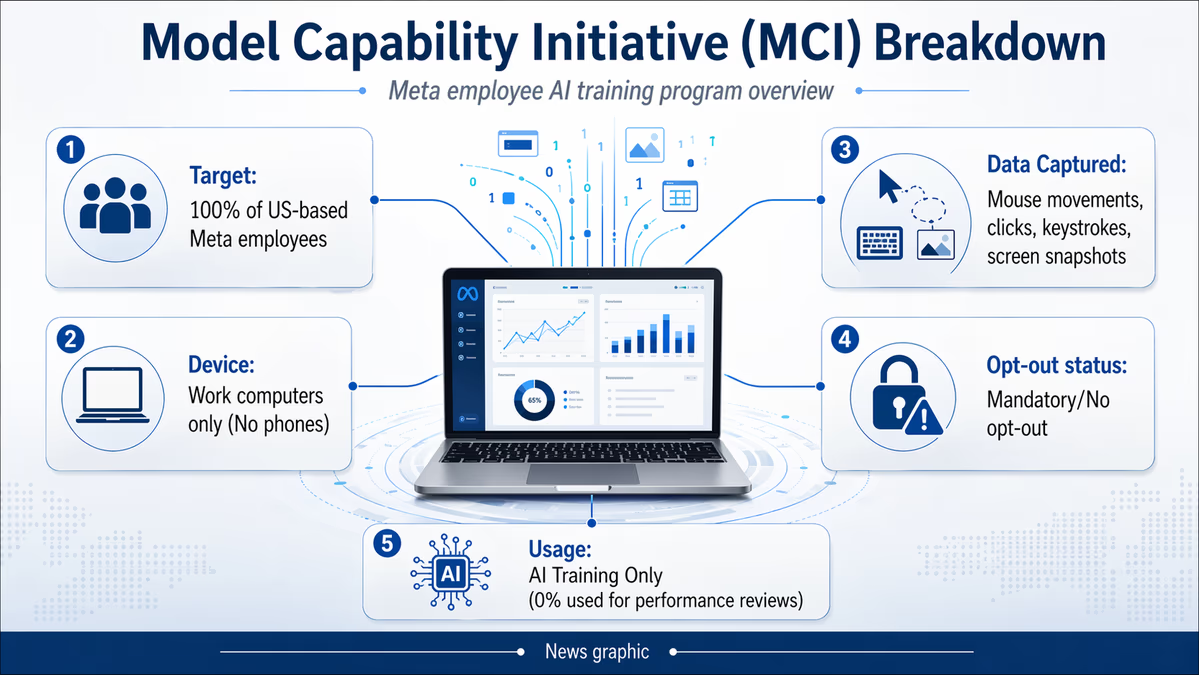
Meta Platforms has begun installing specialized tracking software on the work computers of its U.S.-based employees, a move designed to harvest granular behavioral data to train the next generation of "agentic" artificial intelligence. This program, known as the Model Capability Initiative (MCI), represents one of the most aggressive internal data collection efforts by a major technology firm to date, as Meta seeks to bridge the gap between static AI models and autonomous agents capable of navigating complex software interfaces.

The Model Capability Initiative
The MCI software is designed to capture a comprehensive record of how Meta's workforce interacts with their computers. According to internal documents, the tracking includes mouse movements, clicks, keystrokes, and occasional screen snapshots. Unlike generic telemetry, this data is specifically intended to teach AI models the nuances of human-computer interaction, such as how to use keyboard shortcuts or navigate intricate dropdown menus within professional applications.
Meta spokesperson Andy Stone explained the rationale behind the initiative: "If we're building agents to help people complete everyday tasks using computers, our models need real examples of how people actually use them — things like mouse movements, clicking buttons, and navigating dropdown menus."
Currently, the tracking is limited to US-based employees and applies only to work computers, not personal or company-issued mobile phones. The software operates on a designated list of commonly used work applications and websites to ensure the data is relevant to the professional tasks Meta hopes to eventually automate.
Training the 'Agentic' Future
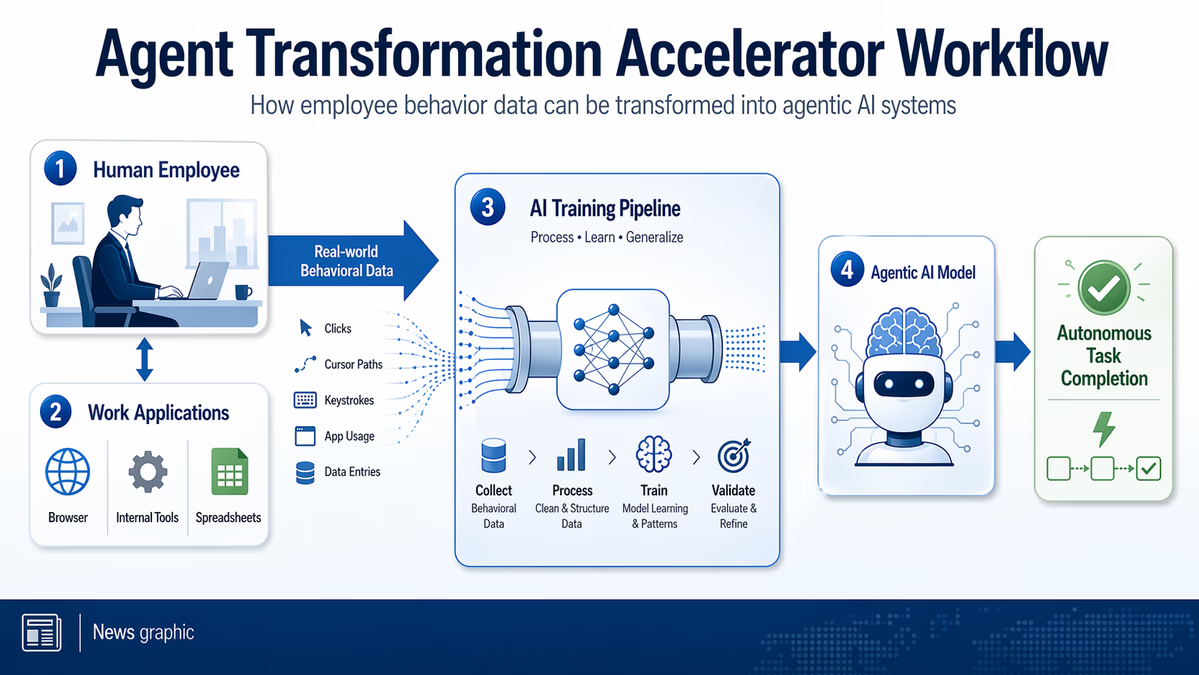
This data collection effort falls under a broader corporate strategy recently rebranded as the "Agent Transformation Accelerator" (ATA), formerly known as "AI for Work." The primary objective is to develop AI agents that can perform workplace tasks autonomously, shifting the human role from execution to oversight.
Andrew Bosworth, Meta's Chief Technology Officer, outlined this vision in a recent memo, stating, "The vision we are building towards is one where our agents primarily do the work and our role is to direct, review and help them improve." An internal memo posted by a staff AI research scientist on April 21, 2026, further emphasized that the program allows employees to help models improve "simply by doing their daily work."
By capturing real-time human behavior, Meta aims to solve persistent challenges in agentic AI, specifically the ability to understand and replicate the non-linear way humans navigate software to solve problems. This requires more than just text-based instructions; it requires the spatial and temporal data of a physical user operating an interface.
Internal Friction and Privacy Concerns
While Meta has implemented safeguards to protect sensitive content and explicitly stated that the data will not be used for employee performance reviews, the rollout has met significant internal resistance. Reports suggest that the announcement on Meta's internal platform was met with a wave of discomfort. One of the top-rated comments from an anonymous employee simply asked, "How do we opt out?" Meta's current policy provides no option for employees to decline the tracking.
Some staff members have described the program as "very dystopian," a sentiment exacerbated by the company’s recent history of workforce reductions. Meta has already laid off approximately 2,000 employees this year and is reportedly planning to cut an additional 10% of its global workforce starting May 20, 2026. This timing has led to fears among some staff that they are effectively being forced to provide the data that will eventually train their own AI replacements.
Meta frames the MCI as an extension of existing policies regarding the monitoring of company-issued devices. However, the depth of the data collection—specifically the logging of every keystroke and mouse movement for model training—represents a significant escalation in how corporate activity is leveraged as a raw material for product development.
Industry Context and Implications
Meta is not alone in the race to develop AI that can "use" a computer. Competitors like OpenAI and Anthropic have recently showcased models with advanced computer-use capabilities. However, Meta’s approach of using its own massive workforce as a live laboratory provides a unique data advantage that few other companies can replicate.
The development also mirrors a growing trend in the AI sector to seek out high-quality, real-world behavioral data as the supply of high-quality public web data becomes exhausted. While this move may accelerate the timeline for capable AI agents, it also intensifies the debate over workplace privacy and data governance. The U.S. Government Accountability Office (GAO) recently warned that such surveillance tools are rapidly reshaping privacy expectations for white-collar professionals.
As Meta moves forward with the MCI, the tech industry will be watching closely to see if the gains in model performance outweigh the potential damage to employee morale and the company's reputation as an employer. For now, Meta’s US employees are finding that their daily workflows are no longer just tasks to be completed, but data points in a massive experiment to automate the future of work.