US Marine Corps Prototyping AI Tools to Transform Aviation Supply and Maintenance
The US Marine Corps is prototyping 'Agent Alfred,' an AI suite designed to boost aviation readiness and automate supply chains for its aircraft fleet.
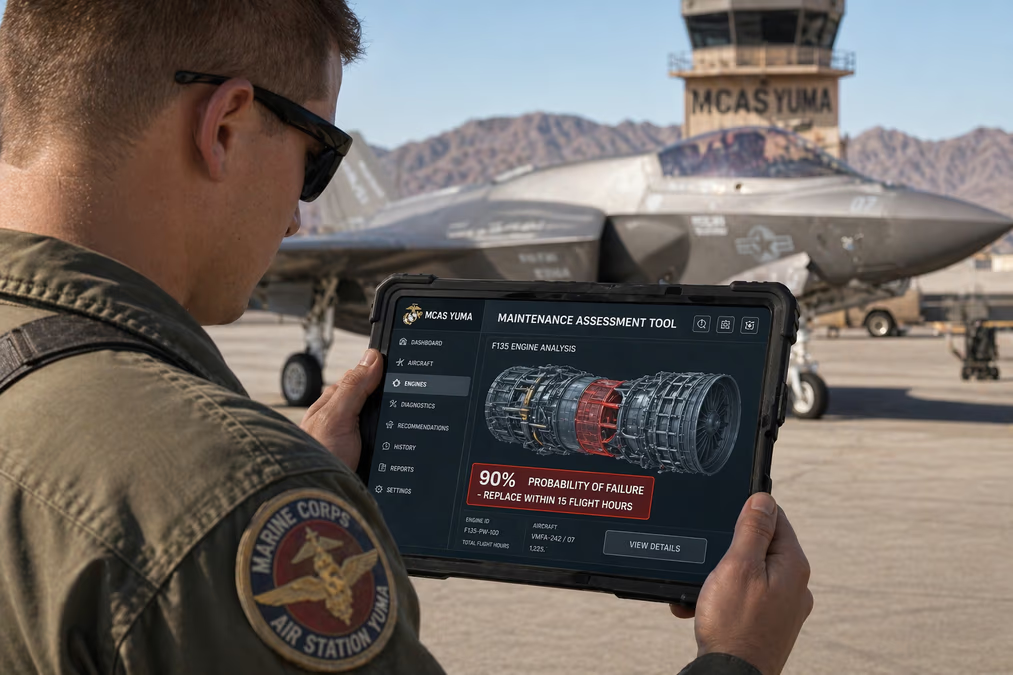
The U.S. Marine Corps is deploying a new suite of artificial intelligence tools designed to predict mechanical failures and automate supply chains, a move intended to boost the mission capability rates of its aging aircraft fleet. This summer, a prototype system known as the 'Maintenance Assessment Tool' (MAT) will launch at Marine Corps Air Station Yuma in Arizona. The initiative represents a pivotal shift for the Corps, moving away from reactive 'break-fix' cycles toward a data-driven, proactive posture known as Condition-Based Maintenance Plus (CBM+).
Marine aviation units currently grapple with a mission capability rate that averages between 62% and 64%. To address this, the 2026 Marine Corps Aviation Plan, released this past February, places AI at the center of its modernization efforts. The goal is to foster what leadership calls a 'data-enabled culture,' where historical performance data is leveraged to forecast exactly when a component will fail before it ever leaves the ground.
The Rise of Agent Alfred
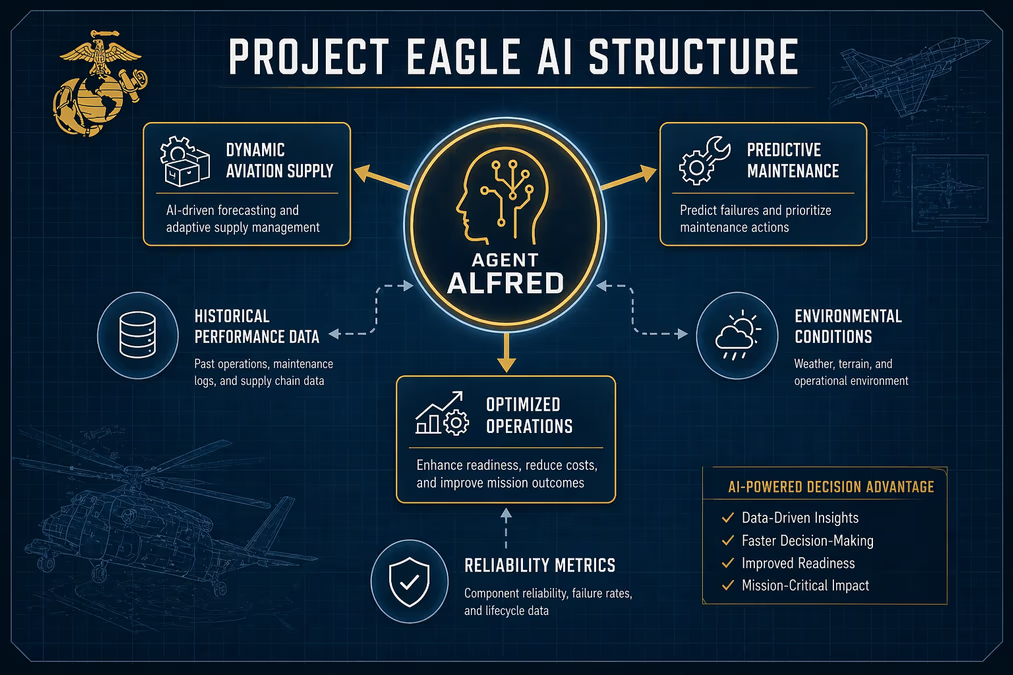
Central to this vision is 'Agent Alfred,' an AI agent named after Alfred A. Cunningham, the first Marine Corps aviator. Unlike previous software iterations that merely visualized data on dashboards, Agent Alfred is designed for the 'agentic age' of computing. In this framework, the AI does not just present information; it actively informs and drives decision-making to achieve what the Pentagon calls 'decision dominance.'
Lt. Gen. William Swan, Deputy Commandant for Aviation, emphasizes the necessity of this transition. "Let's change it before it needs to be in the air, declare an emergency, land in some place we don't want it to land, etc.," Swan said regarding the logic of predictive maintenance. "That's the whole idea: supply first, then maintenance, and then the operational stuff pulls together."
Swan admits that the integration of such advanced technology into legacy military structures is a steep learning curve. "This is new to us," he noted, while explaining the Corps’ intent to use maintenance system data to understand part reliability across various operating environments. "We want to be predictive. If [the probability of failure is] 90% or so, that's good enough for me."
Project Eagle and Strategic Modernization
This AI endeavor falls under Project Eagle, the strategic blueprint guiding the Aviation Combat Element’s balance between modernization and crisis response. The initiative is structured around three primary 'Lines of Operation': Dynamic Aviation Supply, Predictive Maintenance, and Optimized Operations.
The modernization effort began in earnest in 2022, with the F-35 Lightning II serving as the initial focal point. The Corps has already cataloged all consumable parts for the stealth fighter and developed two prototype parts packages. More recently, data collection has expanded to the KC-130J Hercules transport aircraft, ensuring the AI models have the breadth of data required to scale across the fleet.
Partnering for Speed and Accuracy
The Marine Corps is also leaning on commercial innovation to accelerate these capabilities. In July 2025, Marine Aircraft Group 39 (MAG-39) at Camp Pendleton, California, secured a $2.07 million, 18-month contract with the tech firm Tagup. The group will implement Tagup’s 'Manifest' software suite to optimize logistics.
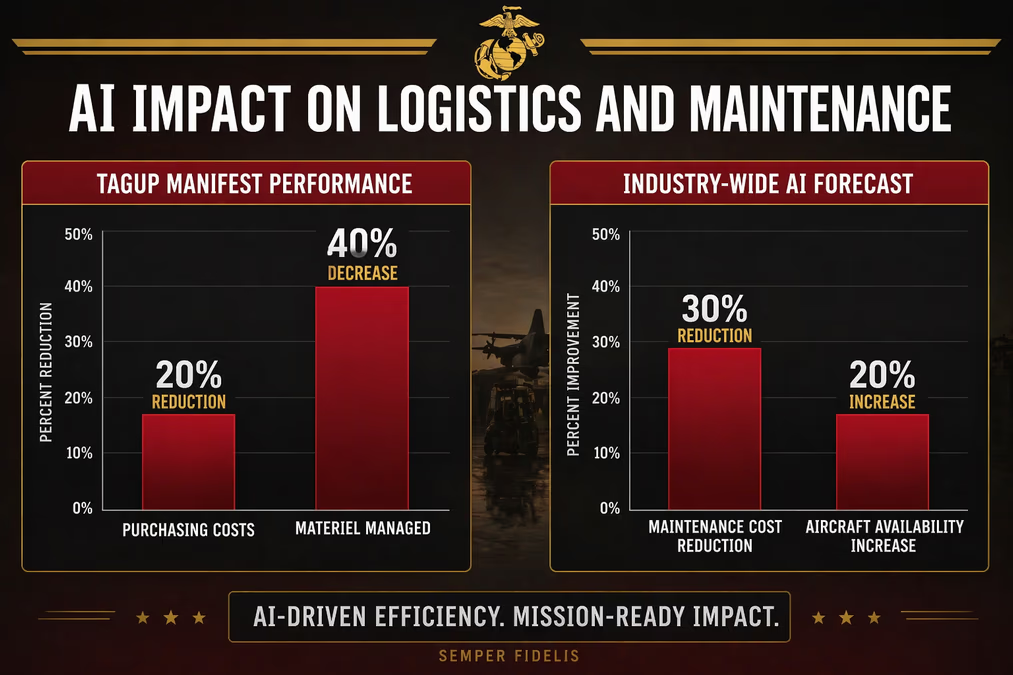
Tagup’s platform has a proven track record in other government sectors, demonstrating a 20% reduction in purchasing costs and a 40% decrease in the total volume of materiel managed. Jon Garrity, CEO of Tagup, stated that the contract reflects a commitment to giving Marines tools that prioritize "speed, accuracy, and adaptability."
This move signals the end of the 'iron mountain' era—a traditional logistics philosophy where the military maintained massive, inefficient stockpiles of spare parts just in case they were needed. Instead, AI-powered systems will identify and order parts dynamically, potentially reducing maintenance costs by up to 30% while increasing aircraft availability by 20%.
A Broader Trend in Defense Logistics
The Marine Corps is not alone in its pursuit of AI-driven readiness. The Defense Logistics Agency (DLA) is currently utilizing AI to manage supply chain risks, having flagged over 19,000 high-risk suppliers by mid-2025. Similarly, the U.S. Air Force is testing 'Artiv' for rapid logistics planning and employs C3 AI’s 'PANDA' application for predictive maintenance on its own platforms. Even commercial giants like Salesforce are tailoring AI innovations for military logistics through their 'Missionforce' initiative.
As the Marine Corps moves MAT into its first unit in Yuma, the focus remains on augmenting human capability rather than replacing it. By integrating Agent Alfred and associated tools directly into the workflow of maintainers and logisticians, the Corps aims to build a more resilient and responsive force capable of operating in the contested environments of the future.