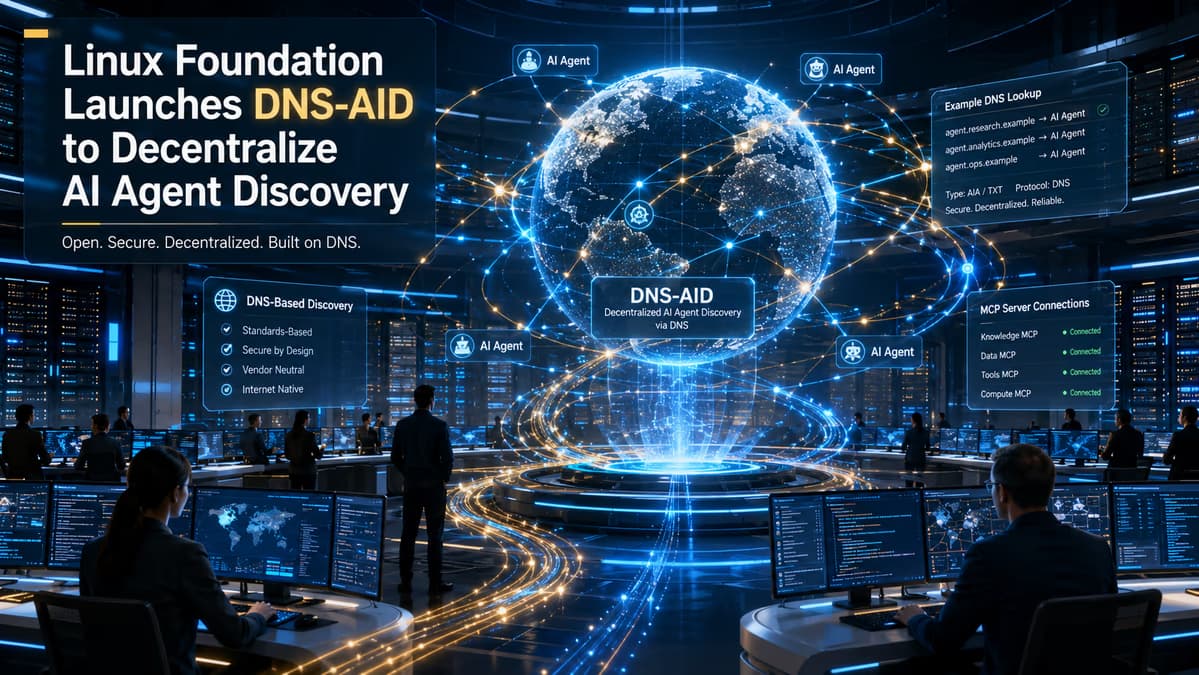
Linux Foundation Launches DNS-AID to Decentralize AI Agent Discovery
The Linux Foundation has launched DNS-AID, an open-source project leveraging DNS infrastructure to enable decentralized AI agent discovery.
The Linux Foundation officially launched the DNS-AID project on May 27, 2026, introducing an open-source framework designed to let artificial intelligence agents discover and communicate with one another using the internet's existing Domain Name System (DNS). Originally developed by Infoblox, the initiative provides a vendor-neutral framework for publishing, discovering, and verifying AI agents and Model Context Protocol (MCP) servers, moving the industry away from centralized registries and hardcoded integrations.
As autonomous AI agents rapidly evolve into critical components of modern digital ecosystems, the lack of standardized, decentralized discovery infrastructure has emerged as a significant hurdle. Up to this point, systems have heavily relied on proprietary directories and static configurations. The DNS-AID project aims to solve this by anchoring agent-to-agent interactions in the global DNS infrastructure that has securely routed internet traffic for decades.
Overcoming the Bottlenecks of Centralized AI
In the current AI landscape, autonomous agents often operate within closed silos. When an agent needs to hand off a task or find a specialized tool, it typically relies on centralized registries. This approach introduces single points of failure, raises data privacy concerns, and limits true interoperability across different platforms.
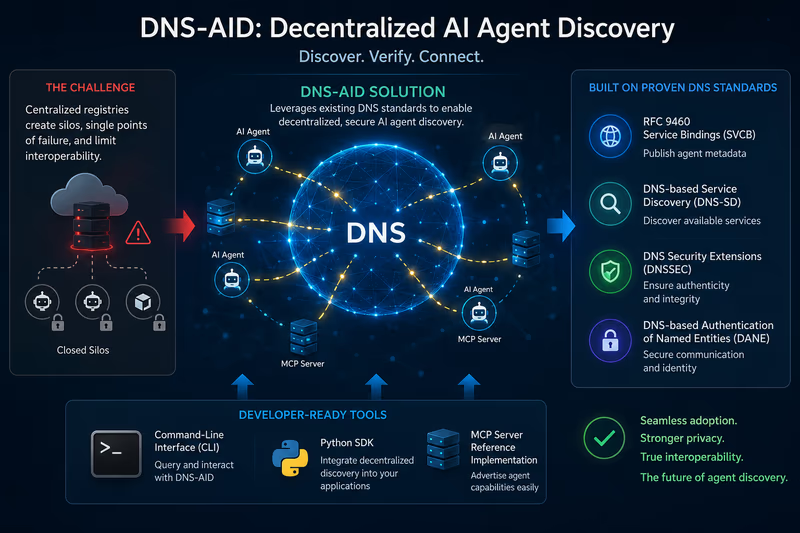
DNS-AID bypasses these centralized chokepoints by leveraging existing DNS standards to publish discoverable agent metadata. Specifically, the project utilizes RFC 9460 Service Bindings (SVCB), DNS-based Service Discovery (DNS-SD), DNS Security Extensions (DNSSEC), and DNS-based Authentication of Named Entities (DANE). By using these established protocols, developers can query DNS records to locate and verify AI agents and the MCP servers they use to advertise their capabilities.
To make adoption seamless, the project includes a Python SDK, a command-line interface (CLI), and an MCP server reference implementation. This allows developers to integrate decentralized agent discovery directly into their existing software workflows.
Trusting a Planetary-Scale Infrastructure
The decision to base AI agent discovery on DNS is rooted in the system's unmatched scalability and reliability. Standardizing how agents are published, discovered, and verified in DNS gives every operator, registrar, and platform one shared way to participate, according to Wei Chen, CLO and EVP of Regulatory Strategy at Infoblox. Chen noted that DNS is already running everywhere agents will run, making it the only discovery system on the internet that is universally deployed, universally interoperable, and proven at planetary scale.
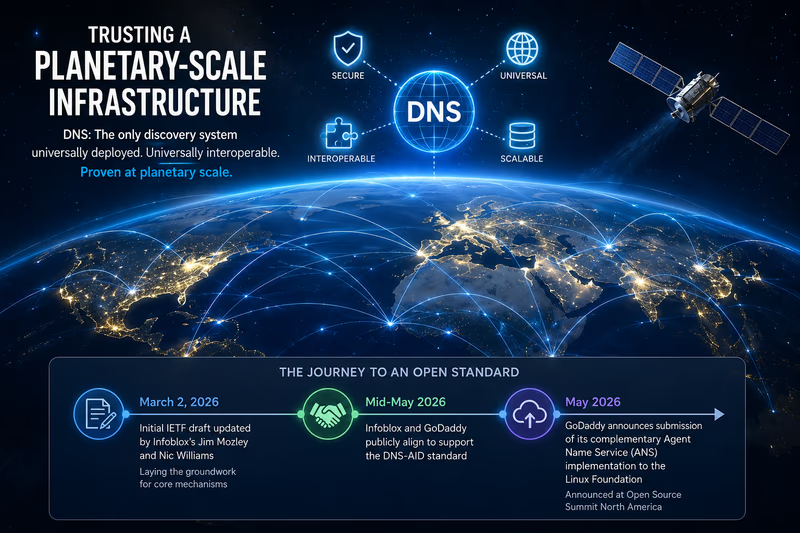
The project is also advancing as an Internet Engineering Task Force (IETF) draft, highlighting the community's push to solidify DNS-AID as an official open internet standard. This development follows a clear timeline: on March 2, 2026, the initial IETF draft co-authored by Infoblox's Jim Mozley and Nic Williams was updated, laying the groundwork for the core mechanisms. By mid-May, Infoblox and GoDaddy publicly aligned to support the standard, culminating in GoDaddy's announcement at the Open Source Summit North America to submit its complementary Agent Name Service (ANS) implementation to the Linux Foundation.
Security and the Next Frontier of AI Attack Surfaces
Security is a paramount concern for the "agentic web." Secure connectivity is essential, as unsupervised agent-to-agent communication is increasingly viewed by security researchers as a highly vulnerable vector for exploitation.
Jim Zemlin, CEO of the Linux Foundation, emphasized the importance of securing this connectivity. He stated that AI agents are quickly becoming the connective tissue of the modern internet, but without secure, open discovery infrastructure, that connectivity becomes a liability. Zemlin added that DNS-AID helps anchor agent discovery in the DNS infrastructure the internet already trusts, with the Linux Foundation providing a neutral home for open governance and long-term stability.
To tackle identity alongside discovery, GoDaddy and Infoblox are concurrently developing the Agent Name Service (ANS). Working in tandem with DNS-AID, ANS is an open standard that leverages DNS and Public Key Infrastructure (PKI) to manage AI agent identity, naming, and verification. Oliver George, Vice President of Strategic Partnerships for GoDaddy, warned of the risks of proceeding without such standards, stating that without this infrastructure, AI agents are anonymous and opaque.
Broad Industry Support
The launch of DNS-AID is backed by a broad coalition of technology, cloud, and registry infrastructure leaders. Initial project members include Cloudflare, CSC, Equinix, GoDaddy, Indeed, Infoblox, the Internet Systems Consortium (ISC), and WWT.
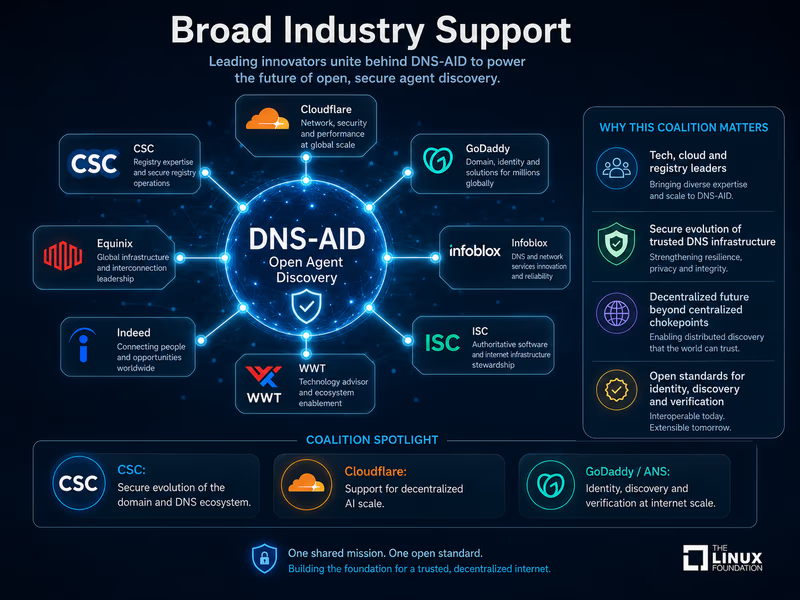
This diverse backing is seen as vital for ensuring that the domain and DNS ecosystem, and the internet's trusted infrastructure, evolve securely alongside the rise of AI-powered communication, according to Ihab Shraim, Chief Technology, Product and AI Officer at CSC. Meanwhile, Dane Knecht, Chief Technology Officer at Cloudflare, reiterated his company's support, noting that Cloudflare is excited to back the project as it builds a decentralized future where AI scale isn’t bottlenecked by centralized chokepoints.
Jared Sine, Chief Strategy and Legal Officer at GoDaddy, echoed these sentiments, pointing out that agents will only reach their full potential on the open web if people and systems can verify who they are interacting with. Sine stated that ANS adopters leverage the only infrastructure existing today that operates at the scale and speed of the global internet, and that open standards for identity, discovery, and verification will be critical as agents become part of everyday digital experiences.
Forward-Looking Implications
By establishing a neutral, decentralized foundation, DNS-AID is positioned to reshape how enterprises and developers deploy autonomous systems. Analysts at Gartner have predicted that agentic AI systems will be embedded in 40% of enterprise applications by the end of 2026. If successful, DNS-AID and ANS will prevent a fragmented AI landscape dominated by a few closed platform monopolies, enabling a more competitive, auditable, and secure ecosystem.
Furthermore, the project aligns with recent guidance from global intelligence bodies, including the Five Eyes alliance, which have urged organizations to proceed cautiously with the adoption of agentic AI services. Anchoring agent discovery in verified, DNSSEC-signed DNS records provides enterprises with the visibility and cryptographic assurances required to maintain zero-trust security postures as the agentic web becomes a reality.