Lightning Strikes in Beijing: Honor's Humanoid Smashes Human World Record in Half-Marathon
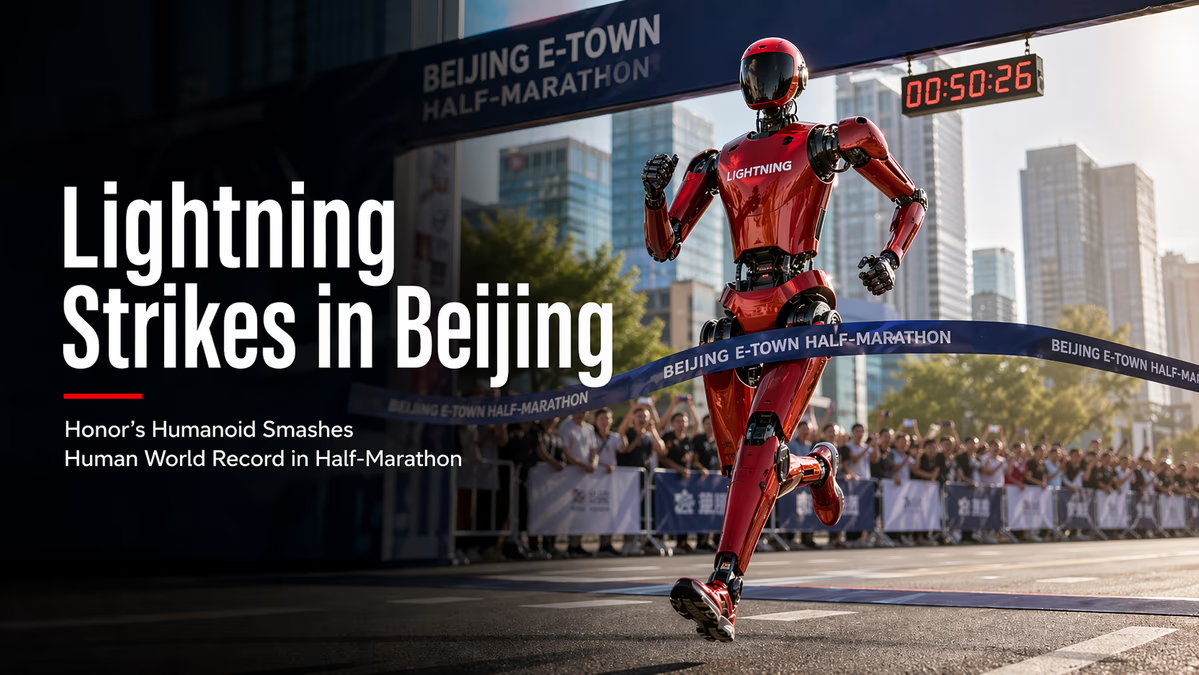
A humanoid robot named Lightning completed the Beijing E-Town Half Marathon in 50:26, beating the human world record by nearly seven minutes.
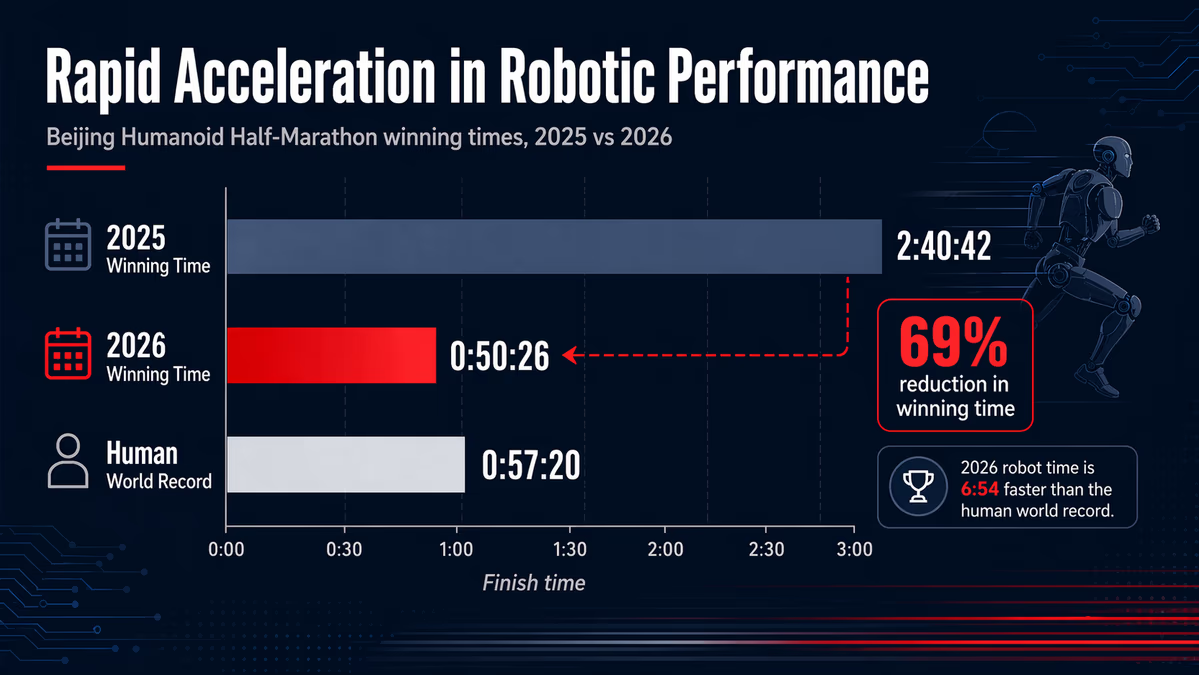
On Sunday, April 19, 2026, a 169-centimeter-tall humanoid robot named "Lightning" surged past the finish line of the Beijing E-Town Half Marathon in 50 minutes and 26 seconds. Developed by the Chinese technology giant Honor, the robot did more than just win the autonomous category of the event; it effectively shattered the human world record for the 13.1-mile distance, which currently stands at 57 minutes and 20 seconds, set by Uganda's Jacob Kiplimo just a month prior.
The event was a massive spectacle of human and machine coordination, featuring over 100 robot teams and approximately 12,000 human runners. To ensure safety, the two groups competed on parallel but separate tracks. While the human athletes showcased the pinnacle of biological endurance, the robotic track offered a glimpse into an era where silicon and carbon-fiber systems are beginning to outpace their creators in specialized physical tasks.
Engineering the Elite Runner
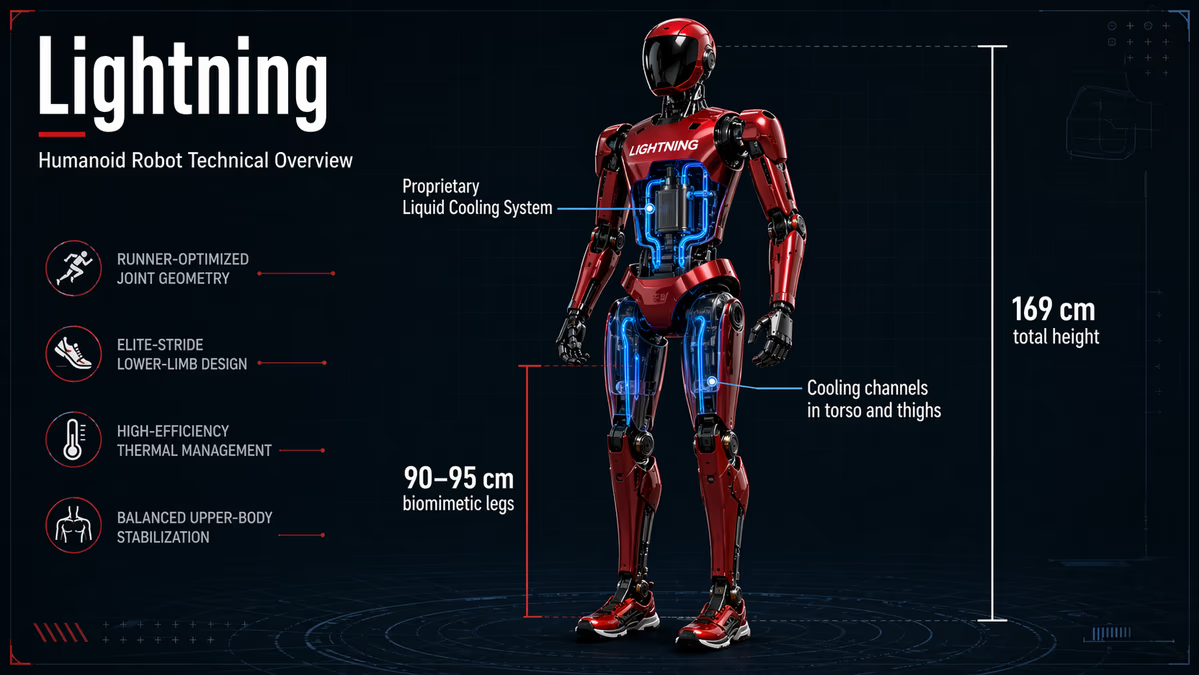
Lightning's victory was not merely a matter of brute mechanical force but a sophisticated application of biomimetic design and thermal management. The robot features legs measuring 90 to 95 centimeters, specifically engineered to replicate the gait and efficiency of elite human long-distance runners.
One of the most significant technical hurdles for high-performance humanoid robotics is heat dissipation. To address this, Honor engineers adapted proprietary liquid cooling technology originally developed for the company’s flagship smartphones. This system allowed Lightning to maintain peak motor performance throughout the 21-kilometer course without the thermal degradation that often plagues high-torque actuators. This cross-pollination of consumer electronics and heavy robotics proved decisive, as Honor-developed robots swept the top three podium spots in the autonomous category.
"Looking ahead, some of these technologies might be transferred to other areas," said Du Xiaodi, a development engineer at Honor. "It's similar to how the automotive industry initially developed through competitions."
A Year of Exponential Growth
The performance leap observed in Beijing is staggering by any historical engineering standard. During the inaugural 2025 race, the winning robot finished with a time of 2 hours, 40 minutes, and 42 seconds. In that first edition, only six out of 21 entrants managed to even complete the course. This year, not only were the times nearly three times faster, but approximately 40% of the field navigated the course autonomously.
Zhenyu Gan, Assistant Professor and Director of the Dynamic Locomotion and Robotics Lab at Syracuse University, noted the significance of this trajectory. "Last year's winning robot took over two hours, with few teams finishing," Gan observed. "This year, a much larger field saw many completions, and the fastest robot surpassed human racers. This reflects advances in energy efficiency, control, and morphology, especially with a known benchmark."
Despite the records, the day was not without its technical hitches. Several robots were seen stumbling or veering off course, and a few experienced mechanical breakdowns mid-race. However, these incidents were significantly less frequent than in 2025, signaling a rapid maturation in real-world balance and AI-driven navigation.
The Strategic Race for Robotics
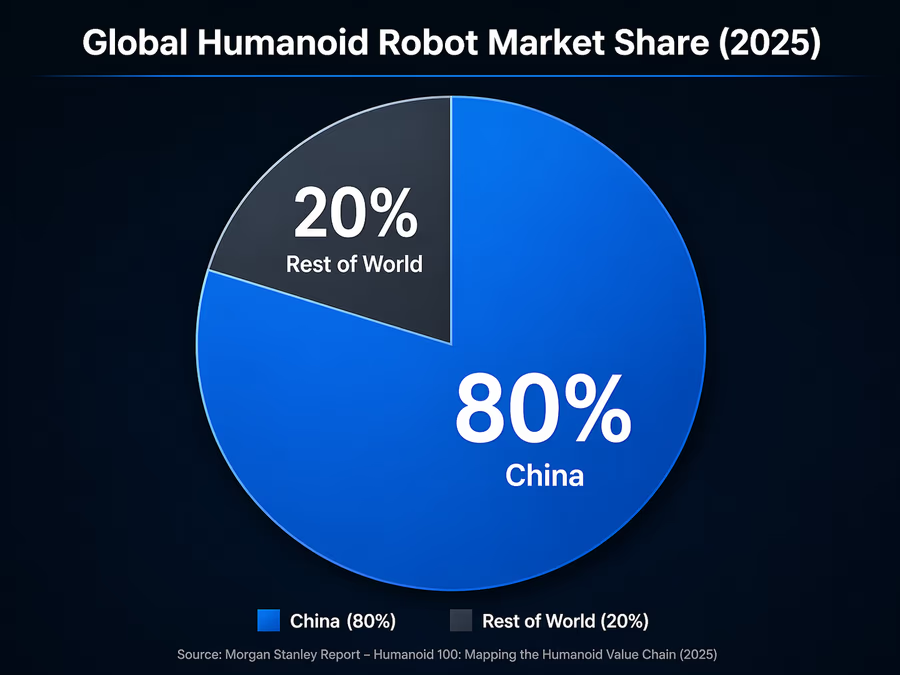
This event serves as more than just a sports competition; it is a critical proving ground for China’s broader industrial strategy. Reports indicate that China dominated the humanoid robot market last year, accounting for 80% of the sector worldwide. The Beijing E-Town race provides a high-stakes environment to test endurance and stability outside of the sterilized conditions of a laboratory.
Liang Liang, Deputy Secretary-General of the Chinese Institute of Electronics, explained that the event's structure is designed to push the envelope of what machines can do without human intervention. "The setting of coefficient aims to guide and encourage the research and development of autonomous navigation, which represents a technological foundation for humanoid robots to be applied in more scenarios in our daily life towards the future," Liang stated.
Spectators at the event expressed a mixture of awe and disbelief. "I'm very excited," said Sun Zhigang, a spectator at the finish line. "First of all, it's the first time robots have surpassed humans, and that's something I never imagined." Another attendee, Jiang Liangzhi, simply described the performance as "quite impressive."
Future Horizons
The implications of Lightning’s run extend far beyond the racetrack. The ability for a humanoid to maintain high speeds over long distances while navigating autonomously suggests that these machines are nearing the threshold for practical application in manufacturing, logistics, and emergency response.
However, researchers caution that running a pre-mapped marathon is a specific, task-oriented challenge. Achieving the same level of robustness in unstructured, everyday environments—like a cluttered home or a disaster zone—will require further breakthroughs in perception and adaptability.
As Honor continues its humanoid program, backed by a reported $10 billion commitment over five years, the line between experimental robotics and commercial utility continues to blur. The 2026 Beijing Half-Marathon may well be remembered as the moment when the physical capabilities of artificial intelligence officially moved out of the human shadow.