
Leaked Apple Code Reveals Four Helpful AI Features for iOS 27
Leaked iOS 27 backend code reveals four new Apple Intelligence features, including smart Safari tabs and nutrition tracking, scheduled for 2026.
Backend Discovery Unveils Next-Gen AI Capabilities
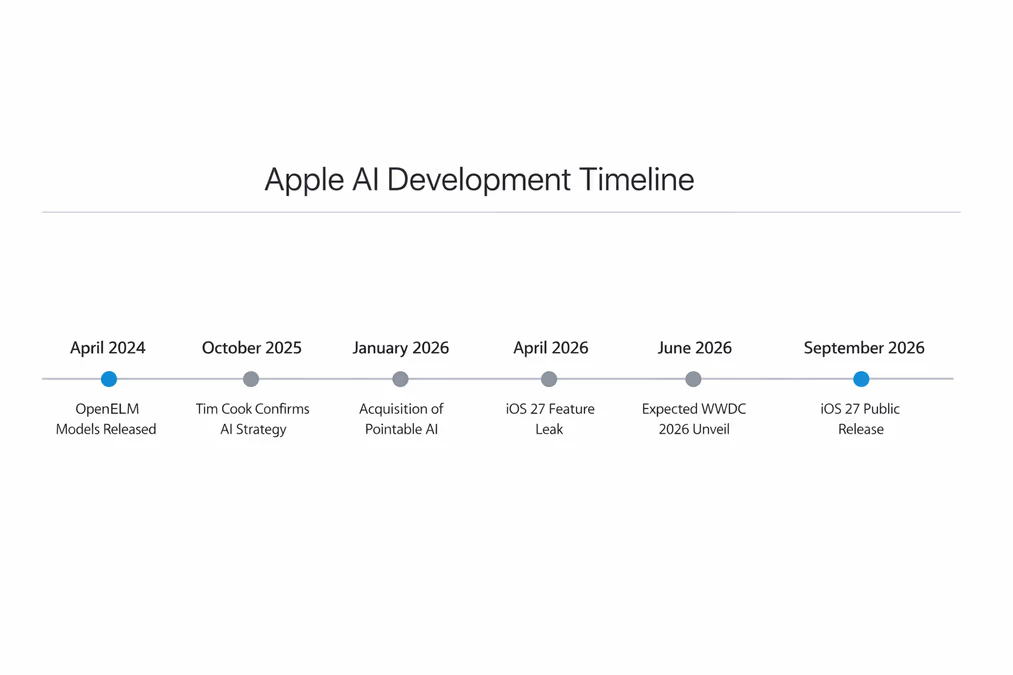
Backend software code discovered by developer Nicolás Alvarez and corroborated by reports from MacRumors suggests that Apple’s upcoming iOS 27 update will introduce four distinct artificial intelligence features. These capabilities, part of the broader “Apple Intelligence” ecosystem, are designed to automate high-frequency manual tasks within core applications such as Safari, Wallet, Camera, and Health. The leak provides an early glimpse into the software scheduled for an official unveiling at the Worldwide Developers Conference (WWDC) in June 2026.
At the center of these developments is Apple’s commitment to privacy-first, on-device processing. The leaked code points toward a more context-aware operating system that utilizes the Neural Engine to analyze data locally rather than relying exclusively on cloud-based computation. This strategy aligns with the company’s ongoing efforts to integrate AI incrementally into its existing hardware stack while maintaining its reputation for user security.
Safari and Contact Management Enhancements
One of the primary features identified in the leak is the introduction of “smart tab groups” for the Safari web browser. This tool will reportedly leverage large language models to automatically categorize open tabs and suggest descriptive names based on their content. For users managing dozens of open pages, the system aims to reduce digital clutter by predicting how a user wants to organize their browsing session.
Apple is also expected to expand its Visual Intelligence framework. The leaked code indicates a new feature allowing the iPhone camera to identify and extract phone numbers and addresses from physical documents like business cards. Once identified, the system will offer to save this information directly into the Contacts app. This build-upon current functionality, which already allows users to lift subjects from photos or add calendar events from scanned flyers, moves Apple closer to a fully automated data entry system for professional use.

Digital Wallet Expansion and Health Integration
In a move that addresses long-standing user requests, the iOS 27 Wallet app is rumored to gain the ability to digitize physical passes. This feature would allow users to scan items such as gym membership cards, event tickets, or paper-based reward cards and convert them into digital passes stored within the device. While Google’s Wallet app on Android currently offers similar functionality, Apple’s implementation is expected to focus on high-fidelity scanning and deep integration with the Apple ecosystem.
Perhaps the most significant addition for health-conscious users is a new nutrition scanning tool. Mark Gurman of Bloomberg has previously signaled that Apple was exploring this area, and the latest leak confirms that the iPhone camera will likely be able to scan nutrition labels on packaged foods. The system is expected to extract caloric and macronutrient data, potentially syncing this information with the Health app for automated tracking. This integration could position Apple Health as a direct competitor to specialized third-party calorie tracking applications, simplifying the process of maintaining a food log.
Strategy and Hardware Constraints
Apple’s approach to these features is rooted in financial and technical pragmatism. The company is reportedly investing approximately $1 billion annually into AI development, focusing on internal projects like “Apple Intelligence” while simultaneously exploring partnerships with external providers. During an earnings call in October 2025, Tim Cook, CEO of Apple, stated that Apple's strategy involves utilizing external models so that users do not have to jump between different tools. This likely refers to the ongoing testing of integrations with OpenAI’s GPT-5, Anthropic’s Claude, and Google’s Gemini.
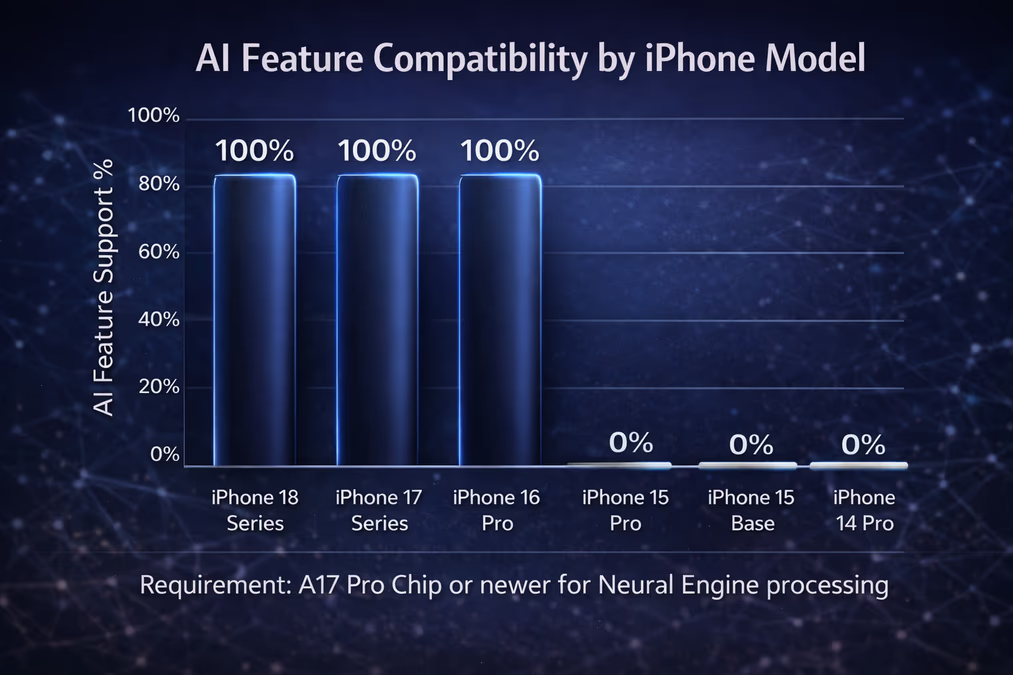
However, these features will likely come with strict hardware requirements. Due to the intensive processing power needed for on-device AI, the features in iOS 27 are expected to be limited to iPhone 15 Pro models and newer devices equipped with advanced Neural Engines. This hardware gatekeeping ensures that the privacy-first processing Apple promises remains performant.
The Evolution of Siri
A substantial overhaul of Siri is also anticipated alongside these features in 2026. The goal is to transform the virtual assistant into a more conversational agent capable of multi-step tasks. Senior Vice President of Software Engineering Craig Federighi emphasized at WWDC 2024 that the company wants users to be able to use external models without having to jump between different tools. By 2026, Siri may act as a bridge between Apple's on-device processing and the massive computational power of third-party large language models.
While Apple continues to innovate, it does so with caution. Tim Cook has noted that artificial intelligence will be implemented only with enough prior consideration regarding safeguards. This measured pace is evident in the timeline of these leaks, appearing months before a public beta or official release.
Looking Ahead to 2026
The public release of iOS 27 is expected in September 2026, coinciding with the launch of the iPhone 18 series. As Apple continues to acquire startups in the space—such as the January 2026 acquisition of Pointable AI—the company is signaling a long-term pivot toward a hardware-software synergy defined by ambient, helpful intelligence. The focus remains on reducing user friction through automation, ensuring that the iPhone remains the central hub for both personal and professional digital management.