Judicial Discretion in the Algorithmic Age: Why Judges are Keeping AI on a Tight Leash
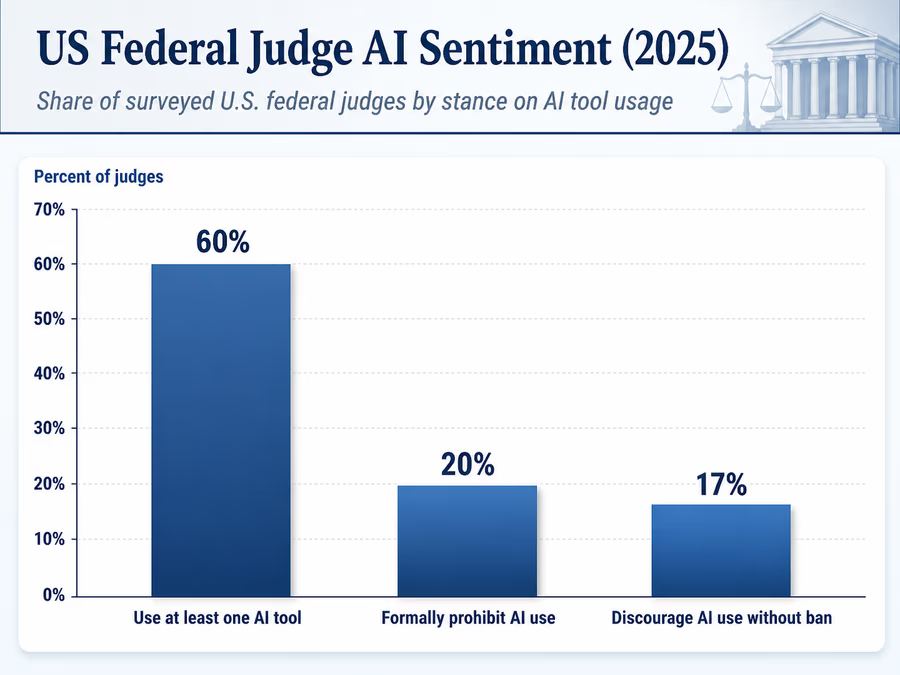
New research shows 60% of federal judges use AI for tasks like document summarization while maintaining strict human oversight to prevent hallucinations.
The Human Element in High-Tech Courts
Recent research from West Virginia University (WVU) reveals that approximately 60% of U.S. federal judges have integrated at least one artificial intelligence tool into their judicial workflow. While adoption is widespread, the report, co-authored by Associate Professor Amy Cyphert, underscores a prevailing atmosphere of caution. Judges are increasingly using generative AI to manage the crushing volume of legal documentation, yet they remain steadfast in the belief that the ultimate power of decision-making must remain exclusively human.
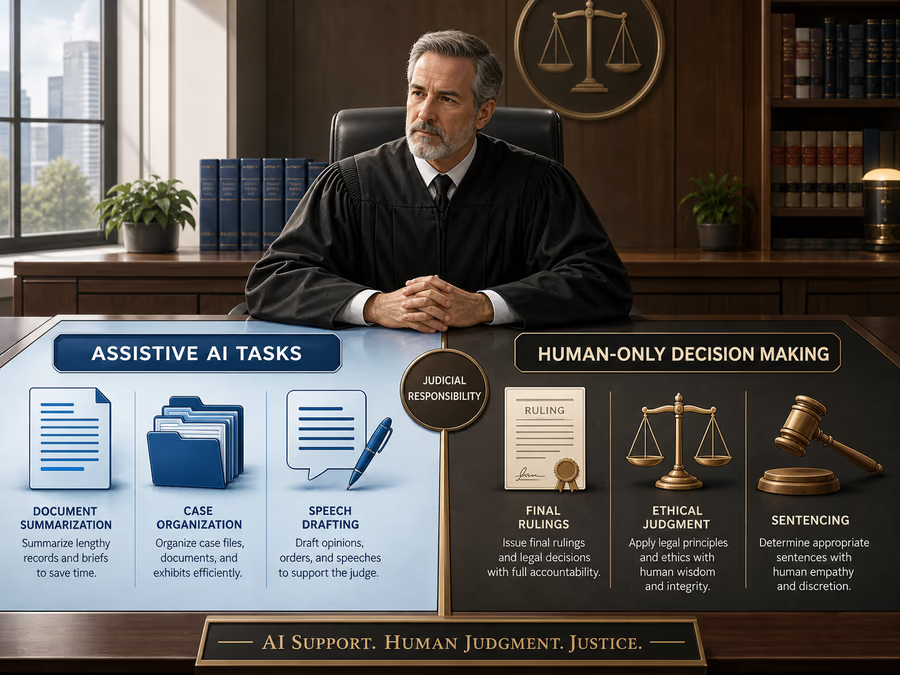
"This project really started from a gap," explained Cyphert, an Associate Professor at the WVU College of Law. The study indicates that while judges are leveraging AI for administrative and preparatory tasks—such as summarizing lengthy filings, organizing case materials, and drafting questions for oral arguments—there is a sharp line drawn at the point of adjudication. "Every single judge we spoke with was clear-eyed about this," Cyphert noted. "They see these tools as helpful, but they also believe very strongly that the responsibility for decision making must remain entirely human."
Balancing Efficiency with Accessibility
The push for AI in the judiciary is largely driven by the potential for massive efficiency gains and improved access to justice. By automating routine tasks, judges can devote more mental energy to the complex nuances of the law. Cyphert highlights that the technology could bridge the gap for those navigating the system without legal representation. "There are real opportunities here to make the system more accessible," she stated. "Things like clearer explanations, better communication and easier navigation of court procedures could make a meaningful difference."
This sentiment is echoed by Maryland Supreme Court Chief Justice Matthew Fader, who observed that while AI brings "extraordinary opportunities," it carries "perhaps equally extraordinary challenges." These challenges were starkly illustrated in late 2025, when several federal judges were forced to withdraw rulings after discovering that AI-generated content had inserted fabricated case citations into legal documents.
The Specter of Hallucinations
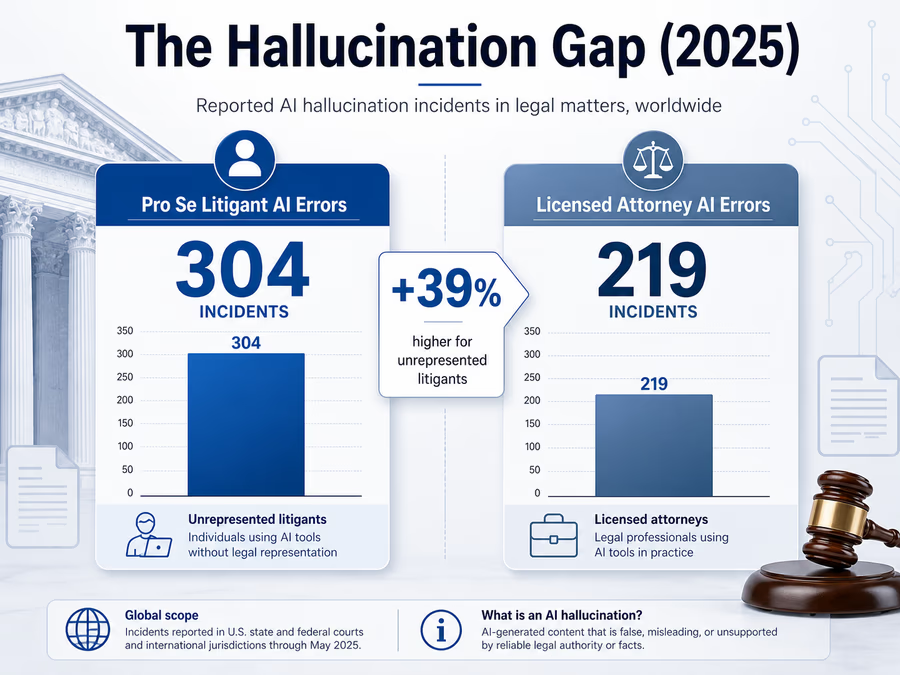
The primary barrier to full-scale AI integration remains the phenomenon of "hallucinations," where large language models confidently present false information as fact. In the legal world, this often manifests as nonexistent precedents or imaginary court cases. According to data from DISCO, pro se litigants (those representing themselves) were involved in 39% more AI hallucination incidents in 2025 than licensed attorneys, totaling over 300 worldwide cases.
"Hallucinations were a concern that every judge raised," Cyphert said. "These systems can confidently produce information that simply isn't real, and sometimes that's easy to catch, but sometimes it's not. That means careful verification is essential." The fear is not just of an incorrect ruling, but of a systemic erosion of public trust. Cyphert added that judges are "very aware that even a single error like that could affect confidence in the courts."
A Patchwork of Regulation and Policy
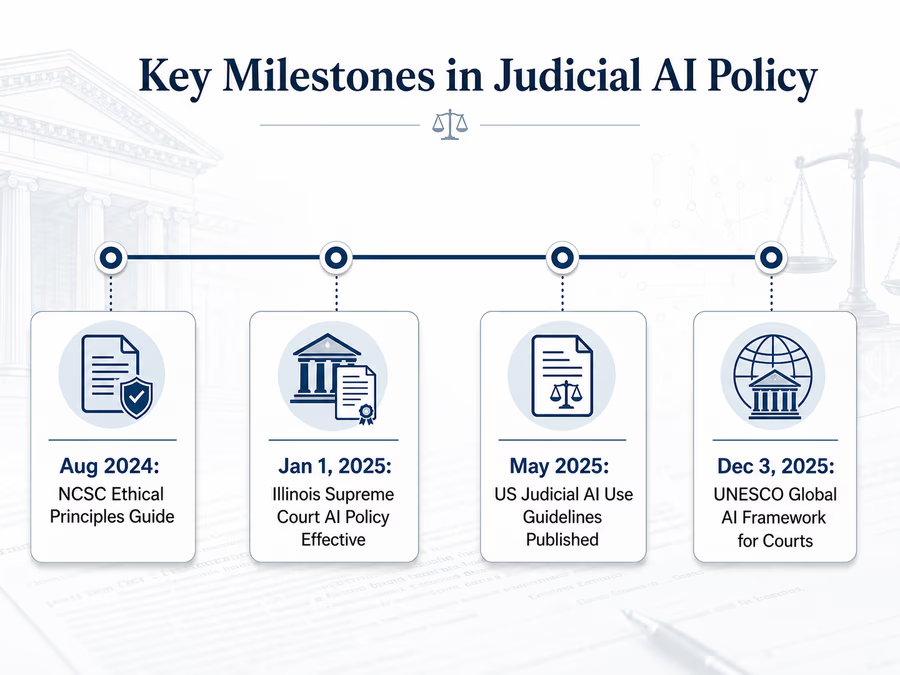
As the technology evolves, so does the regulatory landscape. On January 1, 2025, the Illinois Supreme Court enacted a policy allowing legal professionals and judges to use AI without mandatory disclosure in filings, provided the content is rigorously reviewed for accuracy. This contrasts with a subset of the federal judiciary; roughly 20% of federal judges have formally prohibited AI use in their chambers, while another 17% discourage it without an outright ban.
International bodies are also weighing in. On December 3, 2025, UNESCO released its "Guidelines for the Use of AI in Courts and Tribunals," establishing the first global ethical framework for the judiciary. These guidelines emphasize that AI should serve as an assistive tool under "meaningful human supervision." Similarly, the UK judiciary has provided its officers with secure AI systems, such as a localized version of Microsoft Copilot, while stressing personal responsibility for any output generated.
The Road Ahead
Looking toward the future, the legal profession is entering a phase of mandatory technical competence. The American Bar Association’s Formal Opinion 512 clarifies that a lawyer’s duty of competence now includes a functional understanding of AI tools. This shift is likely to reshape the economics of the law, potentially challenging the traditional billable hour model as automation reduces the time required for research and drafting.
US District Judge Lydia Kay Griggsby succinctly captured the current transition: "AI is changing how courts and judges do the work that we do." As courts continue to refine their standing orders—over 25 federal judges have already issued requirements for AI disclosure—the focus will remain on building "professional-grade" AI tools. Unlike public models, these are built on curated, authoritative legal databases like Westlaw, designed specifically to eliminate the risk of hallucination and ensure that the scales of justice are balanced by human hands, even if they are occasionally guided by silicon chips.