IBM Bob Enters Global Market: Bridging the Gap Between AI Speed and Enterprise Governance
IBM has launched Bob, an AI-powered platform for the full software development lifecycle, reporting up to 70% time savings in internal enterprise tests.
Global Availability of the 'Bob' Platform
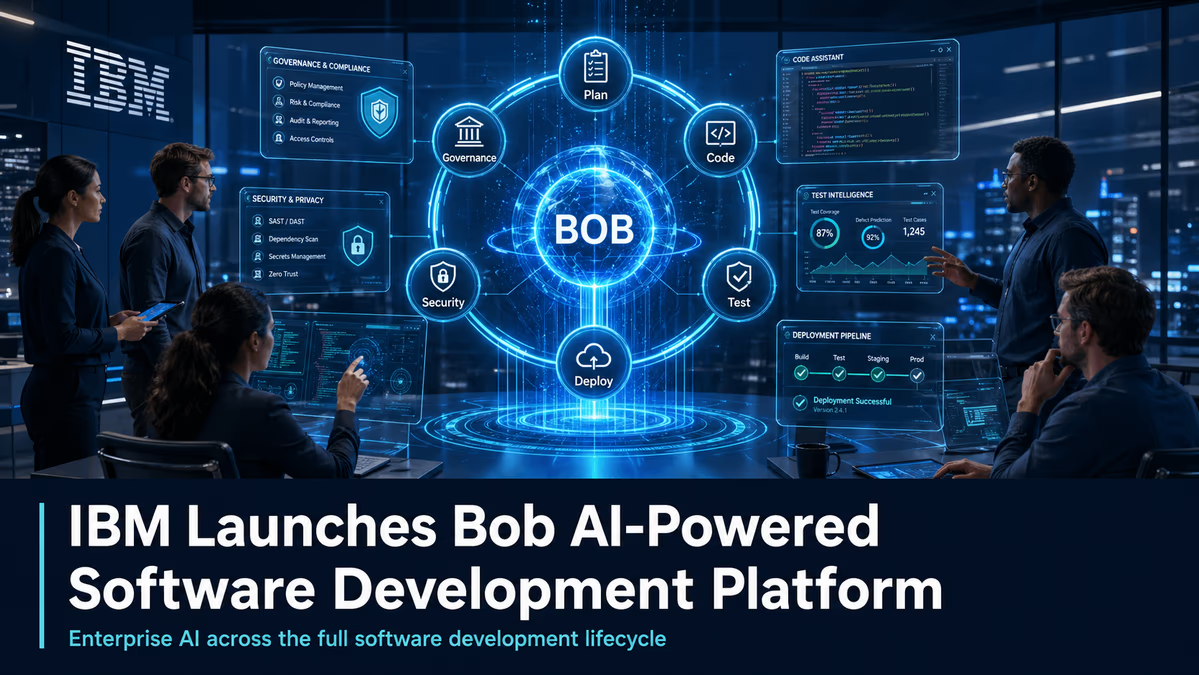
IBM officially released 'Bob,' its AI-powered software development platform, to the global market on April 28, 2026. The platform is designed to automate and orchestrate tasks across the entire software development lifecycle (SDLC), moving beyond the scope of simple code completion to address planning, architectural design, testing, deployment, and legacy modernization.
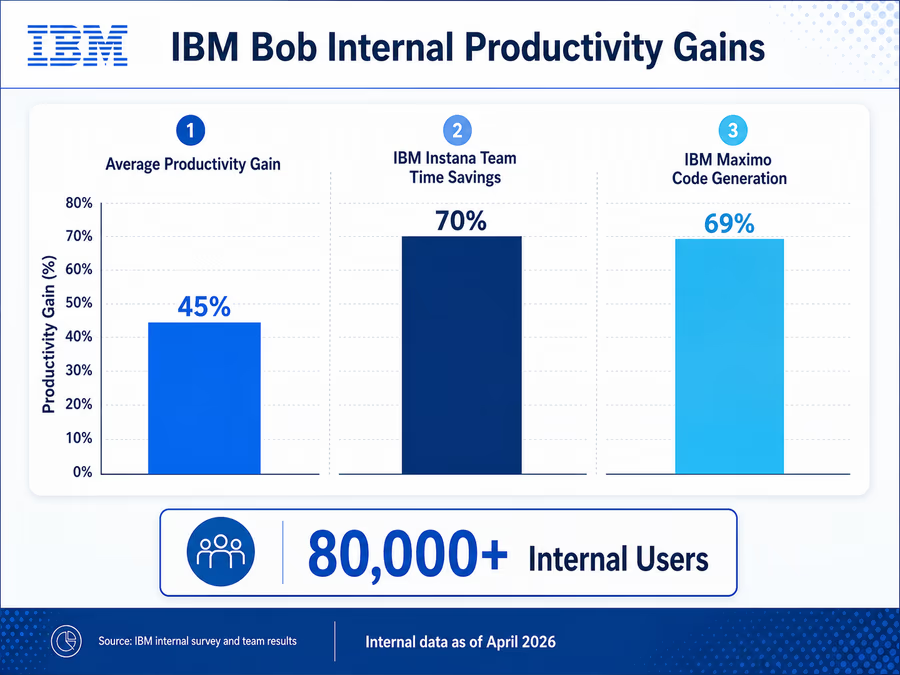
The global launch follows a massive internal scaling effort. IBM began testing Bob in June 2025 with an initial cohort of 100 users. Today, over 80,000 IBM employees use the platform to manage their daily workflows. Internal survey data suggests that these developers have realized an average productivity gain of 45% across modernization and security tasks. Some specialized units have reported even higher efficiencies; the IBM Instana team saw a 70% reduction in time for specific tasks, saving an average of 10 hours per week, while the IBM Maximo team recorded a 69% gain in code generation speed.
Orchestration and Multi-Model Intelligence
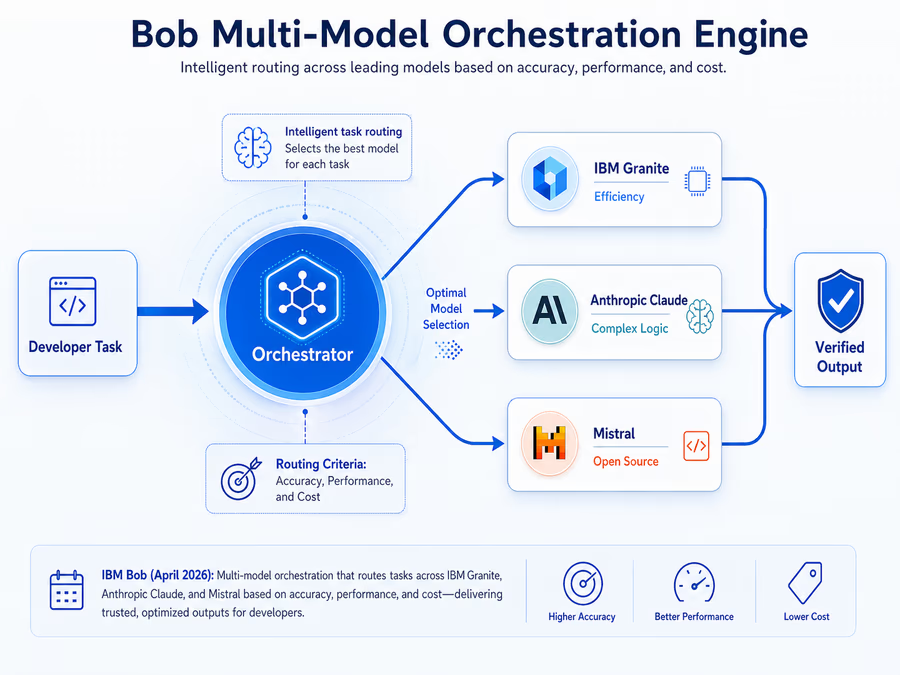
Unlike many AI coding assistants that rely on a single large language model, Bob utilizes a multi-model orchestration engine. This system dynamically routes tasks to the most appropriate AI model based on the specific requirements for accuracy, performance, and cost. Supported models include IBM’s proprietary Granite series, Anthropic’s Claude, and several open-source models from Mistral.
Neel Sundaresan, General Manager of Automation & AI at IBM Software, told VentureBeat that model capability alone is not sufficient for the modern developer. Speaking on the platform's design, Sundaresan noted that developers require a system capable of understanding the full context of their work and acting upon it. He described Bob as an agentic platform that embeds an AI partner into every role, from architects sketching designs to security engineers reviewing code before production.
Solving the Governance Gap
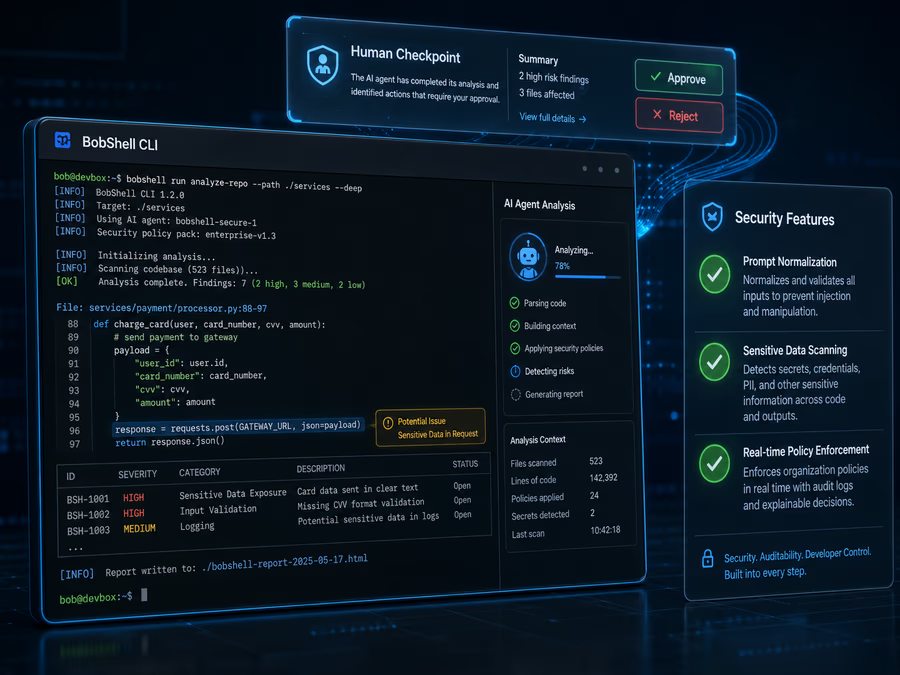
While first-wave AI tools like Cursor and Claude Code have gained popularity for individual productivity, IBM is positioning Bob as a solution for the rigorous governance and security needs of the enterprise. The platform features configurable human checkpoints, ensuring that AI-led development remains under human control.
Security is integrated directly into the workflow through features such as prompt normalization, real-time policy enforcement, sensitive data scanning, and automated AI red-teaming. For auditability, the platform includes 'BobShell,' a command-line interface that generates self-documenting agentic processes, allowing teams to trace every action taken by the AI.
"Every business is racing to modernize. But speed without control and transparency is a liability," said Dinesh Nirmal, Senior Vice President of IBM Software. Nirmal emphasized that Bob allows enterprises to move at "AI speed" without compromising the governance requirements inherent in regulated industries.
Enterprise Adoption and Legacy Integration
External partners are already exploring the platform's capabilities in complex environments. Christopher Aiken, Tax Platforms Leader and Chief Product Officer at Ernst & Young LLP, noted that developing enterprise platforms is about more than just speed; it requires understanding deeply embedded logic and maintaining architectural standards. According to Aiken, EY teams used Bob to interpret complex logic and streamline changes, creating a stronger foundation for scalable transformation.
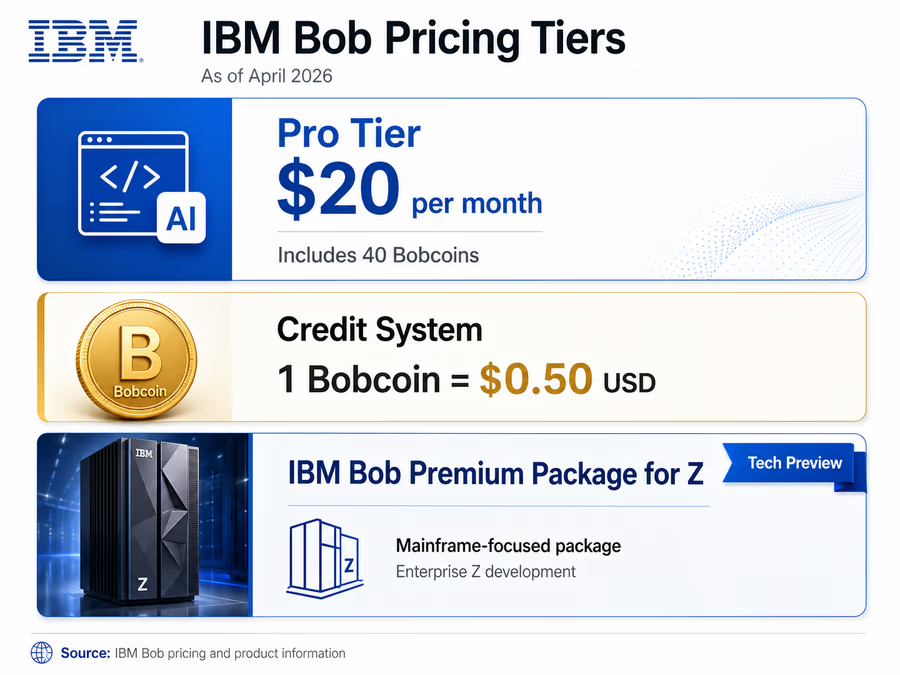
IBM is also addressing the needs of organizations running mainframe systems. The 'IBM Bob Premium Package for Z' is currently in tech preview, integrating the platform with IBM watsonx Code Assistant for Z to assist in the modernization of mainframe applications.
Security Scrutiny and Market Competition
Despite the positive reception of the global launch, the platform's journey has not been without scrutiny. According to unverified reports from Techzine Global, an earlier 1.0.0 release of the software faced internal security concerns in January 2026. Researchers allegedly identified potential vulnerabilities related to malware execution through the CLI and data leakage vectors. The comprehensive security features included in the April global release—specifically the real-time policy enforcement and red-teaming—appear to be a direct response to ensuring enterprise-grade safety.
Bob enters a crowded market of AI coding assistants, including GitHub Copilot, Amazon Q Developer, and Gemini Code Assist. However, IBM’s focus on the entire SDLC and its "agentic" approach—where the AI can perform multi-step workflows across different tools—distinguishes it from tools primarily focused on the code editor.
Pricing and Future Outlook
IBM Bob is now available as a Software-as-a-Service (SaaS) offering. IBM provides a 30-day complimentary trial, with a Pro tier starting at $20 per month. The platform also uses a credit-based system known as 'Bobcoins,' with each coin valued at $0.50 USD, to manage API usage and resource-heavy tasks.
Looking ahead, IBM has signaled plans to offer on-premises deployment options. This move is specifically aimed at organizations with strict data residency requirements or those in highly regulated sectors that cannot utilize public cloud SaaS models for their core intellectual property. As the industry moves toward 'agentic AI,' Bob represents a significant bet that the future of software development lies in highly governed, end-to-end automated environments.