Humanoid Robots Face First Combat Test on the Ukrainian Frontline
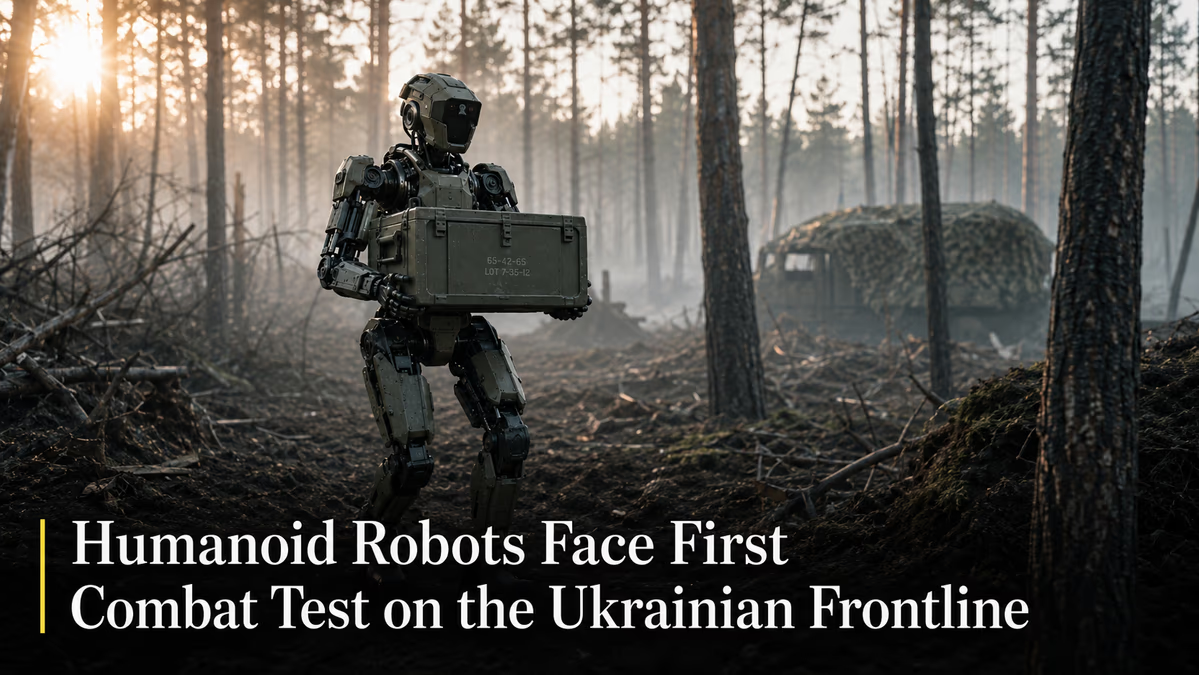
Two Phantom MK-1 humanoid robots have been deployed to Ukraine, marking the first real-world battlefield test of bipedal military logistics.
In February 2026, two Phantom MK-1 humanoid robots developed by San Francisco-based startup Foundation Future Industries were deployed to Ukraine for a pilot demonstration. Operating in highly hazardous zones, these bipedal units were tested for vital logistical tasks, primarily focusing on delivering essential supplies to frontline soldiers. This real-world deployment represents a major milestone in integrating advanced robotics into active combat environments, aiming to significantly reduce human exposure to immediate danger.
Capabilities and Current Limits of the Phantom MK-1
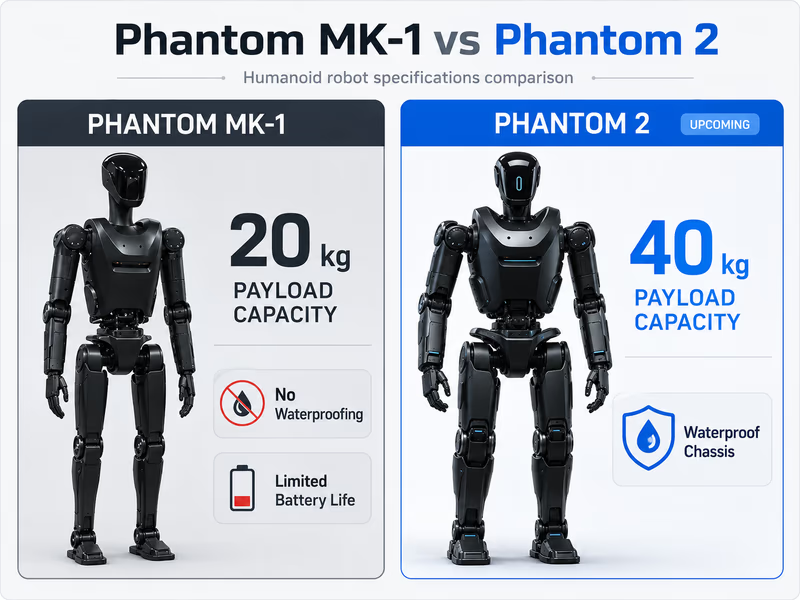
The Phantom MK-1 is currently far from a finished "super soldier." Built primarily for auxiliary operations, the robot features a modest payload capacity of approximately 20 kilograms (44 pounds). It also faces several severe environmental and operational limitations, including a complete lack of waterproofing, restricted battery life, and a limited physical capacity that keeps it bound to supportive roles.
Despite these physical constraints, leadership at Foundation Future Industries remains highly optimistic about the role bipedal robots will play in the future of labor and defense. "I'm convinced the technology is reaching a level where it can replace jobs that are dangerous for humans to perform, and if you can do that, it's the highest net good you can create out of all applications of robotics," Sankaet Pathak, CEO of Foundation Future Industries, stated regarding the deployment.
Scaling Production and Government Contracts
Despite the early developmental stage of the technology, Foundation Future Industries is positioning itself for rapid expansion. The startup has secured $24 million in U.S. government research contracts to test the feasibility of robotics in inspection, logistics, and weapons handling across the U.S. Army, Navy, and Air Force. Notably, Eric Trump, son of former U.S. President Donald Trump, serves as an adviser to the company, highlighting the firm's growing network of political and defense influence.
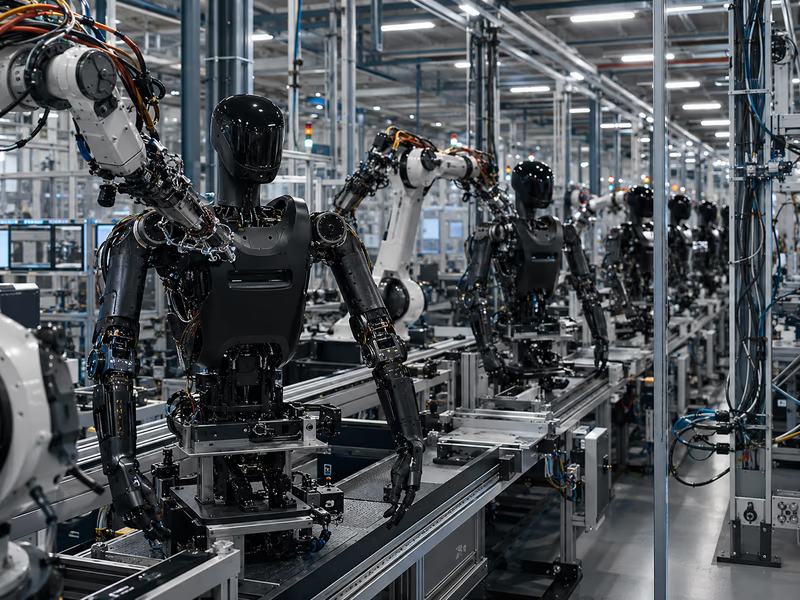
The initial pilot in Ukraine is merely the foundation for a much larger roadmap. Foundation plans to deploy its upgraded "Phantom 2" model to Ukraine later in 2026. This next-generation model is expected to double the payload capacity of its predecessor and introduce features the company describes as "superhuman." Additionally, the company aims to scale its manufacturing capabilities to produce thousands of humanoid robots annually starting in 2026, with projections to deploy this technology to the U.S. military's frontlines within the next 12 to 18 months.
Mike LeBlanc, co-founder of Foundation Future Industries, emphasized the ethical stance behind their mission, stating, "We think there's a moral imperative to put these robots into war instead of soldiers."
Ukraine's Military Technology Revolution
Ukraine has rapidly become one of the world's most critical testing grounds for military AI and automated systems. Following the full-scale Russian invasion, the Ukrainian military has pioneered the use of unmanned ground vehicles (UGVs) and aerial drones for reconnaissance, supply lines, and combat operations. While traditional UGVs—typically wheeled or tracked machines—have been highly effective for cargo transport and casualty evacuation, they often struggle with extreme terrain.
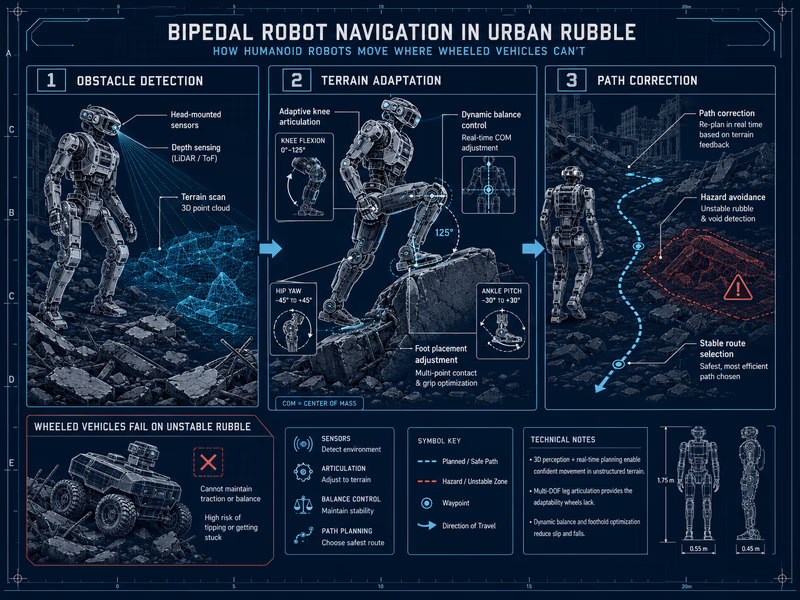
Humanoid robots offer distinct tactical advantages, particularly in traversing complex urban rubble and dense forested environments where traditional wheeled or tracked vehicles get stuck. Highlighting this paradigm shift, a Ukrainian commander reported by TechRadar explained that the logic is straightforward: a robot should be deployed whenever the risk to a human soldier is high.
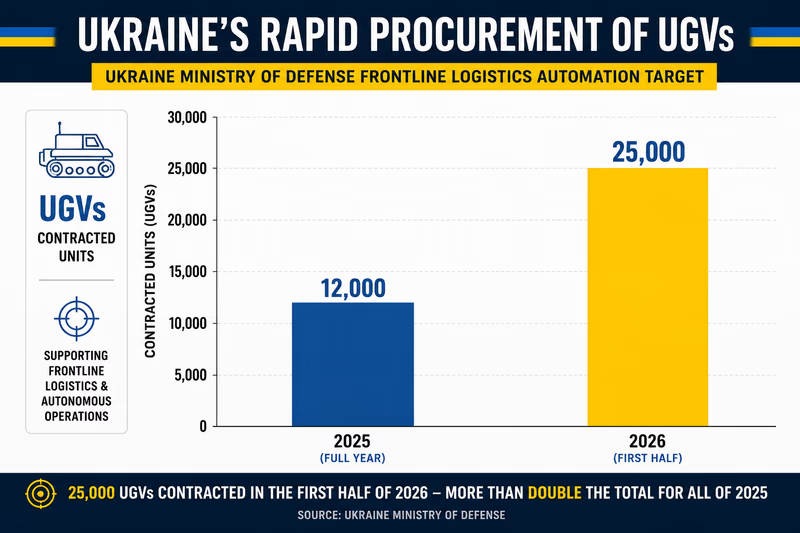
This strategy aligns with a broader initiative by Ukraine's Ministry of Defense to automate operations. The ministry aims for 100% of frontline logistics to eventually be managed by robotic systems. To support this, Ukraine plans to contract 25,000 UGVs in the first half of 2026 alone, more than doubling the procurement numbers of 2025. This rapid integration follows historic milestones, such as in 2024 when Ukraine's 13th Brigade of the National Guard conducted the first-ever robot-only assault. Currently, some Ukrainian commanders are evaluating plans to replace up to 30% of their infantry forces with robotic systems.
Lethal Autonomous Systems and Ethical Concerns
The deployment of humanoid machines in active combat zones has re-ignited intense global debates over the ethics of automated warfare. Proponents argue that robots save lives by absorbing the brunt of high-risk missions and can operate without human emotional flaws like panic, anger, or vengeance. However, critics warn of severe risks, including the degradation of human accountability, the potential for lowered thresholds for declaring conflict, and the capability of automated systems to accurately distinguish between combatants and non-combatants under international humanitarian law.
These ethical concerns are compounded by unverified reports circulating within the defense tech community. According to these unconfirmed reports, the Phantom MK-1 has already been tested wielding various firearms, including revolvers, semi-automatic pistols, shotguns, and dummy M-16 rifles. Furthermore, reports suggest that Foundation CEO Sankaet Pathak is aiming to develop robots capable of utilizing "any kind of weapon that a human can." If verified, such capabilities would escalate the debate from logistics assistance to the highly controversial realm of Lethal Autonomous Weapons Systems (LAWS).
Looking to an Automated Battlefield
As the trials in Ukraine continue, the results of this pilot will likely shape global military doctrines for decades. A successful demonstration of humanoid logistics could accelerate similar programs in Western nations, prompting other global superpowers to fast-track their own bipedal defense initiatives. However, as machines move from auxiliary support roles toward potential combat duties, the international community faces a critical window to establish clear regulations, ensuring that human judgment remains central to life-and-death decisions on the battlefield.