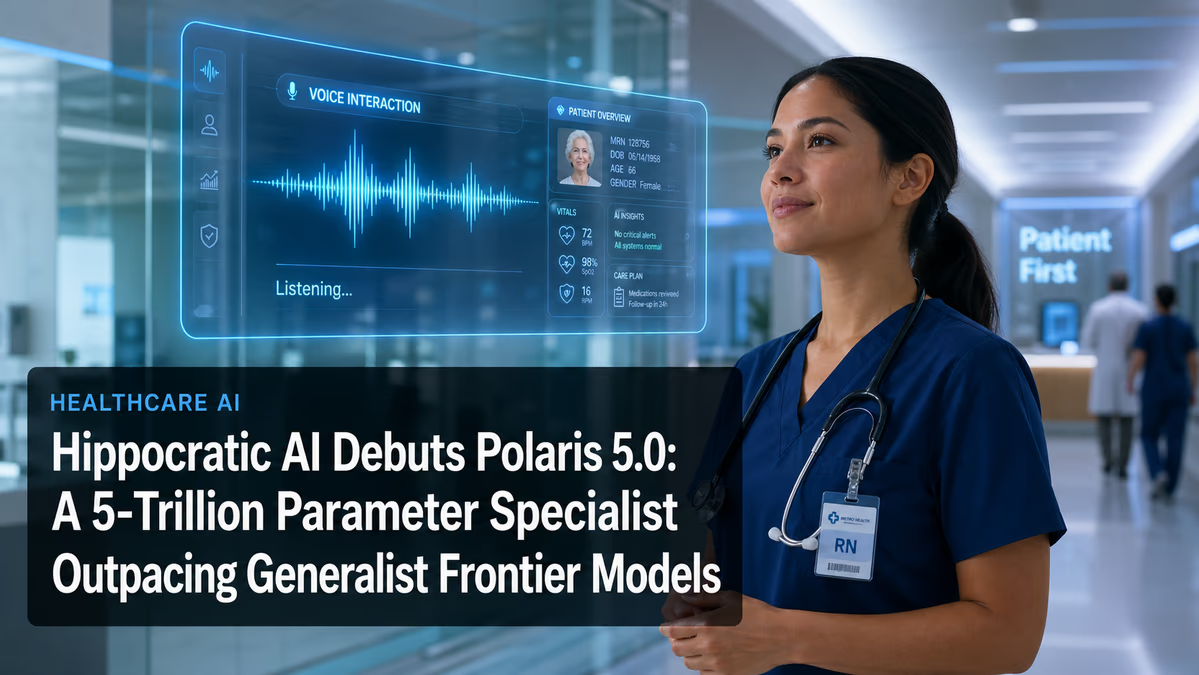
Hippocratic AI Debuts Polaris 5.0: A 5-Trillion Parameter Specialist Outpacing Generalist Frontier Models
Hippocratic AI's Polaris 5.0 sets a new healthcare benchmark, outperforming generalist models in clinical accuracy and regulatory compliance.
Hippocratic AI released Polaris 5.0 on April 30, 2026, marking a significant pivot in the race for domain-specific artificial intelligence. As the latest iteration of the company’s healthcare-specialized Large Language Model (LLM), Polaris 5.0 is designed to tackle the high-stakes requirements of clinical environments—areas where general-purpose models like GPT-4, Gemini, and Claude have historically struggled to maintain the necessary precision and safety standards.
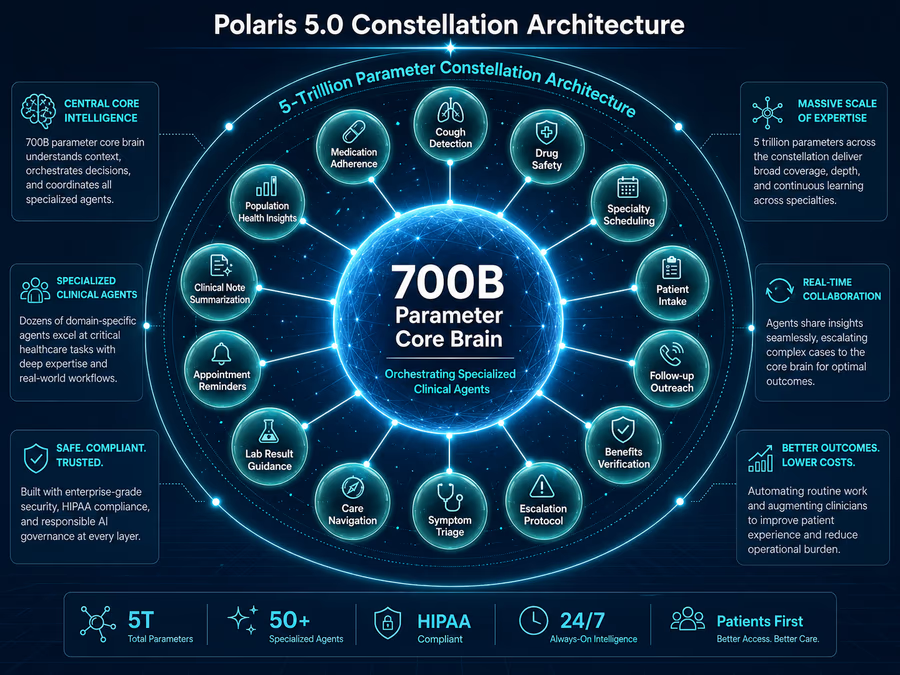
At the heart of the new release is a massive technical upgrade. Polaris 5.0 utilizes what the company calls a 'constellation architecture,' a 5-trillion-parameter system powered by a 700-billion-parameter core 'brain.' This modular approach allows a primary conversational agent to delegate specialized tasks to a network of sub-models, reducing the likelihood of hallucinations and improving the accuracy of complex medical reasoning. This version follows the company's rapid development cycle, which saw the launch of Polaris 1.0 in early 2024 and Polaris 3.0 in March 2025.
Specialized Benchmarks Over Generalist Performance
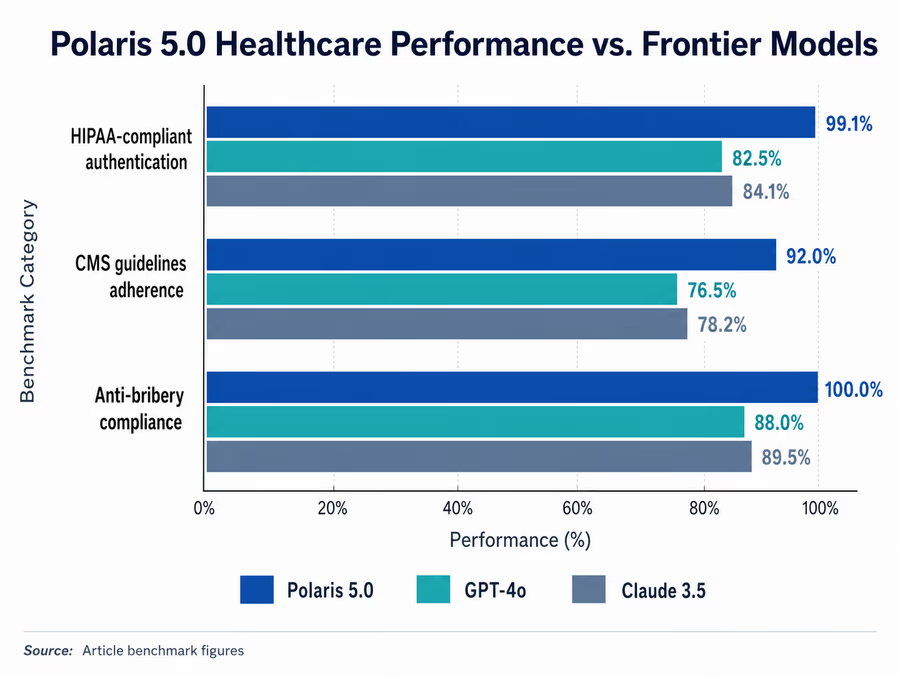
Hippocratic AI reports that Polaris 5.0 consistently outperforms leading frontier models across critical healthcare dimensions. While general models excel at broad knowledge retrieval, they often lack the nuance required for clinical accuracy, HIPAA compliance, and consistent empathy during patient distress. According to company data, Polaris 5.0 achieved a 99.1% accuracy rate on HIPAA-compliant authentication and 92.0% adherence to Centers for Medicare & Medicaid Services (CMS) guidelines. In a specific win for regulatory rigor, the model demonstrated 100% compliance with anti-bribery standards required for pharmaceutical interactions.
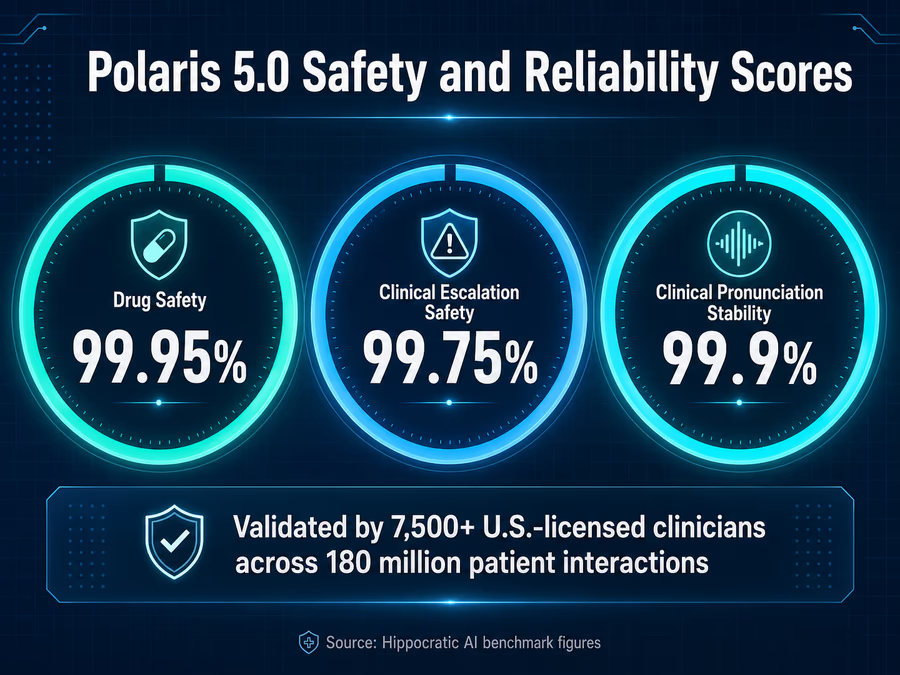
Beyond administrative metrics, the model introduces a suite of new clinical skills. These include contextual automated speech recognition (ASR) tuned for medical terminology, cough detection, drug safety monitoring, and specialty scheduling. Most critically, the system includes a robust clinical escalation protocol for serious conditions, such as suicidal ideation, where it achieved a safety score of 99.75% across seven different body systems.
"With Polaris 5.0 we are introducing the first evidence-based AI model for healthcare, tested by clinicians, built on more than 180 million real-world patient interactions and benchmarked against leading frontier voice capable models," said Munjal Shah, CEO and Cofounder of Hippocratic AI. Shah noted that the model is built to understand what a patient needs and navigate complex conversations at conversational speed with state-of-the-art safety.
Rebuilding the Voice Stack for Real-Time Care
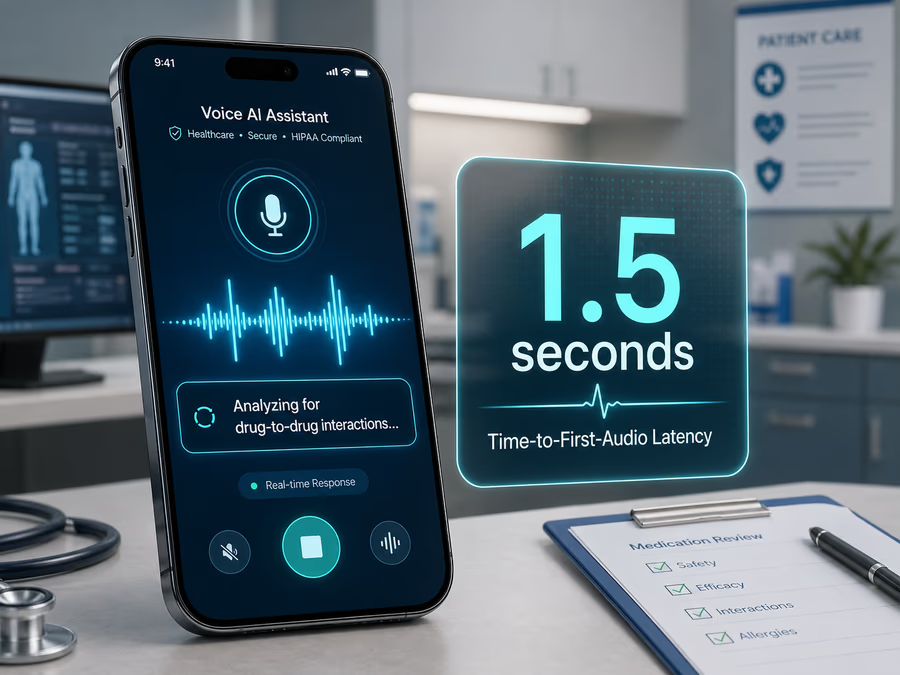
A major differentiator for Polaris 5.0 is its focus on low-latency voice interaction. The system delivers a 1.5-second time-to-first-audio response. This speed is vital for natural patient-provider interactions, where long pauses can lead to frustration or miscommunication. Subhabrata Mukherjee, Co-founder and Chief Science Officer, explained that the company had to rebuild the entire voice AI stack to achieve these results.
According to Mukherjee, frontier models from major tech companies often fail core clinical voice workflows because they are either too inaccurate or too slow. He pointed out that Polaris 5.0 addresses this by utilizing clinical ASR that halves the error rate on drug names compared to standard models, alongside a custom text-to-speech (TTS) system designed for clinical pronunciation stability.
Clinical Validation and Industry Impact
The development of Polaris 5.0 was not a purely computational exercise. The model was trained on 180 million real patient interactions and validated by a network of more than 7,500 U.S.-licensed clinicians. This rigorous human-in-the-loop validation is intended to build trust among healthcare systems that are wary of deploying generative AI in patient-facing roles. The release comes just weeks after the company rolled out its 'AI Front Door' and 'Nurse Co-Pilot' tools, which are already leveraging the Polaris architecture to assist with inpatient workflows and patient access.
This launch comes at a time when the healthcare industry is grappling with severe staffing shortages. By deploying safety-focused AI agents for low-risk, non-diagnostic interactions, Hippocratic AI aims to alleviate the burden on human staff. Earlier developments, including a $17 million investment from Nvidia’s venture arm in late 2024 and the issuance of a patent for the constellation architecture in October 2025, have positioned the company as a leader in the specialized AI space.
The Future of Domain-Specific AI
The success of Polaris 5.0 suggests a growing trend where specialized, vertically-integrated models may offer more value to regulated industries than monolithic, general-purpose LLMs. While companies like OpenAI and Google continue to improve the diagnostic and triage accuracy of their frontier models, the high safety scores of Polaris 5.0—such as its 99.95% accuracy in drug safety—set a high bar for competitors.
As healthcare providers look toward automated workflows to improve care efficiency, the focus will likely remain on maintaining the balance between conversational empathy and clinical safety. With its latest release, Hippocratic AI is betting that a 5-trillion-parameter constellation of specialists is the only way to meet that demand. If the benchmarks hold in real-world deployments, Polaris 5.0 could become the blueprint for how AI enters the patient-facing workforce, transforming healthcare accessibility through high-speed, safety-first automation.