Nous Research Releases Hermes AI Agent V0.12, Introducing Autonomous Memory Curation
Nous Research releases Hermes AI Agent V0.12, introducing an autonomous "Curator" to manage persistent memory and self-improve skill libraries.
The Advent of the Self-Maintaining Agent
On April 30, 2026, Nous Research officially launched Hermes AI Agent V0.12, a release colloquially titled "The Curator." This update marks a significant shift in the architecture of open-source AI agents, moving beyond simple task execution toward a model of autonomous self-maintenance. The primary innovation is a background system designed to solve the clutter and inconsistency that often plague long-term AI deployments.
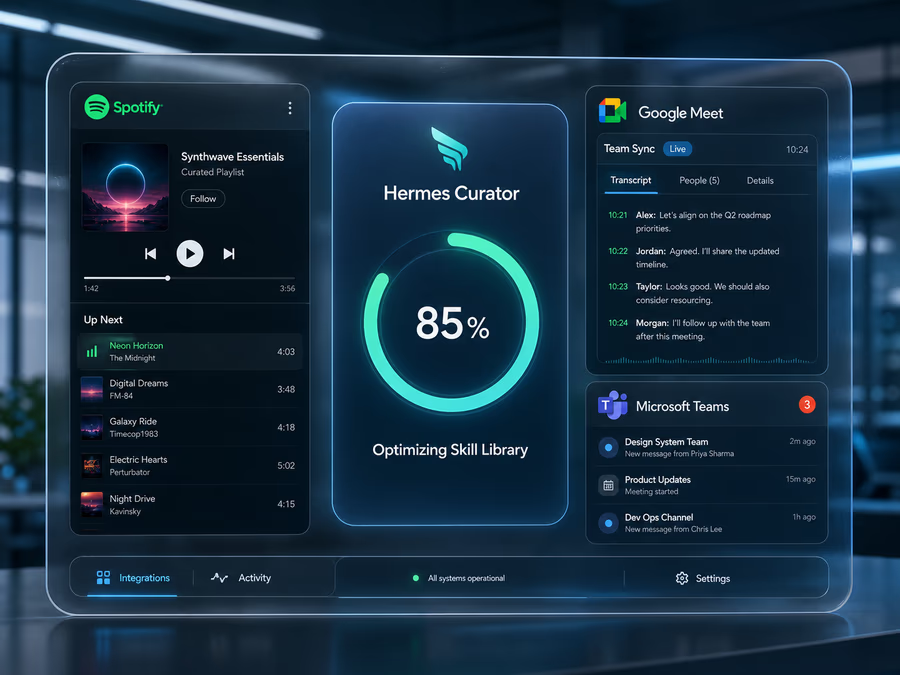
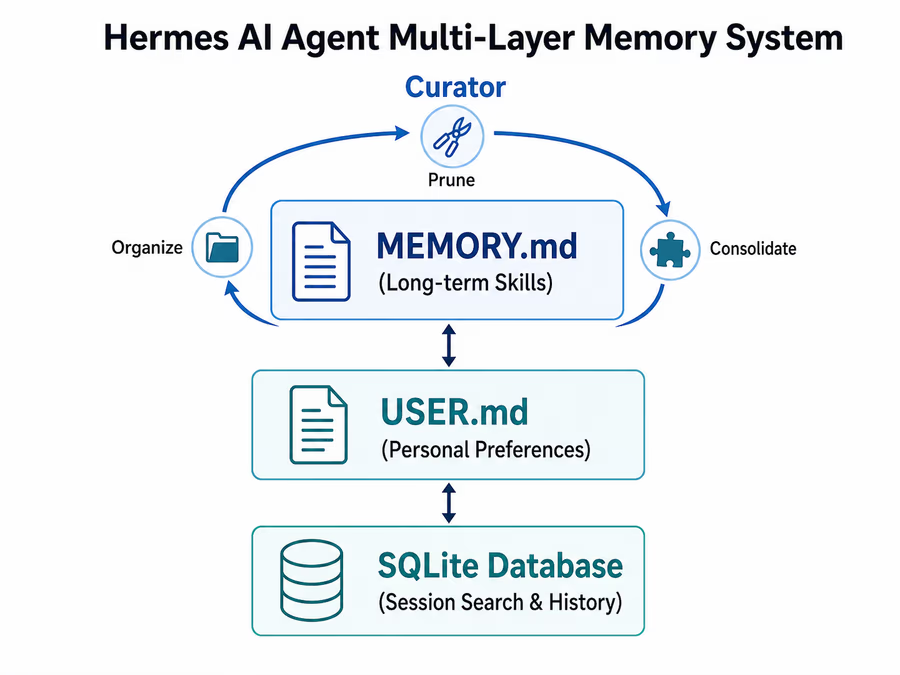
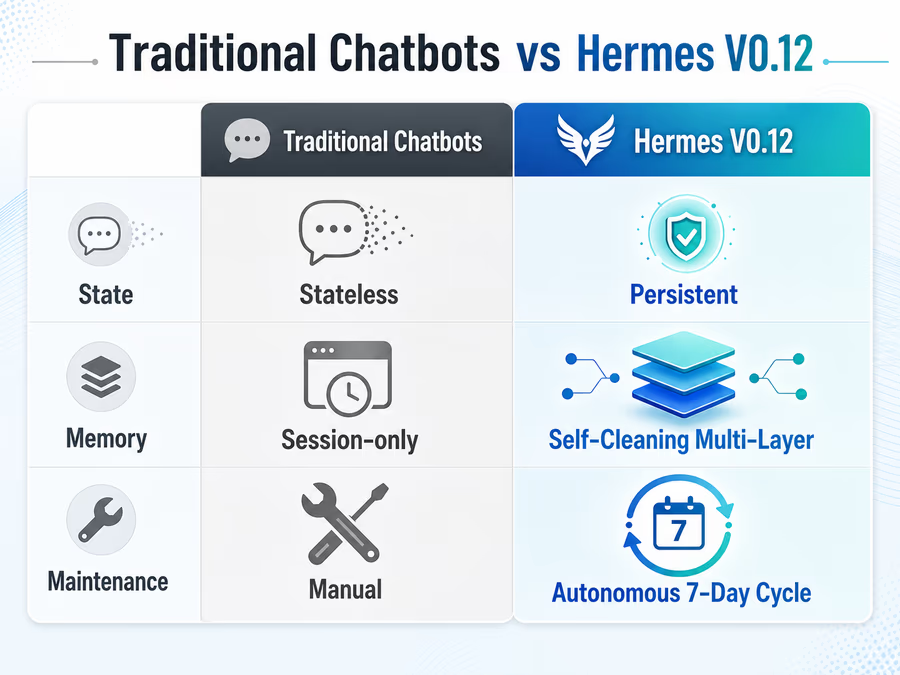
At the heart of the V0.12 release is the autonomous background Curator. This system operates on a default seven-day cycle, during which it grades, prunes, and consolidates the agent’s internal skill library. By using a rubric-based self-improvement loop, Hermes can now prioritize recently loaded skills while managing complex templates and references. This prevents the "skill bloat" that typically slows down performance as an agent accumulates experience over months of operation.
Julian Goldie of the AI Profit Boardroom observed that this update represents the transition of Hermes from a merely functional tool into a system capable of maintaining its own working environment. He noted that the Curator is the defining element of this release, distinguishing it from standard patches by focusing on the management of existing assets rather than just the addition of new ones. Goldie emphasized that the future of AI lies in persistent agents that can act, remember, and improve autonomously.
Performance Gains and Enhanced Integration
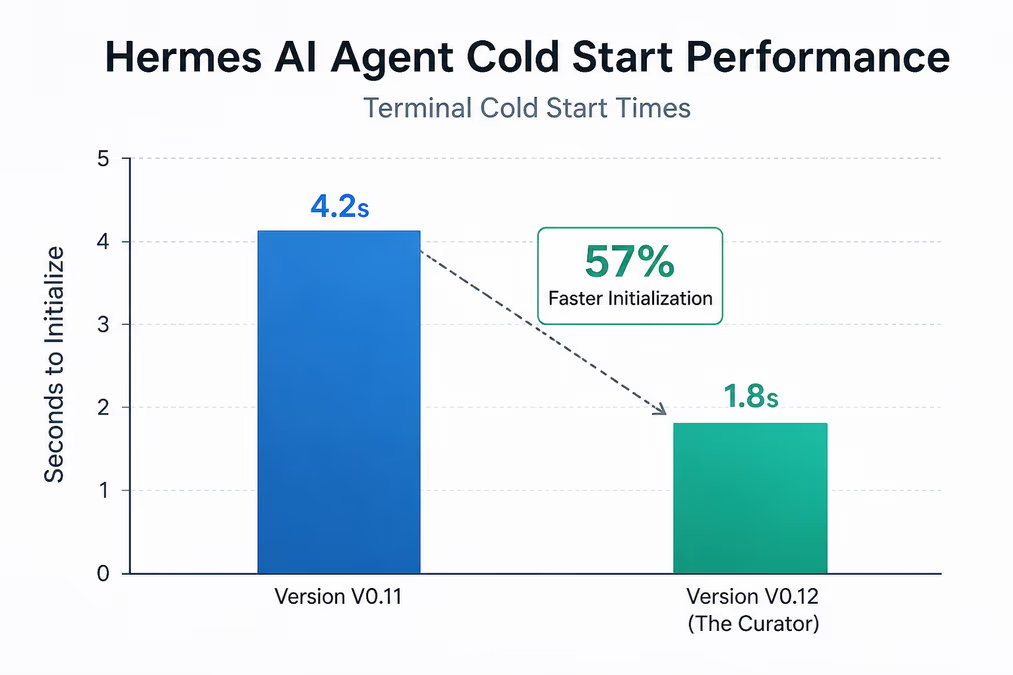
Beyond its memory management capabilities, Hermes V0.12 delivers substantial performance optimizations. Most notably, the terminal cold start time—the speed at which the agent initializes from a dead stop—is now approximately 57% faster than previous versions. This speed increase is paired with expanded support for local model providers. LM Studio has been integrated as a first-class provider, complete with dedicated health checks and live model listing, allowing users to run Hermes entirely on their own hardware with greater stability.
The update also broadens the agent's reach through several native integrations. For professional workflows, Hermes now supports Microsoft Teams and Google Meet. The Google Meet integration allows the agent to join calls, transcribe discussions in real-time, speak, and generate follow-up actions. For entertainment and social use, the update includes seven dedicated tools for Spotify, enabling the agent to search for tracks, manage queues, and control playback. Additionally, messaging support has been extended to the Tencent (Yuanbao) platform.
Solving the Goldfish Problem
Hermes was originally released in February 2026 to address the "goldfish problem"—the tendency of AI agents to forget context and lose learned behaviors between sessions. To solve this, Nous Research developed a multi-layer persistent memory system. This architecture utilizes `MEMORY.md` and `USER.md` files alongside a SQLite database for efficient session searching.
The ability of Hermes to codify successful task sequences into reusable "Skill" documents allows it to effectively write its own playbook. Prior to V0.12, this process could become disorganized. The new rubric-based management system ensures that the agent becomes more useful the longer it is used. Julian Goldie noted that structure is essential for an AI to gain utility over time, and that the V0.12 update provides that necessary framework.
Market Context and Industry Shift
The release of Hermes V0.12 occurs during a period of intense focus on long-term AI memory. The industry is seeing a migration toward persistent frameworks, with Hermes positioned as a viable alternative to systems like OpenClaw. This shift is supported by the emergence of new benchmarks like LOCOMO (Long-term Conversational Memory), which provide rigorous standards for evaluating how well agents retain information.
Other memory frameworks such as Mem0, Zep, and Letta are also competing for dominance, but Hermes distinguishes itself through its open-source, MIT-licensed nature and its ability to autonomously create and prune skills without constant human intervention. The transition from experimental graph memory to production-ready relational memory is also a key theme in early 2026, complementing the vector-based approaches used in earlier iterations of these agents.
Future Implications
The introduction of self-cleaning memory signals a move away from transient chatbots and toward AI entities that function more like evolving operating systems. As Hermes V0.12 proves that agents can manage their own technical debt and knowledge libraries, the threshold for "trustworthy" AI continues to rise.
Looking forward, the ability of these agents to operate in multi-agent configurations—where specialized instances of Hermes collaborate on complex tasks—will likely be the next frontier. By reducing operational friction through faster start times and broader integrations, Nous Research is positioning Hermes as a central hub for personal and professional automation that learns, adapts, and, crucially, keeps its own house in order.