
OpenAI Cuts Hallucinations by Half with New GPT-5.5 Instant Default
OpenAI launches GPT-5.5 Instant, reducing hallucination rates by 52.5% in high-stakes fields like medicine and law to improve ChatGPT reliability.
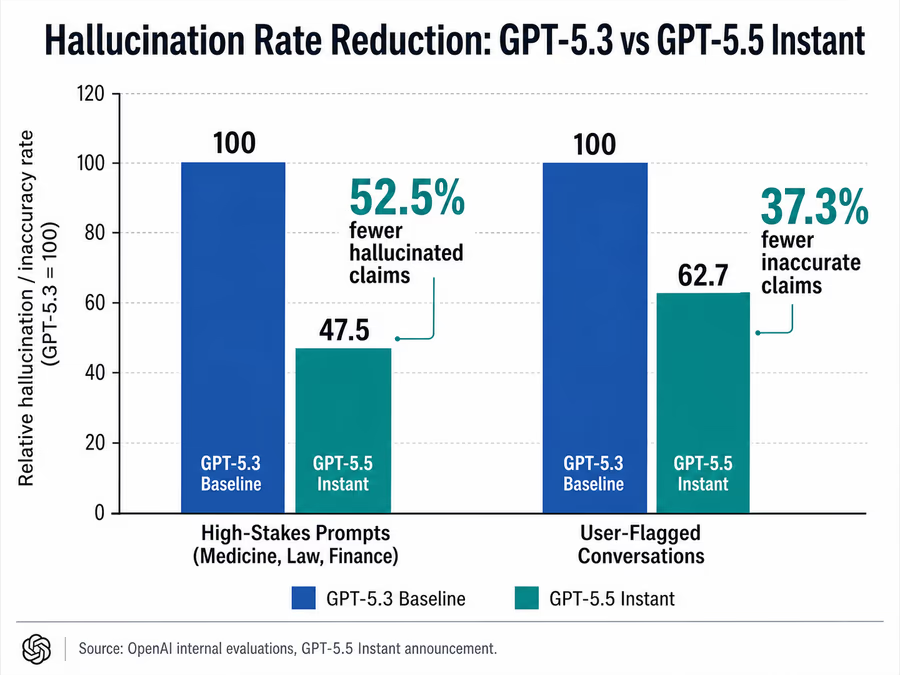
OpenAI officially replaced GPT-5.3 Instant with GPT-5.5 Instant as the default model for all ChatGPT users on May 5, 2026. This release targets the single most persistent criticism of large language models: the tendency to generate plausible but factually incorrect information, known as hallucinations. According to OpenAI's internal evaluations, the new model produces 52.5% fewer hallucinated claims than its predecessor when handling sensitive, high-stakes prompts in the medical, legal, and financial sectors.
Beyond general performance, GPT-5.5 Instant showed a 37.3% reduction in inaccurate claims during challenging conversations previously flagged by users for factual errors. This technical leap comes at a critical time for the industry. In 2024, global business losses attributed to AI hallucinations reached an estimated $67.4 billion, highlighting the massive financial risk associated with unverified AI outputs. By tightening the accuracy of its default model, OpenAI is positioning ChatGPT as a more viable tool for professional environments where a single error can lead to reputational or legal catastrophe.
Quantifiable Gains in Reasoning and Knowledge
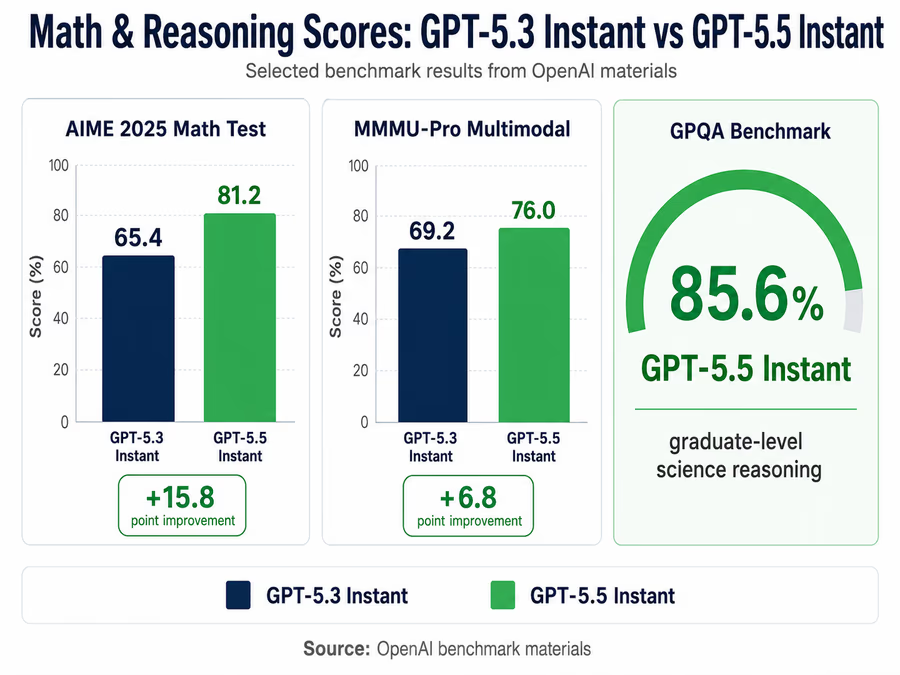
The upgrade is not merely about factual consistency; it represents a significant step up in raw processing power and reasoning. GPT-5.5 Instant achieved a score of 81.2 on the AIME 2025 math test, a sharp rise from the 65.4 managed by GPT-5.3 Instant. In multimodal reasoning, the model scored 76.0 on the MMMU-Pro benchmark, compared to the previous 69.2. Professional-grade benchmarks also saw movement; on HealthBench Professional, the model’s score jumped from 32.9 to 38.4 points, while it maintained a strong 85.6% on the GPQA benchmark.
OpenAI notes that the model is now more effective at determining when to utilize web search to provide useful answers, rather than relying solely on its internal training data. This selective use of external tools is a key strategy in mitigating the risks associated with the training procedures that OpenAI acknowledged in late 2025, which sometimes rewarded guessing over acknowledging uncertainty.
A More Natural, Concise Experience
While the backend improvements focus on accuracy, the frontend experience has been refined for human interaction. OpenAI stated in a blog post that the update makes interactions more useful through "stronger and tighter answers across subject areas, a more natural conversational tone, and better use of the context you've already shared."
User feedback played a central role in the model's design. OpenAI reported via Twitter that GPT-5.5 Instant is designed to be more concise, reducing the verbosity and "overformatting" that often made previous AI responses feel cumbersome. This includes a reduction in "gratuitous emojis" and unnecessary follow-up questions. A spokesperson for OpenAI noted that the model can deliver the same information with more utility than previous versions while keeping responses brief and to the point.
Control and Privacy via Memory Sources
Coinciding with the model rollout, OpenAI has introduced enhanced memory controls called "Memory Sources." These allow users to see exactly which pieces of context the AI is using to personalize a response.
"Memory sources aren't shown to others if you choose to share a chat," OpenAI clarified. "You remain in control of what's in your memory: you can delete chats you no longer want to be cited, delete or change items in saved memories in settings, or use temporary chats that don't use or update your memory."
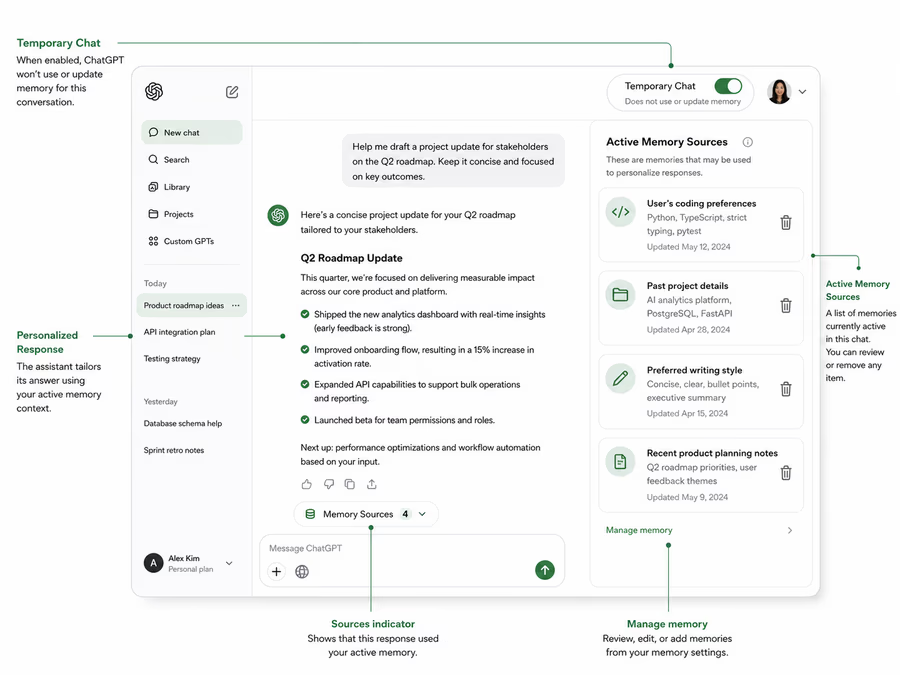
This move toward transparency is partly a response to the complex nature of personalization, which, while useful, has raised concerns regarding how much an AI "remembers" about its users over time.
Managing the Transition
The release of GPT-5.5 Instant follows a rapid-fire series of updates from OpenAI, including the release of GPT-5.5 in April 2026 and the specialized GPT-5.5 Thinking and Pro models for power users and developers. For developers and API users, the new model is available under the identifier 'chat-latest'.
Mindful of the user backlash that occurred in February 2026 after the abrupt deprecation of GPT-4o, OpenAI is taking a more gradual approach with this transition. While GPT-5.5 Instant is now the default for everyone, GPT-5.3 Instant will remain an available option for paid users for three more months before it is officially retired. This grace period allows enterprises and power users to adjust their workflows without the disruption that characterized previous model shifts.

Looking Ahead: The High-Capability Threshold
As LLMs become more reliable, they are also being scrutinized for their potential risks. GPT-5.5 Instant has been classified as "High Capability" in cybersecurity and biological domains, a designation that requires stricter safeguards.
The reduction in hallucination rates suggests that the industry may finally be moving past the "plausible but wrong" era of AI. If OpenAI can maintain this trajectory, the focus of the next year will likely shift from whether the AI is telling the truth to how these increasingly accurate systems can be integrated into the most sensitive layers of global infrastructure. For now, users can expect a ChatGPT that is not only smarter and faster but, for the first time, significantly more careful with the facts.