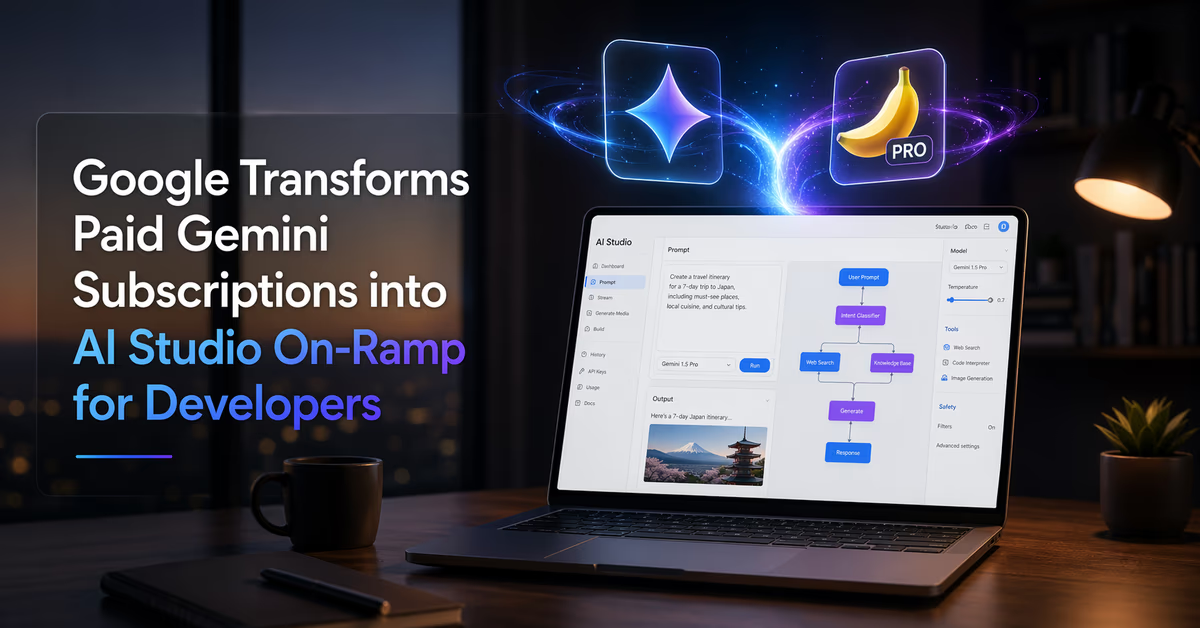
Google Transforms Paid Gemini Subscriptions into AI Studio On-Ramp for Developers
Google is merging consumer Gemini subscriptions with developer tools, offering credits and model access to streamline the prototyping process.
Google is officially bridging the gap between its consumer-facing AI products and its professional development ecosystem by transforming paid Gemini subscriptions into a high-capacity "on-ramp" for Google AI Studio. This strategic integration, which began rolling out in mid-April 2026, aims to eliminate the long-standing friction developers faced when managing separate billing for consumer Gemini access and API usage. Under the new structure, subscribers to Google AI Pro and Google AI Ultra now receive significantly enhanced usage limits and credits directly within the AI Studio environment.
Google AI Studio functions as a browser-based integrated development environment (IDE) that allows researchers and developers to prototype applications using Gemini models. Historically, moving from experimentation to testing required developers to manage a complex web of API keys and pay-per-request billing. The new subscription-based bridge provides a more predictable cost model for the early stages of the development lifecycle.
Streamlining the Developer Workflow
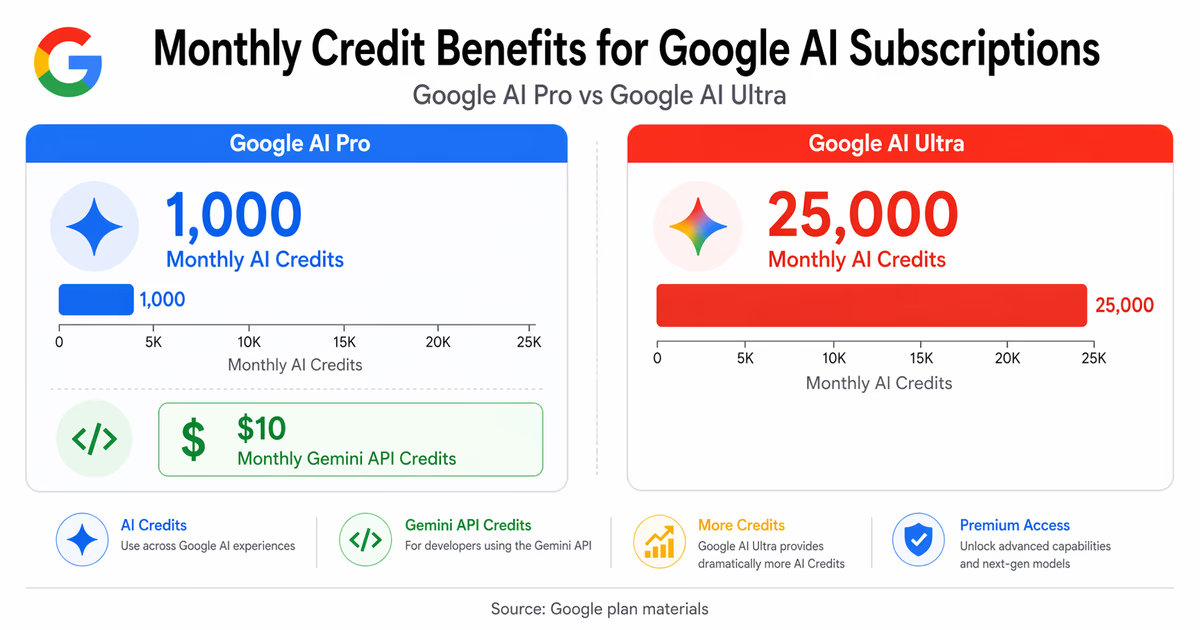
The most immediate benefit for subscribers is the injection of monthly AI credits that can be used across Google’s suite of generative tools. According to details released by the company, Google AI Pro subscribers now receive 1,000 monthly AI credits, while those on the Ultra tier are granted 25,000 credits per month. These credits are applicable not just for text-based models, but also for video generation tools like Flow and Whisk.
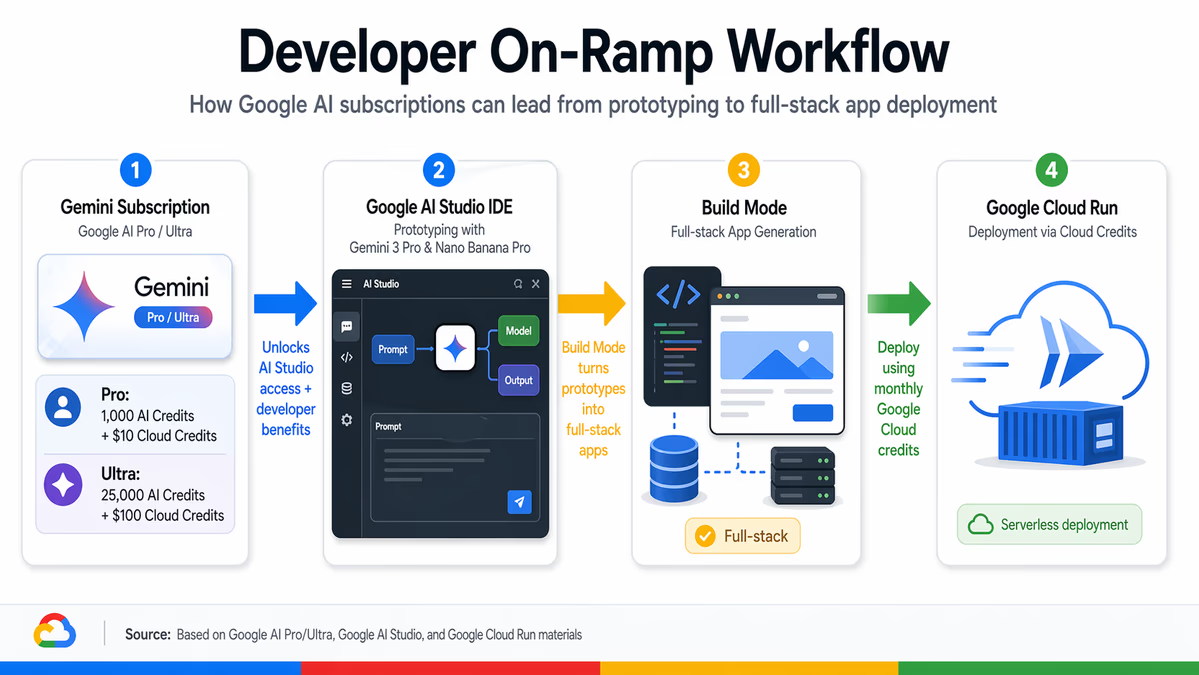
In addition to these usage credits, Google AI Pro subscribers will receive a $10 monthly credit specifically for use with the Gemini API. This move follows a January 2026 update where Google integrated premium benefits from the Google Developer Program, including Google Cloud credits, directly into the AI Pro and AI Ultra tiers. This holistic approach ensures that a developer can move from an initial prompt to a hosted application without leaving the Google ecosystem or entering a new credit card.
"Starting today, Google AI Pro and Ultra subscribers get increased usage limits in Google AI Studio," a Google blog post stated on April 20, 2026. "This update also includes access to Nano Banana Pro and Gemini Pro models, providing developers with more versatility right out of the gate. Subscribers can now move from an initial idea to a working application in minutes with predictable costs."
New Models and Multimodal Capabilities
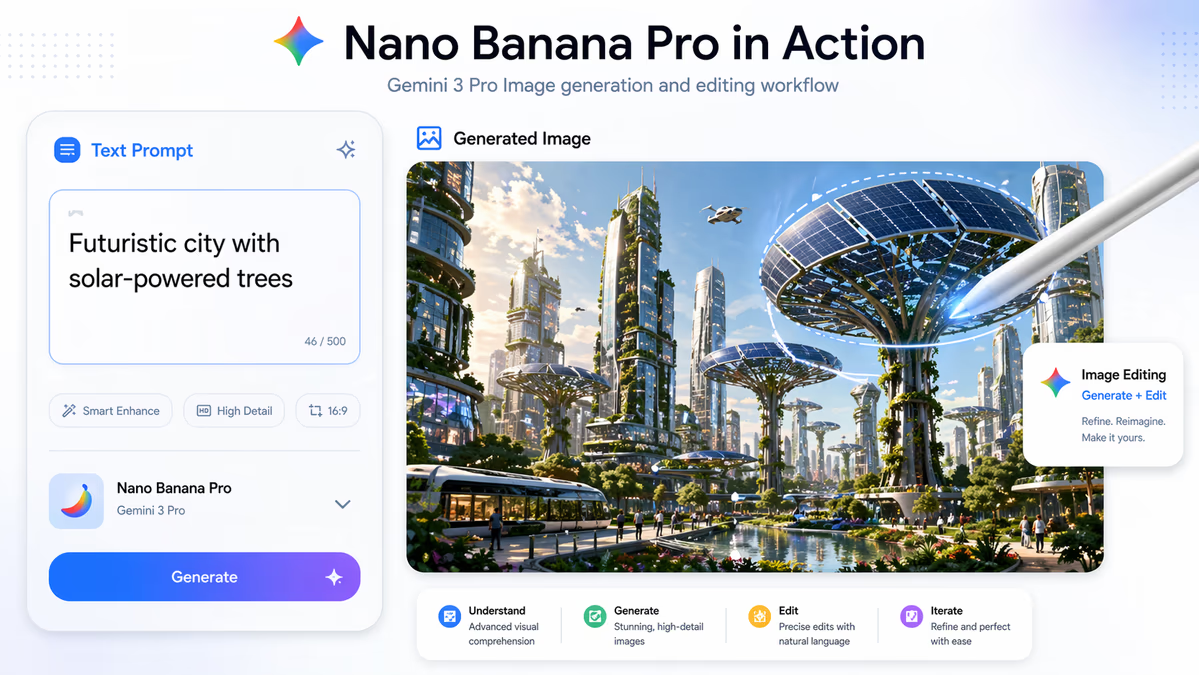
The integration also unlocks access to Google’s most advanced models for experimentation. This includes Gemini 3 Pro—often referred to simply as Gemini Pro in development contexts—and the specialized Nano Banana Pro. Introduced by Google DeepMind on November 20, 2025, Nano Banana Pro (also known as the Gemini 3 Pro Image Preview model) is designed specifically for sophisticated image generation and editing tasks.
Ammaar Reshi, a Google employee, confirmed the rollout was in the works days before the official announcement, noting that the features were being tested and prepared for a gradual release. This phased approach ensured that the increased usage limits did not compromise the stability of the AI Studio IDE, which supports a wide array of multimodal inputs including audio, video, and text.
For those building complex systems, AI Studio’s 'Build' mode now allows for the generation of full-stack applications from simple prompts. These applications can be deployed directly to Google Cloud Run, utilizing the newly included Cloud credits to cover hosting costs during the initial launch phase.
Positioning Against the Competition
Google’s decision to unify its consumer and developer billing reflects a broader industry trend toward simplified AI access. Competitors like OpenAI and Anthropic have faced similar demands for streamlined payment structures that allow developers to experiment without the overhead of enterprise-grade API management.
By offering a "low-setup billing bridge," Google is positioning AI Studio as the primary gateway for the next generation of AI-native startups. As noted in the company's official communications, while pay-per-request API keys remain the standard for production-scale launches, the subscription model provides a necessary middle ground for deep prototyping. When a project is ready to scale, AI Studio handles the transition to a full API setup seamlessly.
Forward-Looking Implications
This shift likely signals a future where the line between an AI "user" and an AI "developer" continues to blur. By lowering the barrier to entry, Google is betting on a massive influx of new applications built within its ecosystem. The inclusion of Google Cloud credits suggests that Google is not just looking to sell AI access, but to capture the subsequent cloud infrastructure spend that follows successful application deployment.
As Nano Banana Pro and Gemini 3 Pro become more accessible, the variety of multimodal applications—ranging from automated video editing to complex conversational agents—is expected to grow. For the individual developer, the era of managing multiple separate accounts for personal AI assistants and development sandboxes appears to be coming to an end, replaced by a single, unified subscription that covers the entire journey from imagination to implementation.