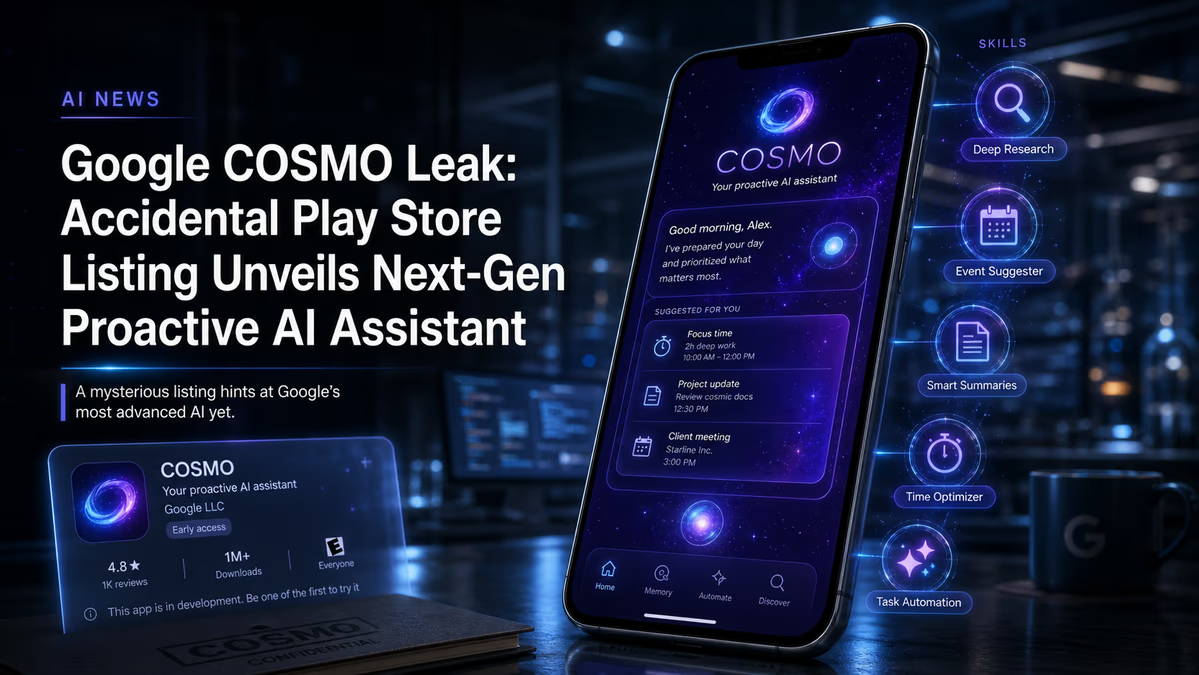
Google COSMO Leak: Accidental Play Store Listing Unveils Next-Gen Proactive AI Assistant
Google accidentally leaked COSMO, a proactive on-device AI assistant powered by Gemini Nano, hinting at a major shift for Android at Google I/O 2026.
Google’s Unintended Preview of the Proactive Future
On May 1, 2026, Google inadvertently offered the world a glimpse into its next-generation AI strategy when an experimental application named "COSMO" appeared on the Google Play Store. Though the app was swiftly removed within hours, its brief availability allowed tech enthusiasts and researchers to dissect what appears to be a radical evolution of the Android user experience. COSMO is not merely a conversational bot; it represents a transition toward a proactive AI assistant that anticipates user needs rather than waiting for explicit commands.
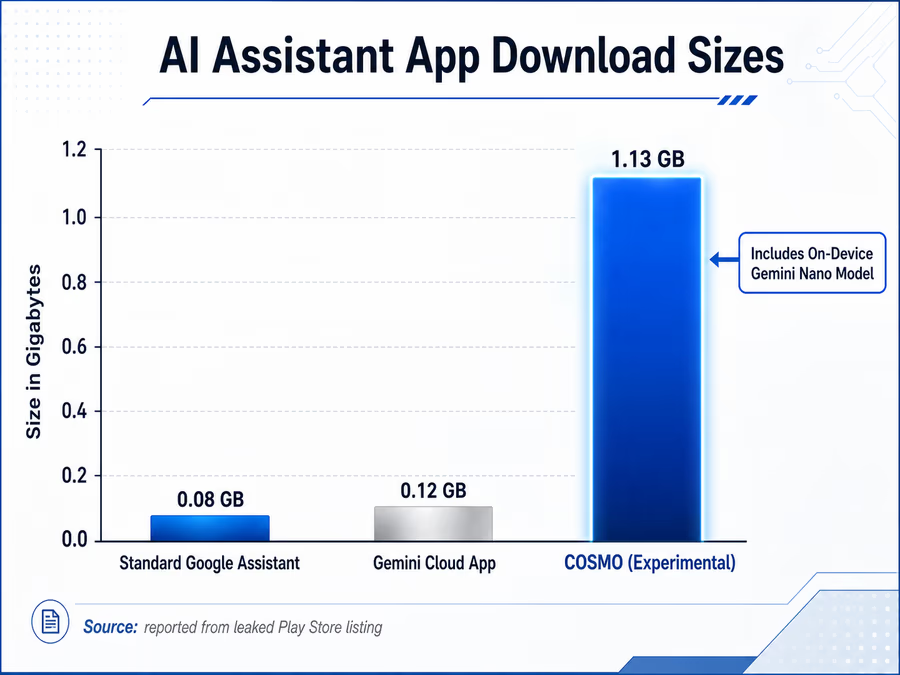
The application, filed under the package name `com.google.research.air.cosmo`, traces its origins back to Google Research. Its appearance just weeks before Google I/O 2026—scheduled for May 19-20—suggests that this was a premature reveal of a flagship announcement. Unlike the current Gemini app, which relies heavily on cloud infrastructure, COSMO is anchored by a significant 1.13 GB download, a size almost entirely attributed to the inclusion of a local Gemini Nano model for on-device processing.
The Architecture of On-Device Intelligence
The technical specifications of COSMO underscore Google's commitment to speed, privacy, and offline functionality. The app features three distinct "Fulfillment Models" that determine how it processes information. The first is a Nano-only mode designed for entirely offline use, ensuring that user data never leaves the device. The second is a server-side model referred to in the app as "PI." While Google has not officially clarified this acronym, industry analysts speculate that it stands for "Personal Intelligence." The third is a hybrid mode that dynamically switches between local and server-side processing based on the complexity of the task and connectivity status.
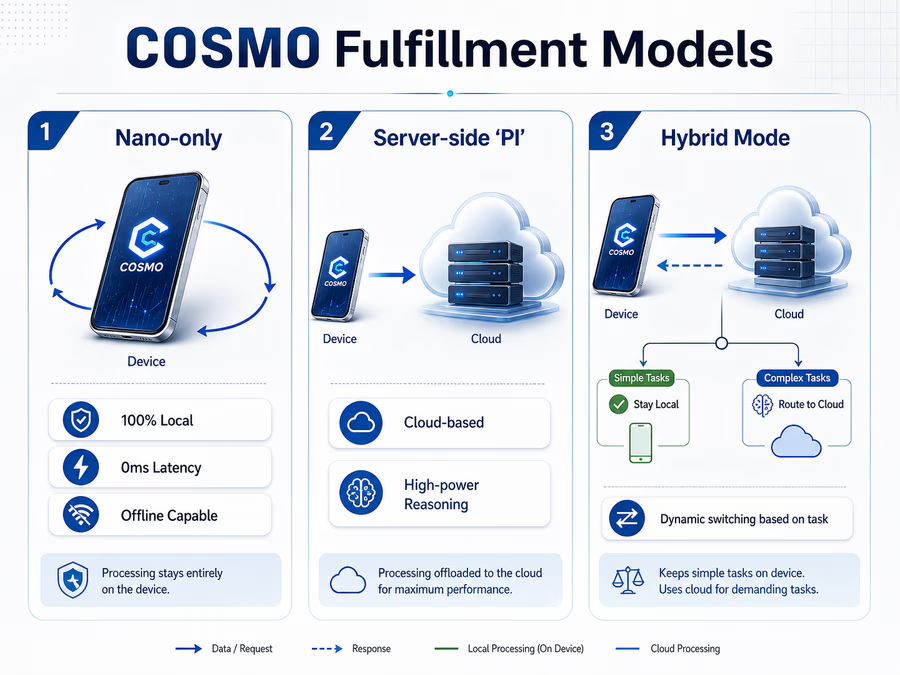
By leveraging the Gemini Nano model, COSMO aims to reduce the latency typically associated with cloud-based assistants. This local execution is expected to work in tandem with specialized hardware like Neural Processing Units (NPUs) found in modern mobile chipsets. This shift aligns with a broader industry trend toward "agentic AI," where systems move beyond responding to prompts and begin to execute complex, multi-step tasks autonomously.
Fourteen Skills for a Smarter OS
The leak revealed a comprehensive list of 14 "Skills" that COSMO is designed to master. These capabilities suggest a deep integration with the Android ecosystem, far surpassing the functional limits of current voice assistants. Notable skills include:
* Mariner-powered Browser Agent: Utilizing Google’s Project Mariner research to navigate the web and execute actions within a browser.
* Recall and Deep Research: Capabilities designed to find information across various user data points and perform exhaustive web-based inquiries.
* Screen Context Awareness: By utilizing Android’s AccessibilityService API, COSMO can effectively "see" what is on the user's screen, allowing it to provide insights based on current apps, documents, or conversations.
* Conversation Summary and Event Understanding: These features allow the assistant to parse through messaging threads or calendar invites to suggest actions or provide summaries of complex social interactions.
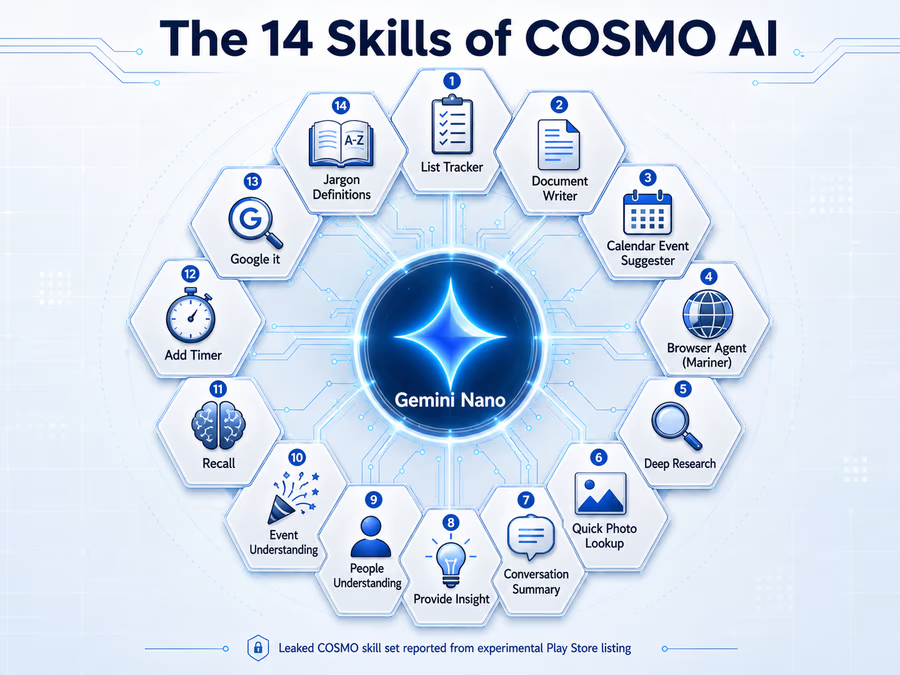
Other listed skills include a List Tracker, Document Writer, Calendar Event Suggester, Quick Photo Lookup, and Provide Insight. The inclusion of the AccessibilityService API is particularly significant, as it indicates COSMO will have the authority to act across the entire operating system, observing user behavior to offer context-aware assistance in real-time.
A Strategic Pivot Toward Proactivity
Experts believe COSMO is the manifestation of Google’s "universal AI assistant" vision. Current versions of Google Assistant and the standard Gemini app are largely reactive—they wait for a wake word or a typed prompt. COSMO, by contrast, appears designed to monitor the device’s state and proactively suggest tasks. For example, if a user is discussing a dinner plan in a messaging app, COSMO might use its "Calendar Event Suggester" and "People/Event Understanding" skills to automatically draft a calendar invite and find a restaurant reservation window before the user even asks.
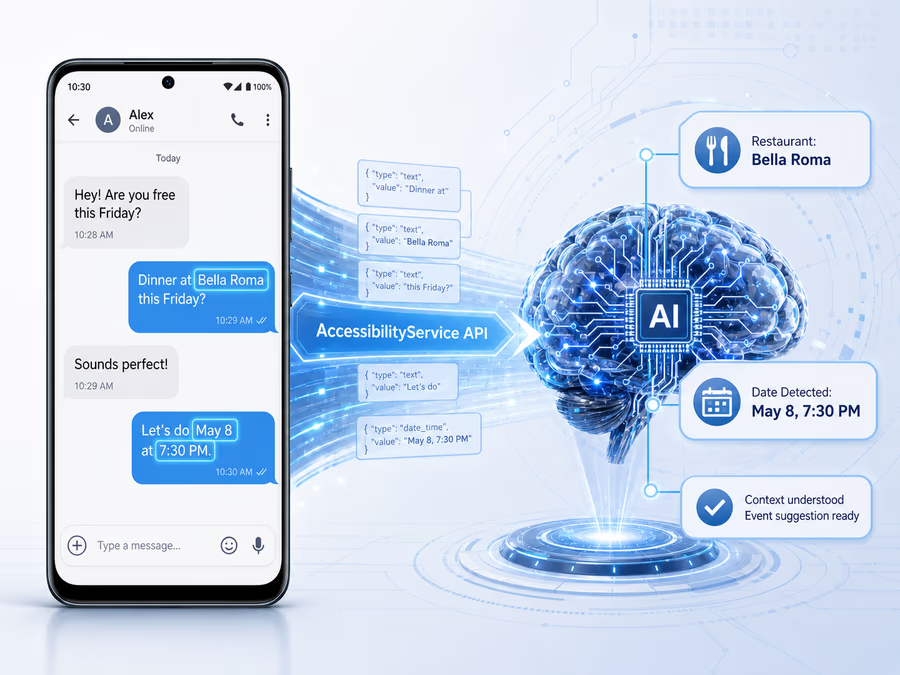
This proactive approach is not without its hurdles. The leaked app featured a relatively basic chat interface and several UI inconsistencies, signaling that COSMO remains an internal testbed. However, the strategic intent is clear: Google wants to build an AI agent that understands context, plans ahead, and takes action. This builds upon previous research prototypes such as Project Astra, moving those experimental concepts into a consumer-facing package.
Implications for Privacy and the Market
The emphasis on on-device processing via Gemini Nano serves as a direct response to growing privacy concerns regarding generative AI. By keeping the "Personal Intelligence" (PI) data local where possible, Google can argue that its proactive agent is more secure than cloud-only competitors. This could set a new benchmark for mobile AI, forcing competitors like Apple and Samsung to further accelerate their own on-device LLM integrations.
As the industry looks toward Google I/O 2026, the COSMO leak has effectively set the stage. The accidental publication has transformed a planned surprise into a highly anticipated deep dive. Whether COSMO will replace the existing Gemini app or serve as an underlying framework for a total Android overhaul remains to be seen. What is certain is that the era of the reactive assistant is ending, replaced by a future where the OS itself is an intelligent, active participant in the user’s daily life.