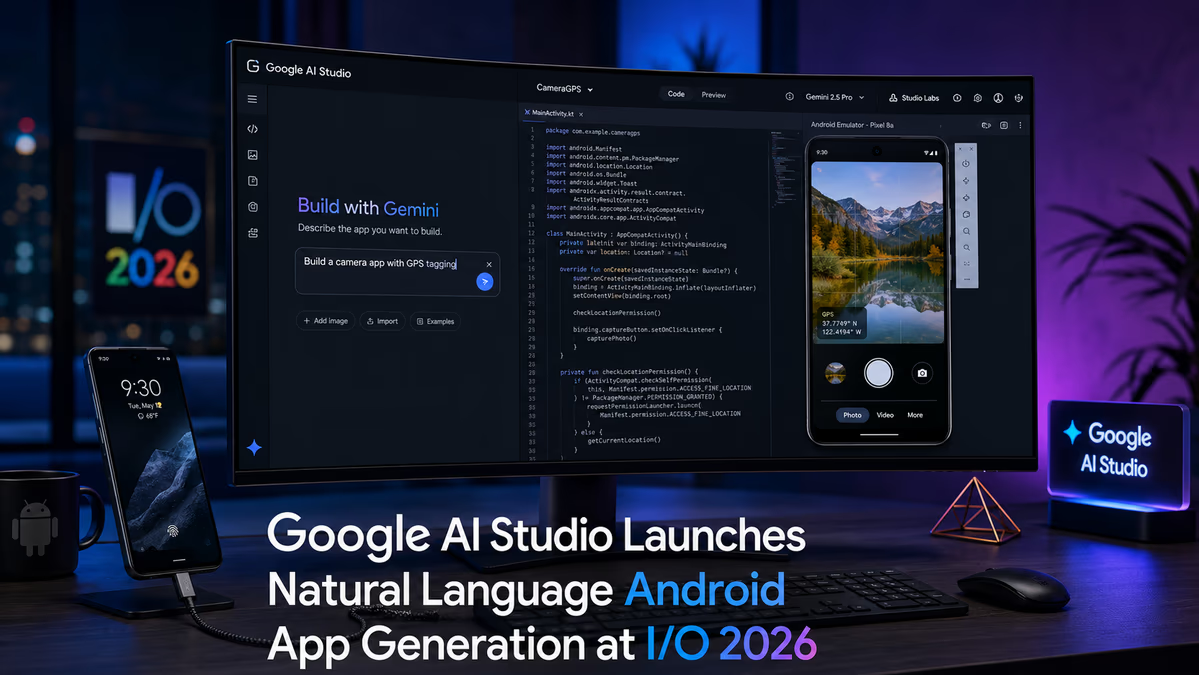
Google AI Studio Launches Natural Language Android App Generation at I/O 2026
Google launches AI-powered tools in Google AI Studio at I/O 2026, enabling native Android app generation from natural language prompts.
Google has launched a suite of AI-powered tools in Google AI Studio that allows users to generate fully functional, native Android applications directly from natural language text prompts. Announced on May 19, 2026, at the annual Google I/O conference, the new capabilities represent a major shift in how mobile software is conceptualized and built, lowering technical barriers for non-programmers while accelerating professional development workflows.
The system operates entirely within a web browser interface that functions as a standalone integrated development environment (IDE). By eliminating the initial hurdles of local software installation and complex library configurations, the tools open native app development to a much broader pool of creators.
"Starting today Google AI Studio can build entire Android apps for you in minutes from just a prompt," said Emma-Louise Leavey, Group Product Manager, and Mike Taylor-Cai, Product Manager, in a joint statement. "You don’t need to install any software or configure any libraries, which significantly lowers the barrier to development."
The Dual-Model Engine and Native Capabilities
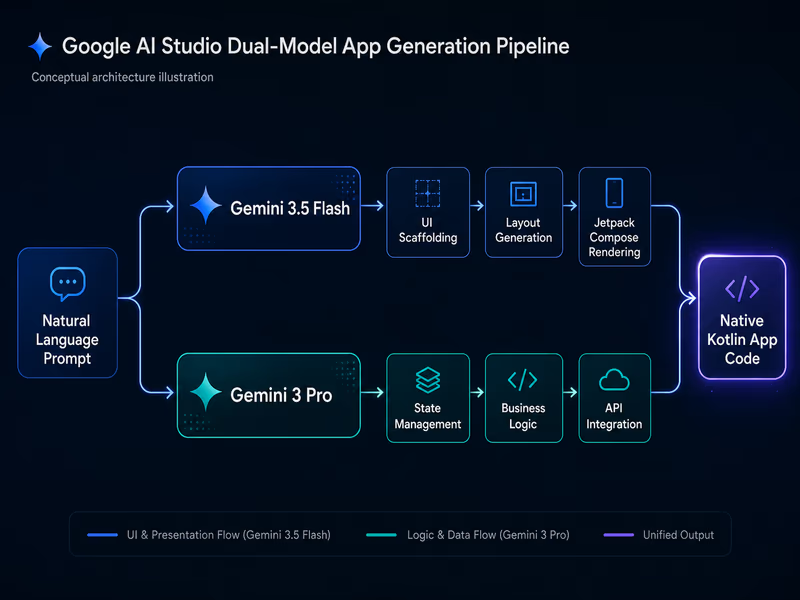
At the core of the new pipeline is a sophisticated, dual-model architecture engineered to split development tasks according to model strengths. Google AI Studio leverages Gemini 3.5 Flash to handle application scaffolding, layout design, and user interface (UI) rendering. Simultaneously, the more powerful Gemini 3 Pro model manages intricate backend logic, state management, and external API integrations.
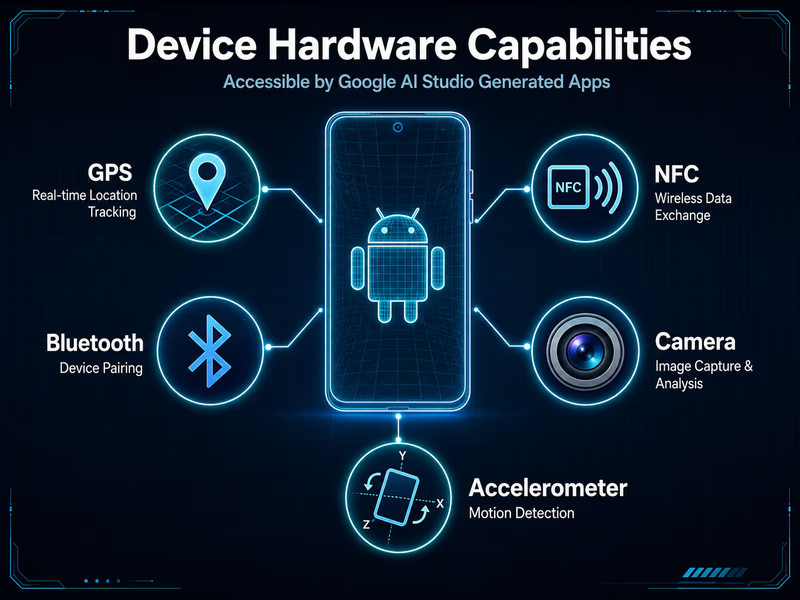
Unlike hybrid or web-view app builders, the generated applications are built on native Android foundations using Kotlin and Jetpack Compose. Furthermore, these applications are not sandboxed from physical device hardware. Apps generated through this process have comprehensive access to a phone's internal systems, including GPS, Bluetooth, NFC, accelerometers, and the device camera.
To complement the development process, Google introduced an auxiliary AI agent named Nano Banana. Operating in the background, Nano Banana dynamically designs custom user interface assets, logos, and iconography tailored specifically to the context of the user's prompt.

Seamless Testing and Deployment Pipelines
To facilitate immediate testing, the browser-based IDE features an embedded, real-time Android Emulator. For on-device testing, developers can use integrated Android Debug Bridge (ADB) support to install the generated applications directly onto a physical Android smartphone via USB.
For distribution and scale, Google has integrated several export options. Projects can be compressed into standard ZIP files, pushed directly to GitHub repositories, or opened directly within Android Studio for manual modifications. Developers possessing a Google Play Developer account can also upload and publish builds directly to internal testing tracks via Play Console integration.
For applications requiring backend support, developers receive two free Cloud Run deployments for server-side functionalities. Once those limits are reached, standard Google Cloud always-free tier policies apply. The environment also supports native Google Workspace API integrations, allowing apps to read and write data directly from Google Sheets, Drive, and Docs.
Contextualizing the "Vibe Coding" Shift
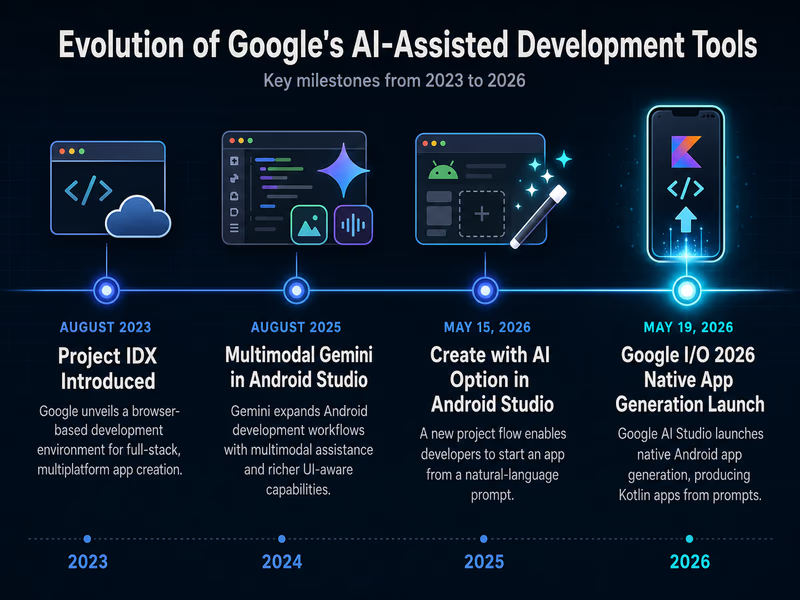
The introduction of natural language app generation aligns with an industry trend often described as "vibe coding," where software is authored through conversational iteration rather than manual syntax typing. This release is part of a multi-year effort by Google to thread artificial intelligence throughout its development ecosystem. This timeline includes the August 2023 debut of Project IDX (now Firebase Studio) and the subsequent rollout of AI features in Android Studio, such as Gemma 4 integration for local development and the Android Studio Migration Assistant.
"For millions of builders, Google AI Studio has become the fastest path from prompt to a production app," noted Ammaar Reshi, Product and Design Lead at Google AI Studio, alongside Product Manager Mike Taylor-Cai. "At Google I/O 2026, we reimagined not just how you build, but what you can build, too."
For advanced developers who find the web-based AI Studio environment too limiting, Google highlighted Antigravity, an AI-focused development system that integrates Android command-line interface (CLI) commands, providing an engineering upgrade path.
Quality and Security Considerations
While the technology promises to compress prototyping cycles from weeks to minutes, the deployment of AI-generated code to production environments carries notable caveats. Unverified reports within developer communities suggest that while the generated Kotlin code is structurally identical to native, hand-written equivalents, it can still introduce unexpected logic or subtle security vulnerabilities. Industry experts emphasize that thorough security, performance, and accessibility auditing remains crucial before developers submit AI-generated builds to public application stores.
Initially, Google AI Studio will focus its app generation templates on highly requested categories, including personal utilities, simple social tools, hardware-enabled software, and AI-powered applications that leverage external Gemini APIs. As the system matures, the balance between human oversight and autonomous code generation will likely dictate how deeply these tools penetrate enterprise-level software engineering.