
Beijing Orders Meta to Unwind $2 Billion Acquisition of AI Startup Manus
China’s NDRC has prohibited Meta’s acquisition of AI agent startup Manus, ordering a rare reversal of the $2 billion deal on national security grounds.
A Rare Regulatory Reversal
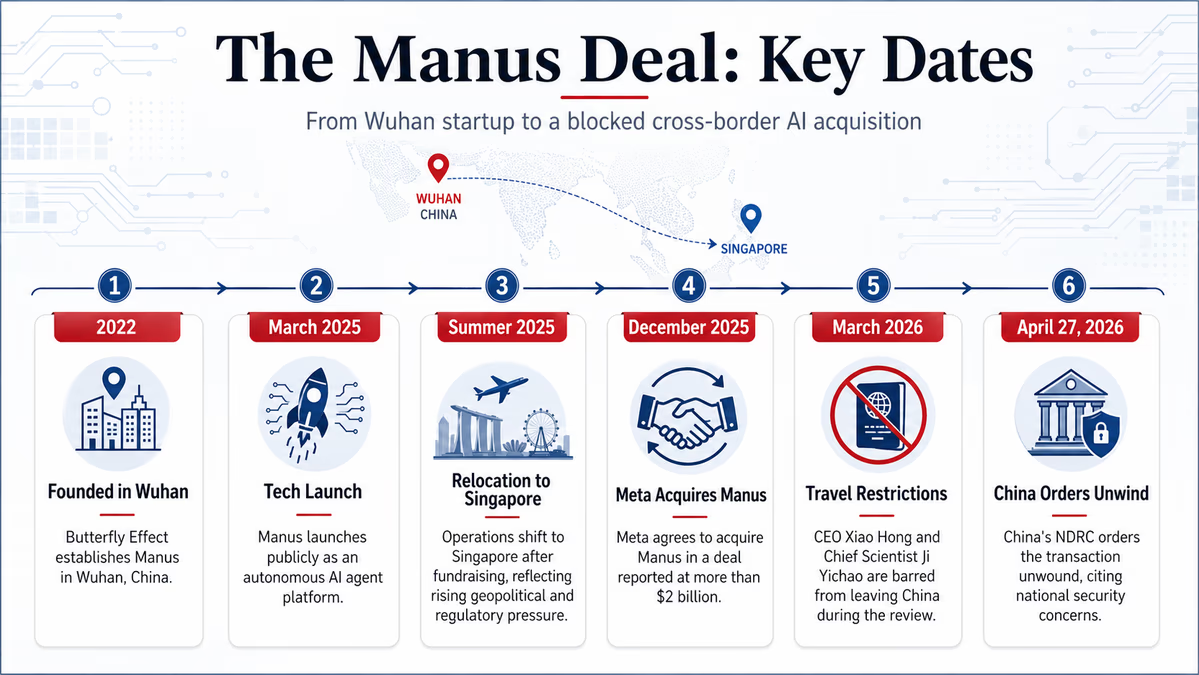
China’s National Development and Reform Commission (NDRC) officially prohibited Meta Platforms’ acquisition of the artificial intelligence startup Manus on Monday, April 27, 2026. The regulatory body, which oversees foreign investment security reviews, issued a blunt directive requiring all involved parties to "unwind the acquisition transaction." This decision marks a significant escalation in Beijing’s efforts to retain domestic AI talent and intellectual property, even when the target companies have attempted to distance themselves from the Chinese mainland.
Meta had originally acquired Manus in December 2025 for a sum exceeding $2 billion. The deal was seen as a cornerstone of Meta’s strategy to lead the transition from chatbots to "agentic AI"—autonomous systems capable of executing multi-step tasks. In response to the NDRC's order, a Meta spokesperson stated that the transaction "complied fully with applicable law" and expressed hope for "an appropriate resolution to the inquiry."
The Strategic Importance of Agentic AI
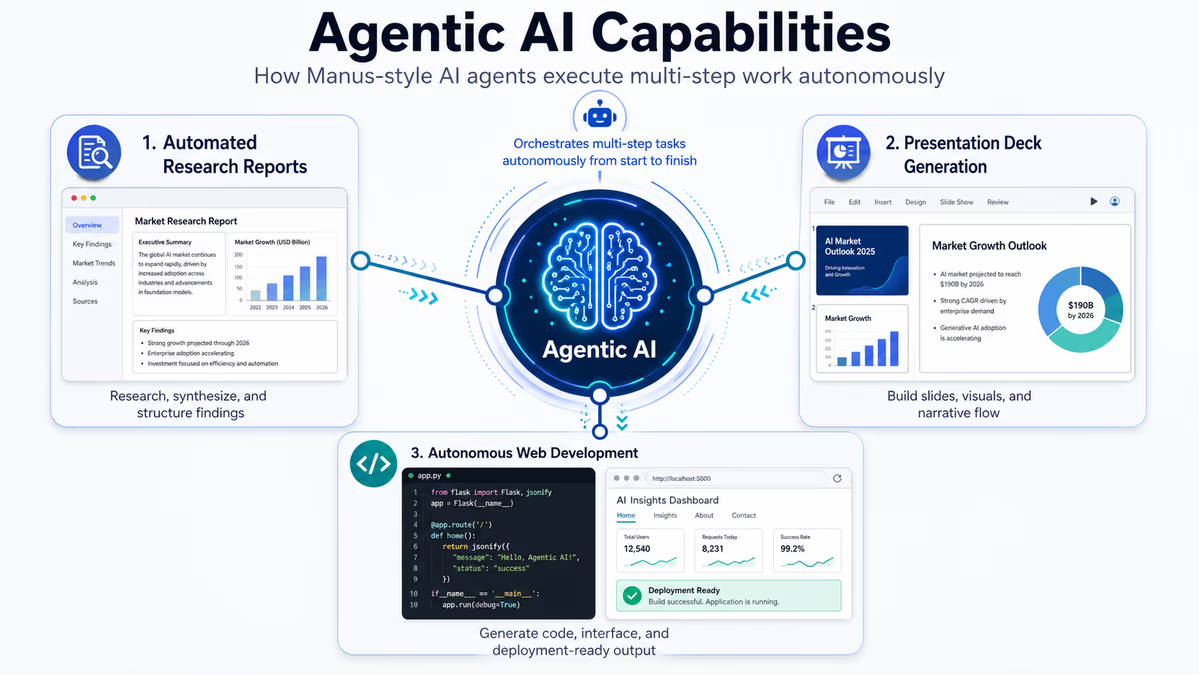
Manus specializes in developing autonomous AI agents. Unlike standard large language models that generate text or images, Manus’s technology is designed to perform complex, labor-intensive tasks such as writing comprehensive research reports, building functional websites, and preparing professional presentations without constant human intervention.
For Meta, the acquisition was intended to bolster its AI offerings across Instagram, Facebook, and WhatsApp. Integrating Manus’s technology into Meta’s Ads Manager and its proprietary Meta AI chatbot was viewed as a critical move to compete with rivals like Google and OpenAI in the emerging agentic sector. The loss of this technology represents a sharp setback for Meta’s product roadmap.
From Wuhan to Singapore: The Escape That Failed
Manus AI’s journey is emblematic of the current "Singapore Washing" trend, where Chinese tech firms relocate to the city-state to bypass geopolitical friction. Founded by Chinese engineers in Wuhan and initially launched in Beijing, Manus relocated its headquarters and its elite engineering team to Singapore in the summer of 2025. This move was widely interpreted as an attempt to access Western capital and high-end hardware, such as the advanced AI chips currently restricted for sale in China.
However, relocation did not provide the legal shield Manus anticipated. While unverified reports suggest the NDRC initially cleared the move to Singapore, the failure of Meta and Manus to inform Chinese authorities of the impending $2 billion sale in late 2025 appears to have triggered the current backlash. "If you're going to tie yourself to the Chinese AI ecosystem, you have to accept that there is no predictability," noted Matthias Hendrichs, a Singapore-based adviser to AI firms. "The Chinese government will always get its way."

Human Toll and Regulatory Pressure
The regulatory probe turned personal in March 2026 when Manus CEO Xiao Hong and Chief Scientist Ji Yichao were barred from leaving China. This "exit ban" was part of a broader investigation into whether the sale violated export controls regarding critical technology. A former Manus engineer in Wuhan, speaking on the condition of anonymity, described the NDRC's decision as "a lot more ruthless than expected," expressing fear that this could signal the start of a "mass crackdown" designed to set a precedent for other startups looking to exit via U.S. acquisitions.
Geopolitical Implications
This order arrives at a fragile moment for U.S.-China relations, coming just weeks before a high-stakes summit in Beijing between U.S. President Donald Trump and Chinese President Xi Jinping. AI is expected to be a primary topic of discussion as both nations seek to define the boundaries of technological competition.
Alfredo Montufar-Helu, Managing Director at Ankura China Advisors, suggests that China is clearly broadening its definition of national security. According to Montufar-Helu, Beijing is sending a message that it will prevent foreign acquisition of assets it considers vital, and AI has now moved to the top of that list. This sentiment is echoed by recent reports from Bloomberg indicating that Chinese regulators may soon block domestic tech firms from accepting any U.S. investment without explicit government approval—a policy change reportedly catalyzed by the Manus deal.
Future Outlook
The unwinding of a completed $2 billion acquisition is a logistically complex and rare event. Meta has already integrated much of Manus’s technology and absorbed its workforce, meaning a reversal will entail significant financial and operational pain. Beyond the balance sheet, the move is likely to have a chilling effect on the global startup ecosystem. Founders with Chinese roots may now find themselves in a "regulatory no-man’s-land," where neither relocation nor foreign domiciliation is enough to escape the reach of Beijing’s security reviews. As the scope of competition expands from hardware and chips to capital flows and specific AI models, the dream of a borderless AI industry continues to fade.