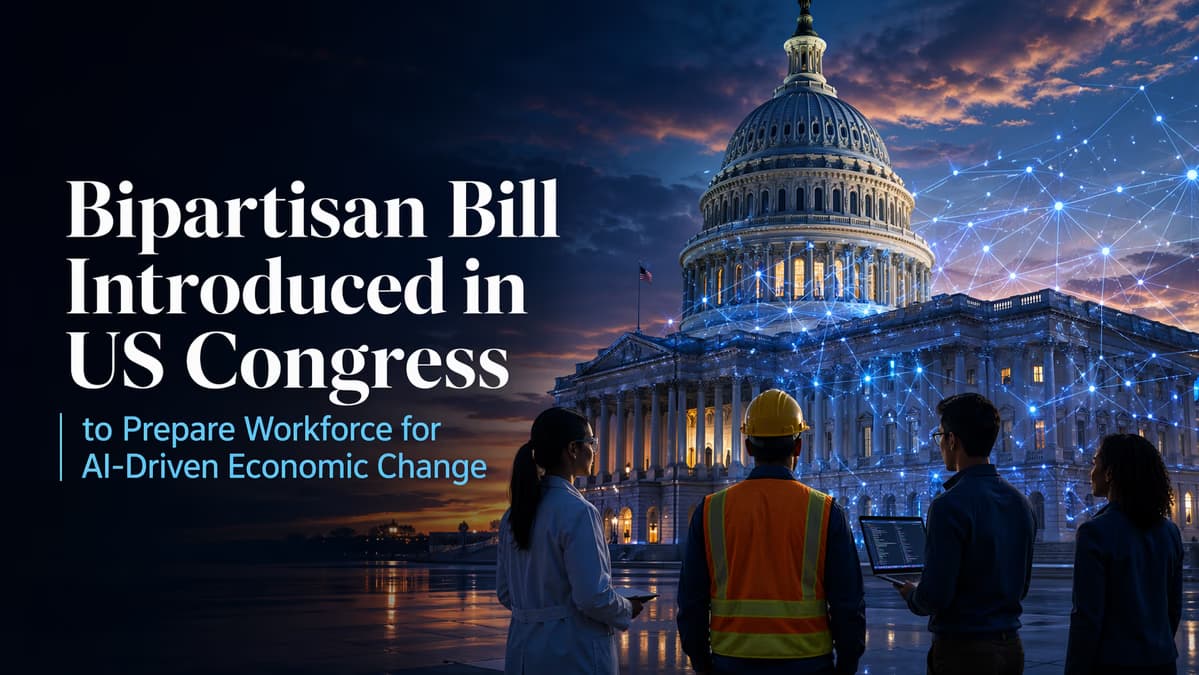
Bipartisan Bill Introduced in US Congress to Prepare Workforce for AI-Driven Economic Change
The Economy of the Future Commission Act of 2026 proposes a bipartisan body to study AI’s impact on the US workforce, education, and competitiveness.
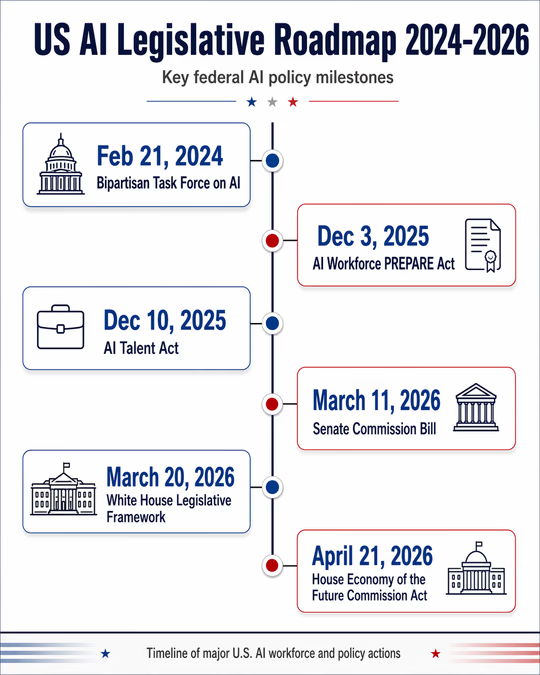
On April 21, 2026, Representatives Jay Obernolte (R-CA-23) and Sara Jacobs (D-CA-51) introduced the "Economy of the Future Commission Act of 2026" in the U.S. House of Representatives. This legislative move follows the introduction of a companion bill in the Senate by Senators Mark Warner (D-VA) and Mike Rounds (R-SD) on March 11, 2026. The legislation seeks to establish a bipartisan, bicameral commission dedicated to studying the profound economic impacts of artificial intelligence (AI) and providing a roadmap for the nation's transition into an AI-augmented economy.
A Blueprint for Economic Resilience
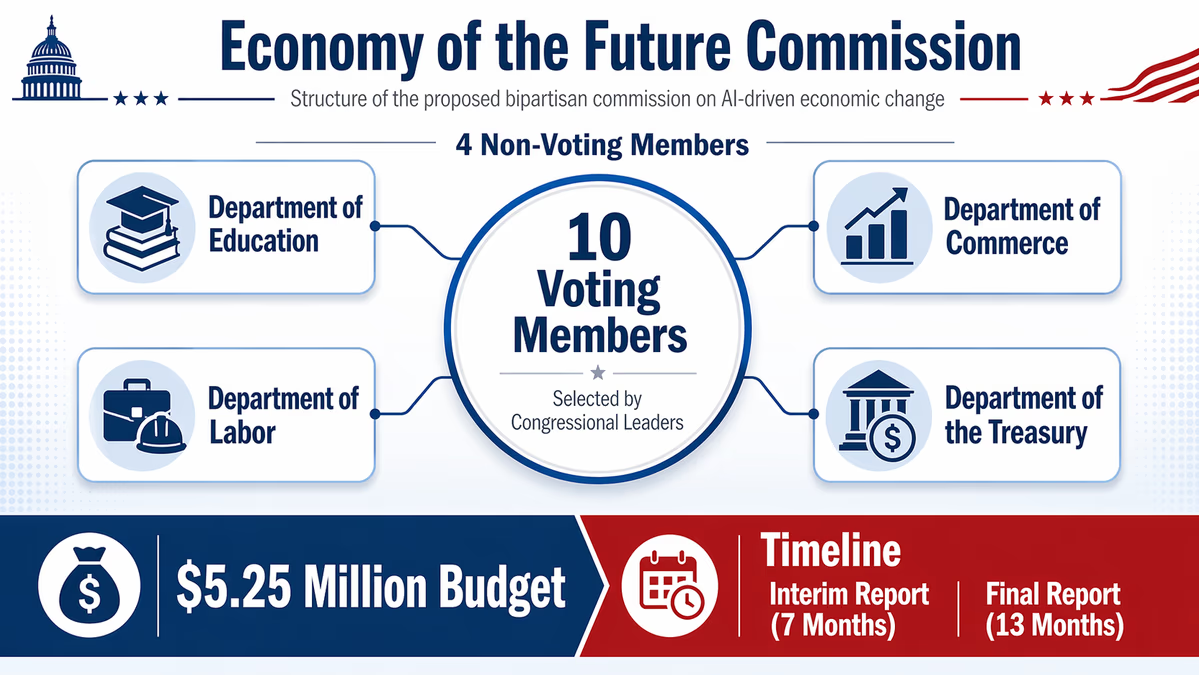
The proposed commission is designed to be a high-level body consisting of 10 appointed members, selected by congressional leaders from both major political parties based on their specific expertise in technology, labor, and economics. To ensure the findings are integrated across the federal government, the commission will also include four non-voting members: the Deputy Secretaries of Education, Labor, Commerce, and Treasury. Leadership will be shared by two co-chairs from different political parties, a structure intended to foster consensus in a polarized political climate.
To support its mission, the bill allocates $5.25 million from the Treasury. The commission is not intended to be a permanent fixture; it is mandated to deliver an interim report within seven months of enactment and a final report within 13 months. Following the submission of its final recommendations, the body is scheduled to terminate after 120 days.
Rep. Jay Obernolte emphasized the urgency of the initiative, stating, "Artificial intelligence will reshape every sector of our economy, and Congress has a responsibility prepare for those changes. This legislation brings together experts and lawmakers to develop clear, actionable recommendations to strengthen our workforce, support American workers, and ensure the United States continues to lead the world in innovation."
Targeted Focus Areas
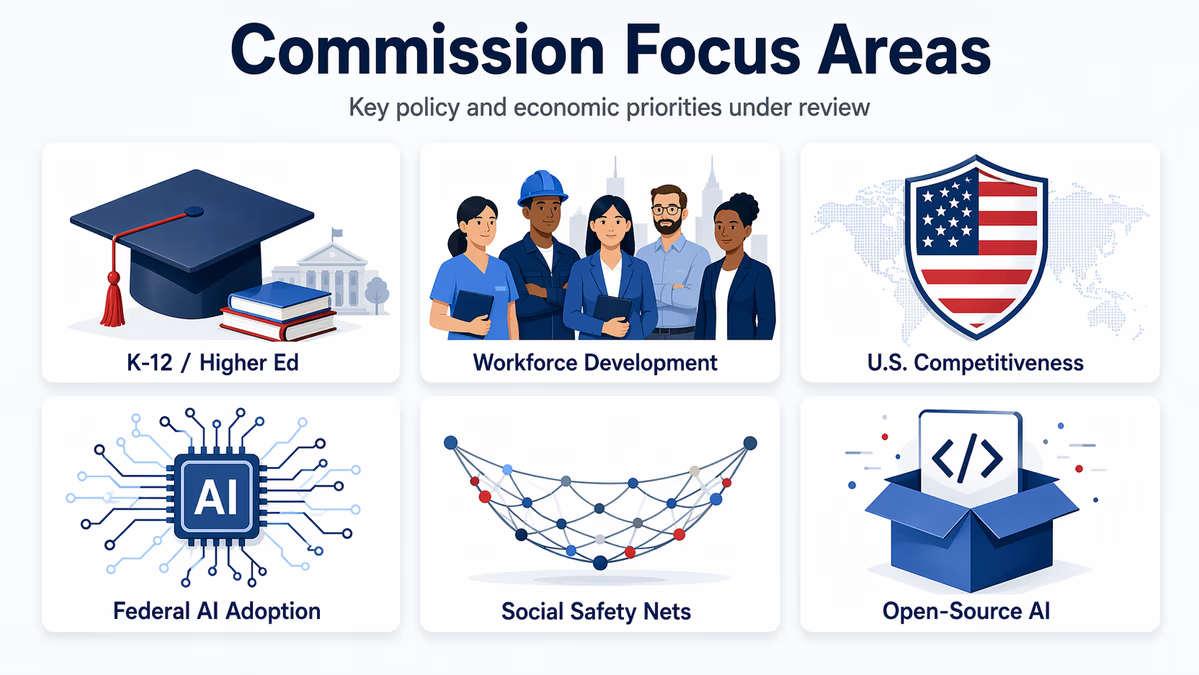
The commission’s mandate is broad, covering the entire lifecycle of the American worker and the infrastructure that supports them. Key focus areas include:
* Workforce Development and Education: Evaluating K-12 and higher education systems to ensure they are equipped to teach the skills necessary for the AI era.
* Federal Strategy: Developing strategies for AI adoption within the federal government to improve efficiency and service delivery.
* National Competitiveness: Assessing how the U.S. can maintain its lead against global competitors who are also investing heavily in AI.
* Social Safety Nets: Studying the impact of AI on government data and the ability of existing social safety nets to support workers during periods of transition.
* Open-Source and Standards: Investigating the value of open-source AI technology and establishing standards for responsible AI integration.
To ensure the commission can conduct a thorough investigation, the bill grants it subpoena power to gather information. It will also be exempt from certain provisions of the Federal Advisory Committee Act and the Freedom of Information Act to facilitate candid discussions on sensitive economic and security issues.
Bipartisan Consensus Amid Rapid Change
The introduction of this act reflects a growing recognition within Congress that the pace of AI development requires proactive, expert-driven policy rather than reactive legislation. While the bill avoids citing specific, unverified job displacement figures—which have been the subject of much speculation in tech circles—it explicitly acknowledges the general concern about job transformation as a significant backdrop to the legislative effort.
Sen. Mike Rounds highlighted the competitive stakes involved: "America's workforce must be equipped to lead the transformation of the economy happening due to AI. This commission would help keep America ahead of our global competitors and keep America prosperous and innovative."
Industry leaders have also voiced their support. Maria Flynn, President & CEO of Jobs for the Future, noted that the act "creates a bipartisan, expert-driven forum to develop practical solutions across education, workforce development, and worker supports." Similarly, Brendan Steinhauser, CEO of The Alliance for Secure AI, described the bill as a "smart, bipartisan approach to developing legislative solutions that protect working Americans."
A Broader Legislative Context
The Economy of the Future Commission Act of 2026 is part of an escalating series of legislative actions aimed at AI governance. It follows the 2024 establishment of the House Bipartisan Task Force on AI and the 2025 introduction of both the "AI Workforce PREPARE Act" and the "AI Talent Act." Furthermore, the bill arrives on the heels of the White House’s National AI Legislative Framework, released in March 2026, and the "AI for Main Street Act," which was signed into law earlier this year to assist small businesses.
By moving toward a commission-based approach, lawmakers are signaling a preference for a structured, evidence-based framework to guide future regulations. For the AI industry, this could mean a more predictable regulatory environment. For the American workforce, it represents a commitment to ensuring that the benefits of technological innovation are balanced with economic security and opportunity for all.