
Apple's Generative Leap: Rumors Suggest Advanced AI Photo Editing Tools Slated for iOS 27
Rumors suggest Apple will introduce generative AI 'Extend,' 'Enhance,' and 'Reframe' tools to the Photos app in the upcoming iOS 27 release.
Apple Eyes Generative Expansion in iOS 27
Apple is reportedly preparing a significant expansion of its artificial intelligence capabilities for the Photos app, aiming to bridge the functional gap between its native editing software and the generative features offered by long-time rivals Google and Adobe. According to unverified reports, primarily stemming from Bloomberg’s Mark Gurman, the upcoming iOS 27, iPadOS 27, and macOS 27 will introduce a suite of advanced generative tools designed to fundamentally change how users interact with their visual memories.
Since the introduction of the 'Clean Up' tool in earlier versions of Apple Intelligence, the company has maintained a relatively conservative stance on generative image manipulation. However, leaked information suggests a shift in strategy. The new features are expected to be housed under a dedicated 'Apple Intelligence Tools' section within the Photos app, marking a clear evolution in Apple’s approach to mobile photography.
The Trio of Rumored Features: Extend, Enhance, and Reframe
Central to the rumors are three specific tools: 'Extend,' 'Enhance,' and 'Reframe.' The 'Extend' feature is described as a generative fill tool, similar to Adobe Photoshop’s Generative Expand or the tools found on Google’s Pixel devices. It would allow users to use generative AI to expand an image beyond its original frame, intelligently filling in the background to match the existing scene. This represents a significant departure from Apple’s historical focus on realism.
'Enhance' is reportedly an automated editor that utilizes machine learning to tweak color, lighting, and shadow parameters. While Apple has long offered an 'Auto' button in Photos, this new iteration is expected to be significantly more sophisticated, using deep-learning models to understand the context of the image and apply localized adjustments rather than global filters.
Perhaps the most specialized tool is 'Reframe.' Designed specifically for spatial photos captured for the Apple Vision Pro headset, this tool would allow users to shift the perspective of a photo after it has been taken. This functionality underscores Apple’s commitment to its spatial computing ecosystem, providing a software-side benefit to those invested in the company’s high-end hardware.

Internal Challenges and Technical Hurdles
Despite the excitement surrounding these potential features, unconfirmed reports indicate that development has not been without friction. Sources suggest that both 'Extend' and 'Reframe' have faced difficulties passing internal quality testing, with engineers noting inconsistent results and visual artifacts. These challenges mirror some of the public criticism directed at the current 'Clean Up' tool, which users have occasionally found to produce 'messy' areas or random glitches when removing objects.
These technical hurdles could lead to a scaled-back release or a delay in the rollout of specific tools. Apple has historically prioritized stability and user experience over being first to market, a sentiment echoed by Craig Federighi, Apple’s Senior Vice President of Software Engineering, who noted in 2024 that Apple wants to keep photos 'true to reality.' The inclusion of generative expansion suggests that the company is now trying to balance that commitment to truth with the growing consumer demand for creative AI tools.
Privacy and the On-Device Strategy
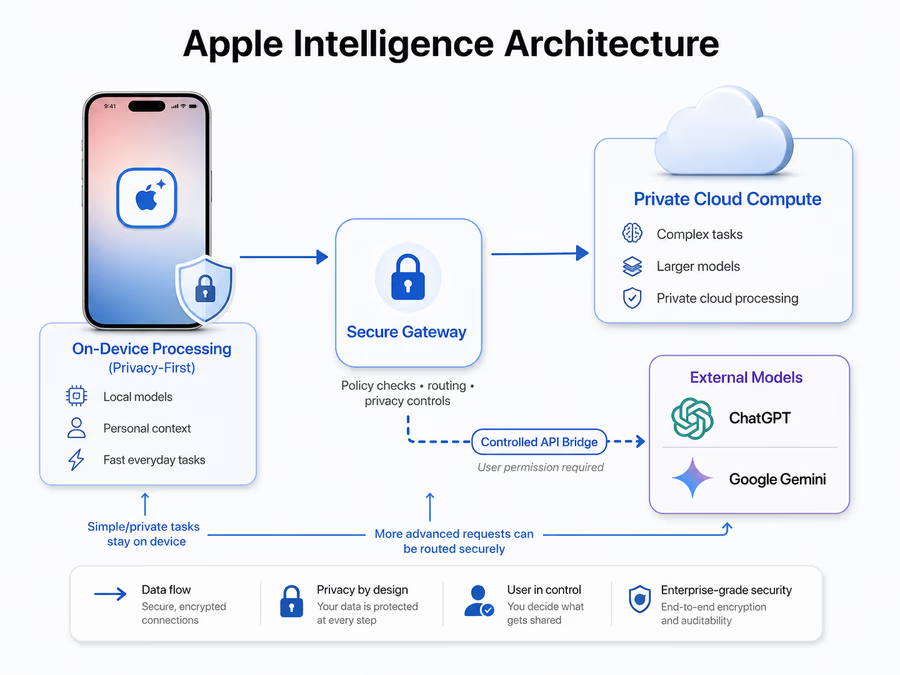
Apple’s broader AI strategy continues to hinge on its 'Apple Intelligence' platform, which emphasizes privacy through on-device processing. Tim Cook, Apple’s CEO, highlighted this differentiator in January 2026, stating, "We see both being important, the on-device and the private cloud compute. We do not see it as an either-or. We see it as both. And… we believe it is a differentiator because of our privacy approach."
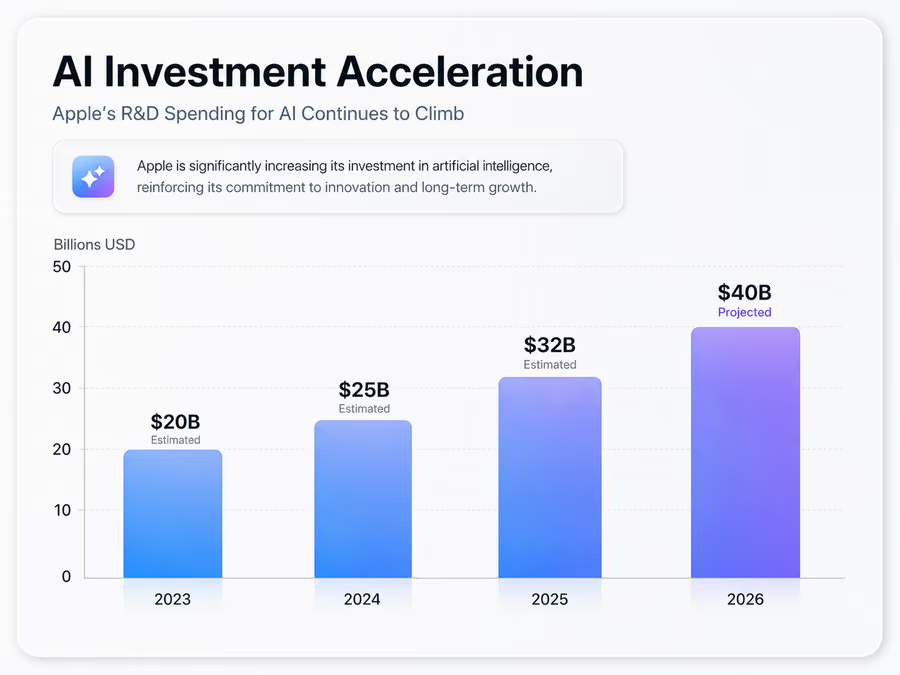
To power these features, Apple is not acting alone. While the company is reallocating staff and increasing investment in internal models, it has also forged strategic partnerships. Following the integration of OpenAI’s ChatGPT, Apple is reportedly collaborating with Google to utilize Gemini models for multi-step tasks within Siri and other system-level features in iOS 27. This multi-model approach allows Apple to offer cutting-edge generative capabilities while maintaining its signature control over the user experience.
Looking Toward WWDC 2026
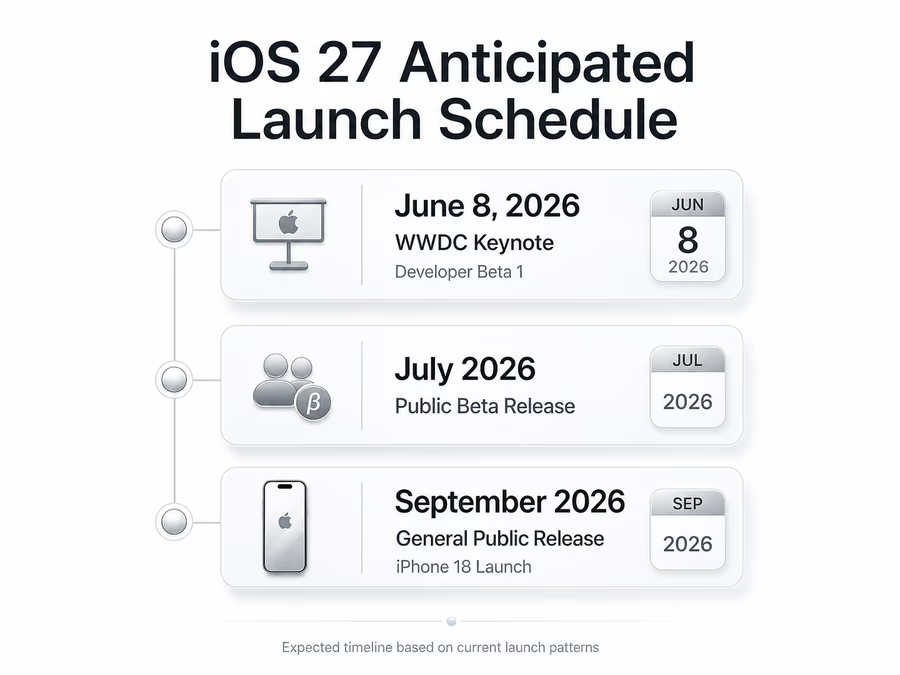
The tech world expects a first look at these tools during the Worldwide Developers Conference (WWDC) on June 8, 2026. Following the typical release cycle, a developer beta of iOS 27 is anticipated to launch the same day, with a public beta arriving in July. The final public release is expected to coincide with new hardware announcements in September 2026.
This release window is particularly notable as reports indicate Tim Cook’s tenure as CEO may conclude on September 1, 2026, with John Ternus expected to take the helm. If these rumors hold true, iOS 27 will serve as a definitive statement on Cook’s AI legacy. Furthermore, the software will likely be optimized for Apple’s long-rumored first foldable iPhone, which is also slated for a late 2026 debut. As Apple moves to embrace more aggressive generative tools, it faces the challenge of maintaining its reputation for quality while competing in an AI arms race that shows no signs of slowing down.