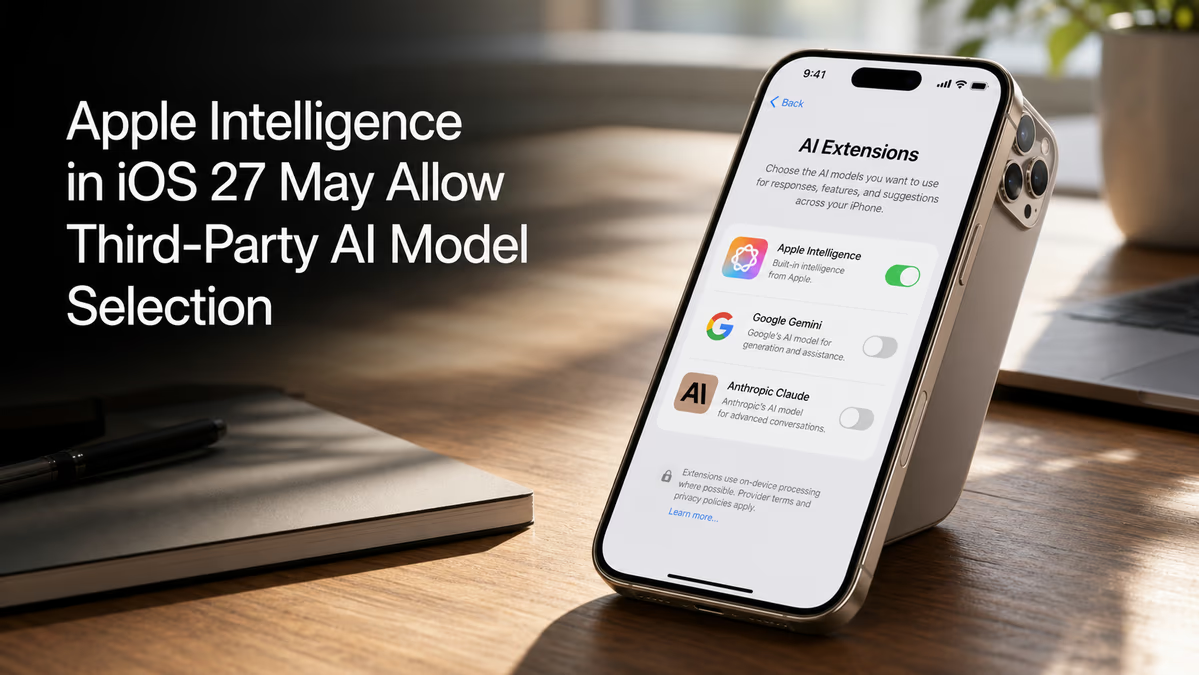
Apple Intelligence in iOS 27 May Allow Third-Party AI Model Selection
Apple is reportedly developing Extensions for iOS 27, allowing users to select third-party AI models like Google Gemini and Anthropic for system tasks.
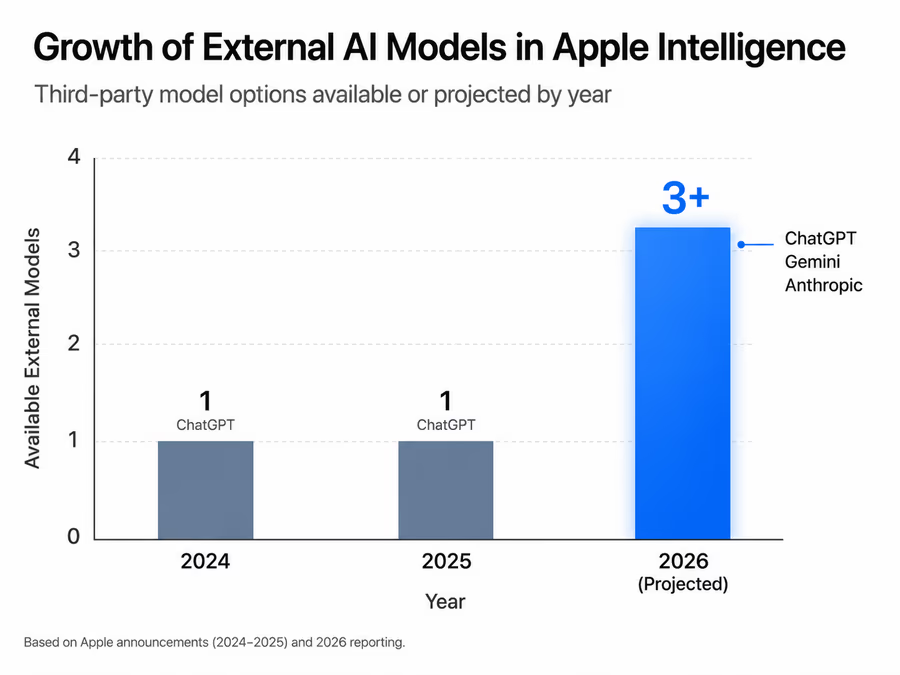
Apple is preparing to dismantle one of the most significant barriers within its software ecosystem by allowing users to choose their preferred artificial intelligence models for core system functions. According to reports from Bloomberg News on May 5, 2026, citing individuals familiar with the matter, the upcoming iOS 27, iPadOS 27, and macOS 27 will introduce a feature currently referred to as "Extensions." This functionality would enable users to swap between rival AI models to power various generative tasks across their devices.
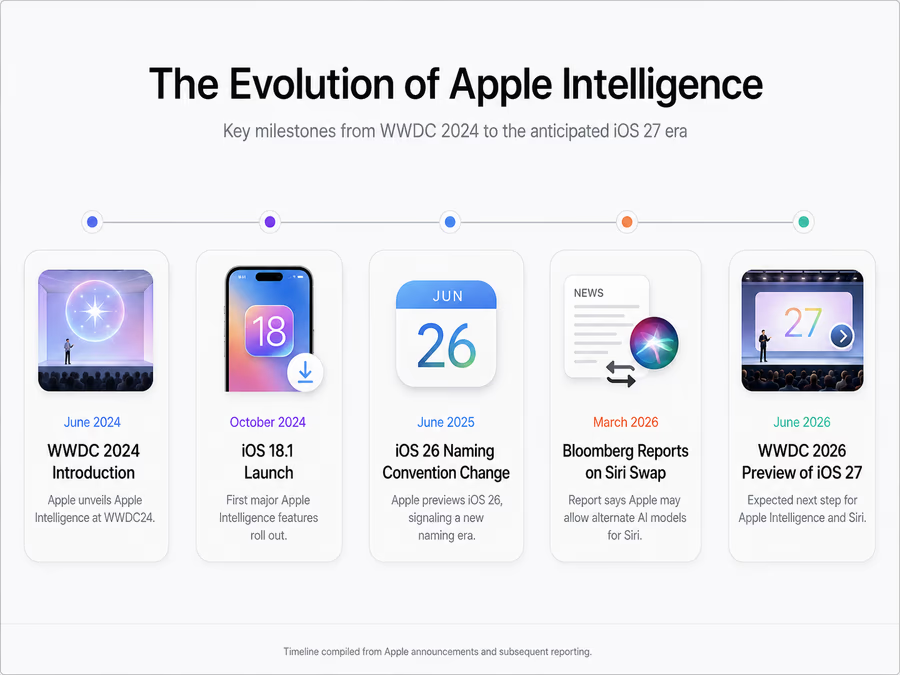
Historically known for its tightly integrated "walled garden," Apple’s reported move signifies a strategic shift toward a more open platform. While Apple Intelligence initially launched in October 2024 with OpenAI’s ChatGPT as its sole external partner, the company is now conducting internal testing with integrations from Alphabet’s Google (Gemini) and Anthropic. This development is expected to be a centerpiece of the Worldwide Developers Conference (WWDC) 2026, which is officially scheduled to take place from June 8 to June 12.
The Architecture of Choice: How Extensions Work
The reported "Extensions" feature will likely reside within the Settings app, providing a centralized hub where users can manage their AI preferences. For a third-party model to become an option, providers would need to opt-in by adding specific compatibility through their existing App Store applications. Once enabled, these third-party services could potentially handle requests that currently default to Apple’s in-house models or the integrated ChatGPT option.
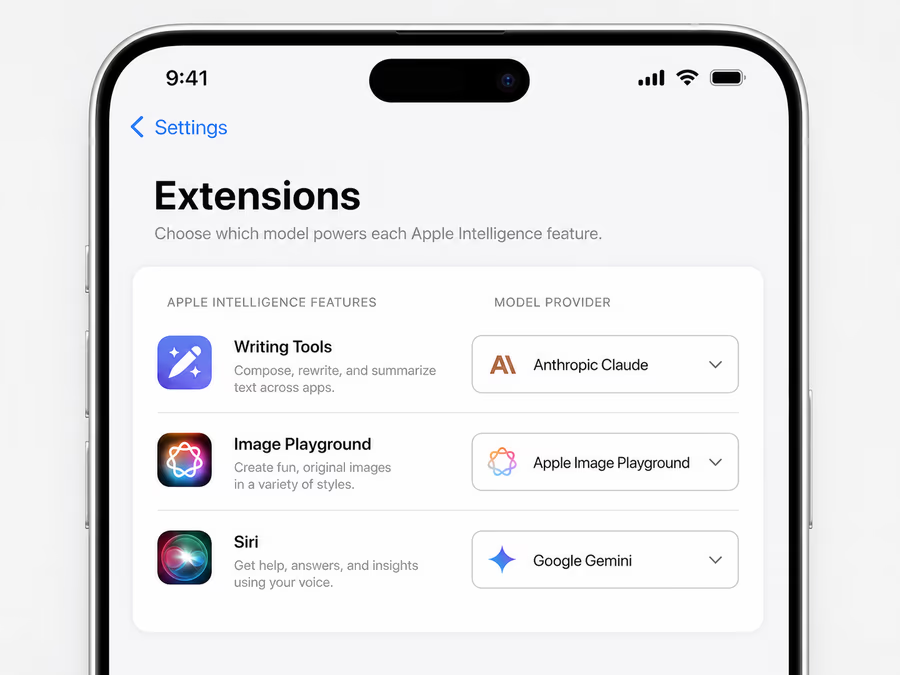
This shift addresses a long-standing criticism of Apple's AI strategy: the perceived lag behind more aggressive rollouts from Alphabet and Microsoft. By opening the doors to Gemini and Claude (Anthropic’s flagship model), Apple positions its hardware as the premium vessel for the world’s most capable AI, rather than forcing users into a single-provider solution.
A Foundation of Privacy
Despite the move toward external model integration, Apple remains committed to the privacy-first architecture it established at WWDC 2024. Apple Intelligence is designed to combine generative models with personal context while emphasizing on-device processing. When a request exceeds a device's computational capacity, Apple utilizes Private Cloud Compute (PCC).
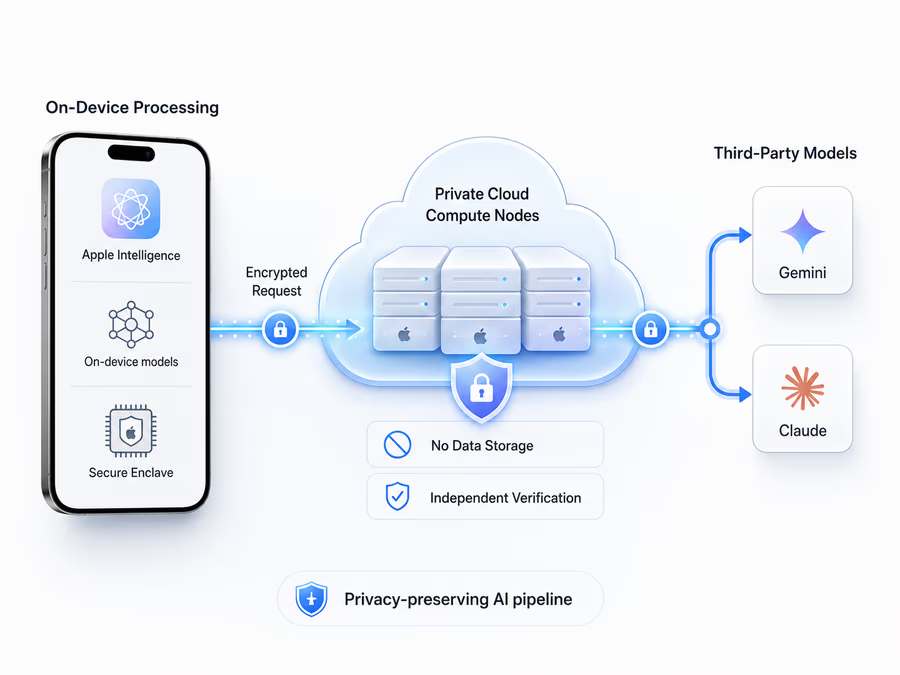
Craig Federighi, Apple’s senior vice president of Software Engineering, previously noted that the system is built on a foundation of privacy. He explained that Private Cloud Compute is a groundbreaking approach that extends the security of Apple products into the cloud, ensuring that user data is never stored or made accessible to Apple. This same rigorous standard is expected to apply to any third-party model integrated via the new Extensions framework, ensuring that selecting a rival model does not mean compromising on data security.
Transforming the User Experience
The potential impact of this change spans the entirety of the Apple Intelligence feature set. Currently, the system offers Writing Tools for rewriting and proofreading, Genmoji for custom emoji creation, and an enhanced Siri with richer language understanding. In iOS 27, a user might choose Gemini for complex creative writing while preferring Anthropic for technical code summaries, all while using the native iOS interface.
Tim Cook, Apple’s CEO, has characterized this era as a transformation of what users can accomplish. Cook stated that Apple Intelligence puts generative models at the core of the device to provide a personal intelligence system that is easy to use while protecting privacy. By adding third-party selection, Apple is essentially providing users with a "pro" level of customization for that personal intelligence.
Alan Dye, Apple's vice president of human interface design, has suggested in past communications that the company deeply cares about the craft and joy of software design. The challenge for iOS 27 will be maintaining that sense of "beauty and craft" when the underlying engine of a feature might be provided by a competitor. This requires a sophisticated API layer that translates Apple’s design language across various AI architectures.
Industry Implications and Regulatory Pressure
This evolution is not happening in a vacuum. Apple is facing increased regulatory pressure, particularly from the European Union, to open its platform to competitors. Simultaneously, the competitive landscape has intensified. Google’s Gemini and Microsoft’s Copilot have seen rapid deployment across mobile and desktop environments, forcing Apple to accelerate its pace.
Furthermore, unconfirmed reports suggest that 2026 will see a significant revamp of Siri. Allowing users to swap out the underlying chatbot for Siri—a move Bloomberg first hinted at in March 2026—could finally bridge the utility gap between Apple’s assistant and its more capable rivals.
If these reports hold true, the fall 2026 release of iOS 27 will represent the most significant change to the iPhone's functional philosophy since the introduction of the App Store. By transforming AI from a locked-in feature into a user-selectable service, Apple is acknowledging that in the era of generative intelligence, the best user experience is one defined by choice.