Apple Delays Rumored AI Smart Glasses to Late 2027 in Pursuit of Perfecting Visual Intelligence
Apple has reportedly delayed its AI-powered smart glasses to late 2027 to ensure the readiness and quality of its visual AI technology.
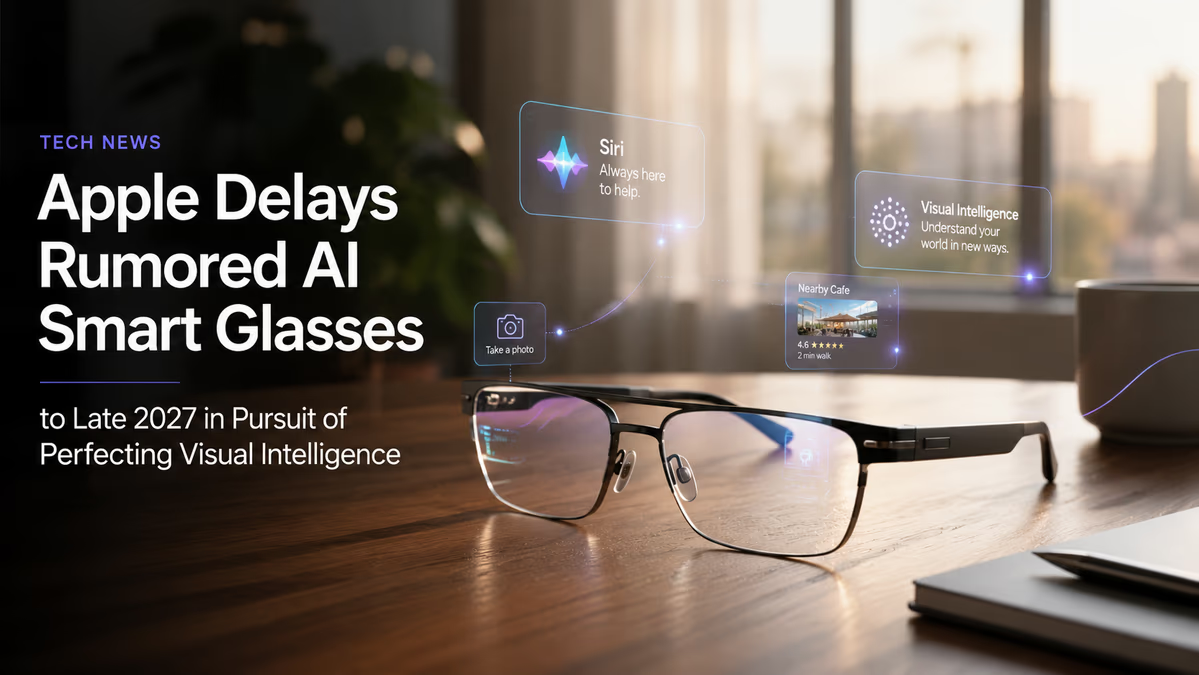
Apple has reportedly pushed back the launch of its highly anticipated AI-powered smart glasses to late 2027, according to unverified reports from Bloomberg’s Mark Gurman. The wearable device, codenamed N50, was previously expected to be announced by the end of 2026 with shipments commencing in early 2027. This postponement reportedly stems from internal concerns regarding the readiness and performance of Apple's visual AI technology, as the company seeks to avoid releasing an unpolished product to the public.

A Quality-First Postponement
According to leaked reports, the decision to delay the launch is driven by Apple’s high standards for its virtual assistant and visual recognition tools. The smart glasses are designed to serve as a key hardware platform for Apple Intelligence, featuring a deeply integrated, revamped version of Siri that is expected to roll out in late 2026.
Leaked details suggest the N50 frames may feature distinct design elements to differentiate them from competitors, including oval-shaped cameras, unique color options, and multiple frame styles. Over the long term, Apple reportedly plans to evolve these glasses into sophisticated health devices, potentially incorporating advanced augmented reality (AR) technologies to assist with vision correction.
Cook’s Vision and the Spatial Computing Ecosystem
This cautious, quality-first approach aligns with Apple's established philosophy on spatial computing and AR. Apple CEO Tim Cook has frequently expressed his enthusiasm for augmented reality, having stated that AR "is going to change everything" and asserting that it amplifies human performance rather than isolating users.
However, Cook has also been realistic about the hardware limitations of current eyewear. He previously noted that the technology itself doesn't exist to build lightweight AR glasses in a quality way, citing massive challenges with display technology and the sheer physical constraints of placing complex hardware onto a user's face.
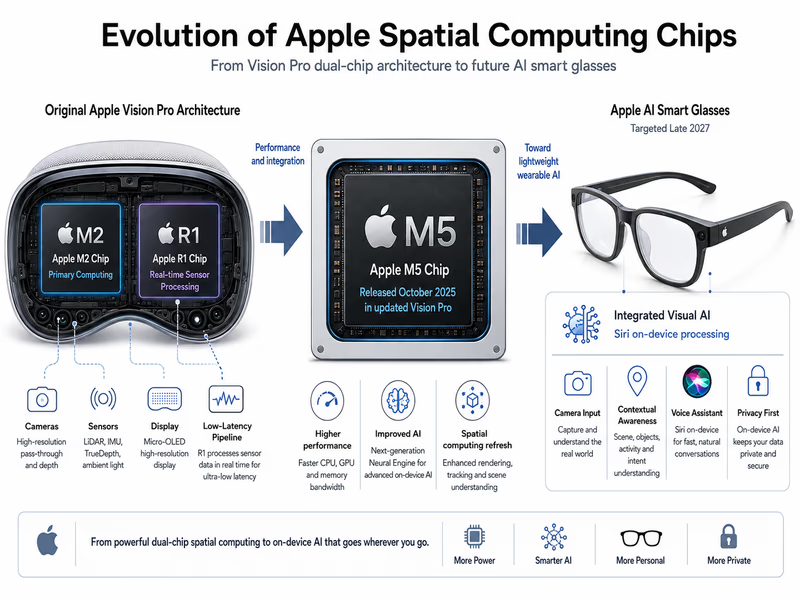
This isn't Apple's first venture into the spatial computing landscape. The tech giant launched the Apple Vision Pro, a high-end spatial computer running visionOS, in the United States on February 2, 2024, following its initial announcement at WWDC on June 5, 2023. Powered by an Apple M2 chip and a custom R1 chip, the device came with a premium base price of $3,499. Apple has since continued to iterate on this high-end platform, releasing an updated Apple Vision Pro model powered by an M5 chip in October 2025. Upon the launch of the original Vision Pro, Cook declared, "The era of spatial computing has arrived," describing it as "the most advanced consumer electronics device ever created."
Rising Mid-Tier Alternatives and Competitive Pressures
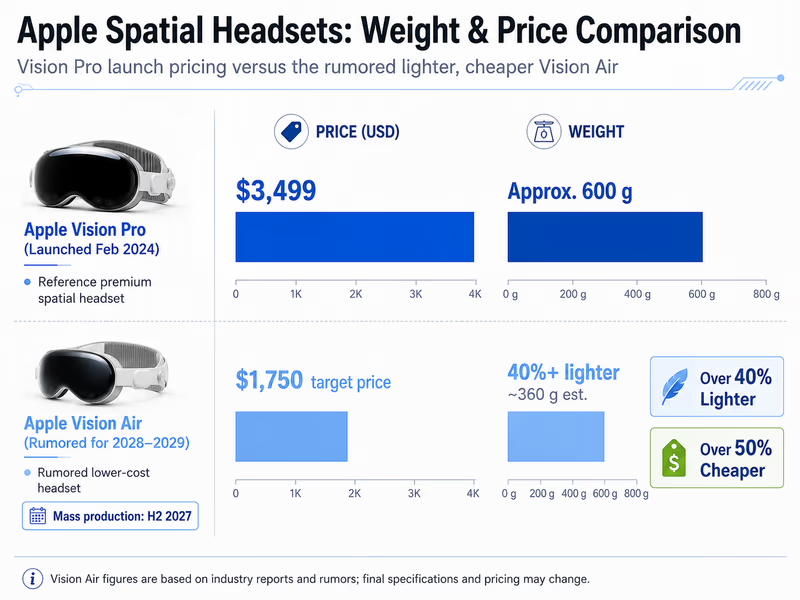
Beyond the ultra-premium Vision Pro and the lightweight AI glasses, Apple is also rumored to be developing a mid-tier spatial computing device. According to industry analyst Ming-Chi Kuo, a lighter, more affordable headset—tentatively dubbed "Vision Air"—could arrive as early as 2028 or 2029.
Kuo suggests that this mid-tier device could be over 40% lighter and more than 50% cheaper than the original Vision Pro, placing its price tag around $1,750. Mass production for this model is rumored to begin in the second half of 2027, serving as a transitional product bridging the gap between high-end headsets and future lightweight AR glasses.
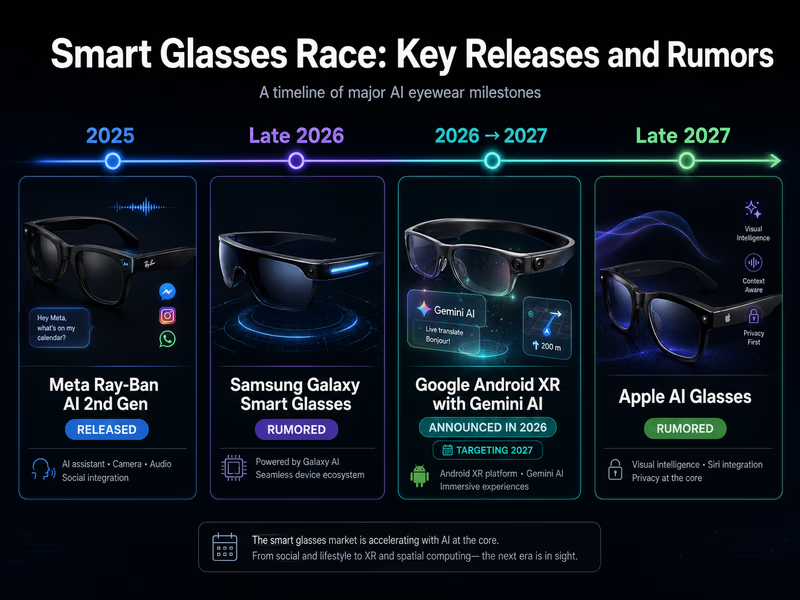
The reported delay of Apple's AI glasses to late 2027 creates a significant strategic window for its primary competitors, who are moving rapidly to establish dominance in the burgeoning smart glasses market. Meta has already launched the second generation of its popular Ray-Ban Meta AI glasses in 2025, which feature enhanced video recording capabilities and improved battery life. Meanwhile, Google officially unveiled its Android XR smart glasses featuring Gemini AI integration at Google I/O 2026, positioning them as a direct competitor for a 2027 release window. Additionally, Samsung is reportedly preparing its own Galaxy-branded smart glasses for a potential launch in late 2026, while smaller hardware players like Xreal, Viture, Rokid, and Even Realities continue to steadily expand their market share.
Strategic Outlook
Apple's ultimate goal in the eyewear market goes beyond competing with traditional tech rivals. The company reportedly intends to challenge legacy eyewear manufacturers like EssilorLuxottica—the parent company of Ray-Ban and Oakley—by offering stylish, everyday glasses that feature deep iPhone integration. By targeting a consumer price segment of $200 to $500, Apple hopes to appeal to a broad, mainstream audience rather than just tech enthusiasts. While the late 2027 delay gives competitors a temporary head start, Apple’s commitment to refining its visual AI suggests it is willing to wait to ensure its entry into the market is a definitive success.