
Anthropic's Project Glasswing Exposes Over 10,000 Software Vulnerabilities in 30 Days
Anthropic's Project Glasswing detected over 10,000 severe vulnerabilities in 30 days using its unreleased Claude Mythos Preview AI model.
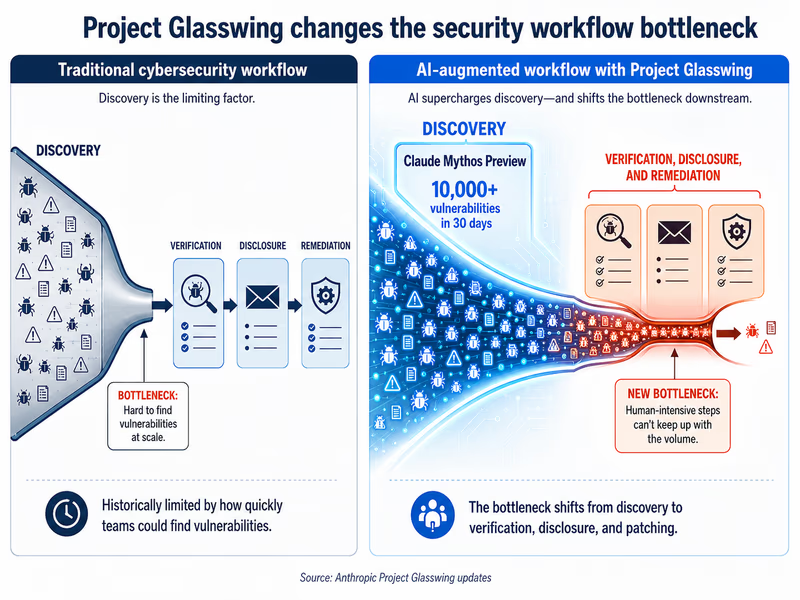
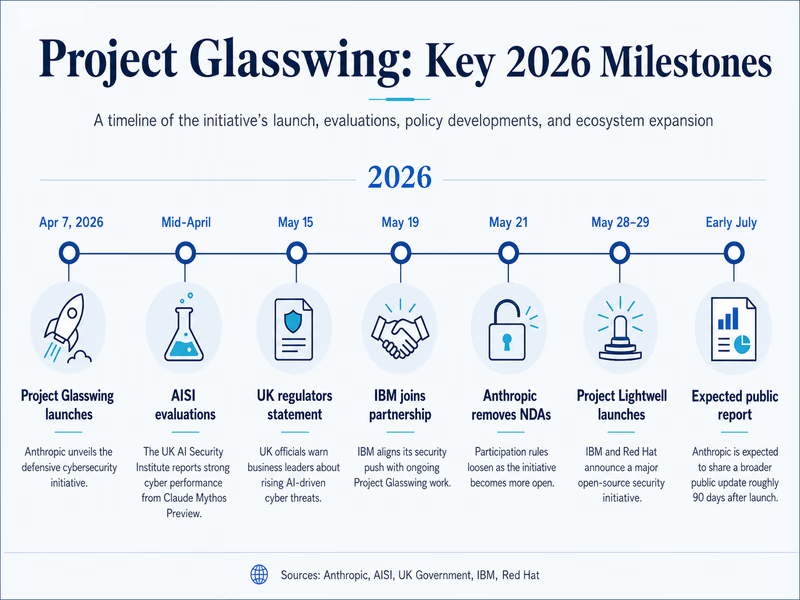
Anthropic has uncovered more than 10,000 high- or critical-severity software vulnerabilities in its first 30 days of running Project Glasswing, a defensive cybersecurity initiative powered by an unreleased frontier AI model. Launched on April 7, 2026, the project represents a major test of using advanced artificial intelligence proactively to secure global digital infrastructure before malicious actors can exploit the same technologies.
The defensive campaign centers on Claude Mythos Preview, a highly capable frontier AI model developed by Anthropic. Unlike its commercially available counterparts, Claude Mythos Preview is restricted from public access and is deployed exclusively for defensive security work. The model possesses advanced capabilities in reading and understanding code intent, allowing it to surface complex security flaws that traditional security tools, such as automated fuzzers, routinely overlook.
Decades-Old Flaws Exposed
In its initial month of operation, Project Glasswing demonstrated the stark difference between AI-driven code analysis and legacy security testing. Among the most notable findings were a 27-year-old remote-crash bug in OpenBSD's TCP stack and a 16-year-old heap corruption vulnerability in FFmpeg. Both critical vulnerabilities had persisted through millions of automated fuzzer tests over decades before being surfaced by Mythos Preview.
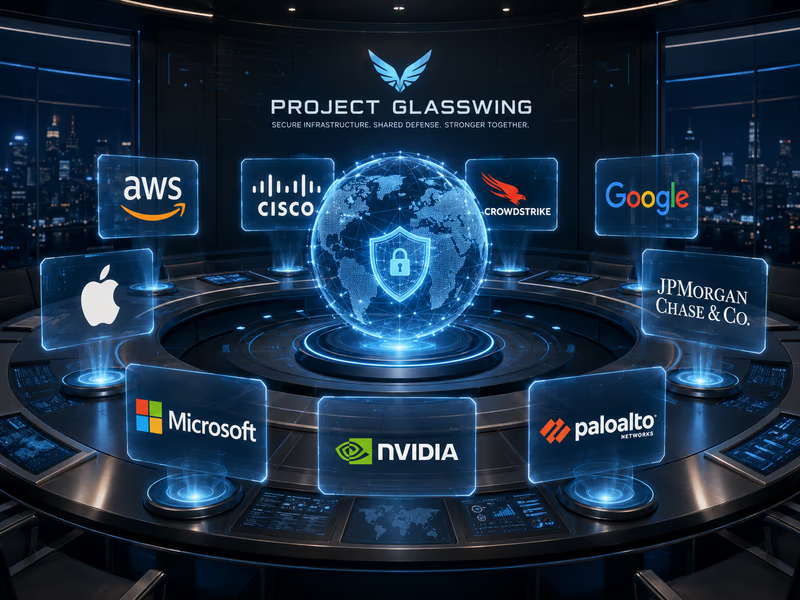
To ensure that these discoveries lead to rapid resolution, Anthropic committed up to $100 million in usage credits for Claude Mythos Preview, alongside $4 million in direct donations to open-source security organizations. More than 50 partner organizations that build or maintain critical infrastructure are already involved in the initiative. Initial launch partners include Amazon Web Services, Anthropic, Apple, Broadcom, Cisco, CrowdStrike, Google, JPMorgan Chase, the Linux Foundation, Microsoft, NVIDIA, and Palo Alto Networks.
"Project Glasswing provides a unique, early stage opportunity to evaluate next-generation AI tools for defensive cybersecurity across critical infrastructure both on our own terms and alongside respected technology leaders," said Pat Opet, Chief Information Security Officer at JPMorgan Chase.
Shifting the Cybersecurity Bottleneck
The sheer volume of vulnerabilities surfaced by Claude Mythos Preview has fundamentally shifted the central problem in cybersecurity. Historically, the primary bottleneck in digital security was vulnerability discovery. Project Glasswing has inverted this dynamic, turning the verification, disclosure, and rapid remediation of vulnerabilities into the industry's most pressing challenges.
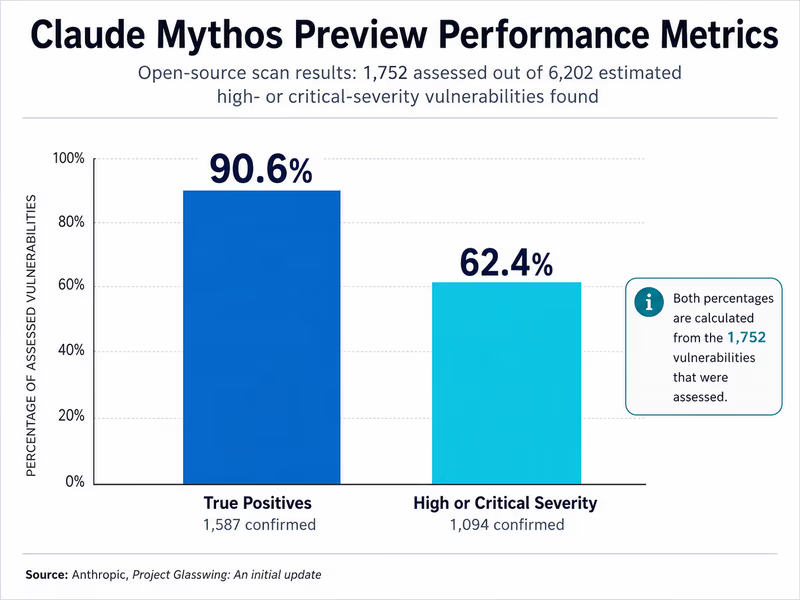
Out of 6,202 high- or critical-severity vulnerabilities identified by Mythos Preview across more than 1,000 open-source projects, 1,752 have been independently assessed. Of those, an extraordinary 90.6% (1,587) were confirmed as valid true positives, with 62.4% (1,094) verified as high- or critical-severity.
This rapid influx of verified flaws is forcing a re-evaluation of traditional security patch cycles. With AI capable of scanning and identifying vulnerabilities at an unprecedented scale, quarterly patching schedules are quickly becoming obsolete, necessitating a shift toward continuous, AI-augmented testing and patch deployment.
"Guardrails are not a product feature, they are an engineering discipline," observed Prashanna Rao, Head of Engineering at GoML. "Project Glasswing stress tests and improves those guardrails in real time. That feedback loop is exactly how you build AI capability you can actually trust."
Industry Response and Collaborative Hardening
The broader tech sector has begun adapting to this new landscape. On May 19, 2026, IBM announced an expansion of its AI security portfolio and confirmed its partnership with Anthropic under Project Glasswing. Shortly thereafter, IBM and Red Hat announced Project Lightwell, a massive $5 billion commitment to secure open-source software against advanced AI threats. IBM's Chief Executive Officer, Arvind Krishna, explicitly noted that the capabilities demonstrated by the Mythos model were the critical triggering factor in launching this multi-billion dollar protective effort.
Rob Thomas, Senior Vice President of Software and Chief Commercial Officer at IBM, detailed his company's active posture in this space. He stated that while AI-powered attacks have already moved beyond what traditional defenses can match, IBM is actively helping clients assess exposure, putting tools like IBM Concert to work, and hardening their own products while contributing fixes back to the open-source community to make the entire ecosystem stronger.
Sensitivities, Disclosures, and Policy Shifts
The deployment of such a powerful model has not been without complications. The launch was preceded in late March 2026 by an unintentional leak, where a draft blog post detailing Project Glasswing was briefly exposed due to a content management system misconfiguration. Furthermore, according to unconfirmed reports, Anthropic has also investigated potential unauthorized access attempts targeting the sensitive Mythos tool itself, emphasizing the security risks associated with frontier defensive assets.
To prevent legal barriers from slowing down defensive collaboration, Anthropic took the step on May 21, 2026, of removing non-disclosure agreements for Project Glasswing partners. This allows participating organizations to share critical vulnerability findings freely with regulators, industry peers, open-source maintainers, and the public.
This move aligns with shifting legislative expectations regarding security transparency. Representative Josh Gottheimer (D-N.J.) emphasized the necessity of open risk communication, stating that no entity should be contractually restricted from warning others, coordinating mitigations, or informing relevant and trusted stakeholders about urgent cyber risks.
Looking Ahead
As the industry prepares for a broader disclosure of the technical findings, the timeline for Project Glasswing is moving toward public transparency. Following a standard 90-day coordinated vulnerability disclosure period, a comprehensive public report detailing the project's discoveries is expected to be released in early July 2026.
The success of the project highlights an urgent reality for global enterprise systems. With adversary AI-driven attacks increasing 89% year-over-year, and security experts predicting a narrow window of 12 to 18 months before widespread exploitation capability proliferates to malicious actors, initiatives like Project Glasswing are providing cyber defenders with a crucial, time-sensitive head start.