
Anthropic Enters Design Space with Claude Design, Directly Challenging Figma and Canva
Anthropic launches Claude Design, a conversational visual tool powered by Claude Opus 4.7, directly challenging established platforms like Figma and Canva.
Anthropic Labs, a specialized division of the AI company Anthropic, released Claude Design on April 17, 2026, signaling a major strategic pivot from foundational model provider to a full-stack product company. This new tool allows users to generate professional-grade visual assets—ranging from interactive prototypes and slide decks to marketing collateral—using simple conversational prompts and interactive editing controls. The platform is powered by Claude Opus 4.7, a vision-centric model released just one day prior, which stands as Anthropic's most capable generally available model to date.
A Conversational Approach to Visual Identity
Claude Design distinguishes itself by focusing on ease of use for both non-designers and professionals. According to Anthropic's product documentation, the tool aims to provide designers with more space to explore concepts while giving non-specialists a direct path to high-quality visual work. The workflow is inherently iterative; users describe a concept, and Claude builds an initial draft. From there, users can refine the work through inline comments, direct edits, or unique custom sliders that Claude generates on the fly to adjust specific visual parameters.
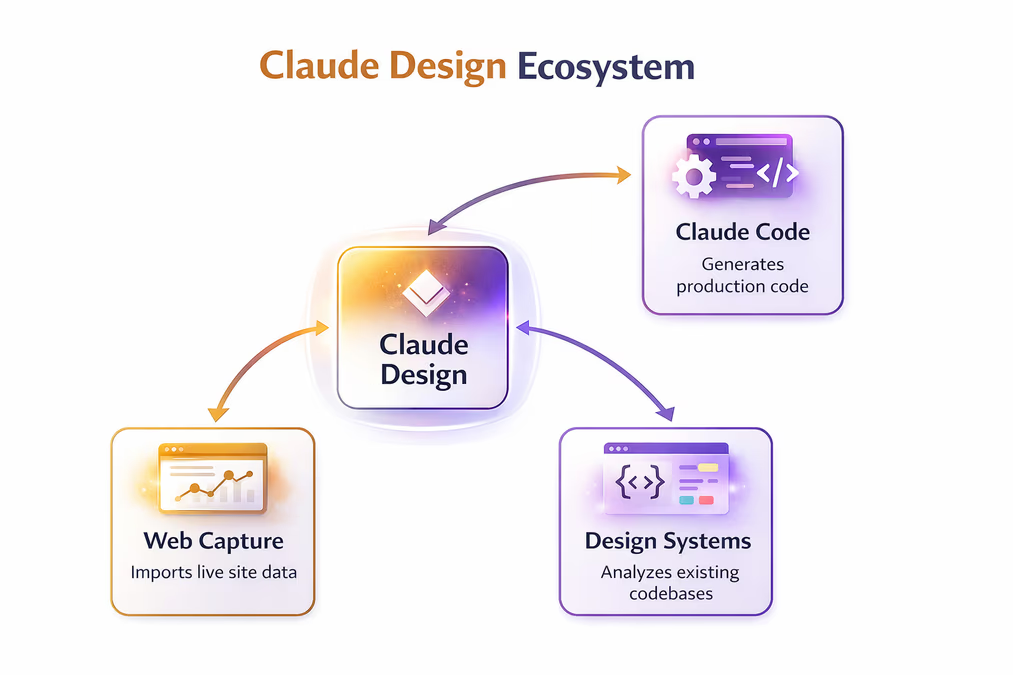
Beyond basic image generation, Claude Design includes a suite of advanced features. A web capture tool allows users to pull elements from live websites directly into their workspace. For engineering teams, the tool offers a handoff mechanism to Claude Code, allowing for the immediate generation of production-ready code from a visual layout. Furthermore, the platform can analyze a team's existing codebase and design files to automatically build a cohesive design system.
Market Disruption and the Figma Rivalry
The launch sent immediate ripples through the tech industry, particularly affecting established players. Following the announcement, Figma's stock price dropped by approximately 7%. The timing of the release followed the high-profile resignation of Mike Krieger, Anthropic's Chief Product Officer, from Figma's board on April 14, 2026—a move that industry analysts interpreted as a precursor to direct competition.
While Claude Design poses a threat to some, other industry leaders are leaning into collaboration. Canva’s CEO indicated that they are excited to build on their existing collaboration with Claude. The goal is to create a seamless experience where ideas and drafts from Claude Design can be brought into Canva as fully editable, collaborative designs ready for publication.
Technical Capabilities and Limitations
Under the hood, Claude Opus 4.7 manages the heavy lifting. The model features significant improvements in high-resolution vision tasks and instruction following. Anthropic has priced the Opus 4.7 API at $5 per million input tokens and $25 per million output tokens. For end users, Claude Design is available in research preview for subscribers of Claude Pro, Max, Team, and Enterprise plans at no additional initial cost.
However, early adopters have noted practical hurdles. The tool is reportedly resource-intensive; some observations suggest that high-frequency use can exhaust a Claude Pro user’s weekly token allowance in as little as 30 minutes. To mitigate this for corporate clients, Anthropic is offering a one-time credit for Enterprise customers through July 17, 2026, covering roughly 20 typical prompts.
Strategic Growth and Future Outlook
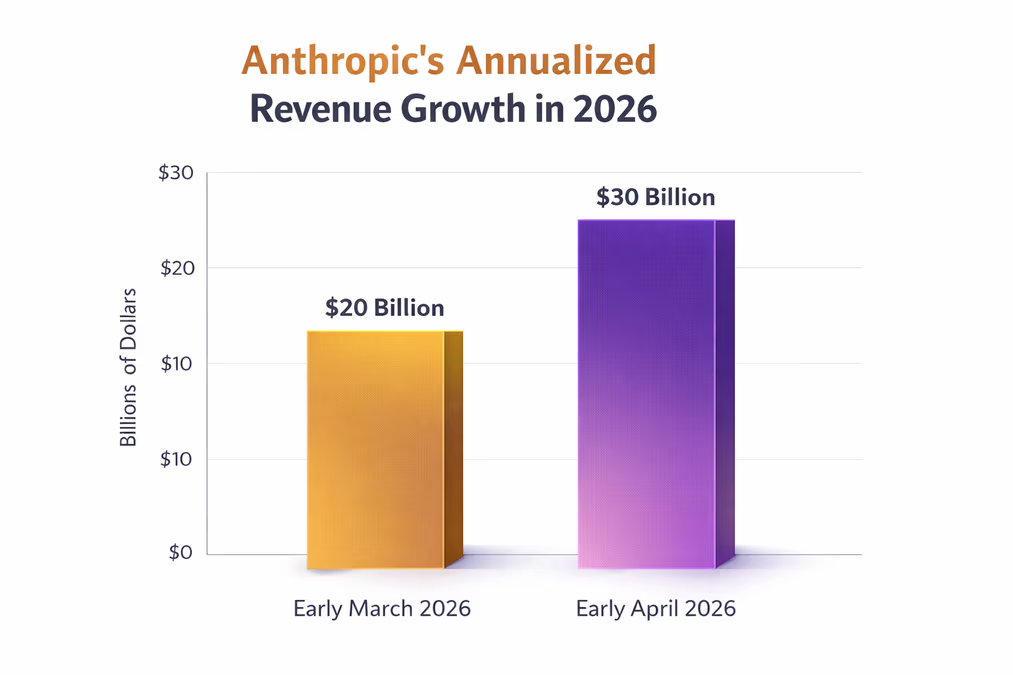
This launch comes at a period of explosive financial growth for Anthropic. The company’s annualized revenue reached approximately $30 billion by early April 2026, a significant jump from the $20 billion reported just one month earlier. This financial momentum has fueled unconfirmed reports that Anthropic is in early discussions for an initial public offering (IPO) as early as October 2026.
Interestingly, Anthropic continues to exercise caution regarding its most advanced technology. While Opus 4.7 powers the new design tool, the company has held back its "Claude Mythos Preview" model. Internal reports suggest this unreleased model is far more powerful but remains restricted due to concerns regarding its advanced cybersecurity capabilities.
As Claude Design moves out of research preview, the industry will be watching to see if it can transition from a tool for high-frequency, non-professional visual content to a primary workspace for design professionals. For now, its integration with the Model Context Protocol (MCP) and other application-layer products like Claude Code suggests Anthropic is building a closed-loop ecosystem designed to dominate the entire product development lifecycle.