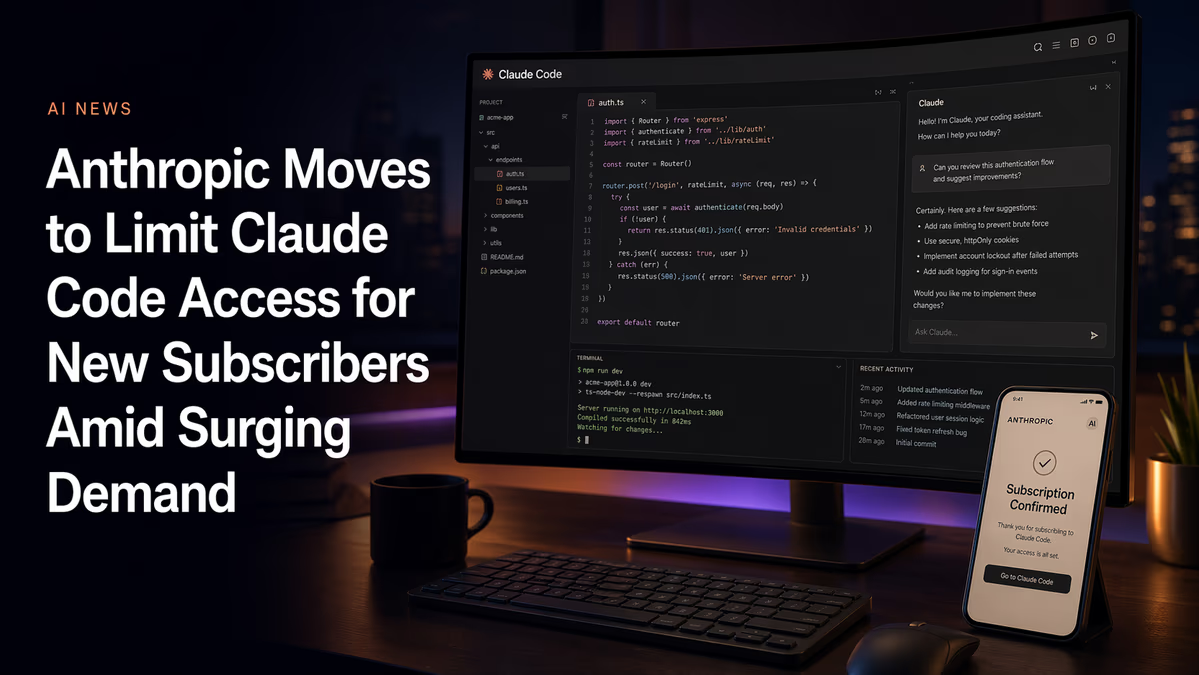
Rumors say Anthropic Moves to Limit Claude Code Access for New Subscribers Amid Surging Demand
Anthropic is testing the removal of Claude Code from its $20 Pro plan for 2% of new users to manage soaring compute costs and usage demand.
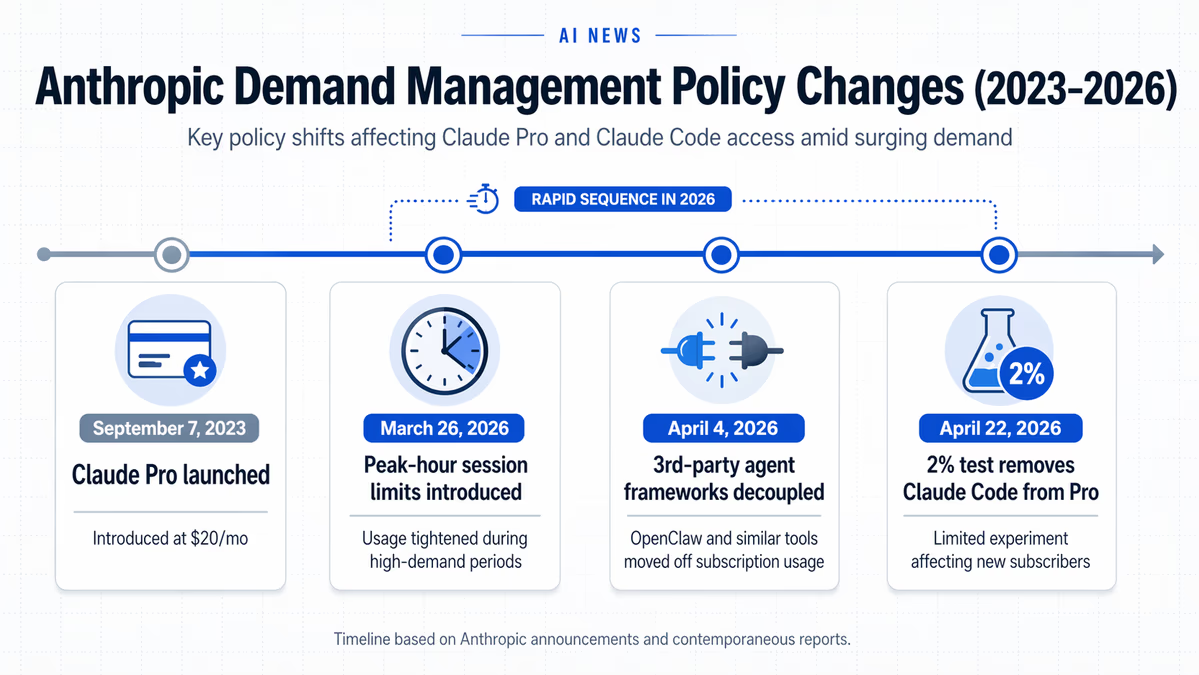
Anthropic has begun a targeted experiment to remove its high-utility 'Claude Code' feature from select new Pro subscription tiers, a move that highlights the escalating pressure on AI infrastructure. The San Francisco-based AI firm is currently conducting a "small test" involving approximately 2% of new prosumer sign-ups for its Claude Pro plan, which is priced at $20 per month. For those caught in the test group, access to the integrated coding environment is being withheld, though existing Pro and Max subscribers remain unaffected.
Amol Avasare, Head of Growth at Anthropic, clarified the nature of the shift, stating that the company is running this small test specifically on new signups and that existing subscribers are not impacted. The experiment was first detected by eagle-eyed users who noticed that Claude Code had vanished from public-facing pricing pages and official support documentation. While the removal appeared sudden, it follows a period of intense growth for the platform following major updates including Opus 4, Cowork, and long-running asynchronous agents.
The Economics of Infinite Inference
This pricing recalibration is not an isolated event but rather a response to what the company describes as dramatic shifts in usage patterns. Anthropic noted that usage has changed significantly and emphasized that their current subscription plans were not originally designed to handle the current levels of engagement. The tension between flat-rate monthly fees and the unpredictable, often astronomical costs of compute-heavy operations like code generation and agentic workflows has become a central challenge for the industry.
Boris Cherny, Head of Claude Code at Anthropic, framed the decision as a necessary step in resource stewardship. Cherny stated that the company has been working to meet the surge in demand for Claude and noted that their subscriptions were not built for the usage patterns seen with third-party tools. He further characterized capacity as a resource that must be managed thoughtfully, signaling that the era of unmetered, high-intensity AI features for a low flat fee may be nearing its end.
A Growing Infrastructure Supercycle
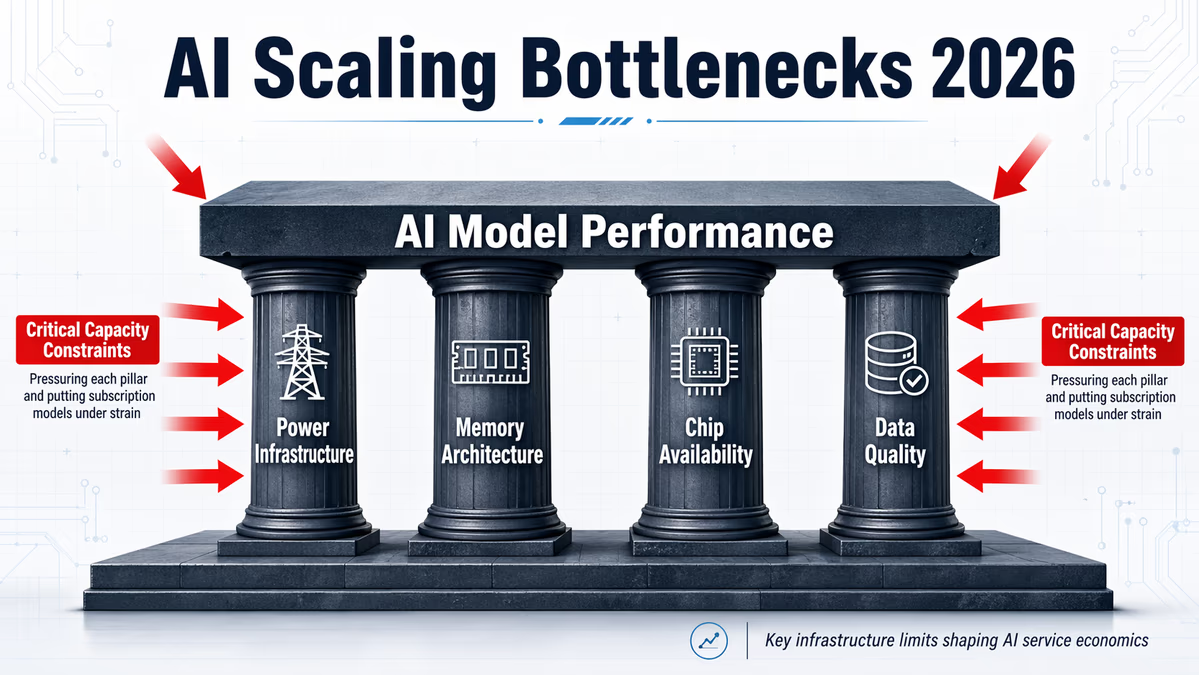
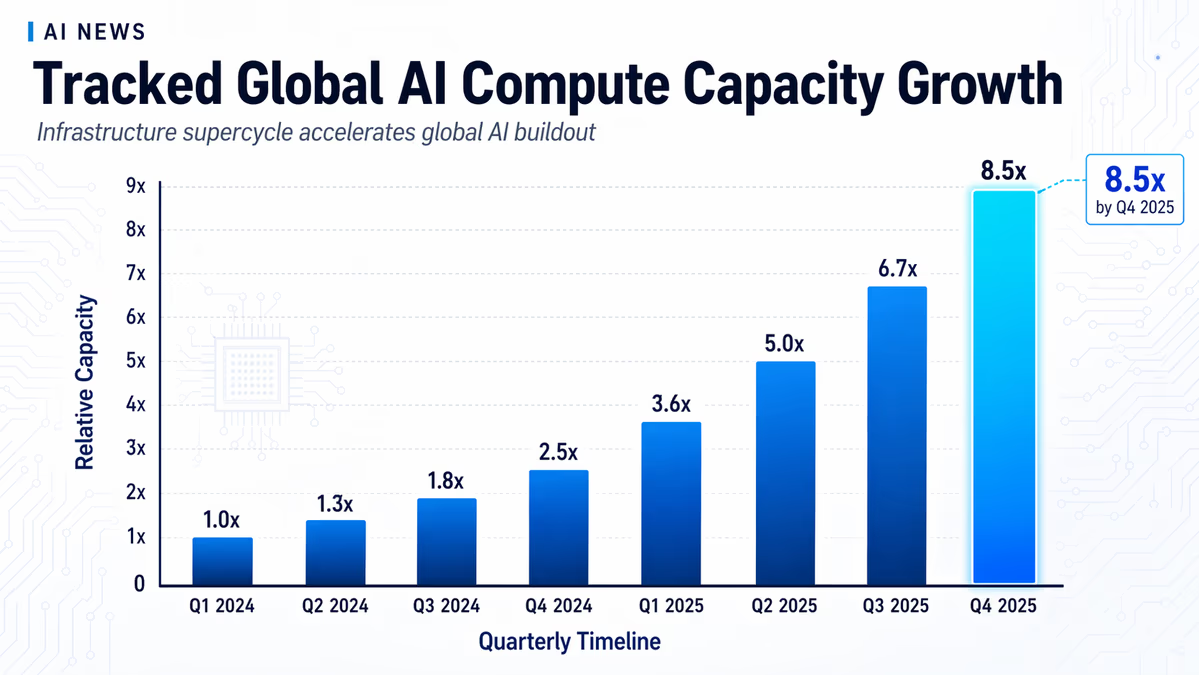
The move comes at a time when the AI industry is grappling with an "infrastructure supercycle." Between Q1 2024 and Q4 2025, tracked AI compute capacity across major tech organizations grew 8.5 times. Despite this massive expansion, providers face persistent bottlenecks in power infrastructure, chip availability, and memory architecture. These physical constraints are increasingly dictating product strategy, forcing companies like Anthropic, Google, and Replit to tighten usage limits or transition toward metered billing.
Anthropic has been incrementally tightening its belt throughout early 2026. On March 26, the company adjusted its five-hour session limits for Free and Pro users during peak hours. By April 4, it implemented a policy change preventing Pro and Max subscribers from using their plan limits to power third-party agent frameworks like OpenClaw, requiring users to switch to API keys or pay-as-you-go billing instead.
Developer Reaction and the Trust Gap
The lack of immediate, transparent communication regarding the Claude Code removal test has triggered what some observers call a "trust crisis" among the developer community. Because documentation was updated before official statements were issued, some users expressed alarm, interpreting the test as a precursor to a wider "nerfing" of the service. While Anthropic employees have denied intentional performance degradation, the inconsistencies in public messaging have led some developers to explore shifting their workflows toward local AI models or self-hosted solutions to ensure consistency.
For power users, the path forward appears increasingly tiered. Anthropic launched its Claude Max plan in April 2025 specifically for those who frequently hit limits on the Pro plan, offering significantly higher usage and full access to Claude Code. By removing these features from the $20 Pro entry point for some new users, Anthropic is effectively nudging its most intensive users toward higher-margin tiers or direct API usage.
Forward-Looking Implications
As compute continues to be a finite and expensive resource, the industry-wide trend toward decoupling high-compute tools from basic subscriptions is likely to accelerate. This experiment by Anthropic may serve as a blueprint for other providers looking to protect their margins from "power users" whose token consumption far exceeds the value of their monthly subscription. For the broader market, this suggests that the future of premium AI services will likely be defined by tiered, metered, or hybrid pricing models rather than the all-you-can-eat structures that characterized the early generative AI boom. Developers and enterprises alike must now weigh the convenience of cloud-based subscriptions against the predictability and cost-efficiency of API-driven or locally-hosted alternatives.