
Anthropic Acquires Stealth Biotech Startup Coefficient Bio for $400 Million
Anthropic acquires stealth startup Coefficient Bio for $400M, signaling a pivot toward building biology-native AI models for drug discovery.
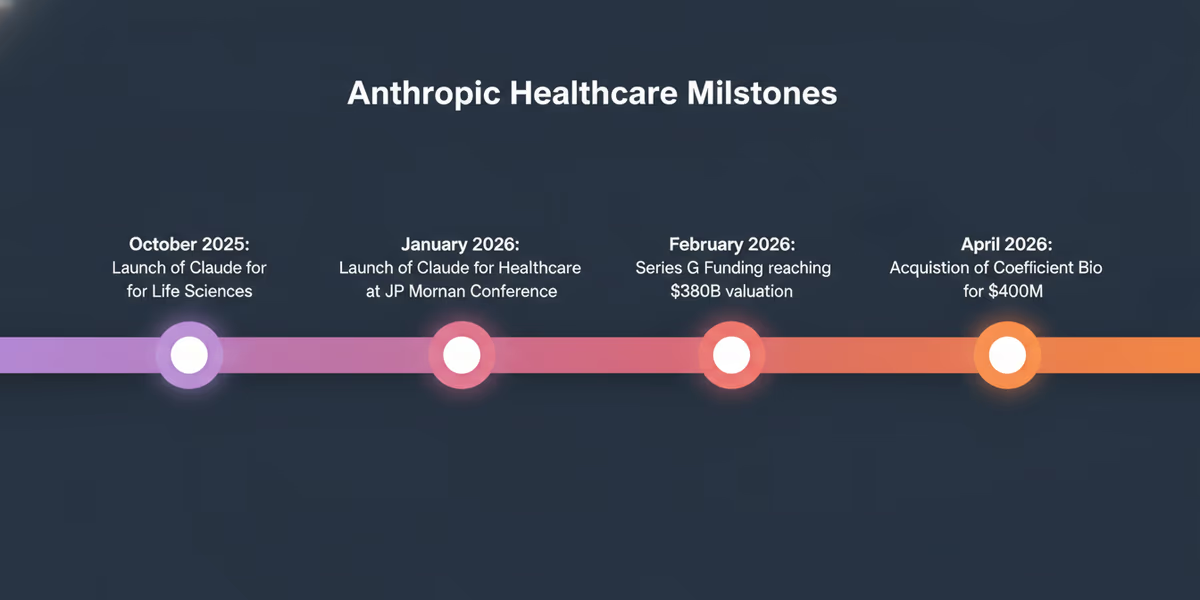
Anthropic finalized its acquisition of Coefficient Bio, a stealth AI biotech startup, on April 1, 2026, for just over $400 million in an all-stock transaction. The deal, which was publicly reported on April 3, marks a significant escalation in Anthropic’s efforts to dominate the intersection of frontier AI and life sciences.
Based in New York, Coefficient Bio was founded in September 2025 by a small but elite team of fewer than ten researchers, many of whom were recruited from Genentech’s prestigious Prescient Design computational biology unit. The acquisition integrates this specialized talent into Anthropic’s Health Care Life Sciences group, led by Eric Kauderer-Abrams, as the company seeks to move beyond general-purpose large language models and into the realm of biology-native AI.
A Strategic Pivot to Biology-Native AI
Until now, Anthropic’s healthcare strategy has focused on adapting its existing Claude models for scientific workflows. Following the launch of 'Claude for Life Sciences' in late 2025 and 'Claude for Healthcare' in early 2026, the company positioned its AI as a versatile assistant for literature reviews and clinical documentation. The acquisition of Coefficient Bio signals a deeper shift: Anthropic is now building models specifically designed for the complexities of biological systems.
Coefficient Bio’s platform utilizes AI not just for analyzing text, but for the fundamental planning of drug research and development, clinical regulatory strategies, and the identification of novel drug candidates. This focus on the high-leverage bottlenecks of the pharmaceutical pipeline suggests that Anthropic aims to provide the foundational intelligence layer for the next generation of medicine.
“We're ushering biopharma into the Intelligence Age,” said Samuel Stanton, Co-founder of Coefficient Bio, in a statement regarding the team's mission. “It will change everything about how the industry learns and makes decisions.” Stanton, who holds a PhD in data science from NYU, co-founded the startup alongside Nathan C. Frey and CEO Aris Theologis.
The Financials of Talent Scarcity
The $400 million valuation for a startup that is less than a year old and has fewer than ten employees underscores the extreme premium currently placed on specialized AI talent. For Anthropic, which reached a post-money valuation of $380 billion following its Series G funding round in February 2026, the acquisition represents a mere 0.1% dilution.
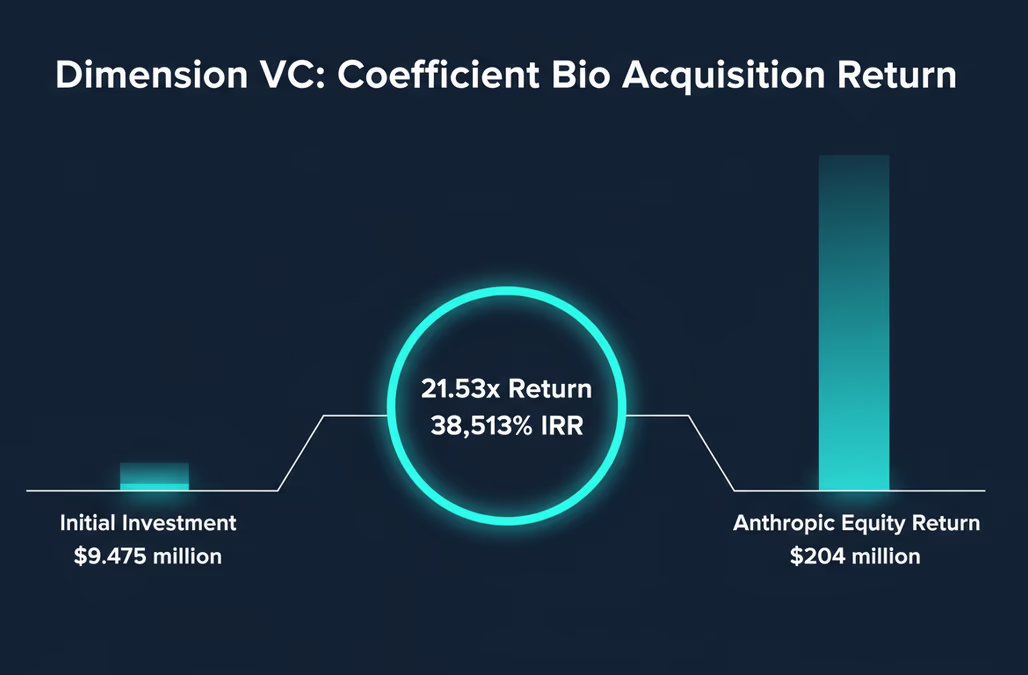
The deal is a massive windfall for the AI-focused venture capital firm Dimension, which incubated and heavily backed the startup. Dimension held a 50.8% equity stake in Coefficient Bio at the time of the sale. Their initial $9.475 million investment has yielded an estimated return of approximately $204 million in Anthropic equity, representing a staggering 21.53x return and a 38,513% Internal Rate of Return (IRR).
Industry Context and Competition
Anthropic’s move comes at a time of intense competition among frontier AI labs. OpenAI has similarly expanded its healthcare footprint, launching an “OpenAI for Healthcare” initiative and reportedly working on a fully automated AI researcher. Meanwhile, the broader biotech sector is seeing a massive influx of capital; Xaira Therapeutics launched in 2024 with $1 billion in funding, and startups like Abridge and Sword Health have recently hit billion-dollar valuations.
The acquisition also reflects a talent drain from traditional pharmaceutical giants. In 2025, Genentech reduced its headcount by nearly 500 roles as its parent company, Roche, pivoted toward automation and digital integration. Coefficient Bio’s team represents the new vanguard of this shift—researchers leaving established firms to build AI-native solutions from the ground up.
Eric Kauderer-Abrams, Head of Anthropic’s Health Care Life Sciences group, has high ambitions for the integration. “We want a meaningful percentage of all of the life science work in the world to run on Claude, in the same way that that happens today with coding,” he stated.
Forward-Looking Implications
By absorbing Coefficient Bio, Anthropic is positioning Claude as more than a chatbot; it is aiming for what some researchers call “artificial superintelligence for science.” If successful, the integration of biology-specific AI capabilities could drastically reduce the time and cost associated with bringing new drugs to market.
As the Coefficient Bio team begins their work within Anthropic, the focus will likely turn to whether these biology-native models can solve the high failure rates in clinical trials—the ultimate bottleneck in the pharmaceutical industry. For now, the deal serves as a clear signal that the next frontier for AI labs isn't just understanding human language, but mastering the language of life itself.