
Faces from the Ash: AI Reconstructs the Final Moments of a Pompeii Victim
Archaeologists at Pompeii have used AI to digitally reconstruct the face of a man who perished in the AD 79 eruption of Mount Vesuvius.
Resurrecting the Past through Neural Networks
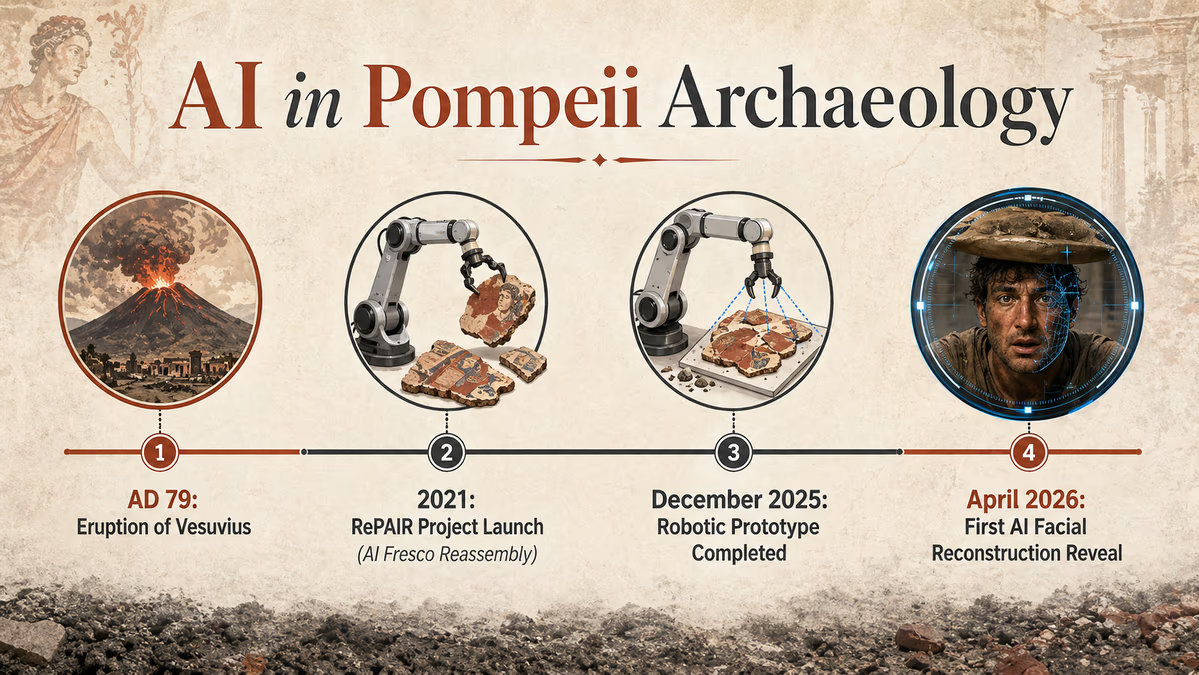
Archaeologists at the ancient Roman site of Pompeii have successfully utilized artificial intelligence to digitally reconstruct the face of a man killed in the AD 79 eruption of Mount Vesuvius. The project marks the first time such technology has been applied to a specific victim from the site, moving beyond traditional 3D scanning to create a realistic human likeness grounded in forensic and archaeological data.
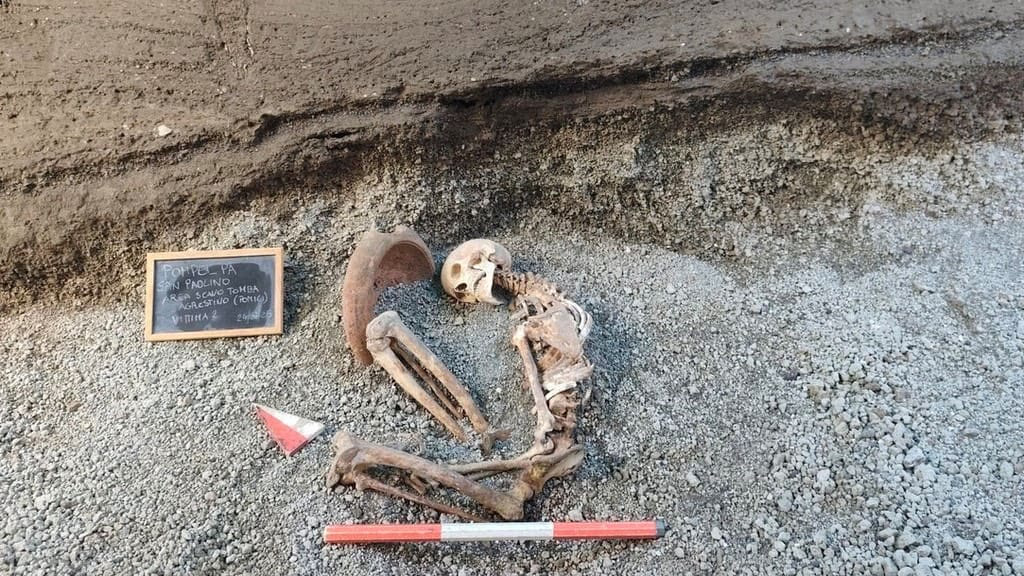
The subject of the reconstruction is an older adult male whose remains were discovered near the Porta Stabia necropolis, just outside the ancient city walls. He was found alongside another individual as they both attempted a desperate flight toward the coast. Researchers indicate that this man likely died during an early phase of the disaster, caught in a heavy fall of volcanic debris that preceded the final, devastating pyroclastic flows.
The Final Moments of the Man from Porta Stabia
The details of the man’s discovery provide a haunting glimpse into the final moments of the eruption. Archaeologists found the victim holding a terracotta mortar—a heavy kitchen bowl—which he appears to have used as an improvised shield against the falling lapilli, or small volcanic stones. Beside him lay a ceramic oil lamp, a small iron ring remained on his finger, and a purse contained ten bronze coins, likely his life savings or the essentials for a quick escape into the unknown.
“The man of Pompeii fled with a mortar on his head, an oil lamp in his hand, and ten coins: he carried what seemed useful to him to orient himself in the dark,” said Luciano Floridi, Founding Director of the Digital Ethics Center at Yale. He noted that while the disaster occurred two millennia ago, AI is now helping to reconstruct those final moments. “AI does not replace the archaeologist. Under its control, it expands and deepens its potential; and it makes accessible to many what was previously readable only for a few.”
A Collaborative Digital Effort
The reconstruction was a joint effort between the Pompeii Archaeological Park and the University of Padua's Digital Cultural Heritage Laboratory. The team used a combination of AI-driven modeling and photo-editing techniques to translate skeletal data and environmental context into a textured, lifelike portrait.
The goal was not to produce a definitive, high-certainty photograph, but rather to build a visual model that makes archaeological research more emotionally engaging for the public. Gabriel Zuchtriegel, Director of Pompeii Archaeological Park, emphasized the necessity of these tools. “The vastness of archaeological data is now such that only with the help of artificial intelligence will we be able to adequately protect and enhance them,” Zuchtriegel stated. “If used well, AI can contribute to a renewal of classical studies.”
Technical Integration and Ethical Boundaries
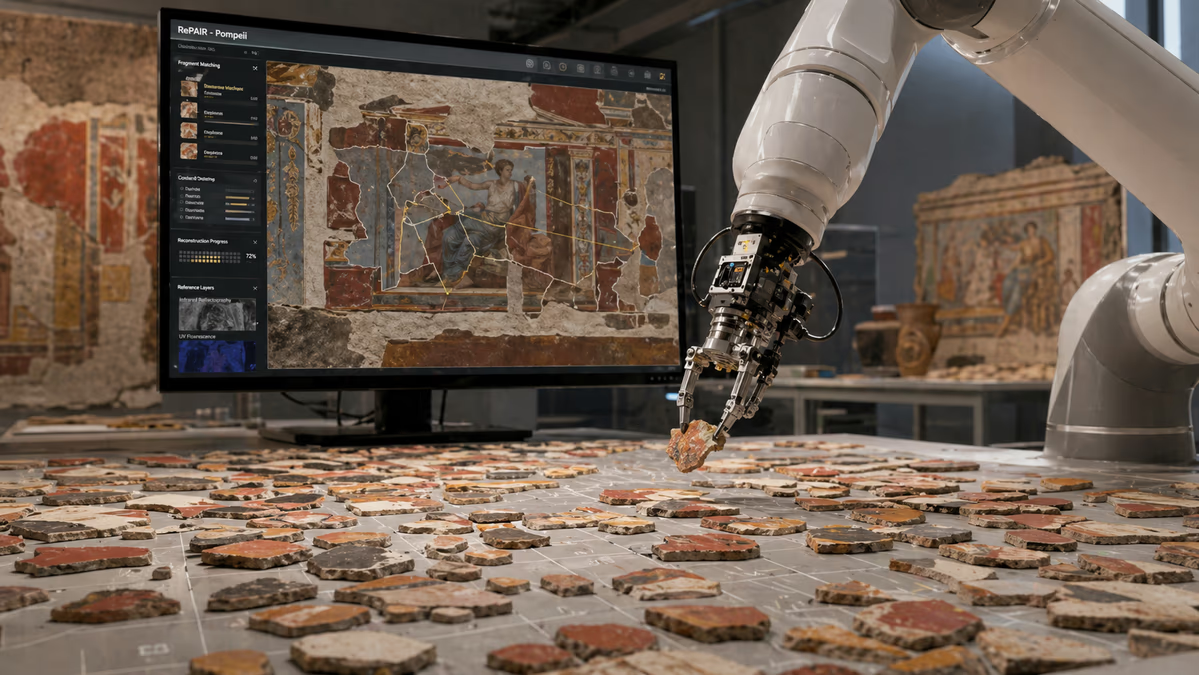
This project sits within a broader trend of integrating AI into the study of the ancient world. At Pompeii, AI has already been utilized in the 'RePAIR' project, which used robotics and neural networks to reassemble thousands of fragmented frescoes damaged by both the eruption and World War II bombings. Elsewhere, AI is being deployed to analyze satellite imagery for hidden sites and to decipher ancient texts that were previously unreadable.
However, the use of AI in cultural heritage is not without its critics. Some unverified reports from within the archaeological community suggest a degree of skepticism regarding the artistic interpretation inherent in AI-generated imagery. Critics question whether the technology possesses actual 'insight' or if it is merely generating a plausible picture based on modern facial patterns. Specialists acknowledge this risk, noting that AI models can inadvertently project contemporary facial structures onto ancient subjects due to the limited 3D data available for ancient populations.
Jacopo Bonetto, a professor at the University of Padua, argued that while the technology is transformative, it must remain under human supervision. He described the project as one that opens a broader reflection on AI’s role, stating that it requires a “controlled and methodologically grounded use, always in integration with the work of specialists.”
Forward-Looking Implications
The success of the Pompeii reconstruction suggests a shift in how museums and historical sites will interact with visitors in the future. By moving from sterile skeletal displays to realistic, relatable human faces, AI can bridge the emotional gap between the present and the deep past. As the technology evolves, we can expect to see more "digital twins" of ancient inhabitants, offering a vivid, interactive window into the daily lives and tragedies of those who lived thousands of years ago. For Pompeii, a city frozen in time by ash, AI is proving to be the tool that finally allows its citizens to look back at us.